Ecclesiastes 3: Finding Life’s Meaning in God’s Sovereign Plans
Introduction: When Solomon looked at the works of the flesh “under the sun” (Ecc. 1:3, 9; 3:16), everything appeared to be (he·ḇel) “הֶ֙בֶל֙”, “futility,” “vanity,” or “meaningless”. It would evaporate like smoke. But when Solomon looked at everything “under heaven” (Ecc. 3:1) he realized God’s greater sovereign plan. Life can have great meaning. But it is only meaningful when it is used to serve God’s greater plans, not our own. From Ecclesiastes 3, the Bible reveals that life under God’s sovereign plan has lasting meaning with: (1) faith, (2) trust, (3) grateful service, (4) reverent fear of Jesus by hating evil, (5) obedience, (6) hope, and (7) contentment.
First, Solomon revealed that each stage of life under heaven goes through an appointed season. But you need faith to understand life’s true meaning in God’s sovereign plans. Second, Solomon stated that a person’s labors might appear to be futile because everything occurs based upon an appointed season. But God wants you to trust Him that your labors for Him during your appointed time on Earth will have lasting value. Third, Solomon concluded that each person should “rejoice” and “do good in one’s lifetime.” God also wants you to use your appointed season on Earth to serve Him out of gratitude. Fourth, consistent with his theme for the book, Solomon also concluded that each person should fear God. With your appointed season on Earth, Jesus also wants you to fear Him by hating evil and embracing what is good. Fifth, Solomon declared that God will judge evil in His appointed time. With your appointed time on Earth, Jesus also wants you to obey Him because He paid the price for your sins. Sixth, Solomon observed that death comes to all, and mankind might appear to share the same fate as the animals. Because your appointed season on Earth will one day come to an end, Jesus also wants you to put your hope in eternal life with Him. Finally, Solomon concluded that each person should enjoy what God provides. Because God provides everything you need during your allotted season on Earth, God also wants you to be content with His grace in your life.
1. Faith: You Need Faith to Understand Life’s True Meaning in God’s Sovereign Plans. Ecc. 3:1-8.
God has pre-ordained every season of your life. Solomon used poetry to state a fundamental truth that can be viewed differently depending upon whether you have faith. With faith, everything from birth until death is ordered in a “season” according to God’s providence. Without faith, life goes through inevitable cycles or stages that you should try to influence. “1 There is an appointed time for everything. And there is a time for every matter under heaven— 2 A time to give birth and a time to die; a time to plant and a time to uproot what is planted. 3 A time to kill and a time to heal; a time to tear down and a time to build up. 4 A time to weep and a time to laugh; a time to mourn and a time to dance. 5 A time to throw stones and a time to gather stones; a time to embrace and a time to shun embracing. 6 A time to search and a time to give up as lost; a time to keep and a time to throw away. 7 A time to tear apart and a time to sew together; a time to be silent and a time to speak. 8 A time to love and a time to hate; a time for war and a time for peace.” (Ecc. 3:1-8). “Notice that the Preacher locates all the times of life ‘under heaven’, which is more positive than his usual phrase, ‘under the sun’. Everything in this time-bound universe is under the authority of God in heaven … Each pair forms a merism -a figure of speech in which two polarities make a whole. Taken together, birth and death comprise the whole of human existence; weeping and laughing cover the full range of human emotion, and so on … There are fourteen pairs in all, which is twice the biblical number (seven) of perfection and completion… God rules all our moments and all our days, and there is a definite orderliness to what He does.” (Philip Ryken on Ecc. 3:1-8).1

God is sovereign and has preordained an appointed season for each stage of life2
God is sovereign over everything. Nothing happens by chance. Everything happens as part of God’s sovereign will. “1 There is an appointed time for everything. And there is a time for every matter under heaven—” (Ecc. 3:1). The laws of physics operate under His sovereign will. “He made the moon for the seasons; the sun knows the place of its setting.” (Ps. 104:19). All human events and governments are also subject to His divine plans. “It is He who changes the times and the periods; He removes kings and appoints kings; He gives wisdom to wise men, and knowledge to people of understanding.” (Dan. 2:21). “and He made from one man every nation of mankind to live on all the face of the earth, having determined their appointed times and the boundaries of their habitation,” (Acts 17:26). Even the animal kingdom is under His divine sovereignty. But unlike the animals, many people do not recognize their true master. “Even the stork in the sky knows her seasons; and the turtledove, the swallow, and the crane keep to the time of their migration; but My people do not know the judgment of the LORD.” (Jer. 8:7).
Without faith, Solomon’s words carry a very different meaning. In 1959, Peter Seeger took Ecclesiastes 3:1-8 and turned it into a song called “Turn! Turn! Turn!”. In 1965, the American folk rock group “the Birds” released it and turned it into a number one hit.3 But the song that copied the words of the Bible did not trigger a religious revival. Instead, it became a countercultural theme song of the 1960s. Many saw it as a secular anthem to incite a change against the prior generation and usher in a time of peace.4 Instead of trusting in God’s will during a tumultuous time, many saw it as an inspiration that mankind could work together by itself to change its culture and the world.
God sets the appointed times for births and deaths. God sets the “time to give birth and a time to die;” (Ecc. 3:2). God’s sovereignty includes the length of our lives. “See now that I, I am He, and there is no god besides Me; it is I who put to death and give life. I have wounded and it is I who heal, and there is no one who can save anyone from My hand.” (Dt. 32:39). “Since his days are determined, the number of his months is with You; and You have set his limits so that he cannot pass.” (Job 14:5). “The LORD puts to death and makes alive; He brings down to Sheol and brings up.” (1 Sam 2:6). “Your eyes have seen my formless substance; and in Your book were written all the days that were ordained for me, when as yet there was not one of them.” (Ps. 139:16). “And just as it is destined for people to die once, and after this comes judgment,” (Heb. 9:27). But He can also “prolong” the life of faithful believers (Dt. 4:40; 5:16; Prov. 3:2; 4:10; 9:11).
Let a weeping or morning person have their appointed time. Solomon also revealed that there is an appointed time to “weep” or “mourn” (Ecc. 3:4). Thus, even though believers have hope in Jesus, you should allow believers a season of weeping or mourning if they experience loss or tragedy. Job’s friends initially sat silently with Job as he mourned the loss of all his children (Job 2:13). Their sin was in failing to stay silent as Job mourned.
God also sets the appointed times for war and peace. God further sets a “time to kill and a time to heal; a time to tear down and a time to build up… A time to love and a time to hate; a time for war and a time for peace.” (Ecc. 3:3, 8). “See, I have appointed you this day over the nations and over the kingdoms, to root out and to tear down, to destroy and to overthrow, to build and to plant.” (Jer. 1:10). “Come, let’s return to the LORD. For He has torn us, but He will heal us; He has wounded us, but He will bandage us.” (Hos. 6:1). But He will still bless those who seek to bring peace. “Blessed are the peacemakers, for they will be called sons of God.” (Matt. 5:9). Even when an appointed time of conflict comes, He also wants you to love and pray for your enemies (Matt. 5:44).
When you are tempted by evil, that is the appointed time for “hate”. Some may be troubled by the reference to an appointed time to “hate.” (Ecc. 3:8). The Hebrew word for hate “sane” (שָׂנֵא) can mean a “lesser preference rather than active malice” as when God chose Jacob over Esau (Mal. 1:2-3).5 But Solomon used “merisms” in Ecclesiastes 3 to express the whole range of emotions and events as belonging to God. Thus, “hatred” here is the opposite of “love”. When then are you to “hate”? When you are confronted by or tempted with evil. That is the definition of fearing the Lord, “The fear of the LORD is to hate evil ....” (Prov. 8:13). Thus, you should hate sin. It should repulse you. But you should still love sinners and show Jesus’ love to them (Matt. 5:43-48; Lk. 6:35).
Use your appointed time on Earth to serve Jesus. Jesus wants you to use your appointed time to live for Him. “for if we live, we live for the Lord, or if we die, we die for the Lord; therefore whether we live or die, we are the Lord’s.” (Ro. 14:8). Thus, during God’s appointed seasons, you can serve Jesus by seeking to fulfill His will.
2. Trust: God Wants You to Trust Him That Your Labors For Him During Your Appointed Time on Earth Will Have Lasting Value. Ecc. 3:9-11.
God wants you to trust that He has preordained for events to occur at the correct time. Solomon realized that his own labors would evaporate like smoke (Ecc. 2:18-23). But he realized that God had placed eternity in each person’s heart so that they might trust Him. “9 What benefit is there for the worker from that in which he labors? 10 I have seen the task which God has given the sons of mankind with which to occupy themselves. 11 He has made everything appropriate in its time. He has also set eternity in their heart, without the possibility that mankind will find out the work which God has done from the beginning even to the end.” (Ecc. 3:9-11). “Verse 9 follows immediately upon the heels of the poem by rudely repeating the thought of 1:3, ‘What profit is there? In the final analysis Qohelet [the teacher] powerfully exposes that everything is frustratingly out of the control of human beings.” (Tremper Longman on Ecc. 3:9).6 “He hath set eternity (or, the everlasting) in their heart. The thought expressed is not that of the hope of an immortality, but rather the sense of the Infinite which precedes it, and out of which at last it grows. Man has the sense of an order perfect in its beauty. He has also the sense of a purpose working through the ages from everlasting to everlasting, but “beginning” and “end” are alike hidden from him and he fails to grasp it.” (John James Stewart Perowne, General Editor, Cambridge Bible for Schools and Colleges on Ecc. 3:11).7
Your labor in the world is subject to the original curse. Solomon lamented that “mankind” was forced to “occupy themselves” with futile “labors” (Ecc. 3:9-10). This was part of the original curse (Gen. 3:17-19). But Jesus offers you comfort while you wait for His return and restoration in the world. “These things I have spoken to you so that in Me you may have peace. In the world you have tribulation, but take courage; I have overcome the world.” (Jo. 16:33). “Come to Me, all who are weary and burdened, and I will give you rest. Take My yoke upon you and learn from Me, for I am gentle and humble in heart, and you will find rest for your souls.” (Matt. 11:28-29).
Your labor for God is never in vain. Solomon saw futility and pain in his works for himself. “9 What benefit is there for the worker from that in which he labors?” (Ecc. 3:9). But when you labor for God, you can trust Him that your labor is never in vain. “Therefore, my beloved brothers and sisters, be firm, immovable, always excelling in the work of the Lord, knowing that your labor is not in vain in the Lord.” (1 Cor. 15:58). He also wants you to diligently serve Him. “Whatever you do, do your work heartily, as for the Lord and not for people, knowing that it is from the Lord that you will receive the reward of the inheritance. It is the Lord Christ whom you serve.” (Col. 3:23-24).
God uses His sovereign will for good. If God sets the appointed seasons of life, some might ask why expend any effort trying to make a difference. This answer is that God is moving events in history in favor of those who love Him and are called according to His purpose. “And we know that God causes all things to work together for good to those who love God, to those who are called according to His purpose.” (Ro. 8:28). “In Him we also have obtained an inheritance, having been predestined according to the purpose of Him who works all things in accordance with the plan of His will,” (Eph. 1:11). “For our momentary, light affliction is producing for us an eternal weight of glory far beyond all comparison,” (2 Cor. 4:17). “The LORD has made everything for its own purpose,...” (Prov. 16:4). Thus, during times of certainty, you should trust that God is in control.
Trust in God’s sovereign and beautiful plans by laboring to serve Him8
3. Grateful Service: God Wants You to Use Your Appointed Season on Earth to Serve Him Out of Gratitude. Ecc. 3:12-13.
God wants you to use your allotted time to serve Him out of gratitude. Solomon also realized that a life lived in the pursuit of self-gratification or pleasure was also empty and meaningless (Ecc. 2:1-3, 8-11). But he realized that serving God out of gratitude provides fulfillment and meaning. “12 I know that there is nothing better for them than to rejoice and to do good in one’s lifetime; 13 moreover, that every person who eats and drinks sees good in all his labor—this is the gift of God.” (Ecc. 3:12-13). “We must be pleased with our lot in this world, and cheerfully acquiesce in the will of God concerning us, and accommodate ourselves to it. There is no certain, lasting, good in these things; what good there is in them we are here told, v. 12, 13. We must make a good use of them, 1. For the benefit of others. All the good there is in them is to do good with them, to our families, to our neighbors, to the poor, to the public, to its civil and religious interests … We mistake if we think we were born for ourselves. No; it is our business to do good; it is in doing good that there is the truest pleasure, and what is so laid out is best laid up and will turn to the best account. Observe, It is to do good in this life, which is short and uncertain; we have but a little time to be doing good in, and therefore had need to redeem time. It is in this life, where we are in a state of trial and probation for another life. Every man's life is his opportunity of doing that which will make for him in eternity… Grace and wisdom to do this is the gift of God, and it is a good gift, which crowns the gifts of his providential bounty.” (Matthew Henry on Ecc. 3:12-13) (italics in original).9
Be grateful for God’s gifts. Based upon his mistakes, Solomon proclaimed that there was nothing better than to rejoice in God’s grace. “12 I know that there is nothing better for them than to rejoice …;” (Ecc. 3:12). Every good and perfect thing in your life is from God (Jam. 1:17). You can respond by showing God your gratitude. “Rejoice in the Lord always; again I will say, rejoice!” (Phil. 4:4). “always giving thanks for all things in the name of our Lord Jesus Christ to our God and Father;” (Eph. 5:20). “in everything give thanks; for this is the will of God for you in Christ Jesus.” (1 Thess. 5:18).
Serve Jesus out of gratitude. Instead of serving himself, Solomon concluded that it is better to serve God and “do good in one’s lifetime;” (Ecc. 3:12). Paul reached the same conclusion. “Therefore I urge you, brothers and sisters, by the mercies of God, to present your bodies as a living and holy sacrifice, acceptable to God, which is your spiritual service of worship.” (Ro. 12:1). “Whatever you do in word or deed, do everything in the name of the Lord Jesus, giving thanks through Him to God the Father.” (Col. 3:17).

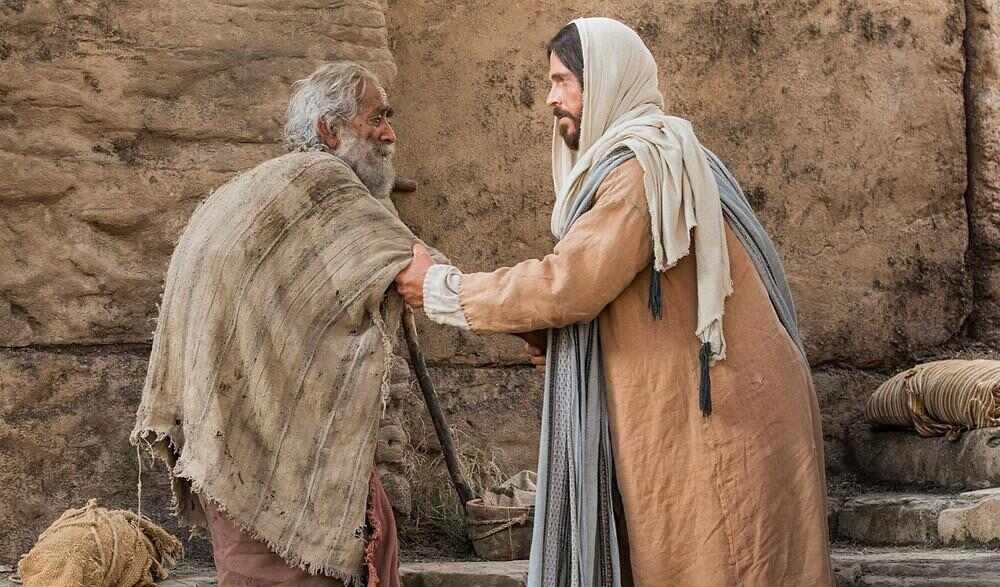
Follow Jesus’ example by using your allotted time to do good and help others10
Show your appreciation by serving Jesus. To show their gratitude for their unearned redemption, Moses urged Israel to serve God with all their heart and soul: “And now, Israel, what does the LORD your God require of you, but to fear the LORD your God, to walk in all His ways and love Him, and to serve the LORD your God with all your heart and with all your soul,” (Dt. 10:12). Joshua gave a similar exhortation. “Now, therefore, fear the LORD and serve Him in sincerity and truth; and do away with the gods which your fathers served beyond the Euphrates River and in Egypt, and serve the LORD.” (Josh. 24:14). Samuel also implored the Jews to show their love for God through their service. “If you will fear the LORD and serve Him, and listen to His voice and not rebel against the command of the LORD, then both you and the king who reigns over you will follow the LORD your God. . . Only fear the LORD and serve Him in truth with all your heart; for consider what great things He has done for you.” (1 Sam. 12:14, 24).
Serving God fulfills your highest calling. God has called every believer by name before the foundation of the world to do good works for Him: “For we are His workmanship, created in Christ Jesus for good works, which God prepared beforehand so that we would walk in them.” (Eph. 2:10). “Therefore, if anyone cleanses himself from these things, he will be a vessel for honor, sanctified, useful to the Master, prepared for every good work.” (2 Tim. 2:21). How are you fulfilling your calling for His “good works”?
God is faithful to reward those who serve Him. Paul later made clear that God is faithful to honor those who honor Him with good works. “With goodwill render service, as to the Lord, and not to people, knowing that whatever good thing each one does, he will receive this back from the Lord, whether slave or free.” (Eph. 6:7-8).
4. Fear Jesus: With Your Appointed Season on Earth, Jesus Wants You to Fear Him by Hating Evil and Embracing What is Good. Ecc. 3:14-15.
God wants you to live a holy life for Him. God blessed Solomon with greater wisdom and wealth than any other person (1 Kgs. 4:29-34; 10:23; 1 Chr. 29:25). But without the reverent fear of God, he sinned and misused God’s gifts to glorify himself. He then realized that only God’s will holds lasting meaning. “14 I know that everything God does will remain forever; there is nothing to add to it and there is nothing to take from it. And God has so worked, that people will fear Him. 15 That which is, is what has already been, and that which will be has already been; and God seeks what has passed by.” (Ecc. 3:14-15). “Nothing can be added to or subtracted from God’s work in the world. God’s plan cannot be changed, and He has a specific purpose for His plan and even the frustration we feel. It is to cause people to revere Him. This is key in Ecclesiastes. The fear of God is the beginning of wisdom, and it is the key to alleviating the frustrations of life trapped between time in this cursed existence and eternity. There is no use trying to change the past, the present, or the future. God uses all of this tension, frustration, and burden to drive us to Him.” (Daniel Akin and Jonathan Akin on Ecc. 3:14).11 “We can therefore formulate the author’s goal as follows: to convince the Israelites to stand in awe before their sovereign God.” (Sidney Greidanus on Ecc. 3:14-15) (italics in original).12
Each person should stand in awe in the face of God’s eternal gifts. What God desires to last forever will last forever. “14 I know that everything God does will remain forever…” (Ecc. 3:14). “for the gifts and the calling of God are irrevocable.” (Rom. 11:29). “Jesus Christ is the same yesterday and today, and forever.” (Heb. 13:8; 1 Cor. 1:9).
Fear God throughout your life. Because God’s Word is eternal and cannot be changed, Solomon concluded, “people will fear Him.” (Ecc. 3:14). The conclusion to Ecclesiastes is also to live a life of reverent fear of God. “The conclusion, when everything has been heard, is: fear God and keep His commandments, because this applies to every person.” (Ecc. 12:13). This was also Solomon’s message in in Proverbs. “7 The fear of the Lord is the beginning of knowledge; fools despise wisdom and instruction.” (Prov. 1:7; 2:5; 9:10; 15:33; 22:4). The “fear of the Lord” is again defined as hating what God calls evil (Prov. 8:13). Examples include avoiding evil (Prov. 2:14-18), avoiding evil companions (Prov. 1:10-19; 4:17; 23:6-8; 27:19), avoid drunkenness (Prov. 20:1; 31:5), controlling one’s tongue (Prov. 10:19-20; 11:9; 11:13; 13:3; 15:1,4; 17:9), avoiding unfair business practices (Prov. 11:1; 16:11; 20:10), honoring your marriage (Prov. 11:29; 14:1; 19:13; 21:19), having self-control (Prov. 16:32; 25:8), and having integrity (Prov. 2:7).

During your appointed time of Earth, fear God by obeying Him and avoiding evil13
The fear of the Lord includes helping others in need. Understanding that God is sovereign does not mean that God wants you to do nothing. Instead, God wants you to use your allotted time to serve Him and others in need. Solomon promised a blessing for those who serve God by helping others: “One who oppresses the poor taunts his Maker, but one who is gracious to the needy honors Him.” (Prov. 14:31). “One who is gracious to a poor person lends to the LORD, and He will repay him for his good deed.” (Prov. 19:17). “There is one who scatters, and yet increases all the more, and there is one who withholds what is justly due, and yet it results only in poverty. A generous person will be prosperous, and one who gives others plenty of water will himself be given plenty.” (Prov. 11:24-25). “All day long he is craving, while the righteous gives and does not hold back.” (Prov. 21:26). “One who gives to the poor will never lack anything, but one who shuts his eyes will have many curses.” (Prov. 28:27). Helping the needy is also part of God’s Law. “If there is a poor person among you, one of your brothers, in any of your towns in your land which the LORD your God is giving you, you shall not harden your heart, nor close your hand from your poor brother; but you shall fully open your hand to him, and generously lend him enough for his need in whatever he lacks.” (Dt. 15:7-8).
Those who ignore the needy do not fear God. God’s love is not present when you ignore the needy: “But whoever has worldly goods and sees his brother or sister in need, and closes his heart against him, how does the love of God remain in him?” (1 Jo. 3:17). “and one of you says to them, ‘Go in peace, be warmed and be filled,’ yet you do not give them what is necessary for their body, what use is that?” (Jam. 2:16). Thus, you can show your reverent fear of God by helping others who are in need around you.
5. Obedience: With Your Appointed Time on Earth, God Wants You To Obey Him Because He Must Judge Evil as a Just and Holy God. Ecc. 3:16-17.
Because God is just and must judge sin, fearing the Lord includes obeying Him. Solomon asked God to rule with righteousness (Ps. 72:1). But he realized that all have sinned, including himself (Ecc. 7:20). Because Solomon knew that God is just and must judge sin, he warned others to fear judgment by obeying God. “16 Furthermore, I have seen under the sun that in the place of justice there is wickedness and in the place of righteousness there is wickedness. 17 I said to myself, ‘God will judge the righteous and the wicked,’ for a time for every matter and for every deed is there.” (Ecc. 3:16-17). In addition to obeying God to avoid sin, you can also trust God to right the wrongs against you. “Knowing that God is outside of time and sees it all and will, in the end, bring to judgment both the righteous and wicked, stops me needing to be in control of everything that happens to me. The message of Ecclesiastes is not that life is full of good times and bad times and so you just have to roll with the punches. Rather, the message is that life is full of good times and bad times that we cannot control, but the patterning of our lives in this way is part of a bigger pattern that God controls.” (David Gibson on Ecc. 3:16-17).14
God will judge those who refuse to obey His Law. Because God is just, He “will judge the righteous and the wicked,’ for a time for every matter and for every deed is there.” (Ecc. 3:17). Jesus “will repay each person according to his deeds:” (Rom. 2:6). “Do not be deceived, God is not mocked; for whatever a person sows, this he will also reap. For the one who sows to his own flesh will reap destruction from the flesh, but the one who sows to the Spirit will reap eternal life from the Spirit.” (Gal. 6:7-8).
Jesus takes the judgment of believers, but He still holds believers accountable. Believers are not exempt from judgment. Instead, Jesus takes upon Himself the judgment of every believer. “He made Him who knew no sin to be sin in our behalf, so that we might become the righteousness of God in Him.” (2 Cor. 5:21). “and He Himself is the propitiation for our sins; and not for ours only, but also for the sins of the whole world.” (1 Jo. 2:2). But believers will still be held accountable at the Bema seat of Christ “For we must all appear before the judgment seat of Christ, so that each one may receive compensation for his deeds done through the body, in accordance with what he has done, whether good or bad.” (2 Cor. 5:10). Thus, believers should faithfully obey Jesus.
![[Free Wallpaper for your Desktop, tablet or phone] Pick up your cross & follow me! – Christian ...](/ecclesiastes-3/media/image7.jpg)
During your appointed time of Earth, obey Jesus and avoid all forms of evil15
God blesses those whose faith leads to obedience. Because God must judge evil, a person who fears God will want to obey Him. When you obey God out of loving devotion, God promises to bless you: “Blessed is everyone who fears the LORD, who walks in His ways.” (Ps. 128:1). “Now then, sons, listen to me, for blessed are those who keep my ways.” (Prov. 8:32). “But He said, ‘On the contrary, blessed are those who hear the word of God and follow it.’” (Lk. 11:28). “If you know these things, you are blessed if you do them.” (Jo. 13:17). “Therefore, everyone who hears these words of Mine, and acts on them, will be like a wise man who built his house on the rock.” (Matt. 7:24). “And a voice came from the throne, saying, ‘Give praise to our God, all you His bond-servants, you who fear Him, the small and the great.”’ (Rev. 19:5). This is a spiritual blessing of peace that comes from knowing that you are following God’s will for you.
God’s blessing comes from following His Law with the right motives. A person who follows God’s Law out of obligation is unlikely to persevere. Instead, the blessed person will persevere because he or she delights in God’s Law: “But his delight is in the Law of the LORD, and on His Law he meditates day and night.” (Ps. 1:2). “I shall delight in Your statutes; I will not forget Your word … I will delight in Your commandments, which I love … How I love Your Law! It is my meditation all the day … I have inherited Your testimonies forever, for they are the joy of my heart.” (Ps. 119:16, 47, 97, 111).
6. Hope: Because Your Appointed Season on Earth Will One Day Come to an End, Put Your Hope in Eternal Life Through Jesus. Ecc. 3:18-21.
God wants you to place your hope in him for your life after death. Without faith, mankind appears to share a fate no different than the animals: death eventually comes for all. But Solomon urged people to put their hope in God for their spirits to live with Him. “18 I said to myself regarding the sons of mankind, ‘God is testing them in order for them to see that they are as animals, they to themselves.’ 19 For the fate of the sons of mankind and the fate of animals is the same. As one dies, so dies the other; indeed, they all have the same breath, and there is no advantage for mankind over animals, for all is futility. 20 All go to the same place. All came from the dust and all return to the dust. 21 Who knows that the spirit of the sons of mankind ascends upward and the spirit of the animal descends downward to the earth?” (Ecc. 3:18-21). “Solomon looked at life among both humans and animals, and also compared their deaths – doing so in under the sun, absent eternity terms. On this basis, he could say that there is little difference in the life and destiny between humans and animals … The Preacher thought of an animal dying and its body decomposing. Then he thought that by all outward appearance, the same happens to a human body … We sense that the Preacher hoped there was a different destiny between people and animals. Yet in his under the sun thinking, there was no real reason to believe it – so, ‘Who knows’?” (David Guzik on Ecc. 3:18-21) (emphasis in original).16
Those without faith have no hope. People without faith will die with no hope of a resurrection in heaven. “19 For the fate of the sons of mankind and the fate of animals is the same.” (Ecc. 3:19). “But man in his splendor will not endure; he is like the animals that perish.” (Ps. 49:12). “You hide Your face, they are terrified; you take away their breath, they perish and return to their dust.” (Ps. 104:29). “Like a flower he comes out and withers. He also flees like a shadow and does not remain.” (Job 14:2; 10:9).
Place your hope in Jesus alone for eternal life in heaven17
Put your hope in Jesus for your restoration and salvation. Jesus promises to restore what you have lost to sin. He will make you a new creation (2 Cor. 5:17; Ro. 6:4). “For as in Adam all die, so also in Christ all will be made alive.” (1 Cor. 15:22). “For the wages of sin is death, but the gracious gift of God is eternal life in Christ Jesus our Lord.” (Ro. 6:23). Thus, you can put your hope in Jesus. In Him, we “have fled for refuge to lay hold upon the hope set before us.” (Heb. 6:18). When you are tossed about in the storms of life, He is the anchor of hope for your soul: “This hope we have as an anchor of the soul, a hope both sure and reliable and one which enters within the veil,” (Heb. 6:19). “And now, Lord, for what do I wait? My hope is in You.” (Ps. 39:7). “For You are my hope; Lord GOD, You are my confidence from my youth.” (Ps. 71:5). “Blessed is he whose help is the God of Jacob, whose hope is in the LORD his God,” (Ps. 146:5).
7. Contentment: Because God Provides Everything You Need During Your Season on Earth, He Wants You to Be Content With His Grace. Ecc. 3:22.
God wants you to live content with His blessings in your live. After realizing the futility of his worldly wealth that would disappear after his death, Solomon urged each person to be content with God’s grace. “22 I have seen that nothing is better than when a person is happy in his activities, for that is his lot. For who will bring him to see what will occur after him?” (Ecc. 3:22). “After all, the writer arrives at the conclusion intimated in ver. 12; only here the result is gathered from the acknowledgment of man’s impotence (vers. 16-18), as there from the experience of life … As man is not master of his own lot, cannot order events as he would like, is powerless to control the forces of nature and the providential arrangements of the world, his duty and his happiness consist in enjoying the present, in making the best of life, and availing himself of the bounties which the mercy of God places before him. Thus he will free himself from anxieties and cares, perform present labors, attend to present duties, content himself with the daily round, and not vex his heart with solicitude for the future.” (Pulpit Commentary on Ecc. 3:22).18
Be content with what God has given you. Solomon repeatedly urged believers to be content with and enjoy the gifs that God provides (Ecc. 2:24; 3:22; 5:18-20; 9:7-10). Because God is sovereign, He provides what is best for you. Thus, you should be content with His grace: “But godliness actually is a means of great gain when accompanied by contentment.” (1 Tim. 6:6). “Not that I speak from need, for I have learned to be content in whatever circumstances I am.” (Phil. 4:11). “Make sure that your character is free from the love of money, being content with what you have; . . .” (Heb. 13:5a).

During your appointed season on Earth, be content with God’s provision19
Philip Ryken, Why Everything Matters: The Gospel in Ecclesiastes, (Glasgow, SCO, Crossway Bibles 2024) p. 62.↩︎
Image credit: Ecclesiastes 3:1 KJV - Verse of the day↩︎
Strong's Hebrew: 8130. שָׂנֵא (sane) -- To hate, detest, be hostile to↩︎
Tremper Longman III, The Book of Ecclesiastes, (Grand Rapids, MI, William B. Eerdman’s Publishing Company, 1998) p. 111.↩︎
Image credit: Ecclesiastes 3:11 KJV Desktop Wallpapers | Bible Verse Wallpapers↩︎
Ecclesiastes 3 Commentary - Matthew Henry Commentary on the Whole Bible (Complete) | Bible Study Tools↩︎
Image credit: Christ Helped the Needy↩︎
Daniel L. Akin and Jonathan Akin, Christ-Centered Exposition, Exalting Jesus in Ecclesiastes, (Brentwood, TN, B&H Publishing Group, 2016), p. 44.↩︎
Sidney Greidanus, Preaching Christ from Ecclesiastes, (Grand Rapids, MI, William B. Eerdman’s Publishing Company, 2010), p. 77.↩︎
Image credit: Ecclesiastes 12:13 The conclusion, when all has been heard, is: fear God and keep His commandments, because this applies to every person.↩︎
David Gibson, Living Life Backward: How Ecclesiastes Teach Us To Live in Light of the End (Wheaton IL, Crossway Bibles, 2017), p. 60.↩︎
Image credit: [Free Wallpaper for your Desktop, tablet or phone] Pick up your cross & follow me! – Christian Vitality | Christian Weight Loss | Christian Health & Fitness | Christian Devotionals |↩︎
Image credit: Jesus, The Hope of Heaven (Colossians 3:1–4) - OAKRIDGE BIBLE CHAPEL↩︎
Image credit: Be Content In God↩︎