Ecclesiastes 5: Lessons for Living Out Your Faith in Jesus
Introduction: After warning against a life spent in pursuit of meaningless worldly things, Solomon provides seven lessons for finding a fulfilling life in fellowship with Yahweh. Yahweh is another name for the great “I AM”. Jesus revealed that He is the I AM of the Old Testament (Jo. 8:58; Ex. 3:14). To live out your faith in fellowship with Jesus, you must show Him: (1) reverence, (2) obedience, (3) justice, (4) contentment, (5) trust, (6) hope, and (7) gratitude.
First, based upon his own mistakes, Solomon warned believers to approach Yahweh in prayer and worship with humble reverence. Jesus also wants you to live out your faith with humble reverence. Second, also based upon his own mistakes, Solomon warned believers to keep their vows to Yahweh. Jesus also wants you to live out your faith by obeying your vows to Him. Third, Solomon urged believers to trust in Yahweh’s justice when confronted with leaders who practice evil by oppressing the poor. In addition to trusting Him, Jesus wants you to live out your faith by practicing justice with love towards others in need. Fourth, based upon his many mistakes, Solomon also warned that greed and covetousness can never be satisfied. Instead of seeking worldly wealth, Jesus wants you to live out your faith by being content with His provision and storing your riches in heaven. Fifth, Solomon warned that the pursuit of wealth leads to little lasting enjoyment, and it can bring anxiety or insomnia. Jesus wants you to instead trust Him to provide. When you trust in His provision, He also gives you peace. Sixth, Solomon warned that you can’t put your hope in wealth because you cannot bring it with you to heaven. Jesus wants you to put your hope in Him over worldly wealth. Finally, Solomon concluded by encouraging believers to recognize and enjoy what God provides. Every good and perfect thing in your life is from Jesus. While enjoying what He provides, you can show Him your gratitude.
1. Reverence: Live Out Your Faith with Humble Reverence. Ecc. 5:1-3.
Approach God in prayer and worship with humble reverence. Through his apostasy, Solomon learned of the futility of a life where he indulged in every pleasure. Based upon his mistakes, he urged believers to instead approach God in both prayer and worship with humble reverence. “1 Guard your steps as you go to the house of God, and approach to listen rather than to offer the sacrifice of fools; for they do not know that they are doing evil. 2 Do not be quick with your mouth or impulsive in thought to bring up a matter in the presence of God. For God is in heaven and you are on the earth; therefore let your words be few. 3 For the dream comes through much effort, and the voice of a fool through many words.” (Ecc. 5:1-3). “Ecclesiastes 5:1-7 is unique in Ecclesiastes because it focuses on worship in God’s temple. It is an ideal preaching text for countering the contemporary trend of turning the worship of God into folksy entertainment or gaudy spectacle … We can therefore formulate the textual theme as follows, Worship God in his house with reverence!” (Sidney Greidanus on Ecc. 5:1-7).1
God rejected prayer and sacrifices offered with unclean hearts or with mindless rituals. Solomon warned believers not to “offer the sacrifice of fools.” (Ecc. 5:1). When the Jews offered sacrifices and prayers out of ritual or with unrepentant sin, God warned them that He would not listen. “The sacrifice of the wicked is an abomination to the LORD, but the prayer of the upright is His delight.” (Prov. 15:8). “But they flattered Him with their mouth and lied to Him with their tongue. For their heart was not steadfast toward Him, nor were they faithful with His covenant.” (Ps. 78:36-37). “11‘What are your many sacrifices to Me?’ Says the LORD. ‘I have had enough of burnt offerings of rams and the fat of fattened cattle; and I take no pleasure in the blood of bulls, lambs, or goats. 12 When you come to appear before Me, who requires of you this trampling of My courtyards? 13 Do not go on bringing your worthless offerings, incense is an abomination to Me. New moon and Sabbath, the proclamation of an assembly—I cannot endure wrongdoing and the festive assembly. 14 I hate your new moon festivals and your appointed feasts, they have become a burden to Me; I am tired of bearing them. 15’ So when you spread out your hands in prayer, I will hide My eyes from you; yes, even though you offer many prayers, I will not be listening. Your hands are covered with blood.”’ (Is. 1:11-15). “21 I hate, I reject your festivals, nor do I delight in your festive assemblies. 22 Even though you offer up to Me burnt offerings and your grain offerings, I will not accept them; and I will not even look at the peace offerings of your fattened oxen. 23 Take away from Me the noise of your songs; I will not even listen to the sound of your harps.” (Amos 5:21-23). “Then the Lord said, ‘Because this people approaches Me with their words and honors Me with their lips, but their heart is far away from Me, and their reverence for Me consists of the commandment of men that is taught;”’ (Is. 29:13). Jesus quoted and affirmed these condemnations (Matt. 15:8-9; Mk. 7:6-7).
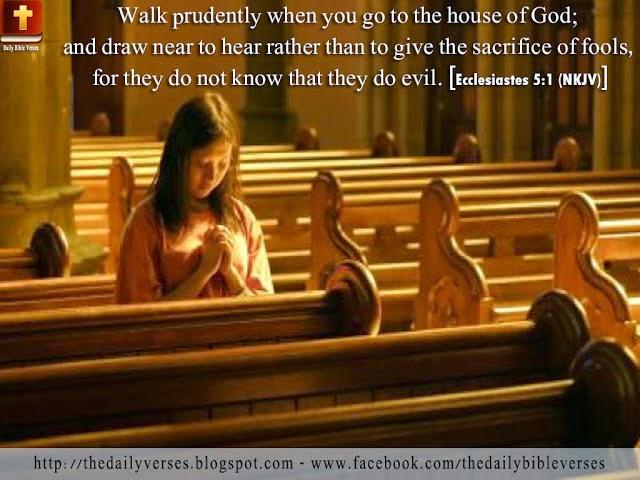
Worship and pray to God with humble reverence.2
God also does not want you to recite mindless prayers. Solomon further warned believers to avoid being “quick with your mouth or impulsive,” but to instead “let your words be few.” (Ecc. 5:2). God does not want prayers that are offered out of ritual. “And when you are praying, do not use thoughtless repetition as the Gentiles do, for they think that they will be heard because of their many words.” (Matt. 6:7). Instead, let the Spirit guide your prayers. “Now in the same way the Spirit also helps our weakness; for we do not know what to pray for as we should, but the Spirit Himself intercedes for us with groanings too deep for words;” (Ro. 8:26; 1 Cor. 2:10-11).
God wants you to offer prayer and sacrifices with a humble and contrite heart. You should first repent of your sins. God then wants you to worship and pray to Him with a humble and contrite heart. “The sacrifices of God are a broken spirit; a broken and a contrite heart, God, You will not despise.” (Ps. 51:17). ‘“For My hand made all these things, so all these things came into being,’ declares the LORD. ‘But I will look to this one, at one who is humble and contrite in spirit, and who trembles at My word.”’ (Is. 66:2). “He has told you, mortal one, what is good; and what does the LORD require of you but to do justice, to love kindness, and to walk humbly with your God?” (Mic. 6:8).
God also wants you to listen to Him before you speak. Solomon also warned that believers should “approach to listen.” (Ecc. 5:1). “In the context of the passage, the fool is the religious person who thinks he has all the answers … Fools gush out their own words instead of listening for God’s words.” (David Gibson on Ecc. 5:1).3
2. Obedience: Live Out Your Faith by Obeying Your Vows to Jesus. Ecc. 5:4-7.
Show your reverence towards God by obeying Him and keeping your vows. Because Solomon broke his vows to God, he urged believers to avoid making the same mistake. “4 When you make a vow to God, do not be late in paying it; for He takes no delight in fools. Pay what you vow! 5 It is better that you not vow, than vow and not pay. 6 Do not let your speech cause you to sin, and do not say in the presence of the messenger of God that it was a mistake. Why should God be angry on account of your voice, and destroy the work of your hands? 7 For in many dreams and in many words there is futility. Rather, fear God.” (Ecc. 5:4-7). “Koheleth [Solomon] sums up the sense of the preceding paragraph, vers. 1-6. The popular religion, which made much of dreams and verbosity and vows, is vanity, and has in it nothing substantial or comforting … In contrast with these spurious forms of religion, which the Jews were inclined to adopt, the writer recalls men to the fear of the one true God, to whom all vows should be performed, and who should be worshipped from the heart.” (Pulpit Commentary on Ecc. 5:7).4
Solomon repeatedly broke his vows to God. To become king, David first told Solomon of the importance that he fully obey God’s laws (1 Kgs. 2:3-4). With the priests as a witness, Solomon then took an oath to obey God’s laws at the time be became king. “Now it shall come about, when he sits on the throne of his kingdom, that he shall write for himself a copy of this Law on a scroll in the presence of the Levitical priests. And it shall be with him, and he shall read it all the days of his life, so that he will learn to fear the LORD his God, by carefully following all the words of this Law and these statutes,” (Dt. 17:18-19). A king who failed to keep his oath blasphemed God’s holy name (Lev. 19:12). This also violated God’s Third Commandment (Ex. 20:7; Dt. 5:11). Solomon violated his oath when he took 1,000 wives, including 700 wives and 300 concubines (1 Kgs. 11:3-4). He violated God’s law that he have only one wife 999 times “And he shall not acquire many wives for himself, so that his heart does not turn away;” (Dt. 17:17(a)). His many wives, especially his pagan ones, turned his heart against God (1 Kgs. 11:4). Because of his foreign wives, Solomon began to worship other gods (1 Kgs. 11:5-6). This violated God’s First Commandment (Ex. 20:2-3; Dt. 5:6-7). Because of his foreign wives, he then built idols and pagan altars for the Jews to worship Chemosh and Molech (1 Kgs. 11:5-8). This also violated God’s Second Commandment (Ex. 20:4-6; Dt. 5:8-10). By worshipping other gods, he further caused generations of Jews to do the same. Thus, he dishonored both his father David and God the Father. This also violated God’s Fifth Commandment (Ex. 20:12; Dt. 5:16). After his lust had pulled him from his walk with God, Solomon tried to kill his servant Jeroboam. He did this in rebellion against God after the prophet Ahijah told Solomon that God would give Jeroboam 10 of the 12 tribes because of Solomon’s rebellions (1 Kgs. 11:40). This also violated God’s Sixth Commandment (Ex. 20:13; Dt. 5:17). Solomon also hoarded gold out of covetousness. But this violated God’s Tenth Commandment (Ex. 20:17; Dt. 5:21). This also violated another part of his oath when he became king, “nor shall he greatly increase silver and gold for himself.” (Dt. 17:17b). Thus, Solomon preached based upon his own mistakes.

Show your love for Jesus by keeping your vows to Him.5
If you love Jesus, you will obey His Commandments out of devotion, not obligation. God desires your obedience more than mindless rituals. “Samuel said, ‘Does the LORD have as much delight in burnt offerings and sacrifices as in obeying the voice of the LORD? Behold, to obey is better than a sacrifice, and to pay attention is better than the fat of rams.”’ (1 Sam. 15:22). “If you love Me, you will keep My commandments…The one who has My commandments and keeps them is the one who loves Me; and the one who loves Me will be loved by My Father, and I will love him and will reveal Myself to him.” (Jo. 14:15, 21). “If you keep My commandments, you will remain in My love; just as I have kept My Father’s commandments and remain in His love.” (Jo. 15:10). “By this we know that we have come to know Him, if we keep His commandments. The one who says, ‘I have come to know Him,’ and does not keep His commandments, is a liar, and the truth is not in him;” (1 Jo. 2:3-4). “For this is the love of God, that we keep His commandments; and His commandments are not burdensome.” (1 Jo. 5:3).
Obedience includes keeping your vows. People who fail to keep their vows profane God’s holy name. “And you shall not swear falsely by My name, so as to profane the name of your God; I am the LORD.” (Lev. 19:12; Dt. 23:21-23; Nu. 30:2). “Offer God a sacrifice of thanksgiving and pay your vows to the Most High;” (Ps. 50:14). Thus, Jesus urged believers to keep their vows and avoid making ones that they cannot keep. ‘“Again, you have heard that the ancients were told, ‘You shall not make false vows, but shall fulfill your vows to the Lord.’ But I say to you, take no oath at all, neither by heaven, for it is the throne of God, nor by the earth, for it is the footstool of His feet, nor by Jerusalem, for it is the City of the Great King. Nor shall you take an oath by your head, for you cannot make a single hair white or black. ‘But make sure your statement is, ‘Yes, yes’ or ‘No, no’; anything beyond these is of evil origin.”’ (Matt. 5:33-37; Jam. 5:12). Without Jesus, people will be judged for the vows they fail to keep (Matt. 12:36-37).
Fear God by hating evil. Solomon also urged believers to “fear God.” (Ecc. 5:7). This was his central message is Ecclesiastes. “The conclusion, when everything has been heard, is: fear God and keep His commandments, because this applies to every person.” (Ecc. 12:13). This was also Solomon’s central message in Proverbs (Prov. 1:7; 2:5; 9:10; 15:33; 22:4). The “fear of the Lord” is defined as hating what God calls evil (Prov. 8:13). Disobeying God is a serious evil to be avoided. God considers rebellion against Him to be as evil as witchcraft. “For rebellion is as reprehensible as the sin of divination, and insubordination is as reprehensible as false religion and idolatry. Since you have rejected the word of the LORD, He has also rejected you from being king.” (1 Sam. 15:23). Solomon urged believers to fear God based upon his own repeated failure to do so.
3. Justice: Live Out Your Faith by Practicing God’s Justice. Ecc. 5:8-9.
Show your reverence towards God by practicing His justice for the poor and oppressed. Solomon observed that injustice is sadly common in the fallen world. Believers could trust in God’s ultimate justice. But believers have an important function in upholding His justice for the poor. “8 If you see oppression of the poor and denial of justice and righteousness in the province, do not be shocked at the sight; for one official watches over another official, and there are higher officials over them. 9 After all, a king who cultivates the field is beneficial to the land.” (Ecc. 5:8-9). “From the follies of the religious life we pass to the disorders of the political. As in ch. Ecc. 4:16, the thinker looks on those disorders of the world, … The first impression made by the verse is that the Debater tells men not to wonder or be dismayed at the prevalence of wrong, on the ground that God is higher than the highest of the tyrants of the earth and will in the end punish their wrong-doing. So understood, the first and the last ‘higher’ both refer to ‘God,’ or, as some take it, the last only, the first referring to the king as distinct from satraps or other officers, and the train of thought is supposed to be Wonder not with the wonder of despair, at the seeming triumph of evil. The Supreme Judge (ch. Ecc. 3:17) will one day set all things right… Belief in the righteous government of God can hardly remove, though it may perhaps silence, the wonder which men feel at the prevalence of evil.” (John James Stewart Perowne, Cambridge Bible for Schools and Colleges).6
God repeatedly condemned worldly leaders for their wickedness. All have fallen short and are prone to sin (Ecc. 7:20; Ro. 3:23). Unless sin is checked through the fear of God (Prov. 8:13), many leaders magnify the evil in their hearts when their authority increases. “Your rulers are rebels and companions of thieves; everyone loves a bribe and chases after gifts. They do not obtain justice for the orphan, nor does the widow’s case come before them.” (Is. 1:23). “Woe to those who enact unjust statutes and to those who constantly record harmful decisions, so as to deprive the needy of justice and rob the poor among My people of their rights, so that widows may be their spoil and that they may plunder the orphans.” (Is. 10:1-2). “They are fat, they are sleek, they also excel in deeds of wickedness; they do not plead the cause, the cause of the orphan, so that they may be successful; and they do not defend the rights of the poor.” (Jer. 5:28). “The people of the land have practiced extortion and committed robbery, and they have oppressed the poor and needy, and have oppressed the stranger without justice.” (Ezek. 22:29).
God requires leaders to be just and fair over the people they lead. Because God is just and righteous, He demands that His leaders treat all people with justice. The directions to King Lemuel required that he be a just king. “Open your mouth for the people who cannot speak, for the rights of all the unfortunate. Open your mouth, judge righteously, and defend the rights of the poor and needy.” (Prov. 31:8-9). The requirement that rulers follow God’s standards of justice are also repeated in the Torah. “You shall not pervert the justice due to your needy brother in his dispute.” (Ex. 23:6). “You shall not do injustice in judgment; you shall not show partiality to the poor nor give preference to the great, but you are to judge your neighbor fairly.” (Lev. 19:15). “You shall not distort justice, you shall not show partiality; and you shall not accept a bribe, because a bribe blinds the eyes of the wise and distorts the words of the righteous.” (Dt. 16:19). “This is what the LORD says: ‘Do justice and righteousness, and save one who has been robbed from the power of his oppressor. And do not mistreat or do violence to the stranger, the orphan, or the widow; and do not shed innocent blood in this place.”’ (Jer. 22:3).
Be a source of Jesus’ justice by loving the poor and the oppressed. God’s commands are not limited to leaders. He calls upon everyone to show His justice, love, and kindness to the poor, the oppressed, and others in need. “He has told you, mortal one, what is good; and what does the LORD require of you but to do justice, to love kindness, and to walk humbly with your God?” (Mic. 6:8). “Learn to do good; seek justice, rebuke the oppressor, obtain justice for the orphan, plead for the widow’s case.” (Is. 1:17). “Vindicate the weak and fatherless; do justice to the afflicted and destitute. Rescue the weak and needy; save them from the hand of the wicked.” (Ps. 82:3-4). Caring for the poor and the oppressed is also part of the definition of true religion. “Pure and undefiled religion in the sight of our God and Father is this: to visit orphans and widows in their distress, and to keep oneself unstained by the world.” (Jam. 1:27).
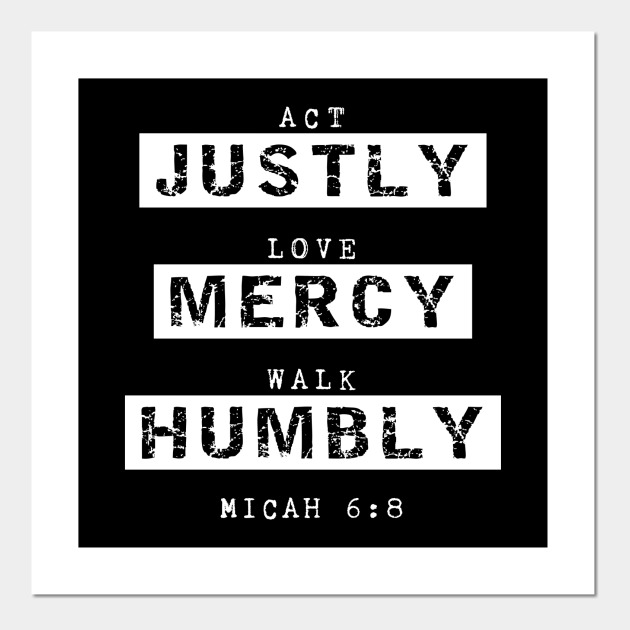
Be a source of Jesus’ justice by helping the poor and others in need.7
4. Contentment: Live Out Your Faith by Being Content with Jesus’ Provision and Seek to Store Your Riches in Heaven. Ecc. 5:10.
Be content with God’s provision and avoid all forms of greed and covetousness. Based upon his own mistakes, Solomon warned that greed can never be satisfied. “10 One who loves money will not be satisfied with money, nor one who loves abundance with its income. This too is futility.” (Ecc. 5:10). “At its core, the verse states that a person who loves silver, or money, will never find true satisfaction in it. This reflects a deeper understanding of human nature and our pursuit of happiness. In our journey through life, many of us often seek contentment through material possessions, believing that acquiring wealth will lead us to fulfillment and joy. However, this Scripture warns us about the futility of such pursuits. The message resonates through the ages, encouraging us to look beyond external wealth and consider what truly enriches our lives. We might have experienced moments where we thought if we just had a little more money or a nicer car, we would be happier. Yet, many who have achieved financial success report a lingering emptiness, illustrating that wealth isn’t the ultimate key to happiness. In fact, these pursuits can lead us to feel more inadequate rather than fulfilled. In our quest for more resources, we may get caught in a cycle of desire that never seems to satisfy. Ultimately, the verse teaches us that true contentment doesn’t stem from material gains but rather from a sense of gratitude, relationships, and purpose.” (Christianitypath.com, Ecc. 5:10).8
Be content with what God has given you. Many are driven to become rich. But such ambitions stem from a lack of contentment with God’s gifts. David saw little value in his worldly accomplishments: “Whom do I have in heaven but You? And with You, I desire nothing on earth.” (Ps. 73:25). Like David, you are called upon to be content with God’s grace in your life: “But godliness actually is a means of great gain when accompanied by contentment.” (1 Tim. 6:6). “Not that I speak from need, for I have learned to be content in whatever circumstances I am.” (Phil. 4:11). “Make sure that your character is free from the love of money, being content with what you have; . . .” (Heb. 13:5a).

Greed is an evil that can never be satisfied by giving into the temptation.9
Selfish greed can never be satisfied. Based upon his own sins, Solomon warned that greed can never be satisfied (Ecc. 5:10). In Proverbs, he also wrote, “Sheol and Abaddon are never satisfied, nor are the eyes of a person ever satisfied.” (Prov. 27:20). “John D. Rockefeller was the richest man in the world, but when someone asked him how much money was enough, he famously said, ‘Just a little bit more.’ … Ecclesiastes warns us that living for things that only money can buy is vanity.” (Philip Ryken on Ecc. 5:10).10
Greed is a form of idolatry that pulls you off your walk with Jesus. Because the pursuit of wealth will pull believers off their walk, Jesus warned believers to guard their hearts against greed. “But He said to them, ‘Beware, and be on your guard against every form of greed; for not even when one is affluent does his life consist of his possessions.”’ (Lk. 12:15). Greed is also a form of idolatry. “Therefore, treat the parts of your earthly body as dead to sexual immorality, impurity, passion, evil desire, and greed, which amounts to idolatry.” (Col. 3:5). “But those who want to get rich fall into temptation and a trap, and many foolish and harmful desires which plunge people into ruin and destruction. For the love of money is a root of all sorts of evil, and some by longing for it have wandered away from the faith and pierced themselves with many griefs.” (1 Tim. 6:9-10). “Riches do not benefit on the day of wrath, but righteousness rescues from death.” (Prov. 11:4).
Wealth has limited value. Money cannot be taken to heaven. Thus, a life devoted to wealth is meaningless. “Do not weary yourself to gain wealth; stop dwelling on it. When you set your eyes on it, it is gone. For wealth certainly makes itself wings like an eagle that flies toward the heavens.” (Prov. 23:4-5). “Certainly every person walks around as a fleeting shadow; they certainly make an uproar for nothing; he amasses riches and does not know who will gather them.” (Ps. 39:6). “For when he dies, he will take nothing with him; his wealth will not descend after him.” (Ps. 49:17). “For we have brought nothing into the world, so we cannot take anything out of it, either.” (1 Tim. 6:7).
5. Trust: Live Out Your Faith by Trusting Jesus to Provide. Ecc. 5:11-12.
Trust God to provide for your needs. Because greed cannot be satisfied, it provides little lasting enjoyment. Even worse, greed can lead to anxiety and insomnia. Believers who trust in God’s provision enjoy His peace and rest. “11 When good things increase, those who consume them increase. So what is the advantage to their owners except to look at them? 12 The sleep of the laborer is sweet, whether he eats little or much; but the full stomach of the rich person does not allow him to sleep.” (Ecc. 5:11-12). “As one’s means increase, so do ‘bills.’ … The wealthy person really has no pleasure in riches except to see them pass through his hands (admire it) … the rich are so driven to multiply their wealth that they cannot sleep. Or, … the rich cannot sleep because they worry about losing their wealth. In either case, the irony is that laborers sleep soundly, though they do not enjoy the same level of prosperity.” (Tremper Longman III on Ecc. 5:11-12).11
Those who trust in Jesus instead of their worldly wealth will be blessed. Like the laborer who sleeps in peace, those who trust in Jesus instead of wealth will be blessed with a fulfilling and restful life. “One who trusts in his riches will fall, but the righteous will flourish like the green leaf.” (Prov. 11:28). “Behold, the man who would not make God his refuge, but trusted in the abundance of his riches and was strong in his evil desire. But as for me, I am like a green olive tree in the house of God; I trust in the faithfulness of God forever and ever.” (Ps. 52:7-8). “Blessed is the man who trusts in the LORD, and whose trust is the LORD. “For he will be like a tree planted by the water that extends its roots by a stream, and does not fear when the heat comes; but its leaves will be green, and it will not be anxious in a year of drought, nor cease to yield fruit.” (Jer. 17:7-8).
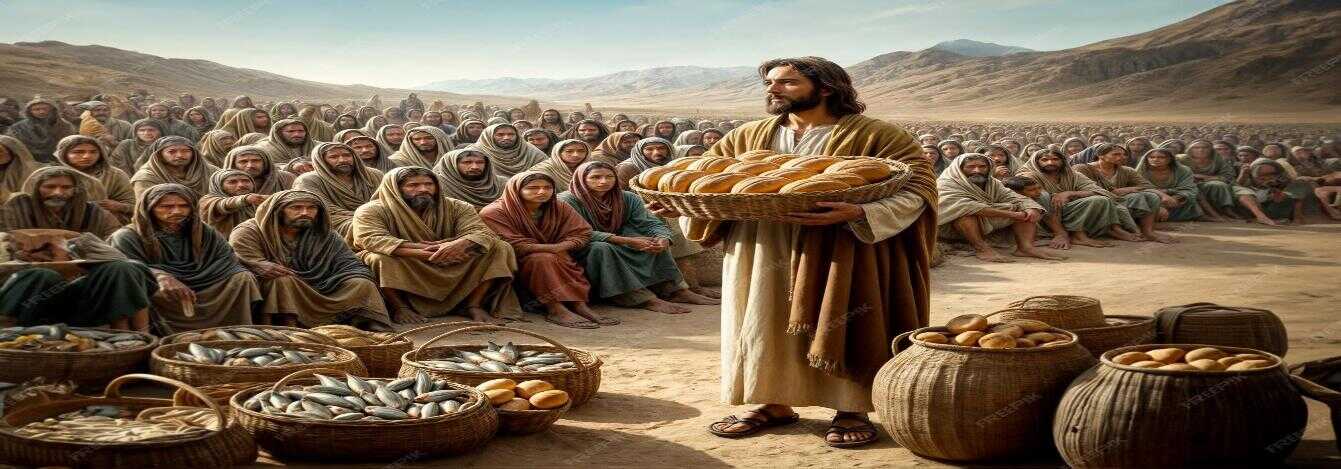
Trust in Jesus, and He will richly bless you and provide for your needs.12
Trust Jesus by seeking His kingdom and righteousness to avoid financial anxious. Jesus knows your needs. When you trust Him by serving Him and seeking after His righteousness, He will provide for you. “But seek first His kingdom and His righteousness, and all these things will be provided to you. So do not worry about tomorrow; for tomorrow will worry about itself. Each day has enough trouble of its own.” (Matt. 6:33-34). His provision further comes with the blessing of peace. “Do not be anxious about anything, but in everything by prayer and pleading with thanksgiving let your requests be made known to God. And the peace of God, which surpasses all comprehension, will guard your hearts and minds in Christ Jesus … And my God will supply all your needs according to His riches in glory in Christ Jesus.” (Phil. 4:6-7, 19).
You cannot divide your trust between Jesus and wealth. You cannot claim to trust in Jesus if your real feeling of security comes from your money. “No one can serve two masters; for either he will hate the one and love the other, or he will be devoted to one and despise the other. You cannot serve God and wealth.” (Matt. 6:24; Lk. 16:13).
6. Hope: Live Out Your Faith by Placing Your Hope in Jesus and Making Him Your Inheritance Instead of Worldly Wealth. Ecc. 5:13-17.
Jesus wants you to put your hope in heaven instead of worldly wealth. Jesus views hoarding wealth as an evil to be avoided. Because all worldly wealth will one day disappear, He wants you to put your hope in Him and not in your wealth. “13 There is a sickening evil which I have seen under the sun: wealth being hoarded by its owner to his detriment. 14 When that wealth was lost through bad business and he had fathered a son, then there was nothing to support him. 15 As he came naked from his mother’s womb, so he will return as he came. He will take nothing from the fruit of his labor that he can carry in his hand. 16 This also is a sickening evil: exactly as a person is born, so will he die. What then is the advantage for him who labors for the wind? 17 All his life he also eats in darkness with great irritation, sickness, and anger.” (Ecc. 5:13-17). “Solomon then observed that wealth does not bless the life of every wealthy person. Especially those who keep their riches with an ungenerous, clenched fist, they are riches kept for their owner to his hurt … But those riches perish through misfortune… he shall take nothing from his labor: This shows further the foolishness of holding on to wealth in an ungenerous way. Wealth can disappear suddenly through misfortune; yet we lose all wealth in death. Solomon knew that despite the burial wishes and customs of the pharaohs, one cannot take their wealth with them after death … Just exactly as he came, so shall he go: Solomon understood that great wealth ultimately means nothing under the sun. Man comes with nothing into the world and leaves the same way. The New Testament gives a more hopeful picture, taking us beyond the Preacher’s under the sun premise and telling us that we can lay up treasure in heaven. You can’t take your wealth with you when you die; but you can send it on ahead by generous giving to God’s work … All his days he also eats in darkness, and he has much sorrow and sickness and anger: With a sympathetic touch, Solomon tells us the loneliness, sorrow, and anger there is even for the very wealthy.” (David Guzik, Ecc. 5:13-17).13

Those who put their hope in wealth ultimately find only sorrow (Ecc. 5:17)14
Show that your hope is in Jesus by giving His provision to others in need. Solomon called the hoarding of wealth “evil”. (Ecc. 5:13). While the generous person prospers, those who withhold their wealth from others in need will find spiritual poverty. “There is one who scatters, and yet increases all the more, and there is one who withholds what is justly due, and yet it results only in poverty. A generous person will be prosperous, and one who gives others plenty of water will himself be given plenty.” (Prov. 11:24-25). If you give to others, Jesus will provide. “Give, and it will be given to you. They will pour into your lap a good measure—pressed down, shaken together, and running over. For by your standard of measure it will be measured to you in return.” (Lk. 6:38). “One who is gracious to a poor person lends to the LORD, and He will repay him for his good deed.” (Prov. 19:17). “Instruct them to do good, to be rich in good works, to be generous and ready to share, storing up for themselves the treasure of a good foundation for the future, so that they may take hold of that which is truly life.” (1 Tim. 6:18-19). “And do not neglect doing good and sharing, for with such sacrifices God is pleased.” (Heb. 13:16). “contributing to the needs of the saints, practicing hospitality.” (Rom. 12:13). When you help the poor or others in financial need, you are directly serving Jesus (Matt. 25:35-40).
Store up your treasures in heaven. Solomon also warned against placing your hopes in business ventures because the money can be quickly lost (Ecc. 5:14). Jesus also warned against placing your hope in worldly wealth that can be stolen, rot, or disappear. In contrast, His wealth is eternal. “Do not store up for yourselves treasures on earth, where moth and rust destroy, and where thieves break in and steal. But store up for yourselves treasures in heaven, where neither moth nor rust destroys, and where thieves do not break in or steal; for where your treasure is, there your heart will be also.” (Matt. 6:19-21).
Those who put their hope in money are fools because it disappears at death. Solomon warned against putting your hope in wealth because you cannot take it with you or use it when you die (Ecc. 5:13-17). When Job lost everything, he made a similar statement. “He said, ‘Naked I came from my mother’s womb, and naked I shall return there. The LORD gave and the LORD has taken away. Blessed be the name of the LORD.”’ (Job 1:21). “For when he dies, he will take nothing with him; His wealth will not descend after him.” (Ps. 49:17). “For we have brought nothing into the world, so we cannot take anything out of it, either.” (1 Tim. 6:7). Even worse than losing it, you have nothing to ransom the cost of your sins if your hope is in money instead of Jesus. “For what does it benefit a person to gain the whole world, and forfeit his soul?” (Mk. 8:36; Matt. 16:26).
Let Jesus be your inheritance. The priests had to sacrifice their worldly inheritance for an inheritance in Yahweh: “And it shall be with regard to an inheritance for them, that I am their inheritance; and you shall give them no possession in Israel-- I am their possession.” (Ezek. 44:28). “The LORD is my portion; I have promised to keep Your words.” (Ps. 119:57). “The LORD is the portion of my inheritance and my cup; You support my lot.” (Ps. 16:5). “But you will be called the priests of the LORD; you will be spoken of as ministers of our God. You will eat the wealth of nations, and in their riches you will boast. Instead of your shame you will have a double portion, and instead of humiliation they will shout for joy over their portion. Therefore they will possess a double portion in their land, everlasting joy will be theirs.” (Is. 61:6-7). You are part of Jesus’ holy priesthood (1 Pet. 2:5, 9). Yet, unlike the Jewish priests, you do not need to wait to receive your inheritance. First, Jesus offers any believer the Holy Spirit as a down payment on His inheritance: “who also sealed us and gave us the Spirit in our hearts as a pledge.” (2 Cor. 1:22). Second, when you act in one accord with your fellow believers for Christ, Jesus further gives part of His glory to you (Jo. 17:22). Third, you have an inheritance in heaven that is so great that it cannot be adequately described: “[B]ut just as it is written, ‘Things which the eye has not seen and ear has not heard, and which have not entered the heart of man, all that God has prepared for those who love Him.’” (1 Cor. 2:9). “For I consider that the sufferings of this present time are not worthy to be compared with the glory that is to be revealed to us.” (Ro. 8:18).
7. Gratitude: To Live Out Your Faith, Be Grateful to Jesus. Ecc. 5:18-20.
Recognize that Jesus has given you great things to enjoy by showing Him gratitude. Solomon concluded by urging believers to enjoy what Yahweh provides instead of striving after wealth. To fully enjoy what Jesus provides, you must recognize where it comes from. “18 Here is what I have seen to be good and fitting: to eat, to drink, and enjoy oneself in all one’s labor in which he labors under the sun during the few years of his life which God has given him; for this is his reward. 19 Furthermore, as for every person to whom God has given riches and wealth, He has also given him the opportunity to enjoy them and to receive his reward and rejoice in his labor; this is the gift of God. 20 For he will not often call to mind the years of his life, because God keeps him busy with the joy of his heart.” (Ecc. 5:18-20). These verses, Ecclesiastes 5:18-19, direct our focus towards the enjoyment of life and the gifts bestowed upon us by God. The passage emphasizes the goodness and appropriateness of partaking in the simple pleasures of life and relishing the fruits of our labor. It underscores the idea that life’s joys are not merely incidental but are, in fact, divine gifts that should be treasured and appreciated. “It is good and fitting for one to eat and drink, and to enjoy the good of all his labor” encapsulates this sentiment beautifully. ‘This is the gift of God” serves as a poignant reminder that our capacity to find delight in life’s blessings is a gracious endowment from the divine. It prompts us to cultivate a spirit of gratitude and to acknowledge God’s provision in our daily existence. The message resonates with other biblical passages such as 1 Timothy 6:17, which urges us not to place our hope in material wealth but in God, who abundantly blesses us for our enjoyment. Similarly, James 1:17 reinforces the notion that every good thing we experience is a gift from above, unchanging and steadfast like the Father from whom they originate.” (Reverend Michael Johnson on Ecc. 5:18-19).15
Enjoy what Jesus provides and avoid striving for worldly things. Based upon his own failures with coveting money and women, Solomon urged believers to find fulfillment in what Yahweh provides (Ecc. 5:18). This repeated a conclusion that Solomon previously reached (Ecc. 2:24-25; 3:12-13). This is a conclusion that he would also reach again (Ecc. 9:7-9). “The basic idea is to enjoy what God has given you instead of craving more, more, and more. Enjoy food, enjoy drinks, enjoy your work, and enjoy your spouse and your family because until you enjoy what you already have, new things will not help or satisfy. Why should God provide more for you if you are not content with what He has already given you?” (Daniel Akin and Jonathan Akin on Ecc. 5:18-6:9).16
Jesus provides every good and perfect thing. The good things in your life are gifts from Jesus. “Every good thing given and every perfect gift is from above, coming down from the Father of lights, with whom there is no variation or shifting shadow.” (Jam. 1:17).

Be grateful to Jesus because He provides for your needs out of love.17
Show gratitude for Jesus’ gifts. In addition to enjoying Jesus’ gifts, you should show gratitude by giving thanks for His gifts. “When you have eaten and are satisfied, you shall bless the LORD your God for the good land which He has given you.” (Dt. 8:10). “in everything give thanks; for this is the will of God for you in Christ Jesus.” (1 Thess. 5:18). “always giving thanks for all things in the name of our Lord Jesus Christ to our God and Father;” (Eph. 5:20). “Through Him then, let’s continually offer up a sacrifice of praise to God, that is, the fruit of lips praising His name.” (Heb. 13:15). “Give thanks to the LORD, for He is good, For His mercy is everlasting.” (Ps. 107:1).
Sidney Greidanus, Preaching Christ from Ecclesiastes, (Grand Rapids, MI, William B. Eerdman’s Publishing Company, 2010), pgs. 122, 127 (italics in original).↩︎
Image credit: Prayer Pointers: Ecclesiastes 5: 1 - Maximising benefits of His presence↩︎
David Gibson, Living Life Backward: How Ecclesiastes Teach Us To Live in Light of the End (Wheaton IL, Crossway Bibles, 2017), p. 85.↩︎
Image credit: Keep Your Vow - HoldToHope↩︎
Image credit: Act Justly, Love Mercy, Walk Humbly, Micah 6:8 Bible Verse - Scripture - Posters and Art Prints | TeePublic↩︎
Ecclesiastes 5:10 Meaning & Explanation (with Related Verses) - Christianity Path↩︎
Image credit: examples-of-greed-in-the-bible.jpg (1024×768)↩︎
Philip Ryken, Why Everything Matters: The Gospel in Ecclesiastes, (Glasgow, SCO, Crossway Bibles 2024) pgs. 90, 92.↩︎
Tremper Longman III, The Book of Ecclesiastes, (Grand Rapids, MI, William B. Eerdman’s Publishing Company, 1998) p. 165 (italics in original).↩︎
Image credit: Jesus christ feeds the five thousand biblical story | Premium AI-generated image↩︎
Enduring Word Bible Commentary Ecclesiastes Chapter 5 (emphasis in original).↩︎
Image credit: Ecclesiastes 5:10 Artwork | Bible Art↩︎
What does Ecclesiastes 5:18-19 really mean? - God's Blessing↩︎
Daniel L. Akin and Jonathan Akin, Christ-Centered Exposition, Exalting Jesus in Ecclesiastes, (Brentwood, TN, B&H Publishing Group, 2016), p. 81.↩︎
Image credit: How Gratitude Happens Every Day | iBelieve.com↩︎
