Ecclesiastes 6: Lessons Regarding the Futility of Trusting in Wealth
Introduction: Solomon previously warned that for those who trust in the worldly things “under the sun” (Ecc. 1:3, 9, 14; 2:18-23; 3:16; 4:8; 5:13-14), such trust is (he·ḇel) “הֶ֙בֶל֙”, “futility,” “vanity,” or “meaningless”. It will one day evaporate like smoke. In the prior chapter, Solomon warned about the futility of wealth. Here, Solomon continued with these warnings. Those who trust in their wealth instead of Jesus will ultimately experience: (1) loss, (2) regret, (3) eternal sorrow, (4) insatiable desires, (5) futile rebellion, (6) futile pride, and (7) a futile lack of faith.
First, Solomon warned that people who trust in what Yahweh provides instead of trusting in Yahweh will one day die with their wealth stripped and given to others. Those who trust in wealth instead of Jesus will also one day be stripped of what they value most. Second, Solomon warned that even the blessing of a hundred children will not outweigh the sorrow for those who trust in wealth. They will regret their lives. Those who trust in the idol of wealth over Jesus also face an eternity of regret. Third, Solomon further warned that the blessing of a 1,000-year life span would also be meaningless without the faith to recognize that such a blessing is from Yahweh. Without faith in Jesus, such a person faces eternal death and sorrow. Thus, even one day in God’s presence is better than 1,000 elsewhere (Ps. 84:10). Fourth, Solomon warned that worldly desires, especially greed, can never be satisfied. Those who trust in the idol of wealth instead of Jesus will also experience desires that can never be satisfied. Fifth, Solomon warned that rebelling against Yahweh to trust in the idol of wealth is foolishness because Yahweh is sovereign over everything. Those who trust in their wealth instead of Jesus also foolishly rebel against Him. Sixth, in the context of people who question Yahweh, Solomon warned that such words are a futile vanity. Those who question Jesus and seek to justify themselves by how they use their wealth also engage in futile vanity. Finally, for people without faith, Solomon warns that life is a fleeting vapor. They cannot possibly know what happens after they die if they embrace the idol of wealth over faith in Yahweh. Those who trust in their temporary wealth and reject Jesus have also sadly gambled their souls on a blind bet that they will lose.
1. Loss: Those Who Trust in Wealth Instead of Jesus Will One Day Be Stripped of What They Value Most. Ecc. 6:1-2.
Avoid placing your trust in the gift instead of the Giver. Solomon warned that those who place their trust in Yahweh’s provision instead of Yahweh Himself will lose what they value. “1 There is an evil which I have seen under the sun, and it is widespread among mankind: 2 a person to whom God has given riches, wealth, and honor, so that his soul lacks nothing of all that he desires, yet God has not given him the opportunity to enjoy these things, but a foreigner enjoys them. This is futility and a severe affliction.” (Ecc. 6:1-2). “The phrase ‘under the sun’ in Ecclesiastes signifies life on earth and human endeavors, framing the discussion within the realm of earthly existence. The mention of God granting wealth, possessions, and honor underscores the idea that these are gifts from above, yet true happiness is not guaranteed by their abundance. Even when one lacks nothing they desire, the inability to derive pleasure from these blessings reveals the deeper truth that contentment is a separate gift from God. The irony that a stranger may end up enjoying the fruits of one’s labor points to the fleeting nature of material wealth and the ultimate futility of amassing possessions without the capacity to relish them. Ecclesiastes 6:1-2 ultimately urges us to seek a life where material success is complemented by gratitude and the ability to appreciate God’s gifts. It prompts reflection on the importance of finding contentment in the present rather than endlessly chasing after wealth that may ultimately prove unsatisfying. True fulfillment, as these verses suggest, lies not in the abundance of possessions but in the ability to find joy in what we already have, recognizing it as a gift from above.” (Rev. Michael Johnson, Ecc. 6:1-2).1
Search for true meaning in Jesus and not in worldly possessions.2
You cannot take your money with you when you die. Without naming his son, Solomon lamented that someone else would inherit all his physical possessions. “So I hated all the fruit of my labor for which I had labored under the sun, because I must leave it to the man who will come after me. And who knows whether he will be wise or a fool? Yet he will have control over all the fruit of my labor for which I have labored by acting wisely under the sun. This too is futility.” (Ecc. 2:18-19). “As he came naked from his mother’s womb, so he will return as he came. He will take nothing from the fruit of his labor that he can carry in his hand.” (Ecc. 5:15). David gave a similar warning about wealth. “Do not weary yourself to gain wealth; stop dwelling on it. When you set your eyes on it, it is gone. For wealth certainly makes itself wings like an eagle that flies toward the heavens.” (Prov. 23:4-5). “Certainly every person walks around as a fleeting shadow; they certainly make an uproar for nothing; he amasses riches and does not know who will gather them.” (Ps. 39:6). “Do not be afraid when a person becomes rich, when the splendor of his house is increased; for when he dies, he will take nothing with him; his wealth will not descend after him.” (Ps. 49:16-17). “For we have brought nothing into the world, so we cannot take anything out of it, either.” (1 Tim. 6:7).
Solomon’s son squandered Solomon’s wealth. God’s prophet Ahijah told Solomon before he died that God would judge him for his sins by confiscating his wealth from his son. “So the LORD said to Solomon, ‘Since you have done this, and you have not kept My covenant and My statutes, which I have commanded you, I will certainly tear the kingdom away from you, and will give it to your servant. However, I will not do it in your days, only for the sake of your father David; but I will tear it away from the hand of your son.”’ (1 Kgs. 11:11-12). Rehoboam then squandered Solomon’s inheritance. He first lost 10 of the 12 tribes in a civil war that he instigated because of his cruelty and refusal to listen to godly counsel (1 Kgs. 12:1-24). After he failed to repent of his sins and turn back to God, God allowed the Egyptians to plunder the wealth that Solomon accumulated. “Now it happened in the fifth year of King Rehoboam, that Shishak the king of Egypt marched against Jerusalem. And he took away the treasures of the house of the LORD and the treasures of the king’s house, and he took everything; he even took all the shields of gold which Solomon had made.” (1 Kgs. 14:25-26; 2 Chr. 12:19).
2. Regret: Those Who Trust in The Idol of Wealth Will One Day Experience Eternal Sorrow That Will Cause Them To Regret Their Lives. Ecc. 6:3-5.
Those who trust wealth face eternal regret. Even the honors of having a hundred children and a long life will not outweigh the ultimate regret in trusting in the idol of wealth. When faced with an eternity of darkness, those who trust in wealth over Jesus will regret their lives. “3 If a man fathers a hundred children and lives many years, however many they may be, but his soul is not satisfied with good things and he does not even have a proper burial, then I say, ‘Better the miscarriage than he, 4 for a miscarriage comes in futility and goes into darkness; and its name is covered in darkness. 5 It has not even seen the sun nor does it know it; yet it is better off than that man.” (Ecc. 6:3-5). “The stillborn child enters the world then passes without any life experience. There is, therefore, nothing to remember. The child comes in futility, passes into obscurity, and never really has an identity. The stillborn does not experience life at all (never sees the sun) and does not come into a state of self-awareness (never knows). It is declared to be better off than the prosperous man who was not satisfied with good things and did not have a proper burial. Even though the man had a much longer life than the stillborn, his experience ends up in the same obscurity and futility. He had the potential for great blessing yet was not satisfied with goodness and did not have a proper burial. He ends up in the same place as the stillborn. But unlike the stillborn, he suffers the pain and misery that human experience entails without discovering the blessing within it. In the midst of a vaporous life, he never takes the opportunity to trust God and the vapor is meaningless, confusing, and angst-ridden.” (TheBibleSays.com on Ecc. 6:3-5). (italics in original).3
Greed is a form of idolatry. Paul warned that trusting in money over Jesus is just as evil as the pagan worship of physical idols. “Therefore, treat the parts of your earthly body as dead to sexual immorality, impurity, passion, evil desire, and greed, which amounts to idolatry.” (Col. 3:5). Without Jesus, the idolatry of greed is enough to disqualify a person from heaven. “For this you know with certainty, that no sexually immoral or impure or greedy person, which amounts to an idolater, has an inheritance in the kingdom of Christ and God.” (Eph. 5:5). Idolaters will face torment (Rev. 22:15).
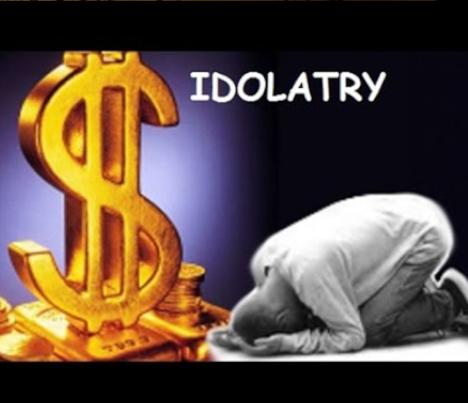
The idolatry of greed leads to regret.4
Those who embrace the idolatry of greed without repenting will regret their lives. Through God’s prophets, the Bible foreshadows the regret that unsaved idolaters will face during the afterlife. For example, Solomon wrote of the oppressed who suffered so much that they regretted even being born. “So I congratulated the dead who are already dead, more than the living who are still living. But better off than both of them is the one who has never existed, who has never seen the evil activity that is done under the sun.” (Ecc. 4:2-3). As another example, Job’s intense pain caused him to regret his birth. “Why then did You bring me out of the womb? If only I had died and no eye had seen me! ‘I should have been as though I had not been, brought from womb to tomb.’” (Job 10:18-19). Likewise, Jeremiah’s intense trials caused him to regret his birth. “Cursed be the day when I was born; may the day when my mother gave birth to me not be blessed! Cursed be the man who brought the news to my father, saying, “A boy has been born to you!” And made him very happy…Why did I ever come out of the womb to look at trouble and sorrow, so that my days have been spent in shame?” (Jer. 20:14-15, 18).
3. Eternal Sorrow: Those Who Trust in The Idol of Wealth Without Faith in Jesus Will One Day Experience Eternal Death and Sorrow. Ecc. 6:6.
Those who squander God’s blessings to trust in wealth face eternal sorrow. Having a prolonged life is a blessing from God. Without Jesus, those who squander God’s grace to embrace the idols of wealth or greed face an eternity torment. “6 Even if the man lives a thousand years twice, but does not see good things—do not all go to one and the same place?’” (Ecc. 6:6). “The weariness of life carries the thinker yet further. Carry it to the furthest point conceivable, and still the result is the same. The longer it is, the fuller of misery and woe … The man goes to the same place,—to the dark, dreary world of Sheol, perhaps even to a more entire annihilation than was implied in the Hebrew thought of that unseen world,—as the abortive birth, with nothing but an accumulated experience of wretchedness. Depression could go no further. (John James Stewart Perowne, General Editor, Cambridge Bible for Schools and Colleges, Ecc. 6:6).5

One day with God is better than a 1,000-year-life without Him.6
It takes faith to see that every good and perfect thing is from heaven. Solomon spoke of a person with a prolonged life who “does not see good things.” (Ecc. 6:6). All the blessings in life are from heaven. “Every good thing given and every perfect gift is from above, coming down from the Father of lights, with whom there is no variation or shifting shadow.” (Jam. 1:17). If you were to live 1,000 years but lack the faith to see that your gifts are from heaven, nothing you do will be pleasing to God. “And without faith it is impossible to please Him, for the one who comes to God must believe that He exists, and that He proves to be One who rewards those who seek Him.” (Heb. 11:6).
Those who trust in their wealth over Jesus cannot redeem their souls. Jesus warns those who trust in wealth instead of Him will have nothing to offer to redeem their souls from eternal death. “For what good will it do a person if he gains the whole world, but forfeits his soul? Or what will a person give in exchange for his soul?” (Matt. 16:26; Lk. 9:25). “But God said to him, ‘You fool! This very night your soul is demanded of you; and as for all that you have prepared, who will own it now?’ Such is the one who stores up treasure for himself, and is not rich in relation to God.”” (Lk. 12:20-21). “What man can live and not see death? Can he save his soul from the power of Sheol? Selah” (Ps. 89:48).
The unsaved who trust in their wealth will face eternal sorrow. Even if you were blessed to live 1,000 years, that would not outweigh the pain of an eternal death. “For a day in Your courtyards is better than a thousand elsewhere. I would rather stand at the threshold of the house of my God than live in the tents of wickedness.” (Ps. 84:10). “As for the days of our life, they contain seventy years, or if due to strength, eighty years, yet their pride is only trouble and tragedy; for it quickly passes, and we disappear.” (Ps. 90:10). “Then they will go out and look at the corpses of the people who have rebelled against Me. For their worm will not die and their fire will not be extinguished; and they will be an abhorrence to all mankind.” (Is. 66:24). “And many of those who sleep in the dust of the ground will awake, these to everlasting life, but the others to disgrace and everlasting contempt.” (Dan. 12:2). “For many walk, of whom I often told you, and now tell you even as I weep, that they are the enemies of the cross of Christ, whose end is destruction, whose god is their appetite, and whose glory is in their shame, who have their minds on earthly things.” (Phil. 3:18-19). “and they will throw them into the furnace of fire; in that place there will be weeping and gnashing of teeth.” (Matt. 13:42).
4. Insatiable Desires: Those Who Trust in The Idol of Wealth Instead of Jesus Will Experience Desires That Can Never Be Satisfied. Ecc. 6:7-9.
Those who set their desires on wealth will never be satisfied. In addition to sorrow, pursuing greed and covetousness is futility because they can never be satisfied. “7 All a person’s labor is for his mouth, and yet his appetite is not satisfied. 8 For what advantage does the wise person have over the fool? What does the poor person have, knowing how to walk before the living? 9 What the eyes see is better than what the soul desires. This too is futility and striving after wind.” (Ecc. 6:7-9). “The preacher here further shows the vanity and folly of heaping up worldly wealth and expecting happiness in it… 1. Natural desires are still returning, still pressing; a man may be feasted to-day and yet hungry to-morrow. 2. Worldly sinful desires are insatiable, ch.5:10… 3. The desires of the soul find nothing in the wealth of the world to give them any satisfaction. The soul is not filled, so the word is. When God gave Israel their request he sent leanness into their souls, Ps. 106:15… (v.9) This wandering of the desire is vanity and vexation of spirit. It is vanity at the best; if what is desired, be obtained, it proves not what we promised ourselves from it, but commonly the wandering desire is crossed and disappointed, and then it turns to vexation of spirit.” (Matthew Henry on Ecc. 6:7-9).7
Greed can never be satisfied. Based upon his own sins, Solomon warned that greed can never be satisfied “10 One who loves money will not be satisfied with money, nor one who loves abundance with its income. This too is futility.” (Ecc. 5:10). In Proverbs, he also wrote, “Sheol and Abaddon are never satisfied, nor are the eyes of a person ever satisfied.” (Prov. 27:20). Money cannot be taken to heaven. Thus, a life devoted to wealth is meaningless. “Do not weary yourself to gain wealth; stop dwelling on it. When you set your eyes on it, it is gone. For wealth certainly makes itself wings like an eagle that flies toward the heavens.” (Prov. 23:4-5). “When I break your staff of bread, ten women will bake your bread in one oven, and they will bring back your bread in rationed amounts, so that you will eat and not be satisfied.” (Lev. 26:26). “You will eat, but you will not be satisfied, and your filth will be in your midst. You will try to remove valuables for safekeeping, but you will not save it all, and what you do save I will turn over to the sword.” (Micah 6:14; Hos. 4:10). Because the pursuit of wealth will pull believers off their walk, Jesus warned believers to guard their hearts against all forms of greed. “But He said to them, ‘Beware, and be on your guard against every form of greed; for not even when one is affluent does his life consist of his possessions.”’ (Lk. 12:15).
Outside of heaven, your eternal desires can also never be satisfied. For those who reject Jesus, insatiable desires will sadly carry on after death. In the story of the rich man and Lazarus, the evil, rich man died and then experienced an insatiable thirst in the face of unspeakable heat and eternal torment. “And he cried out and said, ‘Father Abraham, have mercy on me and send Lazarus, so that he may dip the tip of his finger in water and cool off my tongue, for I am in agony in this flame.’ But Abraham said, ‘Child, remember that during your life you received your good things, and likewise Lazarus bad things; but now he is being comforted here, and you are in agony.” (Lk. 16:24-25).
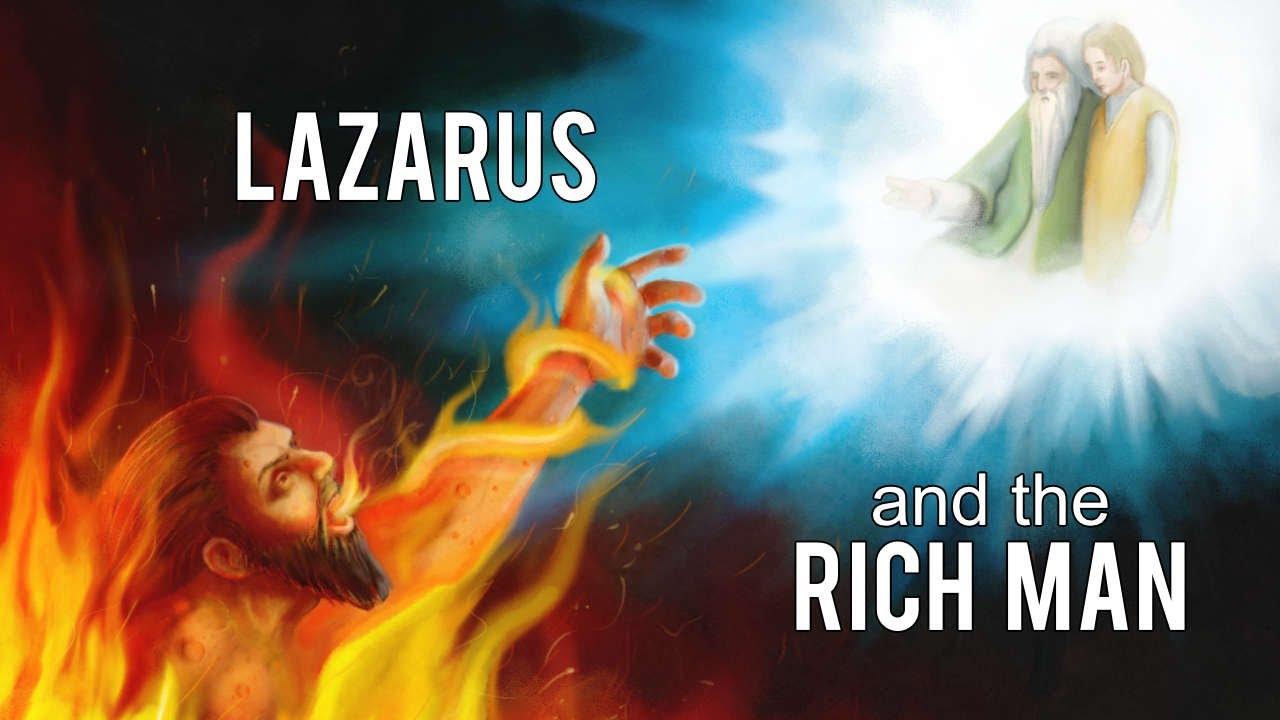
Without Jesus, those who embraced greed will find torment that cannot be quenched.8
Be content with Jesus’ bread of life. Jesus offers the bread of life, which is more valuable than gold. “Jesus said to them, “I am the bread of life; the one who comes to Me will not be hungry, and the one who believes in Me will never be thirsty.” (Jo. 6:35). Mankind further cannot live on just worldly bread (Matt. 4:4). Thus, He calls upon believers to be content with His grace: “Make sure that your character is free from the love of money, being content with what you have; . . .” (Heb. 13:5a). “But godliness actually is a means of great gain when accompanied by contentment.” (1 Tim. 6:6). “Not that I speak from need, for I have learned to be content in whatever circumstances I am.” (Phil. 4:11).
Worldly people are blind to their need for Jesus. Solomon asked, “8 For what advantage does the wise person have over the fool?” (Ecc. 6:8). “A scoffer seeks wisdom and finds none, but knowledge is easy for one who has understanding.” (Prov. 14:6). Those who are wise in their own eyes in chasing after wealth are spiritually blind. “in whose case the god of this world has blinded the minds of the unbelieving so that they will not see the light of the gospel of the glory of Christ, who is the image of God.” (2 Cor. 4:4). People who chase after the idol of wealth without repenting and accepting Jesus are no better off than the fools who reject Jesus and have no concern about sin. “There is a way which seems right to a person, but its end is the way of death.” (Prov, 14:12).
5. Futile Rebellion: Those Who Trust in Their Wealth Instead of Jesus Foolishly Rebel Against His Sovereign Authority. Ecc. 6:10.
Jesus is sovereign, and nothing that a person tries to do outside of His plans will succeed. People who rebel against Yahweh by trusting in their wealth act foolishly because Yahweh is sovereign, and his will cannot be challenged. “10 Whatever exists has already been named, and it is known what man is; for he cannot dispute with the one who is mightier than he is.” (Ecc. 6:10). “As viewed by many commentators, it asserts that man is the creature of a destiny, which he cannot resist. Long ago, in the far eternity, his name has been written, and what he will be. He cannot plead against the Power that is mightier than himself, i.e. against God. There is nothing left but submission.” (John James Stewart Perowne, General Editor for the Cambridge Bible for Schools and Colleges).9
God exists outside of human time and is sovereign over everything. Even though many might feel protected from harm when they accumulate great wealth, they act foolishly if they believe that they can change their eternal destiny by hoarding wealth. “Many plans are in a person’s heart, but the advice of the LORD will stand.” (Prov. 19:21). “The LORD of armies has sworn, saying, ‘Certainly, just as I have intended, so it has happened, and just as I have planned, so it will stand,”’ (Is. 14:24). “Declaring the end from the beginning, and from ancient times things which have not been done, saying, ‘My plan will be established, and I will accomplish all My good pleasure’;” (Is. 46:10).
Live for Jesus and use your wealth for His Kingdom. Instead of fighting against Jesus’ plans, believers should seek to submit and surrender their God-given wealth for Jesus’ kingdom. “When Martin Luther considered the long-term value of his financial position, he proclaimed, ‘As I shall forsake my riches when I die, so I forsake them while I am living.’ Luther didn’t want to wait until he died; he wanted to get ready for that momentous day by letting go of his possessions while he was alive.” (Philip Ryken).10
Seek first Jesus’ sovereign will for your life, and He will provide. If you trust in Jesus’ plans for you and use your God-given wealth to serve Jesus by helping others, He will give you everything you need. “But seek first His kingdom and His righteousness, and all these things will be provided to you.” (Matt. 6:33; Lk. 12:31). “And my God will supply all your needs according to His riches in glory in Christ Jesus.” (Phil. 4:19).
6. Futile Pride: Those Who Question Jesus and Seek to Justify Themselves by How They Use Their Wealth Also Engage in Futile Vanity. Ecc. 6:11.
Pride causes people to foolishly try to justify themselves by how they use their wealth. Those who reject Jesus will be held to account for their actions. Those who attempt to justify themselves will be rejected for their pride. “11 For there are many words which increase futility. What then is the advantage to a person?” (Ecc. 6:11). “Solomon’s great frustration is rooted in the understanding that man is man, God is God, and man can never successfully contend with Him who is mightier than he. Many today refuse to know what the Preacher knew. They believe that when they face God (abandoning Solomon’s under the sun premise) they will in fact contend with Him, and tell God a thing or two. Such are seriously and sadly deluded.” (David Guzik on Ecc. 6:10-11).11
Only a fool questions Jesus’ plan for salvation. Some might feel they should be admitted into heaven if they accumulate wealth and then give generously to charities. But only the fool questions Jesus’ narrow path for salvation to instead trust in their own wealth. “On the contrary, who are you, you foolish person, who answers back to God? The thing molded will not say to the molder, ‘Why did you make me like this,’ will it? Or does the potter not have a right over the clay, to make from the same lump one object for honorable use, and another for common use?” (Ro. 9:20-21). “You turn things around! Shall the potter be considered as equal with the clay, that what is made would say to its maker, ‘He did not make me’; or what is formed say to him who formed it, ‘He has no understanding’?” (Is. 29:16). “Woe to the one who quarrels with his Maker— A piece of pottery among the other earthenware pottery pieces! Will the clay say to the potter, ‘What are you doing?’ Or the thing you are making say, ‘He has no hands’?” (Is. 45:9).
Pride causes sinners to deny Jesus’ sovereignty. Jesus’ plans are beyond full human understanding. “For as the heavens are higher than the earth, so are My ways higher than your ways and My thoughts than your thoughts.” (Is. 55:9). Believing your decisions about how you use your wealth deserves the same weight as Jesus’ plans stems from an inflated view of yourself. But this type of pride is one of the things that Jesus “hates” (Prov. 6:16-17). “When pride comes, then comes dishonor; but with the humble there is wisdom.” (Prov. 11:2). “Pride goes before destruction, and a haughty spirit before stumbling.” (Prov. 16:18). “Before destruction the heart of a person is haughty, but humility goes before honor.” (Prov. 18:12). “For the LORD is exalted, yet He looks after the lowly, but He knows the haughty from afar.” (Ps. 138:6). Jesus will judge those who exalt themselves. “Whoever exalts himself shall be humbled, and whoever humbles himself shall be exalted.” (Matt. 23:12; Lk. 14:11). “But He gives a greater grace. Therefore it says, ‘God is opposed to the proud, but gives grace to the humble.’ … Humble yourselves in the presence of the Lord, and He will exalt you.” (Jam. 4:6, 10). Thus, those who believe that they are righteous because of their giving are guilty of pride.
7. Futile Faithlessness: Those Who Trust in Their Wealth and Reject Jesus Have Gambled Their Souls On a Blind Bet; a Bet That They Will Lose. Ecc. 6:12.
Those without faith who trust in their wealth have placed a losing bet on their souls. People who reject what the Bible says and trust in their wealth over Jesus have placed a wager on their souls. They sadly gamble everything on their lack of faith. “12 For who knows what is good for a person during his lifetime, during the few years of his futile life? He will spend them like a shadow. For who can tell a person what will happen after him under the sun?” (Ecc. 6:12). “Specifically, the verse says that he made people like a shadow. The expression occurs elsewhere (1 Chron. 29:15; Ps. 144:4; Job 8:9, 14:12) in contexts that also emphasize the frailty of human beings. The metaphor is one that highlights the brevity of human life, but perhaps even more pointedly its ephemerality. It conveys the fact that humans are so ephemeral, so insubstantial, that they are unable to know the future after they leave the scene.” (Tremper Longman III on Ecc. 6:12).12
Only fools trust in their fleeting wealth. The Bible repeatedly warns that life is short. People use their limited time to serve Jesus instead of worldly things like wealth that will quickly vanish. “Behold, You have made my days like hand widths, and my lifetime as nothing in Your sight; certainly all mankind standing is a mere breath. Selah Certainly every person walks around as a fleeting shadow; they certainly make an uproar for nothing; he amasses riches and does not know who will gather them.” (Ps. 39:5-6).

Place your hope in eternal life with Jesus, not in your wealth13
Those with faith store up their treasures in heaven. Instead of trusting your wealth that will quickly fade, your greatest treasure should be your relationship with Jesus and the opportunity to serve Him for all eternity in heaven. “Do not store up for yourselves treasures on earth, where moth and rust destroy, and where thieves break in and steal. But store up for yourselves treasures in heaven, where neither moth nor rust destroys, and where thieves do not break in or steal; for where your treasure is, there your heart will be also.” (Matt. 6:19-21). “Therefore, if you have been raised with Christ, keep seeking the things that are above, where Christ is, seated at the right hand of God. Set your minds on the things that are above, not on the things that are on earth.” (Col. 3:1-2).
What does Ecclesiastes 6:1-2 really mean? - God's Blessing↩︎
Image credit: Ecclesiastes Sermons — Bibleoutlines.com | Sermons | Commentaries | Bible Study Resources↩︎
Image credit: Guilt by Association - Shalom Adventure Magazine↩︎
Image credit: Better is one day in your courts than a thousand elsewhere. Psalms 84:10↩︎
Ecclesiastes 6 Commentary - Matthew Henry Commentary on the Whole Bible (Complete) | Bible Study Tools (italics in original).↩︎
Image credit: Lazarus And The Rich Man↩︎
Philip Ryken, Why Everything Matters: The Gospel in Ecclesiastes, (Glasgow, SCO, Crossway Bibles 2024) p. 95; quoting, M. Luther, “Notes on Ecclesiastes,” in Luther’s Works, vol. 15, ed. and trans. J. Pelikan (St. Louis, MO, Concordia,1972) p. 91.↩︎
Enduring Word Bible Commentary Ecclesiastes Chapter 6 (emphasis in original).↩︎
Tremper Longman III, The Book of Ecclesiastes, (Grand Rapids, MI, William B. Eerdman’s Publishing Company, 1998) p. 178 (italics in original).↩︎
Image credit: https://www.youtube.com/watch?v=nuxn1MVuzAc↩︎