Ecclesiastes 8: Lessons for Living Amongst Evil Leaders
Introduction: Throughout the book of Ecclesiastes, Solomon described the futility of human endeavors. Here, Solomon turned to the subject of human government and evil leaders. Unless a leader’s actions are part of Jesus’ sovereign will, they are (he·ḇel) “הֶ֙בֶל֙”. They are “futility,” “vanity,” or “meaningless”. They will evaporate like smoke. Through Solomon’s revelations, the Bible provides several lessons for living amongst evil leaders. These include: (1) seeking Jesus’ wisdom, (2) obeying Jesus’ appointed leaders, (3) seeking Jesus’ guidance, (4) trusting Jesus, (5) fearing Jesus, (6) placing your hope in Jesus, and (7) be content with Jesus’ provision.
First, Solomon warned that no one is wise on their own. Thus, whether leading or facing evil leaders, believers should turn to Jesus for wisdom. Second, unless ordered to engage in evil, Solomon urged believers to obey civil authority. Jesus also wants you to obey civil authority unless doing involves engaging in evil. Third, Solomon promised that those who obey civil authority in Yahweh’s appointed timing will be blessed. Jesus wants you to turn to Him for guidance if there is any question as to whether it is a proper time to obey civil authorities. Fourth, in the face of the unknown, Solomon urged believers to place their trust in Yahweh. When Jesus’ sovereign plans are unclear, He also wants you to place your trust in Him. Fifth, Solomon promised that evil leaders will all die and be forgotten. Only those who fear Yahweh will be blessed. Jesus also wants you to fear Him by clinging to what is good and avoiding evil. Sixth, Solomon warned that there is a futility in placing your hope in human leaders. Jesus also wants you to place your hope in Him alone and not in leaders. Finally, instead of seeking the things of the flesh as evil leaders do, Solomon urged believers to be content with Yahweh’s provision and revelation. Jesus also wants you to be content with His provision and revelation.
1. Jesus’ Wisdom: When Leading or When Faced with Evil Leaders, Turn to Jesus for Wisdom. Ecc. 8:1.
Turn to Jesus to find true wisdom. Even though he was the wisest man alive, Solomon confessed that no one is wise without God. “1 Who is like the wise person and who knows the meaning of a matter? A person’s wisdom illuminates his face and makes his stern face brighten up.” (Ecc. 8:1). “In Ecclesiastes 8 the Teacher makes two main points about wisdom. His first point is that wisdom helps us survive in a dangerous, unjust world. He begins this chapter by praising wisdom. He asks, ‘Who is like the wise man?’ The expected answer is No one. No one is as exalted as the wise man. The Teacher follows this up with a second question, ‘And who knows the interpretation of a thing?’ He is thinking of wise men in a royal court interpreting signs or dreams so as to foretell the future for the king … The expected answer is, No one but a wise person … ‘The face is an index of the feelings; and a bright face is a sign of happiness or contentment (Prov 15:13).’ Wisdom is reflected even in a person’s face.” (Sidney Greidanus on Ecc. 8:1).1
True wisdom comes from Jesus. Solomon made clear that true wisdom comes from only Yahweh. “For the LORD gives wisdom; from His mouth come knowledge and understanding.” (Prov. 2:6). “It is He who changes the times and the periods; He removes kings and appoints kings; He gives wisdom to wise men, and knowledge to people of understanding.” (Dan. 2:21). Jesus later revealed that the entire Old Testament is about Him (Lk. 24:44). Thus, true wisdom comes through Jesus. “But it is due to Him that you are in Christ Jesus, who became to us wisdom from God, and righteousness and sanctification, and redemption,” (1 Cor. 1:30). “[I]n whom are hidden all the treasures of wisdom and knowledge.” (Col. 2:3). His wisdom is a gift that comes when you have faith in Him. “that the God of our Lord Jesus Christ, the Father of glory, may give you a spirit of wisdom and of revelation in the knowledge of Him.” (Eph. 1:17).

When leading or when faced with evil leaders, turn to Jesus for wisdom.2
God gave Joseph godly wisdom to interpret dreams. Pharaoh’s advisors could not interpret his dreams. When Joseph was brought before Pharaoh, Joseph made clear that Yahweh alone gave him the wisdom to interpret dreams. “And they said to him, ‘We have had a dream, and there is no one to interpret it.’ Then Joseph said to them, ‘Do interpretations not belong to God? Tell it to me, please.’ (Gen. 40:8). Pharaoh later conceded that Yahweh gave Joseph wisdom (Gen. 41:38-39). Nebuchadnezzar was also forced to concede that Yahweh had given Daniel the wisdom to interpret dreams. “The king responded to Daniel and said, ‘Your God truly is a God of gods and a Lord of kings and a revealer of secrets, since you have been able to reveal this secret.”’ (Dan. 4:27).
A person without faith is blind to the true source of wisdom. Like the pagan advisors to Pharaoh or Nebuchadnezzar, people who rely upon their own wisdom are spiritually blind to the true wisdom that comes from Jesus. “But a natural person does not accept the things of the Spirit of God, for they are foolishness to him; and he cannot understand them, because they are spiritually discerned. But the one who is spiritual discerns all things, yet he himself is discerned by no one. For who has known the mind of the Lord, that he will instruct him? But we have the mind of Christ.” (1 Cor. 2:14-16). “in whose case the god of this world has blinded the minds of the unbelieving so that they will not see the light of the gospel of the glory of Christ, who is the image of God.” (2 Cor. 4:4).
2. Obedience: Obey Civil Authorities Unless You Are Asked or Directed to Engage in Evil. Ecc. 8:2-4.
The wisdom of Jesus includes obeying secular authority. Solomon had just confessed that all have fallen short and are prone to sin (Ecc. 7:20). Nevertheless, unless ordered to engage in evil, he urged believers to obey civil authorities. “2 I say, ‘Keep the command of the king because of the oath before God. 3 Do not be in a hurry to leave him. Do not join in an evil matter, for he will do whatever he pleases.’ 4 Since the word of the king is authoritative, who will say to him, ‘What are you doing?’” (Ecc. 8:2-4). “A particular instance of wisdom pressed upon us, and that is subjection to authority, and a dutiful and peaceable perseverance in our allegiance to the government which Providence has set over us….[v.3] Solomon’s subjects, as soon as his head was laid low, went directly contrary to this rule, when upon the rough answer which Rehoboam gave them, they were hasty to go out of his sight,” (Matthew Henry on Ecc. 8:2-4) (italics in original).3

Unless you are directed to engage in evil, obey civil authorities.4
True wisdom comes in obeying authority. To avoid the wrath of civil leaders, believers are warned to obey civil authorities. “The fury of a king is like messengers of death; but a wise person will appease it.” (Prov. 16:14). “My son, fear the LORD and the king; do not get involved with those of high rank,” (Prov. 24:21; Ecc. 10:20). As part of His sovereign plans, Jesus allows these authorities to exist until He returns and institutes His perfect government. “Every person is to be subject to the governing authorities. For there is no authority except from God, and those which exist are established by God. Therefore whoever resists authority has opposed the ordinance of God; and they who have opposed will receive condemnation upon themselves.” (Ro. 13:1-2; Dan. 2:21). “Submit yourselves for the Lord’s sake to every human institution, whether to a king as the one in authority, or to governors as sent by him for the punishment of evildoers and the praise of those who do right. or to governors as sent by him for the punishment of evildoers and the praise of those who do right.” (1 Pet. 2:13-14). “Remind them to be subject to rulers, to authorities, to be obedient, to be ready for every good deed,” (Titus 3:1). “They said to Him, ‘Caesar’s.’ Then He said to them, ‘Then pay to Caesar the things that are Caesar’s; and to God the things that are God’s.’ (Matt. 22:21).
Only when your government tries to force you to engage in evil should you disobey it. An important exception exists to obeying civil authorities. Believers should not obey civil authority if they are directed to engage in evil. “But the midwives feared God, and did not do as the king of Egypt had commanded them, but let the boys live.” (Ex. 1:17). “But even if He does not, let it be known to you, O king, that we are not going to serve your gods nor worship the golden statue that you have set up.” (Dan. 3:18). “But Peter and the apostles answered, ‘We must obey God rather than men.”’ (Acts 5:29).
3. Jesus’ Guidance: When Faced with Any Question About Whether a Government is Acting Properly, Seek Jesus’ Guidance. Ecc. 8:5-6.
When you submit to Jesus by obeying authority, He will bless you. For those who trust in Yahweh’s sovereign plans and appointed rulers, even if they cause oppression, Solomon promised Yahweh’s blessing for their trust. “5 One who keeps a royal command experiences no trouble, for a wise heart knows the proper time and procedure. 6 For there is a proper time and procedure for every delight, though a person’s trouble is heavy upon him.” (Ecc. 8:5-6). “Good will come to those who obey and honor the king … Wisdom knows what Solomon first poetically explained in Ecclesiastes 3:1-8 – that there is a time and purpose for everything under heaven.” (David Guzik on Ecc. 8:5-6).5
Seek Jesus’ guidance to determine if a valid reason exists to refuse to obey authority. Solomon stated that there is “proper time” for every government (Ecc. 8:5-6). Solomon also made clear that there is a time to peacefully obey authority, and there is a time for disobedience and even war. “3 A time to kill and a time to heal; a time to tear down and a time to build up … 8 A time to love and a time to hate; a time for war and a time for peace.” (Ecc. 3:3, 8). As an example of this, the Jews properly resisted Pharaoh’s attempts to kill them (Ex. 1:15-22). As another example of this, the Jews properly fought against Haman’s decree that the Persians kill them (Ecc. 9:1-18). As another example of this, the free nations of the world acted properly and fought against the Nazi’s attempt to exterminate the Jews during World War II. “And I will bless those who bless you, and the one who curses you I will curse. And in you all the families of the earth will be blessed.” (Gen. 12:3). To know when to obey and when to submit, pray for Jesus to guide you. “But if any of you lacks wisdom, let him ask of God, who gives to all generously and without reproach, and it will be given to him.” (Jam. 1:5; Matt. 7:7-8).
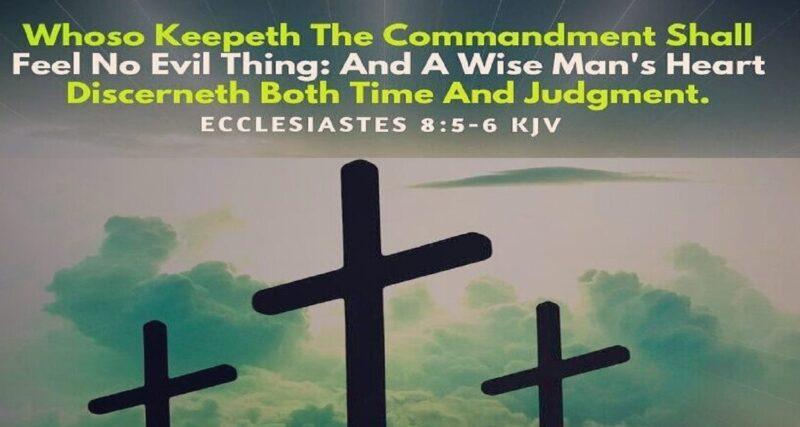
When faced with evil leaders, turn to Jesus for discernment.6
When it does not include evil, those who obey civil authority are blessed with peace. Because God commands believers to obey civil authority where no evil is involved, those who obey His commands will receive His blessing. “Blessed are those whose way is blameless, who walk in the Law of the LORD.” (Ps. 119:1). “But He said, ‘On the contrary, blessed are those who hear the word of God and follow it.”’ (Lk. 11:28; Ro. 2:13; 1 Pet. 1:14-16). In most cases, obeying civil authority gives you the peace of mind in knowing that you will not be prosecuted for breaking the law (Ecc. 8:5).
4. Trust: When Faced with Evil Leaders and the Future is Uncertain, Place Your Trust in Jesus’ Sovereign Plans. Ecc. 8:7-9.
Even when rulers abuse their God-given authority, trust that Jesus is ultimately in control. Some leaders might feel tempted to do whatever they please in light of God’s order for believers to obey civil authority. But Solomon warns that leaders are impotent in front of God and risk His judgment when they embrace evil. “7 If no one knows what will happen, who can tell him when it will happen? 8 No one has authority over the wind to restrain the wind, nor authority over the day of death; and there is no military discharge in the time of war, and evil will not save those who practice it. 9 All this I have seen, and have applied my mind to every deed that has been done under the sun at a time when one person has exercised authority over another person to his detriment.” (Ecc. 8:7-9). “[v. 9] The subject may be man in general, or more probably the evil tyrant. The clause contains a third reason for patience. The despot cannot foresee the future, and goes on blindly filling up the measure of his iniquity, being unable to take any precautions against his inevitable fate (Proverbs 24:22) … [v. 8.] Equally impotent is the tyrant to influence the drift of events that is bearing him on to his end. God’s judgments are often likened to a wind (see Isaiah 41:16; …[v.9] Most modern commentators consider that the hurt is that of the oppressed subject; but it is possible that … the injury may be that which the despot inflicts, and that which he has to suffer. ” (Pulpit Commentary on Ecc. 8:7-9).7

When you face evil leaders and an unknown future, put your trust in Jesus8
Because Jesus gives leaders their authority, they must not abuse it. The wisdom to rule wisely comes from Jesus. “By me kings reign, and rulers decree justice. By me princes rule, and nobles, all who judge rightly.” (Prov. 8:15-16; Is. 32:1). In His sovereignty, Jesus also controls when a leader’s rule begins and ends. “It is He who changes the times and the periods; He removes kings and appoints kings; He gives wisdom to wise men, and knowledge to people of understanding.” (Dan. 2:21; Ps. 75:6-7; Job 12:23; Is. 40:23). Just as rulers cannot command the wind (Ecc. 8:7-8), they have no way of knowing their time of judgment. “But He said to them, ‘It is not for you to know periods of time or appointed times which the Father has set by His own authority;”’ (Acts 1:7). Rulers should therefore always fear God by avoiding all forms of evil governance (Ecc. 12:13). “The God of Israel said it; the Rock of Israel spoke to me: ‘He who rules over mankind righteously, who rules in the fear of God,” (2 Sam. 23:3). “It is an abomination for kings to commit wicked acts, because a throne is established on righteousness.” (Prov. 16:12).
When evil leaders temporarily succeed, trust in Jesus’ sovereign plans. Jesus’ plans are frequently beyond our limited comprehension: “For as the heavens are higher than the earth, so are My ways higher than your ways and My thoughts than your thoughts.” (Is. 55:9). Even when a ruler embraces evil, you can trust that Jesus only allows for this as part of His greater plans for good. “4 The Lord has made everything for its own purpose, even the wicked for the day of evil.” (Prov. 16:4). “And we know that God causes all things to work together for good to those who love God, to those who are called according to His purpose.” (Ro. 8:28). “For our momentary, light affliction is producing for us an eternal weight of glory far beyond all comparison,” (2 Cor. 4:17). “The LORD of armies has sworn, saying, ‘Certainly, just as I have intended, so it has happened, and just as I have planned, so it will stand,”’ (Is. 14:24). “The One forming light and creating darkness, causing well-being and creating disaster; I am the LORD who does all these things.” (Is. 45:7). “Declaring the end from the beginning, and from ancient times things which have not been done, saying, ‘My plan will be established, and I will accomplish all My good pleasure’;” (Is. 46:10). “What if God, although willing to demonstrate His wrath and to make His power known, endured with great patience objects of wrath prepared for destruction? And He did so to make known the riches of His glory upon objects of mercy, which He prepared beforehand for glory,” (Ro. 9:22-23). “In Him we also have obtained an inheritance, having been predestined according to the purpose of Him who works all things in accordance with the plan of His will,” (Eph. 1:11).
Trust that the enemy can never prevent the fulfillment of God’s Word. There is nothing that an evil leader can do to prevent God’s Word from being fulfilled: “Not one of the good promises which the LORD had made to the house of Israel failed; everything came to pass.” (Josh. 21:45). “Blessed be the LORD, who has given rest to His people Israel in accordance with everything that He promised; not one word has failed of all His good promise, which He promised through Moses His servant.” (1 Kgs. 8:56). ‘“I declared the former things long ago, and they went out of My mouth, and I proclaimed them. Suddenly I acted, and they came to pass.”’ (Is. 48:3). God’s many promises to you are also irrevocable. But you need to learn God’s Word in order to trust in His promises.
When you are not called upon to resist, you can still use prayer to seek deliverance. Without any checks on his power, an angry king could mean a quick death for someone who provoked his anger. Haman’s quick execution after Esther exposed his deceit is a good example of this (Esther 7:7-8). If you cannot actively resist, Jesus still gives you powerful tools to obtain His deliverance. First, pray for Jesus’ deliverance. “And do not lead us into temptation, but deliver us from evil.” (Matt. 6:13). “then the Lord knows how to rescue the godly from a trial, and to keep the unrighteous under punishment for the day of judgment,” (2 Pet. 2:9). Second, when possible, seek peace. “If the ruler’s temper rises against you, do not abandon your place, because composure puts great offenses to rest.” (Ecc. 10:4). “A gentle answer turns away wrath, but a harsh word stirs up anger.” (Prov. 15:1). “Blessed are the peacemakers, for they will be called sons of God.” (Matt. 5:9; Jam. 3:18; Heb. 12:14; Ps. 34:14). Third, when the path is unclear, pray for Jesus’ guidance (Jam. 1:5). Do not trust your own understanding (Prov. 3:5-6).
5. Fear Jesus: When Faced with Evil Leaders, Fear Jesus by Clinging to What is Good and Avoiding Evil. Ecc. 8:10-13.
Avoid moral compromise and trust in evil leaders. Although powerful evil rulers may enjoy temporary fame, when they die their worldly accomplishments will vanish like smoke, and they will face God’s judgment. “10 So then, I have seen the wicked buried, those who used to go in and out of the holy place, and they are soon forgotten in the city where they did such things. This too is futility. 11 Because the sentence against an evil deed is not executed quickly, therefore the hearts of the sons of mankind among them are fully given to do evil. 12 Although a sinner does evil a hundred times and may lengthen his life, still I know that it will go well for those who fear God, who fear Him openly. 13 But it will not go well for the evil person and he will not lengthen his days like a shadow, because he does not fear God.” (Ecc. 8:10-13). “[v. 10] The Preacher observes the funerals of the wicked in this part, those who were once held in high regard even in the holy places, but now they face the same fate as everyone else. This serves as a reminder that earthly accomplishments and accolades mean very little in the face of death and judgment … [v. 11] Here, the Preacher reflects on the delay in justice, which can lead people to continue in their wrongdoing because they perceive no immediate consequences for their actions. This delay in justice can lead to a sense of impunity, which ultimately contributes to the perpetuation of evil. [v. 13] This verse serves as a reminder that even though it may seem like the wicked are prospering for a time, their ultimate fate is not one of lasting prosperity or peace. Their lack of fear of God and disregard for righteousness will ultimately lead to their downfall and destruction. These verses in Ecclesiastes 8 highlight the recurring theme of the fleeting nature of earthly pursuits and the importance of fearing God and living a righteous life. The Preacher’s observations serve as a cautionary tale, reminding readers that despite the injustices and seeming successes of the wicked, true fulfillment and blessing can only be found in a life lived in reverence and obedience to God.” (Rev. Michael Johnson on Ecc. 8:10-13).9
Do not envy the fame that evil people enjoy because it is fleeting and will soon vanish. Even though wicked rulers may enjoy brief popularity, they are soon forgotten after they die (Ecc. 8:10). “The mentioning of the righteous is a blessing, but the name of the wicked will rot.” (Prov. 10:7). “I have seen a wicked, violent person spreading himself like a luxuriant tree in its native soil. Then he passed away, and behold, he was no more; I searched for him, but he could not be found.” (Ps. 37:35-36). “You indeed put them on slippery ground; You dropped them into ruin. How they are destroyed in a moment! They are utterly swept away by sudden terrors!” (Ps. 73:18-19). “The arrogance of your heart has deceived you, the one who lives in the clefts of the rock, on the height of his dwelling place, who says in his heart, ‘Who will bring me down to earth?’ Though you make your home high like the eagle, though you set your nest among the stars, from there I will bring you down,” declares the LORD.” (Obadiah 1:3-4).
God delays judgment to give sinners a chance to repent, not to sin more. Evil rulers may misinterpret God’s patience in judging sin (Ecc. 8:11). But sinners should not abuse God’s grace as a license to sin more. He will eventually judge non-repentant sinners. “Though the wicked person is shown compassion, he does not learn righteousness; he deals unjustly in the land of uprightness, and does not perceive the majesty of the LORD.” (Is. 26:10). “Or do you think lightly of the riches of His kindness and restraint and patience, not knowing that the kindness of God leads you to repentance? But because of your stubbornness and unrepentant heart you are storing up wrath for yourself on the day of wrath and revelation of the righteous judgment of God,” (Ro. 2:4-5).
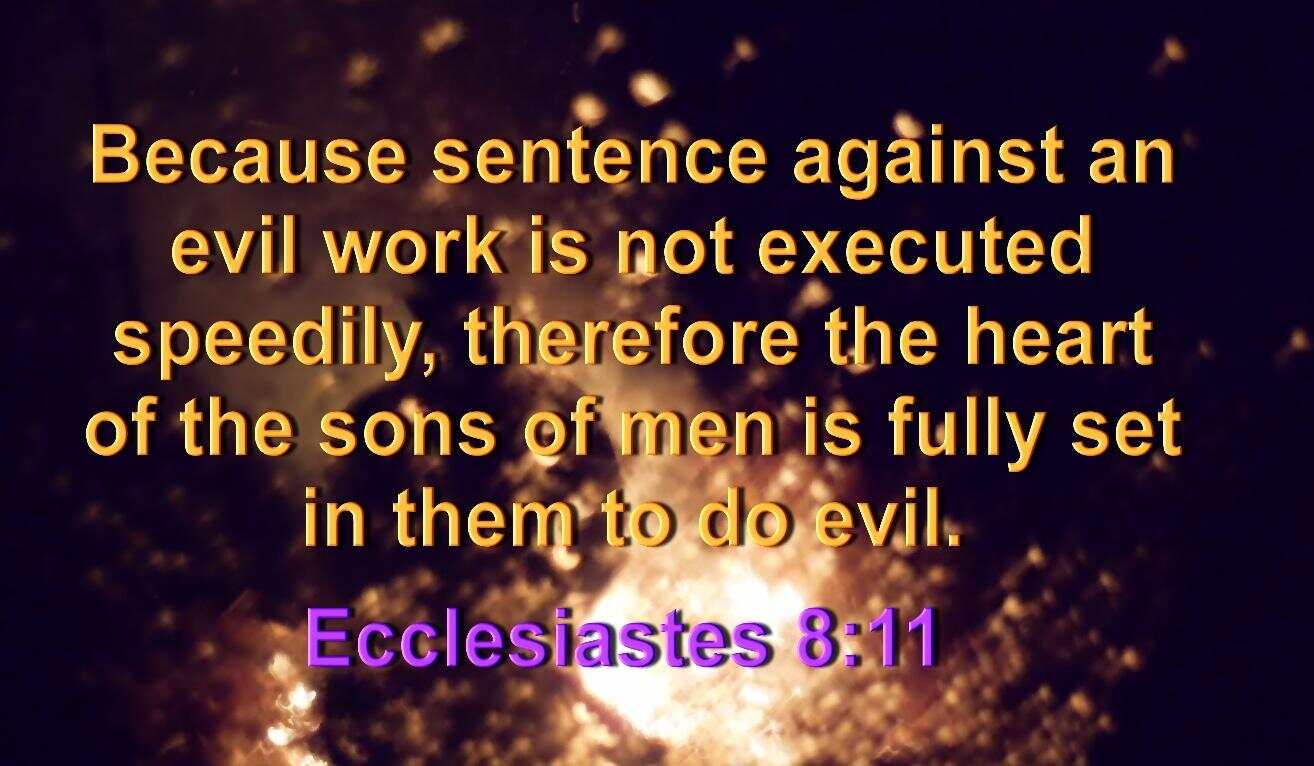
In His perfect timing, Jesus will judge evil leaders who refuse to repent10
Those who fear the Lord make the right choices leading to eternal life. While those who fear God will enjoy a prolonged life on Earth and in heaven, those who refuse to fear the Lord will have their lives shortened (Ecc. 8:12-13). “The fear of the LORD prolongs life, but the years of the wicked will be shortened. The hope of the righteous is gladness, but the expectation of the wicked perishes.” (Prov. 10:27-28). “But whoever listens to me will live securely and will be at ease from the dread of evil.” (Prov. 1:33). “Be assured, the evil person will not go unpunished, but the descendants of the righteous will be rescued.” (Prov. 11:21). “For evildoers will be eliminated, but those who wait for the LORD, they will inherit the land. Yet a little while and the wicked person will be no more; and you will look carefully for his place and he will not be there.” (Ps. 37:9-10).
6. Hope: In the Face of Evil Leaders, Place Your Hope in Jesus. Ecc. 8:14.
Place your hope in Jesus and not in worldly leaders. It is futile to place your hope in worldly leaders. Anything that is not part of Jesus’ Kingdom will one day vanish like smoke. “14 There is futility which is done on the earth, that is, there are righteous people to whom it happens according to the deeds of the wicked. On the other hand, there are evil people to whom it happens according to the deeds of the righteous. I say that this too is futility.” (Ecc. 8:14). “In our journey through life, Ecclesiastes 8:14 serves as a beacon of hope, urging us to trust in God’s plan and His ultimate justice, despite the immediate circumstances that we encounter. It reminds us that though we face seasons filled with injustice, we are not alone. Our struggles can lead to growth and resilience, allowing us to shine light in the darkness.” (Christianitypath.com on Ecc. 8:14).11
Do not put your hope in leaders. Unless Jesus is behind an endeavor, the works of leaders are futile and will one day vanish (Ecc. 8:14). Thus, believers are warned not to place their hope in leaders. “Do not trust in princes, in mortal man, in whom there is no salvation.” (Ps. 146:3). “It is better to take refuge in the LORD than to trust in princes.” (Ps. 118:9). “Do not trust in princes, in mortal man, in whom there is no salvation.” (Ps. 146:3; 60:11). Instead of trusting in human leaders, put your hope in Jesus.
When things feel unjust or unfair, place your hope in Jesus’ justice. Solomon pointed out evil leaders may at times appear to prosper (Ecc. 8:14). Job, David, Jerimiah, and Habakkuk all at times lamented when evil people appeared to prosper. “Why do the wicked still live, grow old, and also become very powerful? Their descendants endure with them in their sight, and their offspring before their eyes, their houses are safe from fear, and the rod of God is not on them.” (Job 21:7-9). “I have seen a wicked, violent person spreading himself like a luxuriant tree in its native soil. Then he passed away, and behold, he was no more; I searched for him, but he could not be found.” (Ps. 37:35-36). “Righteous are You, LORD, when I plead my case with You; nevertheless I would discuss matters of justice with You: why has the way of the wicked prospered? Why are all those who deal in treachery at ease? You have planted them, they have also taken root; they grow, they have also produced fruit. You are near to their lips but far from their mind. (Jer. 12:1-2). “Your eyes are too pure to look at evil, and You cannot look at harm favorably. Why do You look favorably at those who deal treacherously? Why are You silent when the wicked swallow up those more righteous than they?” (Hab. 1:13). When things feel unfair or unjust, Jesus wants you to put your hope in His justice.
When evil is allowed to temporarily succeed, persevere in your faith. If you persevere in the face of evil, Jesus will bless you. “but the rich person is to glory in his humiliation, because like flowering grass he will pass away. For the sun rises with its scorching heat and withers the grass; and its flower falls off and the beauty of its appearance is destroyed; so also the rich person, in the midst of his pursuits, will die out. Blessed is a man who perseveres under trial; for once he has been approved, he will receive the crown of life which the Lord has promised to those who love Him.” (Jam. 1:10-12).
7. Contentment: Instead of Seeking Worldly Things, Be Content with Jesus’ Provision and His Revelation. Ecc. 8:15-17.
In the face of oppression and uncertainty, be content with Jesus’ provision and revelation. Because any human endeavor apart from Jesus is futile and will one day vanish like smoke, Solomon concluded by urging believers to be content with Yahweh’s sovereign provision or revelation. “15 So I commended pleasure, for there is nothing good for a person under the sun except to eat, drink, and be joyful, and this will stand by him in his labor throughout the days of his life which God has given him under the sun. 16 When I devoted my mind to know wisdom and to see the business which has been done on the earth (even though one should never sleep day or night), 17 and I saw every work of God, I concluded that one cannot discover the work which has been done under the sun. Even though a person laboriously seeks, he will not discover; and even if the wise person claims to know, he cannot discover.” (Ecc. 8:15-17). “The Hebrew word is applied not only to the pleasures arising from the physical senses, but also frequently to religious joy. The sentiment of this verse is a frequent conclusion of the writer's personal experience (compare marginal references), and is unfairly charged with Epicureanism. The Preacher is careful to set forth pleasure as a gift from God, to be earned by labor, and received with thankfulness to the Giver, and to be accounted for to Him. His estimate of the pleasures of the senses is recorded in Ecclesiastes 7:2-6.” (Albert Barnes on Ecc. 8:15).12
Be content with Jesus’ provision. Instead of striving for worldly things, Solomon repeatedly urged believers to be content and grateful for Yahweh’s provision. “There is nothing better for a person than to eat and drink, and show himself some good in his trouble. This too I have seen, that it is from the hand of God.” (Ecc. 2:24). “I know that there is nothing better for them than to rejoice and to do good in one’s lifetime; moreover, that every person who eats and drinks sees good in all his labor—this is the gift of God.” (Ecc. 3:12-13; 5:18-20). “Not that I speak from need, for I have learned to be content in whatever circumstances I am. I know how to get along with little, and I also know how to live in prosperity; in any and every circumstance I have learned the secret of being filled and going hungry, both of having abundance and suffering need. I can do all things through Him who strengthens me.” (Phil. 4:11-13).

Instead of seeking worldly things, be content with Jesus’ provision.13
Be content with Jesus’ revelation. Solomon also realized the limits of his understanding (Ecc. 8:16-17). Believers should also know that some mysteries of God are beyond our understanding. ‘“For My thoughts are not your thoughts, nor are your ways My ways,’ declares the LORD. For as the heavens are higher than the earth, so are My ways higher than your ways and My thoughts than your thoughts.” (Is. 55:8-9). “Oh, the depth of the riches, both of the wisdom and knowledge of God! How unsearchable are His judgments and unfathomable His ways! For who has known the mind of the Lord, or who became His counselor?” (Rom. 11:33-34). “That which the seeker contemplates he recognizes as the work of God. Before that work, the wise man bows in reverence with the confession that it lies beyond him. The Finite cannot grasp the Infinite.” (John James Stewart Perowne, General Editor Cambridge Bible for Schools and Colleges, Ecc. 8:17).14
Those with the faith to trust in God’s provision and revelation find joy in Him. “Solomon has been seeking to discover the work God does from beginning to end (Ecclesiastes 3:11). He discovered it couldn't be found through human reason and experience. Rather, understanding begins with faith—the fear of God. Solomon's strategy is to explain that while we can't have answers to all of our ‘how does this fit with that’ questions, we can still enjoy life as a good gift from a gracious God when our foundation for understanding begins with faith and gratitude rather than reason and experience. To depend on self is a quest that is like grasping vapor (‘hebel’). To depend on God transforms the mystery (‘hebel’) into an opportunity and source of joy that brings meaning and fulfillment to the human experience.” (TheBibleSays.com on Ecc. 8:16-17) (italics in original).15
Give thanks that God provides for every good and perfect thing in your life. It is a false vanity to take credit for the good things in your life. Instead, you should thank God because they all come from His loving grace. “Every good thing given and every perfect gift is from above, coming down from the Father of lights, with whom there is no variation or shifting shadow.” (Jam. 1:17). “Instruct those who are rich in this present world not to be conceited or to set their hope on the uncertainty of riches, but on God, who richly supplies us with all things to enjoy.” (1 Tim. 6:17). “He causes the grass to grow for the cattle, and vegetation for the labor of mankind, so that they may produce food from the earth, and wine, which makes a human heart cheerful, so that he makes his face gleam with oil, and food, which sustains a human heart.” (Ps. 104:14-15).
Delight yourself in things of God. If you desire what God wants for you, He will fulfill your heart’s desires and bless you with contentment. “Delight yourself in the LORD; and He will give you the desires of your heart.” (Ps. 37:4). “But seek first His kingdom and His righteousness, and all these things will be provided to you.” (Matt. 6:33).
Sidney Greidanus, Preaching Christ from Ecclesiastes, (Grand Rapids, MI, William B. Eerdman’s Publishing Company, 2010), pgs. 210-211.↩︎
Image credit: Jesus Christ… Wisdom from God! | Coffee With The Lord↩︎
Ecclesiastes 8 Commentary - Matthew Henry Commentary on the Whole Bible (Complete) | Bible Study Tools↩︎
Image credit: John Bevere Quote: “When we oppose God’s delegated authority, we oppose God Himself.”↩︎
Image credit: Ecclesiastes 8 - Keep the King's Command (Listen to, Dramatized or Read) - GNT - Uplifting Scriptures↩︎
Image credit: Trusting God with the Unknown – Lamp For Christ↩︎
Ecclesiastes 8 Explained - Verse by Verse Commentary - God's Blessing↩︎
Image credit: Ecclesiastes 8:11 Because sentence against an evil work is not executed speedily, therefore the heart of the sons of men is fully set in them to do evil.↩︎
Ecclesiastes 8:14 Meaning & Explanation (with Related Verses) - Christianity Path↩︎
https://biblehub.com/commentaries/barnes/ecclesiastes/8.htm↩︎
Image credit: 13 Bible verses about Contentment↩︎