Isaiah 1: Lessons from the Book of Isaiah and Chapter 1
Introduction: Isaiah’s message is best summarized by the meaning behind his name, “Yahweh is salvation” (Yeshaʿyahu) יְשַׁעְיָהוּ.1 His prophecies so closely point to Jesus’ message of repentance and salvation that Augustine of Hippo [354-430 AD] (aka St. Augustine) declared that Isaiah is “not a prophecy, it is a gospel”. Thus, many today affectionately call Isaiah the “Fifth Gospel.”2

Michelangelo Buonarroti (1475-1564) “The Prophet Isaiah” (Sistine Chapel fresco 1508-1512)3
The three periods of time for Isaiah’s prophecy. Isaiah’s ministry spanned between 740 BC and the 680s BC, “from the year King Uzziah died (740/39), through the reigns of Jotham (740/39-732/31), Ahaz (732/31-716/15) and Hezekiah (716/15-687/86).”4 “Tradition states he met his death under King Manasseh (695-642 BC) by being cut in two with a wooden saw,” which would also connect with Hebrews’ reference to a martyr who was “sawn in two” (Heb. 11:37).5 His prophecies cover three time periods. First, he wrote about the events during his life (8th century BC) and God’s judgments (Is. 1-39). Second, he wrote about Judah’s exile during Babylonian captivity during the sixth century B.C. (Is. 40-55). Finally, he wrote about the time spanning the post-exile through the promise of salvation through the future Messiah (Is. 56-66).
Isaiah’s time period: God’s judgement against Israel and His protection of Judah from Assyria. The first period of Isaiah’s writing covers his introduction, God’s judgment upon the nations for their sins (including Isreal and Judah), Assyria’s destruction of Israel, and its threat to destroy Judah (Is. 1-39). In 725 B.C., during the seventh year of Israel’s King Hoshea’s reign, King Shalmaneser of Assyria besieged Israel. By the ninth year of Hoshea’s reign and the sixth year of Hezekiah’s reign in Judah, Israel fell, and the Assyrians sent most of its population into exile (2 Kgs. 17:5-6; 2 Kgs. 18:10). In addition to Isaiah, God’s other prophets made it clear that He sent Israel into exile because of its repeated disobedience, its idolatry, and its refusal to listen to God when He sent prophets or judgments (2 Kgs. 18:12; 1 Kgs. 9:6-7; Dt. 8:19-20; 31:20; Josh. 23:16). In 701 B.C., King Sennacherib of Assyria invaded Judah and conquered 46 of Judah’s fortified cities (2 Chr. 32:9). Only Jerusalem remained. Hezekiah prepared the city for a siege, and he encouraged the Jews to trust God (2 Chr. 32:3-8). But the Assyrians demanded the Jews’ complete surrender and claimed that Hezekiah had left them defenseless without their pagan idols (2 Chr. 32:9-15). An Assyrian envoy named Rab-shakeh told the Jews that they could not trust God to deliver them (2 Kgs. 18:30-32). He arrogantly proclaimed that Yahweh could not stop them either (2 Kgs. 18:35). Sennacherib believed that he was unstoppable because he defeated every other pagan idol and king that he faced in the areas of Iraq and Syria (2 Kgs. 19:11-13). But his pride led to his downfall (Prov. 16:18). In response to Hezekiah’s faith, Isaiah prophesied God’s judgment upon the Assyrian army (Is. 37:22-29; 2 Kgs. 19:20-28) God later fulfilled His promises of judgment by killing 185,000 Assyrian soldiers before they could even begin a siege. He also fulfilled His promise to judge King Sennacherib (Is. 37:36-38; 2 Chr. 32:21-22; 2 Kgs. 19:35-37). Isaiah’s initial calls to repentance and to trust God takes place during this time of national fear leading up to and including God’s grace in preserving Judah.
Isaiah’s prophecies about Baylon: God’s judgement against Judah and its Babylonian exile. The second period of Isaiah’s prophecies covers the Jews’ time in Babylonian exile (Is. 40-55). In 605 B.C., Nebuchadnezzar II of Babylon gained control over Judah after he defeated the Assyrians and the Egyptians at Carchemish in northern Syria. In 605 B.C., he took the first wave of deportees to Babylon. This included the prophet Daniel (Dan. 1:1-3). In 597 and in 587 B.C., Nebuchadnezzar II deported the Jews two more times. As part of God’s judgment, He allowed Nebuchadnezzar II to burn Jerusalem, including God’s Temple (2 Kgs. 25:8-12; 2 Chr. 36:17-19; Jer. 39:1-10; 52:1-23). This purified the Temple from the false worship that had gone on within it. It also fulfilled a prophecy that His house would be burned (1 Kgs. 9:7-8). The prophet Jeremiah warned the people that God planned to send Nebuchadnezzar as His instrument of judgment (Jer. 25:9; 43:10). The Jews, however, ignored these warnings. But to give the Jews hope, God had Isaiah to foretell of Persian King Cyrus’ future victory over Babylon (Is. 45:1).
Isaiah’s post-exile prophecies: God’s promise of the coming Messiah and Israel’s restoration. Finally, Isaiah wrote about the post-exile period (Is. 56-66). God promised David an everlasting covenant (2 Sam. 7:13). Because He is holy, God cannot break His promises (Jer. 33:20-21). Isaiah promised the coming of the Messiah who would die and offer salvation.
1) Sin, rebellion, and judgment. Isaiah devotes 10 chapters to provide God’s judgment against the sinful nation (13-23). He devotes another 11 chapters to God’s judgments during the Day of the Lord (24-35). But these prophecies also contained messages of hope for those who repented of their sins. God’s judgment upon the Jews and the pagan nations shows that He must ultimately judge those who reject His mercy and grace. Judgment will begin with His people. It will then reach all nonbelievers as well (1 Pet. 4:17; 2 Thess. 1:6-8). Jesus began His public ministry with a call to repentance (Matt. 4:17). So did His disciples (Acts 2:38; 3:19). God calls for all the nations to repent so that they can receive the promise of salvation (Is. 54-55)
2) The promise of salvation through Jesus. In answer to the problem of sin and judgment, Isaiah’s prophecies pointed to Jesus. This included the promise of a virgin birth where God would dwell with mankind (Is. 7:14). The Son, born of the virgin birth, would be God and heir to the promise of an eternal kingdom through David (Is. 9:6-7; 11:1-2). The Messiah would also be pierced and killed for mankind’s transgressions to offer healing from sin (Is. 53:5). In the New Testament, Philip explained to an Ethiopian eunuch that Isaiah’s prophecy in chapter 53 foreshadowed Jesus (Acts 8:30-35). “Isaiah provided the means for Christ and his followers to demonstrate that what God was saying to them was not a denial of what had come before but was indeed only the logical extension and development of that precursor. Isaiah showed that Christianity was not a Jewish heresy but was in fact part and parcel of biblical religion. If the book is read in its wholeness today it will continue to unite the two Testaments as no other book can.” (John Oswalt).6 Indeed, Isaiah is quoted in the New Testament 65 times, more than any Old Testament prophet. In reference to Isaiah 53, Martin Luther famously declared, “There is, indeed, in all the writings of the Old Testament, no plainer text nor prediction, both of the sufferings and the resurrection of Christ, than in this chapter. Therefore, all Christians should be well acquainted with it, even know it by heart, in order to strengthen and defend our faith.”7
3) God is sovereign. To show that He is sovereign, God used Isaiah to predict Assyria’s defeat before it happened (Is. 37:22-29, 36-38). God also used Isaiah to foretell King Cyrus’ victory over Babylon. “Thus says the LORD to Cyrus His anointed, whom I have taken by the right hand, to subdue nations before him and to loose the loins of kings; to open doors before him so that gates will not be shut” (Is. 45:1). No skeptic of the Bible can answer “how any human could name Cyrus as Israel’s deliverer more than a century before his parents named him (44:28; 45:1, 13).”8 And Isaiah was not alone in accurately predicting the future. God also used the prophet Jeremiah to foretell of Babylon’s future demise before it even defeated Judah (Jer. 51:57-58). In 539 B.C., to fulfill these prophecies, God empowered King Cyrus and his Persian army to capture Babylon. In 538 B.C., the Holy Spirit moved in King Cyrus’ heart, and he made a decree that gave Ezra and the other captives the right to return to Jerusalem and rebuild the Temple (Ezra 1:1-4; 5:13-17). King Cyrus further understood God’s divine providence in giving him his kingdom and his obligation to rebuild the Temple (Is. 44:28-45:4). These events show that the Bible is inspired, and God is sovereign over all humanity. No similar fulfilled prophecies exist amongst the writings of Isalim, Hinduism, Buddhism, or any other religion.
4) Trust in God alone. Many Jews feared the powerful pagan nations. Some felt tempted to form pagan alliances or even pray to pagan Gods. But God used Isaiah to urge the Jews to trust in Him alone. “Behold, God is my salvation, I will trust and not be afraid; for the LORD GOD is my strength and song, and He has become my salvation.” (Is. 12:2; 26:3-4; 44:8, 10; 43:2; 45:5). In order to show that they trusted God, the Jews needed to take refuge in His power, “My God, my rock, in whom I take refuge, My shield and the horn of my salvation, my stronghold and my refuge; My savior, You save me from violence.” (2 Sam. 22:3; Ps. 18:2; 18:46; 28:8). Paul reveals that “the rock was Christ.” (1 Cor. 10:4). He is our Rock and the power or horn of our salvation: “And has raised up a horn of salvation for us in the house of David His servant—” (Lk. 1:69). Jesus wants you to call upon Him as your Rock of deliverance in times of trouble. “Trust in the LORD with all your heart and do not lean on your own understanding.” (Prov. 3:5; 28:26). When you trust Him and take refuge in Him, He will give you the strength to persevere against any adversary (Ro. 5:3; Jam. 1:2-3; 2 Cor. 1:8-10).
5) Hope. Isaiah also offered a message of hope. This included hope for the exiled Jews and the promised restoration to their land (Is. 40-49). This also included the message of hope that the “Suffering Servant”, a foreshadow of Jesus, would heal His people’s sins and bring redemption (Is. 49-53). This also includes the hope of a renewed creation where God will dwell with His people in everlasting peace (Is. 63-66). God promised that He will never forget His Covenant with His people (Dt. 4:31). He also would not forsake the Jews when He disciplined them (Lev. 26:44-45; Dt. 31:6). God will also never leave or forsake you (Heb. 13:5). The accuracy of God’s promises in the book of Isaiah shows how you can also trust His promises for you as well (1 Thess. 5:24; Dt. 7:9; 1 Cor. 1:9). He is faithful even when you are not (2 Tim. 2:13). He renews the strength of those who place their hope in Him. “Yet those who wait for the LORD will gain new strength; they will mount up with wings like eagles, they will run and not get tired, they will walk and not become weary.” (Is. 40:31).
6) Seeking God’s holiness. “The focal point of the call of Isaiah is the holiness of God … In the Isaianic literature the adjective ‘holy’ (qadowsh) is used of God more frequently [33 times] than in all the rest of the Old Testament taken together [26 times].” (J. Alec Motyer).9 “And one called out to another and said, ‘Holy, Holy, Holy, is the LORD of armies. The whole earth is full of His glory.”’ (Is. 6:3). Because of his sins, Isaiah feared being destroyed when he was in God’s holy presence (Is. 6:5). Because God is holy, He is also unlike any human (Is. 55:8). He dwells in both “a high and holy place, and also with the contrite and lowly of spirit in order to revive the spirit of the lowly and to revive the heart of the contrite.”’ (Is. 57:15). God also calls upon believers to seek His holiness (Is. 1:18). Jesus made you righteous at a terrible price (1 Cor. 6:20). Thus, you are called upon to make your life a living sacrifice for Him (Ro. 12:1). Jesus also wants you to be pure and holy for His use. He wants you to be holy because He is holy (1 Pet. 1:16; Lev. 11:44-5; 19:2; 20:7). This includes seeking God’s holiness, your compassion for the poor, helping others in need, obedience, and faithfulness to God (Is. 56-62).
7). Servanthood and evangelism. Isaiah was God’s servant. He accepted God’s call to evangelize sinners to repent and return to God. “Then I heard the voice of the Lord, saying, ‘Whom shall I send, and who will go for Us?’ Then I said, ‘Here am I. Send me!’ And He said, ‘Go, and tell this people: ‘Keep on listening, but do not understand; and keep on looking, but do not gain knowledge.’” (Is. 6:8-9). Isaiah called upon believers to also be God’s witness to the lost. “… Make known His deeds among the peoples; … let this be known throughout the earth.”’ (Is. 12:4-5). “He says, ‘It is too small a thing that You should be My Servant to raise up the tribes of Jacob and to restore the protected ones of Israel; I will also make You a light of the nations so that My salvation may reach to the end of the earth.”’ (Is. 49:6). “How delightful on the mountains are the feet of one who brings good news, who announces peace and brings good news of happiness, who announces salvation, and says to Zion, ‘Your God reigns!”’ (Is. 52:7).
Isaiah Chapter 1: The Foreshadow of Jesus’ Gospel
Introduction: Isaiah chapter one begins with a message that foreshadowed the Gospel. This includes: (1) the need for repentance, (2) Jesus’ mercy and grace, (3) Spirit-led obedience, (4) living out Jesus’ righteousness with holiness and good works for those in need, (5) faith in Jesus’ atoning sacrifice, (6) fearing Jesus by hating evil, and (7) hope in Jesus’ redemption.
First, through Isaiah, God called upon His people to repent. Jesus’ public ministry also began with a call for repentance. Second, if it were not for God’s mercy and grace, His people would have suffered the same fate as Sodom and Gomorrah. Because all have sinned, all need to seek out Jesus’s mercy and grace. Third, God rejected as meaningless the Jews’ sacrifices when the Jews carried them out as a mere ritual. Your obedience should be from the heart, Spirit-led, and more than just a ritual. Fourth, God called on His people to seek after His righteousness by purifying themselves and helping others in need. The fruit of your faith should include holiness and helping others in need. Fifth, God observed that although His people’s sins were like “scarlet, they shall become as white as snow.” This foreshowed Jesus’s offer of salvation. As a “free gift” for all who believe in His atoning sacrifice at the cross, He offers to forgive sins and make you’re a pure new creation. Sixth, God condemned the leaders who embraced evil. To stay on Jesus’ path, He also wants you to fear Him. The Bible defines this as hating evil. Finally, even though God threatened judgment upon His rebellious people, He offered the hope of restoration for all who repented. Jesus also offers the hope of redemption and eternal life.
1. Repentance: Repent of Your Sins and Return to God. Is. 1:1-6.
Isaiah was the greatest Old Testament prophet. The Bible’s collection of 17 prophetic books begins with Isaiah. Because of who Isaiah was, the accuracy of his predictions, and the message he preached, every believer should learn his words and apply them. “1 The vision of Isaiah the son of Amoz concerning Judah and Jerusalem, which he saw during the reigns of Uzziah, Jotham, Ahaz, and Hezekiah, kings of Judah.” (Is. 1:1). “The Bible does not tell us who his father Amoz was, but rabbinic tradition claims that Amoz was brother to Amazaiah, King of Judah, putting Isaiah into the royal family. We know that Isaiah was a married man with children. We think he was a resident of Jerusalem.” (Raymond Ortlund Jr. on Is. 1:1).10 “Whether or not he was actually of royal lineage, there is something royal in his nature and bearing. Like Solomon among the kings, so he among the prophets towers in grandeur.” (Edward Young on Is. 1:1).11
Repent and turn from your sins. In a foreshadow of how Jesus’ ministry began with His call to repentance (Matt. 4:17), Isaiah also begins with God’s call for His people to repent. “2 Listen, heavens, and hear, earth; for the Lord has spoken: ‘Sons I have raised and brought up, but they have revolted against Me. 3 An ox knows its owner, and a donkey its master’s manger, but Israel does not know, My people do not understand.’ 4 Oh, sinful nation, people weighed down with guilt, offspring of evildoers, sons who act corruptly! They have abandoned the Lord, they have despised the Holy One of Israel, they have turned away from Him. 5 Where will you be stricken again, as you continue in your rebellion? The entire head is sick and the entire heart is faint. 6 From the sole of the foot even to the head there is nothing healthy in it, only bruises, slashes, and raw wounds; not pressed out nor bandaged, nor softened with oil.” (Is. 1:2-6). “God’s professing people did not know or consider that they owed their lives and comforts to God’s fatherly care and kindness. How many are very careless in the affairs of their souls! … The wickedness was universal. Here is a comparison taken from a sick and diseased body … Nothing but guilt and corruption; the sad effects of Adam’s fall. This passage declares the total depravity of human nature.” (Matthew Henry on Is. 1:2-5).12
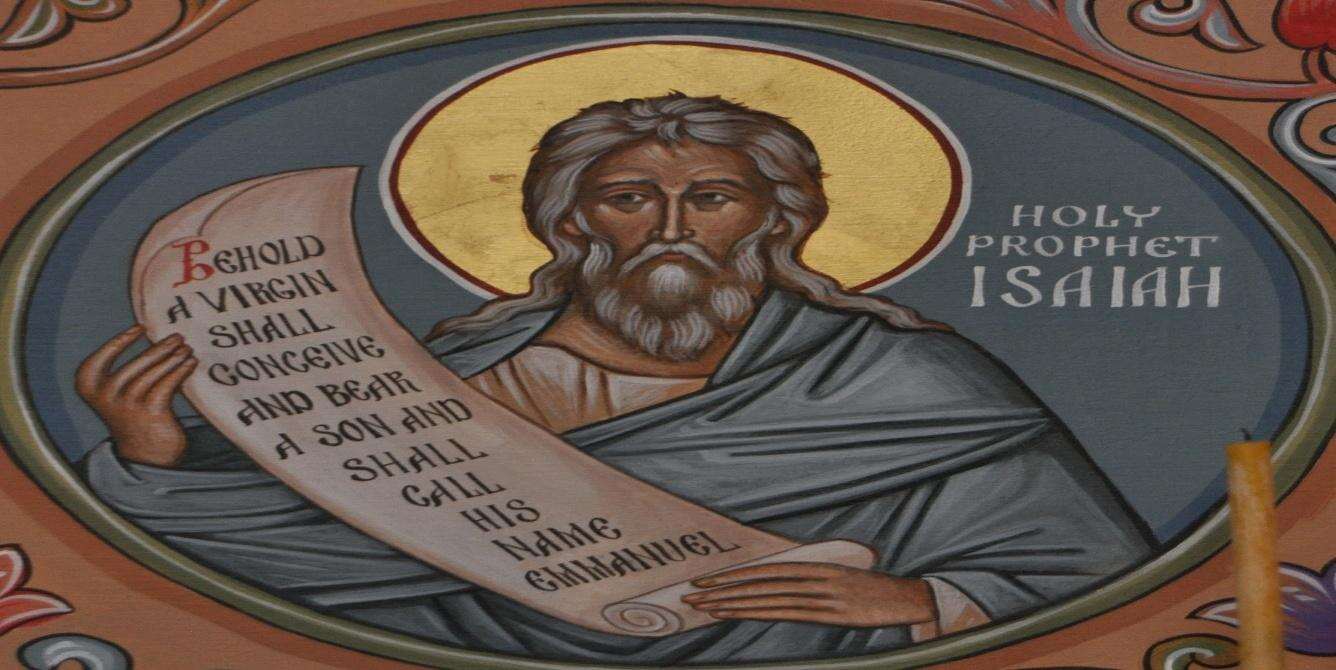
God used the prophet Isaiah to prepare His people for Jesus.13
All have sinned and rebelled against God. God declared that all have rebelled against Him. “‘Sons I have raised and brought up, but they have revolted against Me… 4 Oh, sinful nation, people weighed down with guilt, offspring of evildoers, sons who act corruptly! They have abandoned the Lord, they have despised the Holy One of Israel, they have turned away from Him” (Is. 1:2, 4). This applies to every person because all have sinned against God. “Indeed, there is not a righteous person on earth who always does good and does not ever sin.” (Ecc. 7:20; Ps. 143:2; Ro. 3:10). “For My people have committed two evils: They have abandoned Me, the fountain of living waters, to carve out for themselves cisterns, broken cisterns that do not hold water.” (Jer. 2:13).
An unrepentant sinner is dumber than an animal. God lamented that farm animals know their owner better than His people did. ‘“3 An ox knows its owner, and a donkey its master’s manger, but Israel does not know, My people do not understand.”’ (Is. 1:3). Jeremiah contains God’s similar rebuke. “Even the stork in the sky knows her seasons; and the turtledove, the swallow, and the crane keep to the time of their migration; but My people do not know the judgment of the LORD.” (Jer. 8:7). “The leaders and people of Judah were not like dumb animals, such as the ox or the donkey. They were dumber than dumb animals. The ox at least knows its owner, but Judah didn’t know who owned them. The donkey knows who takes care of him, but Judah didn’t know who took care of them. No animal has ever offended or resisted or rejected or disobeyed God the way every human being has. Any animal is a more faithful servant of God than the best human.” (David Guzik on Is. 1:3) (emphasis original).14 In contrast, Jesus’ followers know Him. “I am the good shepherd, and I know My own, and My own know Me,” (Jo. 10:14).
An unrepentant sinner faces God’s judgment. In a state of unrepentant sin, mankind is an enemy against God and subject to His judgment. “Where will you be stricken again, as you continue in your rebellion?” The entire head is sick and the entire heart is faint. 6 From the sole of the foot even to the head there is nothing healthy in it,…” (Is. 1:5a). “But they rebelled and grieved His Holy Spirit; Therefore He turned Himself to become their enemy, He fought against them.” (Is. 63:10; Ro. 5:10).
Sin is a disease of the soul that requires a cure. God referred to unrepentant sinners as sick from head to toe. “The entire head is sick and the entire heart is faint. 6 From the sole of the foot even to the head there is nothing healthy in it,…” (Is. 1:5b-6). The Christian faith has many wonderful traditions. The Eastern Orthodox Church adds to our understanding by emphasizing how sin must be understood and treated as a disease.15
2. Seeking Jesus’ Mercy and Grace. Because All Have Sinned, Seek Out Jesus’s Mercy and Grace. Is. 1:7-9.
Although His people deserved judgment, God offered mercy and grace. If the Jews did not repent, the Assyrian empire would destroy them. But God offered them hope if they repented. “7 Your land is desolate, your cities are burned with fire; as for your fields, strangers are devouring them in front of you; it is desolation, as overthrown by strangers. 8 The daughter of Zion is left like a shelter in a vineyard, like a watchman’s hut in a cucumber field, like a city under watch. 9 If the Lord of armies had not left us a few survivors, we would be like Sodom, we would be like Gomorrah.” (Is. 1:7-9). “It is owing entirely to the mercy of God, that we are not like Sodom. The prophet traces this not to the goodness of the nation, not to any power or merit of theirs, but solely to the mercy of God. This passage the apostle Paul has used in an argument to establish the doctrine of divine sovereignty in the salvation of people;” (Albert Barnes on Is. 1:9).16
If they continued to rebel, Israel and Judah faced deportation. At the time Isaiah wrote, King Sennacherib of Assyria was destroying Israel and would soon threaten Judah. The Jews faced defeat and deportation if they did not turn back to God. “7 Your land is desolate, your cities are burned with fire; as for your fields, strangers are devouring them in front of you; it is desolation, as overthrown by strangers.” (Is. 1:7). Before they even entered the Promised Land, God warned the Jews through Moses that they would be deported if they rebelled against Him. “You, however, I will scatter among the nations, and I will draw out a sword after you, as your land becomes desolate and your cities become ruins.” (Lev. 26:33). “Furthermore, the LORD will scatter you among all the peoples, from one end of the earth to the other; and there you will serve other gods, made of wood and stone, which you and your fathers have not known.” (Dt. 28:64).
Jesus offers mercy and grace to all who accept Him as Lord and Savior.
God offers His mercy and grace to repentant sinners. Because of God’s people’s sinful and rebellious nature, they would suffer the same final destruction as Sodom and Gomorrah if God were not filled with mercy and grace. “9 If the Lord of armies had not left us a few survivors, we would be like Sodom, we would be like Gomorrah.” (Is. 1:9). God destroyed Sodom and Gomorrah because it openly embraced evil (Gen. 19). Jesus warns that those who reject Him face a similar fate. (Matt. 10:15; 11:23-24). Paul later quoted from Isaiah’s words to urge believers to accept Jesus’ mercy and grace. “And just as Isaiah foretold: ‘If the Lord of Armies had not left us descendants, we would have become like Sodom, and would have been like Gomorrah.”’ (Ro. 9:29). “The LORD’S acts of mercy indeed do not end, for His compassions do not fail.” (Lam. 3:22).
3. Spirit-Led Obedience: Your Obedience Should be From the Heart, Spirit-Led, and More Than Just a Ritual. Is. 1:10-15.
Jesus wants your obedience to come out of your love for Him, not out of mindless ritual. God rejected His people’s ritual sacrifices. They offered pious public acts while their hearts were far from Him. “10 Hear the word of the Lord, you rulers of Sodom; listen to the instruction of our God, You people of Gomorrah! 11 ‘What are your many sacrifices to Me?’ Says the Lord. ‘I have had enough of burnt offerings of rams and the fat of fattened cattle; and I take no pleasure in the blood of bulls, lambs, or goats. 12 When you come to appear before Me, who requires of you this trampling of My courtyards? 13 Do not go on bringing your worthless offerings, incense is an abomination to Me. New moon and Sabbath, the proclamation of an assembly— I cannot endure wrongdoing and the festive assembly. 14 I hate your new moon festivals and your appointed feasts, they have become a burden to Me; I am tired of bearing them. 15 So when you spread out your hands in prayer, I will hide My eyes from you; yes, even though you offer many prayers, I will not be listening. Your hands are covered with blood.” (Is. 1:10-15). “No book in the Bible so clearly exposes the falsehood of salvation by religious works (1:11) as does Isaiah. It is by repentance and faith alone (30:15) that sinners are justified in the sight of such a holy Judge. This faith is a gift of God’s revelation to the elect (53:1). Good works cannot save us (64:6); faith in Christ alone can.” (Andrew Davis on Is. 1:11).17
God condemned both disobedience and mindless rituals. Isaiah commanded God’s people to “hear” God’s warnings (Is. 1:10). Both he and Ezekiel compared God’s people to Sodom and Gomorrah because of their idolatry and rebellion (Is. 1:10; Ezek. 16:49-50). God desired Spirit-led obedience more than sacrifices offered with a rebellious heart or mindless rituals (Is 1:11-15; Amos 5:21-22). “Samuel said, ‘Does the LORD have as much delight in burnt offerings and sacrifices as in obeying the voice of the LORD? Behold, to obey is better than a sacrifice, and to pay attention is better than the fat of rams.” (1 Sam. 15:22; Hos. 6:6). “The sacrifice of the wicked is an abomination to the LORD, but the prayer of the upright is His delight.” (Prov. 15:8). “The sacrifice of the wicked is an abomination, how much more when he brings it with evil intent!” (Prov. 21:27). Jesus later quoted Isaiah and condemned the Jewish leaders for the same reason. “You hypocrites, rightly did Isaiah prophesy about you, by saying: ‘This people honors Me with their lips, but their heart is far away from Me.”’ (Matt. 15:7-8; Is. 29:13).
Offer your obedience with the right heart and not as a mere ritual. Although God condemned sacrifice offered with a rebellious or disinterred heart, He still expected Spirit-led obedience out of loving devotion. The Law does not provide a path to salvation. But there were several reasons why a believer should voluntarily follow the laws regarding morality and the Ten Commandments as an act of loving devotion. First, according to Jesus, obedience to His Commandments is a sign that you love Him: “If you love Me, you will keep My commandments.” (Jo. 14:15, 21; 15:10; 1 Jo. 5:3; 2 Jo. 1:6; Matt. 19:17; 1 Jo. 2:3). He is the great “I AM” who gave these commandments to Moses (Jo. 8:58). Second, through the study of the Law and through Spirit-led obedience, your sins become known to you (Ro. 3:20; 7:7). If the Law were no longer relevant in any context, there would be no sin to reveal. Also, if you say that you are without sin, the truth is not within you (1 Jo. 1:8). Third, voluntary obedience to the Law and the Holy Spirit can set you free from bondage to sin (Ro. 6:16, 12; Jo. 8:34; Gen. 4:7). By contrast, if you freely embrace sin, God will eventually hand you over to the lusts of the flesh (Rom. 1:24-28; Eph. 4:19; Ps. 81:12). Fourth, you are sanctified or set apart for God and act as a light to others when you comply with these laws (1 Pet. 1:16; 1 Thess. 4:4; Lev. 11:44). When you are holy through moral conduct and a loving heart, you become a light to others (Dt. 4:5-6; Matt. 5:14). Conversely, you dishonor God and repel others when you break His Law (Ro. 2:23-24). Fifth, when you follow the Law, God can hear your prayers (James 5:16). Conversely, when you openly violate these laws, your prayers may be “hindered” (1 Pet. 3:7; Jo. 9:31; Ps. 66:18; Prov. 28:9). Sixth, obedience to the Law is one source (in addition to the Holy Spirit) of God’s wisdom and understanding (Dt. 4:5-6; Ps. 119:98-105; Prov. 1:7). Finally, voluntary compliance with these laws allows God to bless you (Ex. 15:26; Lev. 26:3-13; Dt. 28:2-14). Conversely, He warns of “curses” for those who rebel (Lev. 26:14-37; Dt. 27:15-26; 28:15-68).
Unrepentant sin can “hinder” your prayers. Although God will not permanently forsake a believer (Dt. 31:6; Heb. 13:5), He warns that He will temporarily hide His face from a believer in open rebellion: “But I will surely hide My face in that day because of all the evil which they will do, for they will turn to other gods.” (Dt. 31:18; 32:19-20). When God hid His face from the Jews, He did not “hear” their prayers: “So when you spread out your hands in prayer, I will hide My eyes from you; yes, even though you multiply prayers, I will not listen. Your hands are covered with blood.” (Is. 1:15; 8:17; Ps. 66:18; Prov. 28:9). In the New Testament, God also warns that sin can cause a believer’s prayers to be temporarily “hindered” or impaired (1 Pet. 3:7; Jo. 9:31). The reason for this is that sin cannot be in God’s presence, and He “cannot look on wickedness.” (Hab. 1:13). When you act righteously, your prayers are a sweet aroma to Him (Ps. 141:2; Rev. 5:8; 8:3). But when you are in open rebellion, your prayers are putrid to Him. If you are sinning and you repent of your sins, God is faithful to forgive you (1 Jo. 1:9).
4. Living out God’s Righteousness: The Fruit of Your Faith Should Include Holiness and Good Works Where You Help Others in Need. Is. 1:16-17.
The evidence of your faith should include holiness and helping others in need. Instead of embracing evil, God urged His people to cleanse themselves of sin and be His light by helping others in need. “16 ‘Wash yourselves, make yourselves clean; remove the evil of your deeds from My sight. Stop doing evil, 17 learn to do good; seek justice, rebuke the oppressor, obtain justice for the orphan, plead for the widow’s case.” (Is. 1:16-17). “In opposition to this false service of God, Jehovah calls for moral reformation and enunciates the true conditions on which the restoration of His favor depends.” (Rev. John Skinner [1772-1839], Cambridge Bible for Schools and Colleges on Is. 1:16-17).18
Cleanse yourself of sin so that you can lead a holy life. God called for His people to cleanse themselves of sin. “Wash yourselves, make yourselves clean;” (Is. 1:16). “Wash me thoroughly from my guilt and cleanse me from my sin.” (Ps. 51:2). “Come close to God and He will come close to you. Cleanse your hands, you sinners; and purify your hearts, you double-minded.” (Jam. 4:8). “Therefore, having these promises, beloved, let us cleanse ourselves from all defilement of flesh and spirit, perfecting holiness in the fear of God.” (2 Cor. 7:1). He wants you to cleanse yourself of your sins so that you can lead a holy life: ‘“For I am the LORD your God. Consecrate yourselves therefore, and be holy, for I am holy.”’ (Lev. 11:44; 19:2; Ex. 22:31; 1 Pet. 1:16).
God will bless those who seek His righteousness by helping others in need. The fruit of your faith and your desire to follow Jesus’ righteousness should include helping others: “Learn to do good; seek justice, rebuke the oppressor, obtain justice for the orphan, plead for the widow’s case.” (Is. 1:17). “He has told you, mortal one, what is good; and what does the LORD require of you but to do justice, to love kindness, and to walk humbly with your God?” (Mich 6:8). “Pure and undefiled religion in the sight of our God and Father is this: to visit orphans and widows in their distress, and to keep oneself unstained by the world.” (Jam. 1:27). “Turn from evil and do good, so that you will dwell forever.” (Ps. 37:27). “For the Lord God is a sun and shield; the Lord gives grace and glory; He withholds no good thing from those who walk with integrity.” (Ps. 84:11). “Beloved, do not imitate what is evil, but what is good. The one who does what is good is of God; the one who does what is evil has not seen God.” (2 Jo. 1:11).
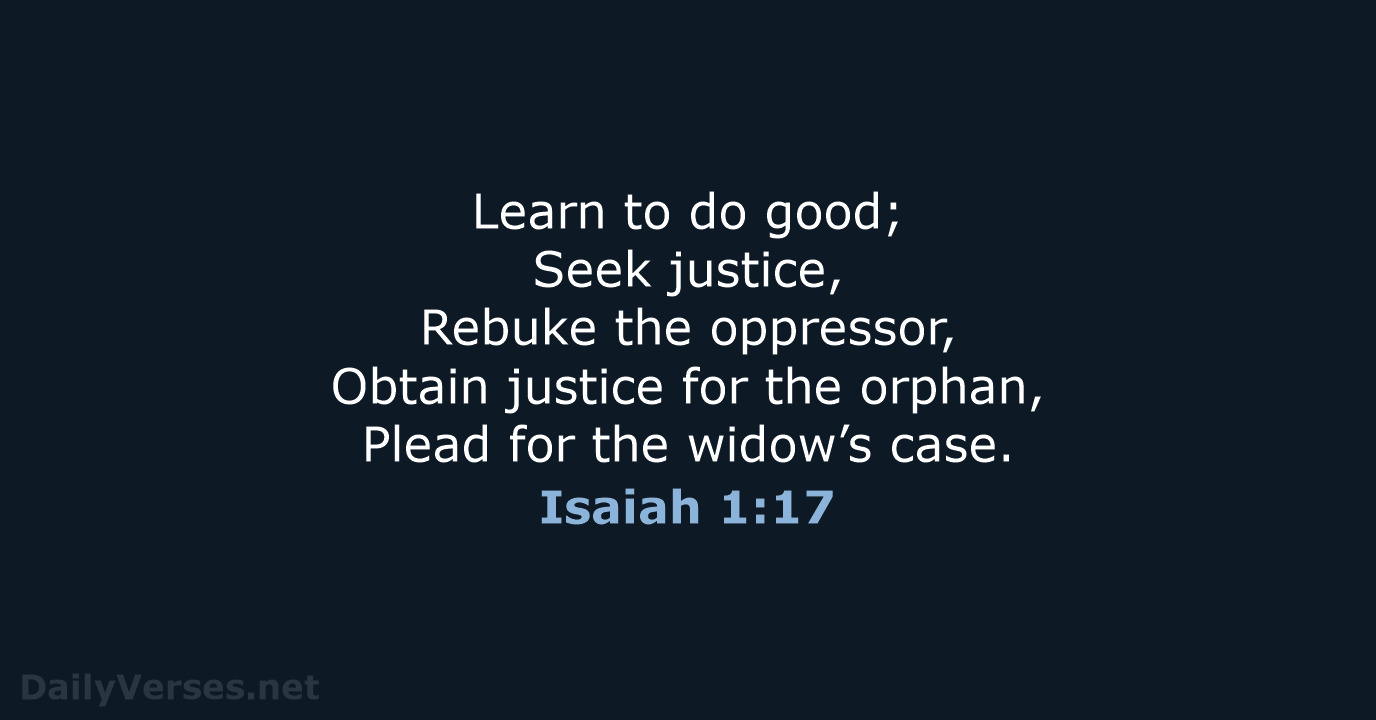
Jesus wants you to be His light to others by helping others in need.19
God will bless the righteous. Although salvation is not based upon your works, God will bless those who seek His righteousness and live in integrity: “Blessed are those who hunger and thirst for righteousness, for they will be satisfied.” (Matt. 5:6). “For You bless the righteous person, LORD, You surround him with favor as with a shield.” (Ps. 5:12). “Fear the LORD, you His saints; for to those who fear Him there is no lack of anything.” (Ps. 34:9). “He will fulfill the desire of those who fear Him; He will also hear their cry for help and save them.” (Ps. 145:19). “What the wicked fears will come upon him, but the desire of the righteous will be granted.” (Prov. 10:24). “One who pursues righteousness and loyalty finds life, righteousness, and honor.” (Prov. 21:21). “for bodily training is just slightly beneficial, but godliness is beneficial for all things, since it holds promise for the present life and also for the life to come.” (1Tim. 4:8).
5. Faith in Jesus’ Atonement: Jesus Offers that Free Gift of Salvation for All Who Have Faith in His Atoning Sacrifice at the Cross. Is. 1:18-20.
With faith in Jesus as your Lord and Savior, He will both cleanse and transform you. God observed that His people’s sins were clear and undeniable. Yet, in a foreshadowing of Jesus’ atonement, He offered to cleanse and transform them. If they refused, they faced judgment. “18 ‘Come now, and let us debate your case,’ Says the Lord, ‘Though your sins are as scarlet, they shall become as white as snow; though they are red like crimson, they shall be like wool. 19 If you are willing and obedient, you will eat the best of the land; 20 but if you refuse and rebel, you will be devoured by the sword.’ For the mouth of the Lord has spoken.” (Is. 1:18-20). “[T]he Lord promises to pardon and cleanse those whom He saves. (This section previews the last twenty-seven chapters of Isaiah, which focus more on God’s grace and forgiveness than on judgment … While Isaiah is a prophet of grace, forgiveness is not unconditional. It comes through repentance. In this regard, the prophet offers his readers the same choice God gave Moses in Deuteronomy 28: a choice between a blessing and a curse. They may choose repentance and obedience in order to reap the benefits of the land, or they can refuse to do so and become victims of foreign oppressors.” (John MacArthur on Is. 1:18-20).20
Jesus took the sins upon Himself of all who are willing to believe. Isaiah prophesied how God would take the sins of His people upon Himself. “All of us, like sheep, have gone astray, each of us has turned to his own way; but the LORD has caused the wrongdoing of us all to fall on Him.” (Is. 53:6). Jesus fulfilled these prophesies. ““I am the good shepherd; the good shepherd lays down His life for the sheep.” (Jo. 10:11). “For even the Son of Man did not come to be served, but to serve, and to give His life as a ransom for many.” (Mk. 10:45). “For while we were still helpless, at the right time Christ died for the ungodly.” (Ro. 5:6). “He made Him who knew no sin to be sin in our behalf, so that we might become the righteousness of God in Him.” (2 Cor. 5:21).
Without faith, salvation is not possible. The salvation requires faith in Jesus’ atonement and your need for it. “And without faith it is impossible to please Him, for the one who comes to God must believe that He exists, and that He proves to be One who rewards those who seek Him.” (Heb. 11:6). “For God so loved the world, that He gave His only Son, so that everyone who believes in Him will not perish, but have eternal life.” (Jo. 3:16). “that if you confess with your mouth Jesus as Lord, and believe in your heart that God raised Him from the dead, you will be saved;” (Ro. 10:9). “They said, ‘Believe in the Lord Jesus, and you will be saved, you and your household.”’ (Acts 16:31).
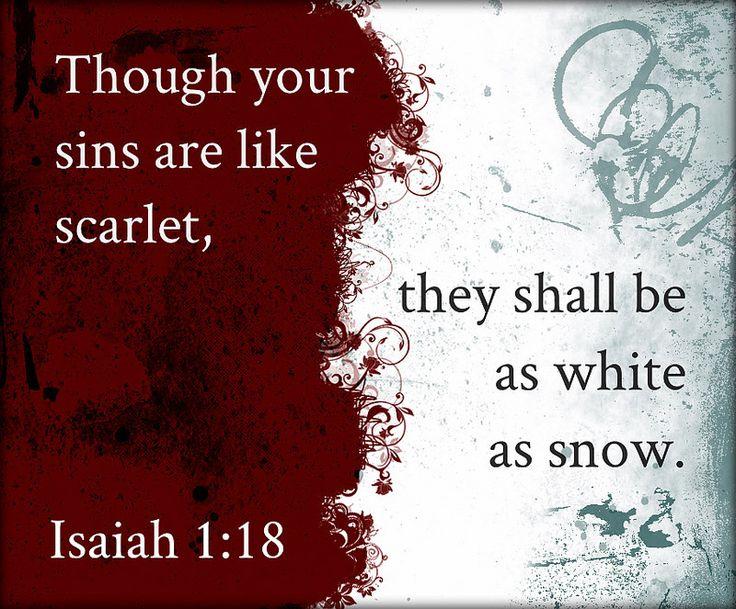
Through faith in Jesus, He offers to purify your sins and make you righteous.21
Each person must choose between salvation and eternal darkness. For the “willing and obedient,” God offered “the best of the land.” (Is. 1:19). In contrast, those who “refuse and rebel,” would be devoured by the sword.” (Is. 1:20). God gave the same message to Moses. “Now it shall be, if you diligently obey the LORD your God, being careful to do all His commandments which I am commanding you today, that the LORD your God will put you high above all the nations of the earth. And all these blessings will come to you and reach you if you obey the LORD your God:” (Dt. 28:1-2). “See, I have placed before you today life and happiness, and death and adversity,” (Dt. 30:15). “May the Holy Spirit make us to be willing and obedient, that we may “eat the good of the land”; and may none of us be found refusing God’s gracious invitation, and rebelling against his authority, lest we perish in our sins!” (Charles Spurgeon on Is. 1:19-20).22
6. Fearing Jesus: To Stay on Jesus’ Narrow Path, Fear Him by Hating Evil and Clinging to What is Good. Is. 1:21-25.
Those who embrace evil and reject God face judgment. God condemned those who rejected Him and embraced evil. To discipline His people, He allowed the Jews’ enemies to invade and defeat them. “21 How the faithful city has become a prostitute, she who was full of justice! Righteousness once dwelt in her, but now murderers. 22 Your silver has become waste matter, your drink diluted with water. 23 Your rulers are rebels and companions of thieves; everyone loves a bribe and chases after gifts. They do not obtain justice for the orphan, nor does the widow’s case come before them. 24 Therefore the Lord God of armies, the Mighty One of Israel, declares, ‘Ah, I will have satisfaction against My adversaries, and avenge Myself on My enemies. 25 I will also turn My hand against you, and smelt away your impurities as with lye; and I will remove all your slag.” (Is. 1:21-25). Here, “the prophet Isaiah addresses the moral and spiritual decay that has taken hold of Jerusalem. This passage serves as a poignant reflection on the transformation from corruption to redemption, highlighting God’s unwavering desire for justice and righteousness to prevail in His people.” (Rev. Michael Johnson).23
God warned the Jews that they faced deportation if they rejected Him. God warned the Jews that they faced deportation before they ever entered the Promised Land. “Because you did not serve the Lord your God with joy and a glad heart, for the abundance of all things; therefore you shall serve your enemies whom the Lord will send against you, in hunger, in thirst, in nakedness, and in the lack of all things;” (Dt. 28:47-48(a)). Through Jeremiah, God later repeated these same warnings. “Then I will cause your enemies to bring it into a land you do not know; for a fire has been kindled in My anger, it will burn upon you.” (Jer. 15:14). “And you will, even of yourself, let go of your inheritance that I gave you; and I will make you serve your enemies in the land which you do not know; for you have kindled a fire in My anger which will burn forever.” (Jer. 17:4).
The Jews turned to evil because they did not fear God. “The fear of the LORD is the beginning of knowledge; fools despise wisdom and instruction.” (Prov. 1:7; Ps. 111:10). The fear of the Lord is defined as hating evil. “The fear of the Lord is to hate evil; ...” (Prov. 8:13). This definition also matches a similar description found in the book of Job. “And to mankind He said, ‘Behold, the fear of the Lord, that is wisdom; and to turn away from evil is understanding.’” (Job 28:28). Jesus came to fulfill these verses by preaching righteousness and hating what He defines as evil in His Word. “The Spirit of the LORD will rest on Him, the spirit of wisdom and understanding, the spirit of counsel and strength, the spirit of knowledge and the fear of the LORD.” (Is. 11:2). Believers must also hate what Jesus defines as evil in His Word. “Hate evil, you who love the LORD, who watches over the souls of His godly ones; He saves them from the hand of the wicked.” (Ps. 97:10). “Hate evil, love good, and establish justice in the gate! Perhaps the LORD God of armies will be gracious to the remnant of Joseph.” (Amos 5:15). “Love must be free of hypocrisy. Detest what is evil; cling to what is good.” (Ro. 12:9).
7. Hope: Jesus Offer the Hope of Redemption and Eternal Life. Is. 1:26-31.
Jesus will redeem and restore those who repent and return to Him. Even though God would be forced to discipline His people with captivity, He would not forsake them. He would restore His people after purifying them of their sins. But those who again rejected God faced darkness and destruction. “26 Then I will restore your judges as at first, and your counselors as at the beginning; after that you will be called the city of righteousness, a faithful city.’ 27 Zion will be redeemed with justice and her repentant ones with righteousness. 28 But wrongdoers and sinners together will be broken, and those who abandon the Lord will come to an end. 29 You certainly will be ashamed of the oaks which you have desired, and you will be embarrassed by the gardens which you have chosen. 30 For you will be like an oak whose leaf withers away, or like a garden that has no water. 31 The strong man will become like flax fiber, and his work a spark.’ So they shall both burn together and there will be no one to extinguish them.” (Is. 1:26-31). “God will bring back a time when the nation will renew its first love, and be as it was in the days of Moses and Joshua … The city of righteousness; or, of justice. The prophecy may have been fulfilled in part by the earthly Jerusalem under Zerubhabel, Ezra, and the Maccabees. but is mainly fulfilled in the heavenly Jerusalem - the Church of God, the true Israel.” (Pulpit Commentary on Is. 1:26) (bold in original).24
Jesus offers the hope of restoration for all who turn to Him. Like Isaiah, Jeremiah also promised God’s restoration after He purified Israel of its sins. “And I will restore the fortunes of Judah and the fortunes of Israel, and will rebuild them as they were at first. And I will cleanse them from all their wrongdoing by which they have sinned against Me, and I will forgive all their wrongdoings by which they have sinned against Me and revolted against Me.” (Jer. 33:7-8). “For behold, days are coming,’ declares the LORD, ‘when I will restore the fortunes of My people Israel and Judah.’ The LORD says, ‘I will also bring them back to the land that I gave to their forefathers, and they shall take possession of it.’” (Jer. 30:3). Moses also promised Israel’s restoration (Dt. 30:3).
Jesus offers all believers both redemption and eternal life. God promised believers that they could live in “city of righteousness, a faithful city.’” (Is. 1:26). This foreshadowed the New Jerusalem. “And I saw the holy city, new Jerusalem, coming down out of heaven from God, prepared as a bride adorned for her husband.” (Rev. 21:2). But those who reject Jesus face eternal darkness, sorrow, and misery (Matt. 8:12; 22:13; 25:30).

Jesus offers the hope of eternal life for all who accept Him as Lord and Savior.25
Meaning, origin and history of the name Isaiah - Behind the Name↩︎
Isaiah’s Message of Judgment and Grace - The Master's University↩︎
Image credit: Michelangelo Buonarroti: The Prophet Isaiah↩︎
J. Alex Motyer, The Prophecy of Isaiah, An Introduction & Commentary (InterVarsity Press, 1993), p. 18.↩︎
John MacArthur, Isaiah, The Promise of the Messiah (Thomas Nelson Publishers, 2020), Introduction p. vi.↩︎
John Oswalt, The Book of Isaiah Chapters 1 -39 (William B. Eerdmans Publishing Company, 1986), pgs. 53-54.↩︎
Every Christian Should Memorize This Chapter for Good Friday – Weswhite.net↩︎
Andrew Davis, Christ-Centered Exposition, Exalting Jesus in Isaiah (B&H Publishing Group, 2017), p. 4.↩︎
J. Alex Motyer, The Prophecy of Isaiah, An Introduction & Commentary (InterVarsity Press, 1993), p. 17.↩︎
Raymond Ortlund Jr., Preaching the Word, Isaiah God Saves Sinners (Crossway, 2005), p. 19; citing Rashi, Ibn Ezra, Radak: Babylonian Talmud, Megilla 10b, Sota 10b.↩︎
Edward Young, The Book of Isaiah, Volume 1 / Chapters 1-18 (William B. Eerdmans Publishing Company, 1965, reprinted 1992), p. 31.↩︎
Image credit: Advent: The Prophet Isaiah↩︎
The Orthodox Faith - Volume IV - Spirituality - Sickness, Suffering, and Death - Sickness - Orthodox Church in America↩︎
Andrew Davis, Christ-Centered Exposition, Exalting Jesus in Isaiah (B&H Publishing Group, 2017), p. 6.↩︎
Image credit: Isaiah 1:17 - Bible verse (NASB) - DailyVerses.net↩︎
John MacArthur, Isaiah, The Promise of the Messiah (Thomas Nelson Publishers, 2020), Introduction p. 4.↩︎
Image credit: Isaiah 1:18↩︎
Isaiah 1 Commentary - Spurgeon's Verse Expositions of the Bible↩︎
Image credit: The New Jerusalem - Eyes to See the Revelation - A Spiritual Journey↩︎