Isaiah 2: Lessons For Choosing Between Hope in Jesus Christ and Despair Without Him
Introduction: In Isaiah 2, Isaiah gave God’s people a stark choice. They could choose the blessings that God offers or judgment and sorrow by following the empty idols of the world. Through Isaiah, Jesus reveals that His blessings are available to all with: (1) faith, (2) obedience, (3) trust, (4) faithfulness, (5) humility, (6) repentance, and (7) diligence in turning to Him.
First, to give His people hope, God gave Isaiah the prophecy of a glorious future for His people under the righteous reign of the Messiah. With faith, Jesus also offers all who believe the hope of a future paradise under His righteous reign. Second, because God is righteous, Isaiah called upon God’s people to return to God and walk in His light. The fruit of your faith should also include a desire to obey Jesus out of gratitude and walk in His light. Third, Isaiah condemned God’s people for trusting in the idols of the world over God. Jesus also wants you to place your trust in Him and not in worldly things. Fourth, Isaiah condemned those with such little faith in God that they bowed down and worshiped the false, pagan gods. Anything that you serve can become your god. Because Jesus is faithful to you, the fruit of your faith should include faithfulness to Him. Fifth, Isaiah warned that the prideful will be humbled. The fruit of your faith should also include humility. Sixth, Isaiah prophesied about a future “Day of the Lord” when God’s enemies who refuse to repent will face a terrible judgment. Because all have sinned, Jesus wants you to repent of your sins and warn others to do so as well. Finally, Isaiah warned against people trusting in themselves because life can quickly end at any moment like a vapor. Because your life can end at any time, don’t delay in turning to Jesus as your Lord and Savior.
1. Faith: With Faith, Jesus Offers All Who Believe the Hope of a Future Paradise Under His Righteous Reign. Is. 2:1-4.
Before giving God’s judgments, Isaiah gave God’s people a reason for hope and faith. Although God’s people had rebelled and faced judgment, Isaiah gave them hope in the Messiah if they repented and returned to faith-led obedience. “1 The word which Isaiah the son of Amoz saw concerning Judah and Jerusalem. 2 Now it will come about that in the last days the mountain of the house of the Lord will be established as the chief of the mountains, and will be raised above the hills; and all the nations will stream to it. 3 And many peoples will come and say, ‘Come, let’s go up to the mountain of the Lord, to the house of the God of Jacob; so that He may teach us about His ways, and that we may walk in His paths.’ For the law will go out from Zion and the word of the Lord from Jerusalem. 4 And He will judge between the nations, and will mediate for many peoples; and they will beat their swords into plowshares, and their spears into pruning knives. Nation will not lift up a sword against nation, and never again will they learn war.” (Is. 2:1-4). “The main focus of attention was upon Israel’s rebellion, hypocrisy, and injustice. Suddenly here, with no transition at all, the focus is upon Israel’s glorious destiny as a lighthouse to the nations for true and peace. One is tempted to ask, ‘What happened?’ Will God merely forget Israel’s sin? How can this Israel become that Israel? …Whatever the present may be, however grim the immediate future may be, the distant future beckons the Judeans to live in its certain light … It is motivational. What can convince the present Judeans to live lives of faithfulness and righteousness? Not so much the threat of punishment as the promise of greatness.” (John Oswalt on Is. 1:1-4).1
During the Messianic era, every knee will bow and confess the Messiah as Lord. Isaiah gave the prophecy of a time when the Messiah would become ruler over the world, and everyone would submit to His righteous rule. “Now it will come about that in the last days the mountain of the house of the Lord will be established as the chief of the mountains, and will be raised above the hills; and all the nations will stream to it.” (Is. 2:2). To confirm this prophecy, Michah repeated it. “And it will come about in the last days that the mountain of the house of the LORD will be established as the chief of the mountains. It will be raised above the hills, and the peoples will stream to it.” (Micah 4:1). Similar prophecies exist in the Psalms. “All the ends of the earth will remember and turn to the LORD, and all the families of the nations will worship before You. For the kingdom is the LORD’S and He rules over the nations.” (Ps. 22:27-28). “And may all kings bow down before him, all nations serve him.” (Ps. 72:11). Jesus will fulfill all these prophecies. All will confess Him as Lord. “so that at the name of Jesus every knee will bow, of those who are in heaven and on earth and under the earth,” (Phil. 2:10).
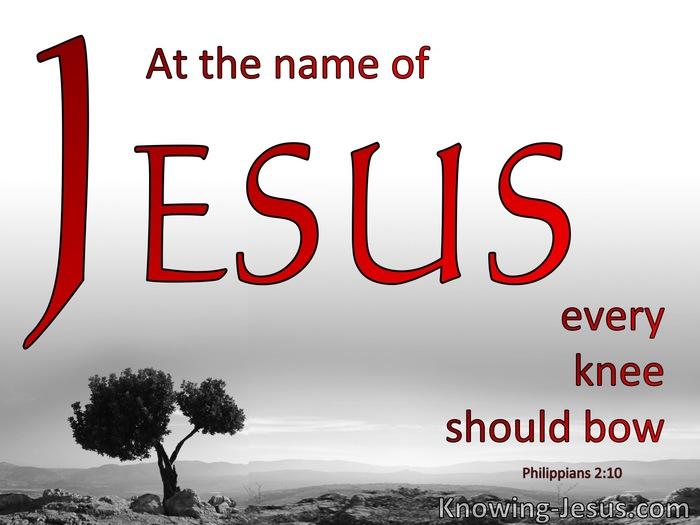
During the Messianic era, every person will confess Jesus as Lord.2
During the Messianic era, people will seek the Messiah’s guidance and follow it. In contrast to the Jews’ ongoing rebellions, the Messiah’s reign will include the submission of His people. They will seek out His wisdom, and they will obey it. “3 And many peoples will come and say, ‘Come, let’s go up to the mountain of the Lord, to the house of the God of Jacob; so that He may teach us about His ways, and that we may walk in His paths.’ For the law will go out from Zion and the word of the Lord from Jerusalem.” (Is. 2:3). To confirm Isaiah’s prophecy, Michah again repeated it. “Many nations will come and say, ‘Come and let’s go up to the mountain of the LORD and to the house of the God of Jacob, so that He may teach us about His ways, and that we may walk in His paths.’ For from Zion will go forth the law, and the word of the LORD from Jerusalem.” (Micah 4:2). Zechariah also gave this prophecy. “So many peoples and mighty nations will come to seek the LORD of armies in Jerusalem, and to plead for the favor of the LORD.’” (Zech. 8:22). Jesus will fulfill this with His New Jerusalem. “The nations will walk by its light, and the kings of the earth will bring their glory into it.” (Rev. 21:24).
During the Messianic era, the Messiah’s rule will bring peace. For those with faith, they will live in paradise under the Messiah’s perfect rule where all wars and conflict will come to an end. “4 And He will judge between the nations, and will mediate for many peoples; and they will beat their swords into plowshares, and their spears into pruning knives. Nation will not lift up a sword against nation, and never again will they learn war.” (Is. 2:4). To confirm Isaiah’s prophecy, Michah again repeated it. “And He will judge between many peoples and render decisions for mighty, distant nations. Then they will beat their swords into plowshares, and their spears into pruning hooks; nation will not lift a sword against nation, and never again will they train for war.” (Micah 4:3). Other prophets gave similar prophecies. “On that day I will also make a covenant for them with the animals of the field, the birds of the sky, and the crawling things of the ground. And I will eliminate the bow, the sword, and war from the land, and will let them lie down in safety.” (Hos. 2:18). “And I will eliminate the chariot from Ephraim and the horse from Jerusalem; and the bow of war will be eliminated. And He will speak peace to the nations; and His dominion will be from sea to sea, and from the Euphrates River to the ends of the earth.” (Zech. 9:10). Jesus came to fulfill these prophecies. “For a child will be born to us, a Son will be given to us; and the government will rest on His shoulders; and His name will be called Wonderful Counselor, Mighty God, Eternal Father, Prince of Peace. There will be no end to the increase of His government or of peace on the throne of David and over his kingdom, to establish it and to uphold it with justice and righteousness from then on and forevermore. The zeal of the LORD of armies will accomplish this.” (Is. 9:6-7; Jer. 23:5-6; Lk. 1:32-33; Heb. 1:8; Rev. 11:15).
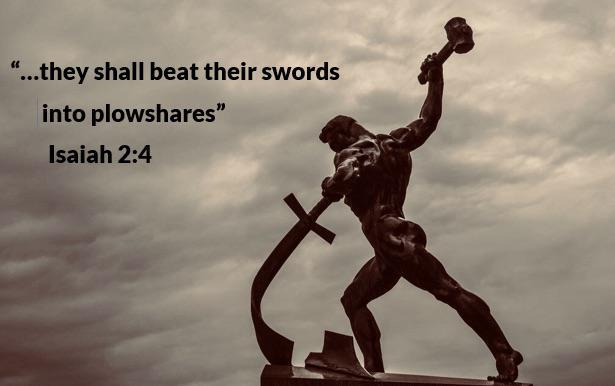
The Messianic era will be a time of peace under Jesus without conflicts or wars.3
Different views regarding Jesus’ Millennial reign. Isaiah’s prophesies correspond with the 1,000-year reign of Jesus Christ (Rev. 20:1-7). But well-meaning Christians have disagreed over time about how to interpret Jesus’ reign. “Premillennialists” believe that Jesus will return and rule during a literal 1,000-year reign on Earth. “Amillennialists” believe that the “millennium” is symbolic of the present Church age. Another similar view, called “postmillennialism”, holds that Jesus will return after a spiritual golden age of the Church. Many Church fathers were premillennialists, also called “chiliasm.” These included: Papias of Hierapolis (60-130 AD), Justin Martyr (100-165 AD), Irenaeus of Lyons (130-202 AD), Tertullian (160-225 AD), and Hippolytus of Rome (170-235 AD). But Augustine of Hippo (354-430 AD) was an amillennialist. The Catholic Church and Eastern Orthodox Churches adopted Augustine’s view. With the Protestant Reformation, Martin Luther (1483-1546), John Calvin (1509-1564), and Jacobus Arminius (1560 – 1609) maintained amillennial views while challenging other beliefs of the Catholic Church. Thus, many early Protestant churches were also amillennialists. These include Lutherans, Anglicans, and Reformed/Calvinist Churches, like Presbyterians and many but not all Methodists. But other Protestant writers adopted the premillennialist views of the early Church fathers. These included: John Gill (1697-1771), Horatius Bonar (1808-1889), J.C. Ryle (1816-1900), Charles Spurgeon (1834-1892), and others. Yet the belief in a premillennial, pre-tribulation rapture was not adopted by any religious institution before John Nelson Darby (1800-1882), called the “father of dispensationalism” and C.I. Scofield (1843-1921), the author of the Scofield Reference Bible.4 Churches holding some form of premillennial view include, but are not limited to, evangelical (non-denominational) Protestant churches, the Southern Baptist Convention, and charismatic churches, like the Assemblies of God. This list is not all inclusive, and alternative views exist in almost every Christian demonization.
2. Obedience: Out of Gratitude and Devotion, Respond to Jesus’ Goodness, Mercy, and Grace by Obeying Him and Walking in His Light. Is. 2:5.
The fruit of your faith should include Spirit-led obedience. In response to God’s promise of a bright future under the reign of the Messiah, Isaiah urged God’s people to repent and walk in faithful obedience. “5 Come, house of Jacob, and let’s walk in the light of the Lord.” (Is. 2:5). “O house of Jacob - This is a direct address, or exhortation, of the prophet to the Jews. It is made in view of the fact that God had gracious purposes toward them. He intended to distinguish them by making them the source of blessings to all nations. As this was to be their high destiny, he exhorts them to devote themselves to him, and to live to his honor. The word ‘house’ here means the ‘family, or nation.’ The phrase is applied to the Jews because their tribes were descended from the twelve sons of Jacob…In the light of the Lord - The sense of this is: Let us obey the commandments of Yahweh; … The idea may be thus expressed: ‘Let us not walk in the darkness and error of sin and idolatry, but in the light or instruction which God sheds upon us by his law. He teaches us what we should do, and let us obey him.’” (Albert Barnes on Is. 2:5).5
God blesses those who walk in faith-led obedience. Although God does not promise a life free from pain, He does bless those who obey Him and walk with integrity. “Is it being said, house of Jacob: ‘Is the Spirit of the LORD impatient? Are these His works?’ Do My words not do good for the one walking rightly?” (Micah 2:7). “For the LORD God is a sun and shield; The LORD gives grace and glory; He withholds no good thing from those who walk with integrity.” (Ps. 84:11). “Blessed are the people who know the joyful sound! LORD, they walk in the light of Your face.” (Ps. 89:15). “He stores up sound wisdom for the upright; He is a shield to those who walk in integrity,” (Prov. 2:7).

Walk in Jesus’ light to be a light to the lost.6
Your obedience to Jesus is a sign of your love for Him. According to Jesus, obedience to His Commandments is a sign that you love Him: “If you love Me, you will keep My commandments.” (Jo. 14:15, 21; 15:10; 1 Jo. 5:3; 2 Jo. 1:6; Matt. 19:17; 1 Jo. 2:3). He is the great “I AM” who gave these commandments to Moses (Jo. 8:58). Through the study of the Law and through Spirit-led obedience, your sins become known to you (Ro. 3:20; 7:7). If the Law were no longer relevant in any context, there would be no sin to reveal. Also, if you say that you are without sin, the truth is not within you (1 Jo. 1:8). Thus, every believer should recognize their sins, repent, and obey Jesus out of devotion to Him.
You are Jesus’ light of hope in a dark world. Jesus is the “Light of the world.” (Jo. 9:5; 8:12). Until He returns, “You are the light of the world.” (Matt. 5:14). To be an example to others, He implores “that you will prove yourselves to be blameless and innocent, children of God above reproach in the midst of a crooked and perverse generation, among whom you appear as lights in the world,” (Phil. 2:15; Prov. 4:18).
3. Trust: Place Your Trust in Jesus and Not Worldly Idols. Is. 2:6-8.
Place your trust in God alone. Isaiah warned that God’s people would be judged for trusting in worldly idols instead of God. “6 For You have abandoned Your people, the house of Jacob, because they are filled with influences from the east, and they are soothsayers like the Philistines. They also strike bargains with the children of foreigners. 7 Their land has also been filled with silver and gold and there is no end to their treasures; their land has also been filled with horses, and there is no end to their chariots. 8 Their land has also been filled with idols; they worship the work of their hands, that which their fingers have made.” (Is. 2:6-8). “Verses 6-8 contain things on which nations pride themselves: broad-minded tolerance (6), financial reserves (7a), military potential, (7b) religious interest (8). These are not matters for pride, says Isaiah, but things which have brought low and humbled all alike…When human beings depart from the Lord – no matter what they depart to – they progressively lose their true humanity. Their dignity, the image of God, is humiliated.” (J. Motyer on Is. 2:6-8).7
God’s people placed their trust in Assyrian idols over God. Isaiah gave a list of reasons for why God had removed His protection. They were “filled with influences from the east, and they are soothsayers like the Philistines.” (Is. 2:6). They struck “bargains with the children of foreigners.” (Is. 2:6), and “Their land has also been filled with idols;” (Is. 2:8). This related to King Ahaz’ attempt to place his trust in the Assyrian pagan idols instead of God. “Now King Ahaz went to Damascus to meet Tiglath-pileser king of Assyria, and he saw the altar which was at Damascus; and King Ahaz sent to Urijah the priest the pattern of the altar and its model, according to all its workmanship. So Urijah the priest built an altar; according to everything that King Ahaz had sent from Damascus, in that way Urijah the priest made it, before the coming of King Ahaz from Damascus. And when the king came from Damascus, the king saw the altar; then the king approached the altar and went up to it,” (2 Kgs. 16:10-12). “Jotham and Ahaz, two of the kings under whom Isaiah prophesied, had failed to remove the idolatrous high places from the land (see 2 Kings 15:35; 16:4).” (John MacArthur on Is. 2:8).8 “For your gods are as many as your cities, Judah; and as many as the streets of Jerusalem are the altars you have set up to the shameful thing, altars for burning incense to Baal.” (Jer. 11:13).
God’s people should not trust in their own strength. Isaiah also condemned God’s people for trusting their military forces and their wealth. “Their land has also been filled with silver and gold and there is no end to their treasures; their land has also been filled with horses, and there is no end to their chariots.” (Is. 2:7). To prevent kings from trusting in their own power, God prohibited them from acquiring too many military horses and excessive wealth. “In any case, he is not to acquire many horses for himself, nor shall he make the people return to Egypt in order to acquire many horses, since the LORD has said to you, ‘You shall never again return that way.’… nor shall he greatly increase silver and gold for himself.” (Dt. 17:16-17). The Jews ignored these rules.
Place your trust in God and not in your wealth. Just as Judah’s wealth could not save it from destruction, those who trust in their wealth also will not be spared during the day of judgment. “Neither their silver nor their gold will be able to save them on the day of the LORD’S anger; and all the earth will be devoured by the fire of His jealousy, for He will make a complete end, indeed a horrifying one, of all the inhabitants of the earth.” (Zeph. 1:18). “Riches do not benefit on the day of wrath, but righteousness rescues from death.” (Prov. 11:4). “For what does it benefit a person to gain the whole world, and forfeit his soul? For what could a person give in exchange for his soul?” (Mk. 8:36-37).
4. Faithfulness: The Fruit of Your Faith Should Include Faithfulness. Is. 2:9.
Do not worship anything besides God. Isaiah condemned those who trust God so little that they bowed down and worshiped the false, pagan gods. “9 So the common person has been humbled and the person of importance has been brought low, but do not forgive them. “There was plenty of worship (bow down) in Judah, and plenty of people humbling themselves. They were simply worshipping the wrong things and humbling themselves before the wrong things! We know how to bow down, we know how to humble ourselves; we just don’t find it easy to direct it properly towards the LORD. We are more than happy to bow down and humble ourselves for something of our choosing but often find it difficult to do it for the LORD. The application is sobering: Therefore do not forgive them. Their worship of foreign gods, of riches, and of idols was sincere. It may have been ennobling or helpful to society. But it was a rejection of the LORD God and was therefore unforgivable.” (David Guzik on Isa. 2:9) (emphasis in original).9
What you serve may be your god. God’s First Commandment prohibits the worship of other gods. “I am the Lord your God who brought you out of the land of Egypt, out of the house of slavery. You shall have no other gods before Me.” (Ex. 20:2-3; Dt. 5:6-7). To many people, the First Commandment may seem like the easiest commandment to obey. The formal worship of multiple deities is mostly limited to Hinduism and the remaining indigenous religions of the world. For those who accept that God exists, most people have accepted that only one God exists, even if they disagree as to who He is. But the First Commandment governs more than the formal worship of a deity. It governs who you serve with your time, talents, thoughts, and treasures. According to the Apostle Paul, we are slaves to whatever we serve: “Do you not know that when you present yourselves to someone as slaves for obedience, you are slaves of the one whom you obey, either of sin resulting in death, or of obedience resulting in righteousness?” (Ro. 6:16; Gal. 4:7-9). Jesus also explains that “for where your treasure is, there your heart will be also.” (Matt. 6:21; Lk. 12:34). Paul also tells us not to trust in our riches but in the God who provides them: “Instruct those who are rich in this present world not to be conceited or to fix their hope on the uncertainty of riches, but on God, who richly supplies us with all things to enjoy.” (1 Tim. 6:17). In other words, if your heart is focused on your money, yourself, success, reputation, or something else, that is your “god.” Thus, an atheist, a humanist, a secularist, or a carnal believer are all just as guilty of breaking this Commandment as the person who worships a pagan god. Once we understand, we must come to accept that the First Commandment is both the hardest commandment to obey and the one that we most frequently break. With the struggles of life, keeping God at the center of your life requires constant effort. Ask God to reveal if your “treasure” is with Him or if it lies in prestige, recognition, work, money, family, lust, or something else.
Be faithful because God is faithful to you. In response to God’s faithfulness, He wants you to be faithful as well. “for we walk by faith, not by sight—” (2 Cor. 5:7). “A faithful man will abound with blessings, . . .” (Prov. 28:20(a)). “But the goal of our instruction is love from a pure heart and a good conscience and a sincere faith.” (1 Tim. 1:5). “but holding to the mystery of the faith with a clear conscience.” (1 Tim. 3:9).
God gives free will, and He will not force your love. “We need hope. But we also need humility. Israel is no dreamy idealist. He sees human pride as the greatest impediment to the world as it should be … If we fill ourselves with anything other than God, we are not enriched; we are brought low. There can come a point of no return, where God’s people are so filled with the wrong things and so empty of a sense of God that forgiveness becomes unthinkable, and God moves on.” (Raymond Ortlund Jr on Is. 2:9). 10
5. Humility: The Fruit of Your Faith Should Include Humility. Is. 2:10-11.
Humble yourself before God. God will humble the proud who refuse to repent. “10 Enter the rocky place and hide in the dust from the terror of the Lord and from the splendor of His majesty. 11 The proud look of humanity will be brought low, and the arrogance of people will be humbled; and the Lord alone will be exalted on that day.” (Is. 2:10-11). “I am the Lord your God who brought you out of the land of Egypt, out of the house of slavery. You shall have no other gods before Me.” (Ex. 20:2-3; Dt. 5:6-7). The lofty looks of man . . . The self-assertion which is the essential element of pride may be found at the opposite extremes of social life.” (Charles Ellicott of Is. 2:10-11).11
Take God’s warnings about pride seriously. Pride is a serious sin that leads to dishonor and judgment if a person fails to repent of this sin. “When pride comes, then comes dishonor; but with the humble there is wisdom.” (Prov. 11:2). “Everyone who is proud in heart is an abomination to the Lord; be assured, he will not go unpunished …Pride goes before destruction, and a haughty spirit before stumbling.” (Prov. 16:5,18). To be honored in your relationships with God and others, be humble. “Before destruction the heart of a person is haughty, but humility goes before honor.” (Prov. 18:12). “For the LORD is exalted, yet He looks after the lowly, but He knows the haughty from afar.” (Ps. 138:6). “So the common people will be humbled and the person of importance brought low, the eyes of the haughty also will be brought low.” (Is. 5:15).
God will exalt you when you are humbled for Him. If you humble yourself, God will one day exalt you: “Whoever exalts himself shall be humbled, and whoever humbles himself shall be exalted.” (Matt. 23:12; Lk. 14:11). “Therefore humble yourselves under the mighty hand of God, so that He may exalt you at the proper time,” (1 Pet. 5:6). “Humble yourselves in the presence of the Lord, and He will exalt you.” (Jam. 4:10).
6. Repentance: Repent of Your Sins and Turn Back to Jesus. Is. 2:12-21.
Those who reject God face judgment. Isaiah prophesied about the Day of the Lord when God’s enemies who refuse to repent will face His judgment. “12 For the Lord of armies will have a day of reckoning against everyone who is arrogant and haughty, and against everyone who is lifted up, that he may be brought low. 13 And it will be against all the cedars of Lebanon that are lofty and lifted up, against all the oaks of Bashan, 14 Against all the lofty mountains, against all the hills that are lifted up, 15 against every high tower, against every fortified wall, 16 against all the ships of Tarshish and against all the delightful ships. 17 And the pride of humanity will be humbled and the arrogance of people will be brought low; and the Lord alone will be exalted on that day, 18 and the idols will completely vanish. 19 People will go into caves of the rocks and into holes in the ground away from the terror of the Lord and the splendor of His majesty, when He arises to terrify the earth. 20 On that day people will throw away to the moles and the bats their idols of silver and their idols of gold, which they made for themselves to worship, 21 in order to go into the clefts of the rocks and the crannies of the cliffs before the terror of the Lord and the splendor of His majesty, when He arises to terrify the earth.” (Is. 2:12-21). “Verses 12-22. - THE DESCRIPTION OF THE DAY OF THE LORD. The prophet, now, having announced that God is about to visit his people in anger (vers. 10, 11), proceeds to describe in highly rhetorical language the visitation itself, (1) as to its object, which is to bring down all that exalts itself against God (ver. 12); (2) as to its scope - it is to be upon trees, mountains, hills, towers, walls, ships, pleasant pictures, idols (vers. 13-18); (3) as to its practical effect, which will be to alarm and terrify, to make men fly and hide themselves, and to produce contempt of the idols in which they have so long trusted (vers. 19-21).” (Pulpit Commentary on Is. 2:12-22).12
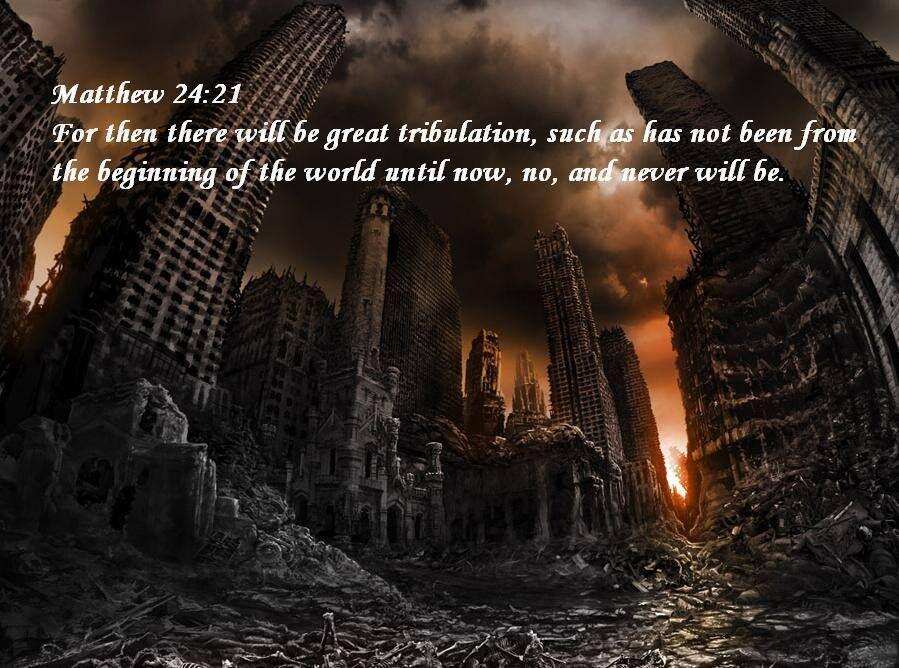
During the Day of the Lord, the idols of mankind will be destroyed.13
The Day of the Lord will bring God’s vengeance. Many prophets came to warn sinners to repent before it is too late and God pours out His wrath on the Day of the Lord. “Wail, for the day of the LORD is near! It will come as destruction from the Almighty.” (Is. 13:6). “For that day belongs to the Lord GOD of armies, a day of vengeance, so as to avenge Himself on His foes; and the sword will devour and be satisfied, and drink its fill of their blood; for there will be a slaughter for the Lord GOD of armies, in the land of the north at the river Euphrates.” (Jer. 46:10). “Woe for the day! For the day of the LORD is near, and it will come as destruction from the Almighty.” (Joel 1:15). “The great day of the LORD is near, near and coming very quickly; Listen, the day of the LORD! In it the warrior cries out bitterly.” (Zeph. 1:14). “For the day is near, indeed, the day of the LORD is near; it will be a day of clouds, a time of doom for the nations.” (Ezek. 30:3). “For the day of the LORD is near for all the nations. Just as you have done, it will be done to you. Your dealings will return on your own head.” (Obadiah 1:15). “For behold, the day is coming, burning like a furnace; and all the arrogant and every evildoer will be chaff; and the day that is coming will set them ablaze,” says the LORD of armies, ‘so that it will leave them neither root nor branches.”’ (Mal. 4:1). “Blow a trumpet in Zion, and sound an alarm on My holy mountain! Let all the inhabitants of the land tremble, for the day of the LORD is coming; indeed, it is near,” (Joel 2:1).
God will judge the worldly things that people rely upon over Him. Instead of trusting God, prideful people trust in their “high tower” [v. 15] (their achievements), their “every fortified wall” [v. 15] (their strength), “all the delightful ships” [v 16] (their wealth), and “the pride of humanity” [17] (themselves) and “the idols will completely vanish.” (any worldly thing of security) [v. 18] “As particularizing the things they are proud of, in which they trust, and of which they make their boast. The day of the Lord shall be upon those very things in which they put their confidence as their strength and security; he will take from the all their armour wherein they trusted.” (Matthew Henry on Is. 2:15-18).14
God’s destruction will extend to every human idol. Isaiah promised that “the idols will completely vanish.” (Is. 2:18). Other prophets gave similar warnings. “This is what you shall say to them: ‘The gods that did not make the heavens and the earth will perish from the earth and from under these heavens.”’ (Jer. 10:11). ‘“And it will come about on that day,’ declares the LORD of armies, ‘that I will eliminate the names of the idols from the land, and they will no longer be remembered; and I will also remove the prophets and the unclean spirit from the land.”’ (Zech. 13:2). This will be fulfilled during the Great Tribulation. “The fruit you long for has left you, and all things that were luxurious and splendid have passed away from you and people will no longer find them.” (Rev. 18:14).
The Day of the Lord will be so terrible that many will beg for death. For the prideful who refuse to repent, the Day of the Lord will be so terrifying that God’s enemies will hide in the rocks to try to flee from God’s wrath. “People will go into caves of the rocks and into holes in the ground away from the terror of the Lord and the splendor of His majesty, when He arises to terrify the earth.” (Is. 2:19, 21). Many will beg for death to end their suffering. “Also the high places of Aven, the sin of Israel, will be destroyed; thorns and thistles will grow on their altars; then they will say to the mountains, ‘Cover us!’ And to the hills, ‘Fall on us!”’ (Hosea 10:8). To encourage sinners to repent, Jesus and the Apostle John later repeated these same warnings. (Lk. 23:30). “for the great day of their wrath has come, and who is able to stand?” (Rev. 6:17). “Then the kings of the earth and the eminent people, and the commanders and the wealthy and the strong, and every slave and free person hid themselves in the caves and among the rocks of the mountains; and they said to the mountains and the rocks, ‘Fall on us and hide us from the sight of Him who sits on the throne, and from the wrath of the Lamb;’ for the great day of their wrath has come, and who is able to stand?” (Rev. 6:15-17).
God will be exalted on the Day of the Lord. Isaiah declared, “the Lord alone will be exalted on that day,” (Is. 2:17). “The Lord alone has been exalted among men whenever He has been pleased to reveal Himself in the plenitude of His power. The revelations under the law were mainly revelations girt with terror. Under the Old Testament dispensation you find God coming out of His place to shake terribly the earth. When He bows the heavens and comes down, the mountains flew at His presence. The Lord alone was exalted in those days when He vindicated His justice and displayed His power against His enemies. Remember the flood when, after so many years of warning, the ark being prepared for the salvation of the believing few, God was pleased to draw up the flood-gates of heaven and to bid the cataracts of earth leap upward instead of downward, till over all the face of the world there was nothing but one mighty all-devouring wave. When in majestic silence the ark floated over the bosom of the world which had become the grave of Jehovah’s creatures, then the Lord alone was exalted in that day. And when men had multiplied again upon the face of the earth, and His people had gone down into Egypt; you know well the story, how proud Pharaoh said, ‘Who is the Lord that I should obey his voice?’ Exodus 5:2 .” (Charles Spurgeon on Is. 2:17 & 2:11).15 Those who exalt themselves and declare no need for God will meet the same sad fate as Pharaoh.
To save others from the coming judgment, share Jesus’ “good news” of salvation. Every person should feel uncomfortable about the end times judgment. But instead of doing nothing or complaining, Jesus calls upon every believer to share the hope that He has given you so that others don’t suffer this terrible judgment. “Go, therefore, and make disciples of all the nations, baptizing them in the name of the Father and the Son and the Holy Spirit, teaching them to follow all that I commanded you; and behold, I am with you always, to the end of the age.” (Matt. 28:19-20). “but sanctify Christ as Lord in your hearts, always being ready to make a defense to everyone who asks you to give an account for the hope that is in you, but with gentleness and respect;” (1 Pet. 3:15).
7. Diligence: Because Your Life Can End at Any Moment Like a Vapor, Don’t Delay in Turning to Jesus as Your Lord and Savior. Is. 2:22.
Return to God before it is too late. Mankind has no reason to trust itself over God because life is short, like a vapor. If you delay or wait to return to God, you might die unexpectedly and lose your chance to accept Jesus as your Lord and Savior. “22 Take no account of man, whose breath of life is in his nostrils; for why should he be esteemed?” (Is. 2: 22). “Stop trusting in your own righteousness, your religious works and efforts, to save you from sin … Seeing what Jesus has accomplished at the cross and the empty tomb, how can any human achievement compare? So it’s time to level the lofty or high places erected by human pride. …The Lord Jesus will be exalted someday. Therefore, why not exalt him now? Why not live by his Word now?” (Andrew Davis on Is. 2:22).16
In comparison to God, the life of each person will quickly disappear like a vapor. Because life is short, there is no reason for delaying repentance and walking in fellowship with God. “People of low standing are only breath, and people of rank are a lie; in the balances they go up. Together they are lighter than breath.” (Ps. 62:9). “As for man, his days are like grass; Like a flower of the field, so he flourishes.” (Ps. 103:15). “Yet you do not know what your life will be like tomorrow. For you are just a vapor that appears for a little while, and then vanishes away.” (Jam. 4:14). The words “whose breath” (Is. 2:22) is “Literally, ‘who, breath is in his nostrils.’ Here is the reason why it is folly to trust in man; in his nostrils there is a breath. Man’s life is transitory. God had breathed into man the breath that brings life (Gen. 2:7; 7:22). Man therefore does not exist through his own strength. As that breath was breathed into him, so also it may be taken away and depart from him (Ps. 146:4).” (Edward Young on Is. 2:22).17
Don’t delay in repenting of your sins and turning to Jesus. Some might read about a future judgment and say that they have plenty of time to get right with God. But the parable of the ten virgins warns against this type of complacency. Five virgins remained alert. But five became drowsy and fell asleep while waiting for the bridegroom. “Now while the groom was delaying, they all became drowsy and began to sleep.” (Matt. 25:5). Believers must also remain spiritually alert and prepared for Jesus’ return. Life could end at any moment. “Therefore, stay alert—for you do not know when the master of the house is coming, whether in the evening, at midnight, or when the rooster crows, or in the morning—so that he does not come suddenly and find you asleep.” (Mk. 13:35-36). “so then, let’s not sleep as others do, but let’s be alert and sober.” (1 Thess. 5:6). “Be on the alert, stand firm in the faith, act like men, be strong.” (1 Cor. 16:13).
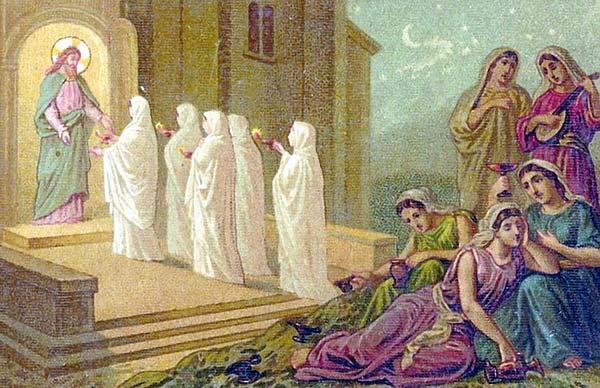
Don’t delay in preparing for Jesus, like the five unprepared virgins.18
John Oswalt, The Book of Isaiah Chapters 1 -39 (William B. Eerdmans Publishing Company, 1986), pgs. 114-116 (italics in original).↩︎
Image credit: What Does Philippians 2:10 Mean?↩︎
Image credit: Isaiah 2:4 : r/rooted_daily↩︎
Image credit: Behold The Lamb Of God↩︎
J. Alex Motyer, The Prophecy of Isaiah, An Introduction & Commentary (InterVarsity Press, 1993), p. 56 (italics in original).↩︎
John MacArthur, Isaiah, The Promise of the Messiah (Thomas Nelson Publishers, 2020), p. 6.↩︎
Raymond Ortlund Jr., Preaching the Word, Isaiah God Saves Sinners (Crossway, 2005), pgs. 52-53.↩︎
Image credit: Matthew 24:21 King James Version (KJV) 21 For then shall be great tribulation, such as was not since the beginning of the world to this time, no, nor ever shall be.↩︎
Isaiah 2 Bible Commentary - Matthew Henry (complete) | Christianity.com (italics in original).↩︎
Isaiah 2 - Spurgeon's Verse Expositions of the Bible - Bible Commentaries - StudyLight.org↩︎
Andrew Davis, Christ-Centered Exposition, Exalting Jesus in Isaiah (B&H Publishing Group, 2017), p. 22.↩︎
Edward Young, The Book of Isaiah, Volume 1 / Chapters 1-18 (William B. Eerdmans Publishing Company, 1965, reprinted 1992), p. 133.↩︎
Image credit: Ten Virgins Parable - Esoteric Meanings↩︎