Isaiah 3: Lessons Regarding Sins That May Lead to God’s Discipline
Introduction: Here, Isaiah moved from God’s general warnings to all His people to His specific warnings against Judah. God’s people had turned from Him. To restore His people, God would need to discipline them out of love if they did not repent of their sins. The sins that would bring about God’s discipline if the Jews did not repent included: (1) self-reliance, (2) rebellion, (3) spiritual blindness, (4) oppressing others, (5) vanity, (6) trusting in yourself, and (7) pride.
First, through Isaiah, God warned that He would remove the things that the people of Judah had turned to proclaim their independence from God. This warning against self-reliance applies today as well. Out of love, God may discipline those who rely upon themselves instead of Him. Second, God further warned that those who rebelled against Him would face instability. Today, God may also discipline those who rebel against Him with disorder and instability with the goal of causing the sinners to turn back to Him. Third, God condemned those who openly embraced sin as spiritually blind, like the people of Sodom and Gomorrah. God may also discipline those who openly embrace sin with spiritual blindness. Fourth, God further condemned the civil and religious leaders who oppressed the poor and defenseless. God may also discipline those who oppress the poor and the helpless. Fifth, God also condemned the vain individuals who idolized their God-given beauty and wealth. God may further discipline vain individuals who glorify themselves with their God-given beauty, wealth, or power. Sixth, God further warned that those who lived by the sword instead of His Word may also die by the sword. God may also discipline those who glorify their strength or violence with violence and defeat. Finally, unless they repented, God would humble the prideful people of Judah with sorrow. With the goal of restoring and humbling the sinner, God may also discipline those who are prideful with sorrow.
1. Self-Reliance: God May Discipline Those Who Rely Upon Themselves Instead of Him. Is. 3:1-3.
God would remove the worldly sources of power that Judah relied upon instead of Him. Because God’s people would not repent, God used the Assyrian and then Babylonian empires to slowly strip away the things that God’s people had turned to instead of Him. “1 For behold, the Lord God of armies is going to remove from Jerusalem and Judah both supply and support, the entire supply of bread and the entire supply of water; 2 the mighty man and the warrior, the judge and the prophet, the diviner and the elder, 3 the captain of fifty and the esteemed person, the counselor and the expert artisan, and the skillful enchanter.” (Is. 3:1-3). “3:1-15 is an oracle of judgment upon Judah and Jerusalem … The Lord will take away the great men including the military leaders (mighty man, captain of fifty), political leaders (judge, elder, man of rank, counselor), religious leaders (prophet, diviner, one who knows charms) and skilled craftsmen. This is, of course, exactly what took place when Assyria, and later Babylon, conquered a city (2 K. 24:14) …Because Judah and Jerusalem had relied on human discernment rather than divine, the day was coming when that support would be removed. Then, perhaps,” they would be forced to rely on God’s leadership again.” (John Oswalt on Is. 3:1-3).1
God first removed His provision. God’s people credited themselves with their provision. Thus, God first removed these things. “both supply and support, the entire supply of bread and the entire supply of water;” (Is. 3:1). “God will take away their ‘support and supply’ or their ‘stay and staff.’ [Is. 3:1] Much of Isaiah takes the form of poetry, and he intentionally uses these two Hebrew words, mašʿēn and mašʿēnâ, as a wordplay because they sound similar. The idea is unmistakable: the Lord is going to remove everything that holds Judah up and keeps the people going. This includes the most basic of needs, represented by bread and water.” (BibleRef.com on Is. 3:1).2 Ezekial later repeated this same warning. “Moreover, He said to me, ‘Son of man, behold, I am going to break the staff of bread in Jerusalem, and they will eat bread by weight and with anxiety, and drink water by measure and in horror, because bread and water will be scarce; and they will tremble with one another and waste away in their guilt.”’ (Ezek. 4:16-17).
God used the Assyrian and Babylonian empires to strip the Jews of their self-reliance. In 725 B.C., during the seventh year of Israel’s King Hoshea’s reign, King Shalmaneser of Assyria besieged Israel. By the ninth year of Hoshea’s reign and the sixth year of Hezekiah’s reign in Judah, Israel fell, and the Assyrians sent most of its population into exile (2 Kgs. 17:5-6; 2 Kgs. 18:10). God’s prophets made it clear that He sent Israel into exile because of its repeated disobedience, its idolatry, and its refusal to listen to Him when He sent prophets or judgments (2 Kgs. 18:12; 1 Kgs. 9:6-7; Dt. 8:19-20; 31:20; Josh. 23:16). In 701 B.C., King Sennacherib of Assyria invaded Judah and conquered 46 of Judah’s fortified cities (2 Chr. 32:9). Only Jerusalem remained. Out of mercy and grace, God sparred Jerusalem and destroyed the Assyrians (Is. 37:36-38; 2 Chr. 32:21-22; 2 Kgs. 19:35-37). But the Jews then again turn away from God and placed their trust in themselves. In 605 B.C., Nebuchadnezzar II of Babylon gained control over Judah after he defeated the Assyrians and the Egyptians at Carchemish in northern Syria. In 605 B.C., he took the first wave of deportees to Babylon. This included the prophet Daniel (Dan. 1:1-3). In 597 and in 587 B.C., Nebuchadnezzar II deported the Jews two more times. As part of God’s judgment, He allowed Nebuchadnezzar II to burn Jerusalem, including God’s Temple (2 Kgs. 25:8-12; 2 Chr. 36:17-19; Jer. 39:1-10; 52:1-23). To fulfill Isaiah’s prophecy, God allowed Nebuchadnezzar II the people who believed that they were “mighty”: “Then he led into exile all the people of Jerusalem and all the commanders and all the valiant warriors, ten thousand exiles, and all the craftsmen and the smiths. None were left except the poorest people of the land.” (2 Kgs. 24:14).
Depend upon God and not powerful people for your deliverance and protection. God warned His people to trust in Him and not in human leaders for their deliverance. “Do not trust in princes, in mortal man, in whom there is no salvation.” (Ps. 146:3). “It is better to take refuge in the LORD than to trust in princes.” (Ps. 118:9). “O give us help against the adversary, for deliverance by man is in vain.” (Ps. 60:11). The same lesson applies today. God wants you to place your trust in Him, not powerful people.
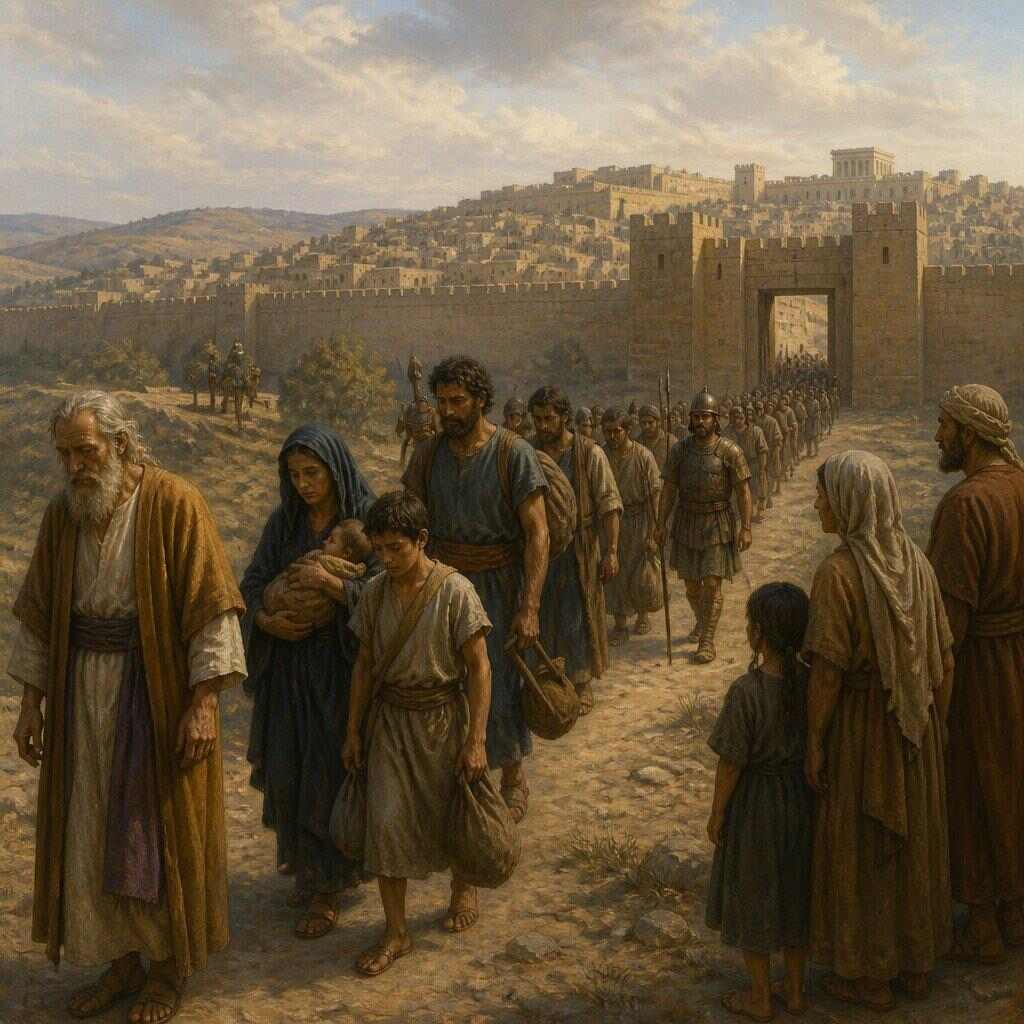
God warned that it would strip Judah of its independence if it did not repent.3
Depend upon Jesus, the Rock of your salvation. The Jews wanted a powerful ally to protect them. But they had “the Rock of Israel”: “My God, my rock, in whom I take refuge, My shield and the horn of my salvation, my stronghold and my refuge; My savior, You save me from violence.” (2 Sam. 22:3; Ps. 18:2). “The LORD lives, and blessed be my rock; and exalted be the God of my salvation,” (Ps. 18:46). “The LORD is their strength, and He is a saving defense to His anointed.” (Ps. 28:8). Paul reveals that “the rock was Christ.” (1 Cor. 10:4). He is our Rock and the power or horn of our salvation: “And has raised up a horn of salvation for us in the house of David His servant—” (Lk. 1:69). Jesus wants you to call upon Him as your Rock of deliverance in times of trouble. He will give you the strength to persevere against any adversary or evil.
2. Rebellion: God May Discipline Those Who Rebel Against Him. Is. 3:4-8.
Just as Judah rebelled against God, Judah would experience its own internal rebellions. Because the Jews rejected the order that God provided, He allowed them to experience the chaos, instability, conflict, and internal division from a life without Him. “4 And I will make mere boys their leaders, and mischievous children will rule over them, 5 and the people will be oppressed, each one by another, and each one by his neighbor; the youth will assault the elder, and the contemptible person will assault the one honored. 6 When a man lays hold of his brother in his father’s house, saying, ‘You have a cloak, you shall be our ruler! And these ruins will be under your authority,’ 7 He will protest on that day, saying, ‘I will not be your healer, for in my house there is neither bread nor cloak; you should not appoint me ruler of the people.’ 8 For Jerusalem has stumbled and Judah has fallen, because their speech and their actions are against the Lord, to rebel against His glorious presence.” (Is. 3:4-8). “Isiah is in reality describing a breakdown in national character and seriousness; the spirit which treats national welfare, politics and leadership as a joke…Moral factors (words and deeds) and spiritual factors (against the LORD) are the cause of the national breakdown.” (J. Alec Motyer on Is. 3:4-8) (italics in original).4
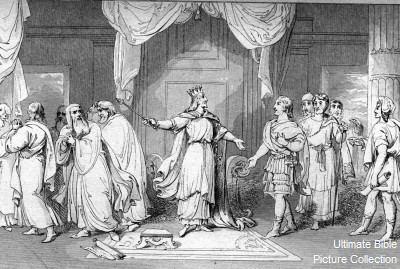
Rehoboam rejected godly elders for young men who gave him the advice he wanted.5
Without Spirit-led leaders, people will slowly drift into rebellion. Rehoboam provides a warning regarding what happens when leaders reject the Spirit-led advice of elders. “But he ignored the advice of the elders which they had given him, and consulted with the young men who had grown up with him and served him.” (1 Kgs. 12:8; 2 Chr. 10:8). His actions ignited a civil war that led to the breakup of Israel into two nations. Without godly leaders, “. .. every man did what was right in his own eyes.” (Jdgs. 17:6(b); 21:25). Both then and now, God warns: “You shall not do at all what we are doing here today, every man doing whatever is right in his own eyes;” (Dt. 12:8). Moses also warned that the people would return to rebellion and disobedience without guidance (Dt. 31:27-30). You also should not judge a leader based upon how popular they are. God warns: “‘For My thoughts are not your thoughts, nor are your ways My ways,’ declares the LORD.” (Is. 55:8). He also warns: “Woe to those who call evil good, and good evil . . .” (Is. 5:20(a)). The Church needs strong leaders to keep Jesus’ flock and the nation from being led astray. The road to Jesus is narrow. The path to destruction is broad (Matt. 7:13-14). Thus, the Church must be God’s salt and light to His people.
Northern Israel faced the curse of instability and decline because it openly embraced evil. Because of their idolatry and other sins, the prophet Ahijah prophesied that the people of Northern Israel would be like a “a reed is shaken in the water” (1 Kgs. 14:15). This was a metaphor for instability (Matt. 11:7; Lk. 7:24). As a fulfillment of this prophecy, in the last 20 years of Northern Israel, the final six rulers were plagued with coups d'état, assassinations and instability. God judged each of the leaders of Northern Israel for their evil acts (1 Kgs. 15:34; 16:2, 19, 31; 22:52; 2 Kgs. 3:3; 10:29, 31; 13:2, 11; 14:24; 15:9, 18, 24, 28). Following Jeroboam II’s evil reign, King Zechariah also did evil in God’s eyes. He reigned over Norther Israel for just six months when Shallum assassinated him (746 B.C.) (2 Kgs. 15:15). King Shallum then also did evil before God. Thus, Shallum’s reign lasted only a month before Menahem assassinated him (745 B.C.) (2 Kgs. 15:14). After assassinating Shallum, Menahem also openly embraced evil. Thus, he also had a short reign (745-738 B.C.) (2 Kgs. 15:16-22). Menahem’s son Pekahiah then also did evil. He reigned for approximately two years before Pekah assassinated him (738-737) (2 Kgs. 15:23-26). Pekah then also did evil, and he also was also assassinated (737-732 B.C.) (2 Kgs. 15:27-31). Hoshea, the final leader, also embraced evil (732-722 B.C.). King Shalmaneser V of Assyria besieged the capital Samaria until he died. In 722, King Sargon II captured Samaria and deported the people of Northern Israel (2 Kgs. 17:6). These leaders reaped the evil that they sowed. “Do not be deceived, God is not mocked; for whatever a man sows, this he will also reap.” (Gal. 6:7; Ho. 8:4).
In every time period, Satan seeks to create conflict, division, and chaos. Satan’s goal has always been to break down order through rebellion. His goal is to create chaos and misery. Satan first led a third of the angels in rebellion against God’s rule (Rev. 12:3-9). He then led Eve to rebel against God’s rules (Gen. 3:1-4). He then led Adam and Eve to rebel against each other (Gen. 3:16). Satan also becomes the father of those who rebel (Jo. 8:44). Jesus once quoted a prophesy: “I will strike down the shepherd, and the sheep shall be scattered.” (Mk. 14:23). When influenced by Satan, the corrupt “despise authority.” (2 Pet. 2:10). Solomon later said that rebellion was the sign of an “evil man.” (Prov. 17:11). According to Paul, rebellion is also part of the spirit of “the prince of the power of the air.” (Eph. 2:2). Samuel also said that: “. . . rebellion is as the sin of witchcraft . . .” (1 Sam. 15:23). After leaving Egypt, the Jews’ lack of faith caused them to repeatedly rebel against God and His appointed leader Moses (Nu. 14:22). As a result of the Jews’ repeated refusal to obey and have faith, God eventually banished them to spend 40 years wandering in the desert (Nu. 14:34). For everything good and holy, Satan has created a counterfeit to deceive people. If God’s perfect government leads to peace and harmony (1 Tim. 2:1-2), rebellion only brings strife, death, and misery.
Obey God and He will also protect you when you do His will. God promised to protect the Jews when they acted in faith-led obedience (Dt. 28:1-14). As led by the Holy Spirit, David also promised Solomon that obedience would ensure that their descendants continued to rule on the throne (1 Kgs. 2:4). When the Jews walked with Him, God also promised to cause their enemies to fear them (Ex. 23:27; Dt. 2:25). You also never need to fear your enemies when you act in Spirit-led obedience.
God gives warnings before He disciplines. Isaiah spelled out the exact reasons why God would be forced to discipline His people. “8 For Jerusalem has stumbled and Judah has fallen, because their speech and their actions are against the Lord, to rebel against His glorious presence.” (Is. 3:4-8). But the Jews ignored these and other warnings. Thus, God disciplined His people only after repeated warnings. “Yet the LORD, the God of their fathers, sent word to them again and again by His messengers, because He had compassion on His people and on His dwelling place; but they continually mocked the messengers of God, despised His words, and scoffed at His prophets, until the wrath of the LORD rose against His people, until there was no remedy.” (2 Chr. 36:15-16).
3. Spiritual Blindness: God May Discipline Those Who Openly Embrace Sin with Spiritual Blindness. Is. 3:9-11.
Just as Judah was spiritually blind to God, Judah would guide itself into darkness. The Jews had become so oblivious to God’s Word that they openly preached the tolerance and acceptance of what God called sinful. This made them no better in God’s eyes than the people of Sodom and Gomorrah. “9 The expression of their faces testifies against them, and they display their sin like Sodom; they do not even conceal it. Woe to them! For they have done evil to themselves. 10 Say to the righteous that it will go well for them, for they will eat the fruit of their actions. 11 Woe to the wicked! It will go badly for him, for what he deserves will be done to him.” (Is. 3:9-11). “Not only does their countenance betray them, but, like the Sodomites (Gen. 19:5,9), they boldly and impudently declare their wicked purposes beforehand, and make no attempt at concealment. Hypocrisy has been said to be the homage that vice pays to virtue … They have rewarded evil unto themselves … (Ro. 1:27). Their sins have at once marred their countenance and injured their moral nature… The mention of the fact that the men of Jerusalem have permanently injured their moral natures by sin, and thus ‘rewarded evil to themselves,’ leads the prophet to declare at this point, parenthetically, the general law, which extends alike to the evil and the good - that men receive in themselves the recompense of their deeds. The righteous raise their moral nature, become better, and, in becoming better, become happier. ‘It is well with them, for of the fruit of their doings they eat.’ The wicked deprave and corrupt themselves, lower their moral nature, become worse than they were, and, in becoming worse, become more miserable. ‘Woe unto them! with them it is ill; for the achievement of their hands is given them.”’ (Pulpit Commentary on Is. 3:9-11).6
Judah was spiritually blind to God’s Word. Judah’s blindness to sin was the outward manifestation of its spiritual blindness against God, His Word, and His prophets (Dt. 28:27-29; Ex. 10:21; Is. 59:10(a); Job 5:14; 12:25; 38:15; Lam. 4:14(a). “The way of the wicked is like darkness; they do not know over what they stumble.” (Prov. 4:19).
Because Judah was spiritually blind, it refused to accept God’s discipline. Like the people of Sodom and Gomorrah, the people of Judah were blind to their sins and refused to repent. “LORD, do Your eyes not look for honesty? You have struck them, but they did not weaken; You have consumed them, but they refused to accept discipline. They have made their faces harder than rock; they have refused to repent.” (Jer. 5:3).
The devil has also blinded those who reject God to truth, justice, and things of the Spirit. Those who reject God and embrace evil become spiritually blind. “in whose case the god of this world has blinded the minds of the unbelieving so that they will not see the light of the gospel of the glory of Christ, who is the image of God.” (2 Cor. 4:4). “But a natural person does not accept the things of the Spirit of God, for they are foolishness to him; and he cannot understand them, because they are spiritually discerned.” (1 Cor. 2:14). “being darkened in their understanding, excluded from the life of God because of the ignorance that is in them, because of the hardness of their heart;” (Eph. 4:18). “For even though they knew God, they did not honor Him as God or give thanks, but they became futile in their reasonings, and their senseless hearts were darkened.” (Ro. 1:21).
Unrepentant sinners who redefine what God calls evil and good will be severely judged. In the ancient world, there were people who rejected the standards of right and wrong that God set in His Law. God sent His prophets to warn these people to repent or face His judgment. “Woe to those who call evil good, and good evil; who substitute darkness for light and light for darkness; who substitute bitter for sweet and sweet for bitter!” (Is. 5:20). These condemnations and warnings are repeated in the New Testament. “and although they know the ordinance of God, that those who practice such things are worthy of death, they not only do the same, but also approve of those who practice them.” (Ro. 1:32). “in order that they all may be judged who did not believe the truth, but took pleasure in wickedness.” (2 Thess. 2:12; 1 Cor. 6:9-10; Gal. 5:19-21; Eph. 5:5-7).
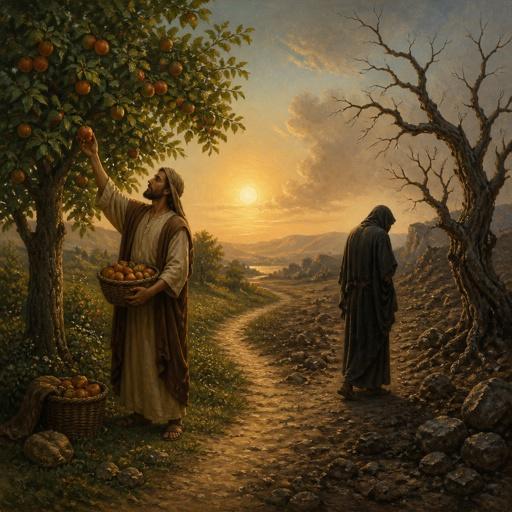
Judah could either enjoy God’s blessings or suffer under His discipline.7
Unrepentant sinners will reap what they sow. God promised that the righteous will be rewarded. (Is. 3:10). In contrast, the wicked will reap sorrow. “11 Woe to the wicked! It will go badly for him, for what he deserves will be done to him.” (Is. 3:9-11). “Do not be deceived, God is not mocked; for whatever a person sows, this he will also reap. For the one who sows to his own flesh will reap destruction from the flesh, but the one who sows to the Spirit will reap eternal life from the Spirit. Let’s not become discouraged in doing good, for in due time we will reap, if we do not become weary.” (Gal. 6:7-9).
4. Oppressing Others: God May Discipline Those Who Oppress the Poor and the Helpless. Is. 3:12-15.
Just as Judah crushed and oppressed the poor, Judah would be crushed and oppressed. Instead of being a light and a source of justice and righteousness, God’s civil and religious leaders had oppressed the poor and defenseless for their own financial gain. “. 12 My people! Their oppressors treat them violently, and women rule over them. My people! Those who guide you lead you astray and confuse the direction of your paths. 13 The Lord arises to contend, and stands to judge the people. 14 The Lord enters into judgment with the elders and leaders of His people, ‘It is you who have devoured the vineyard; the goods stolen from the poor are in your houses. 15 What do you mean by crushing My people and oppressing the face of the poor?’ Declares the Lord God of armies.” (Is. 3:12-15). “In verses 12-15 the Lord exposes the leaders. They too answer to God because he loves his people. We feel his love in the words ‘my people,’ seen twice in verse 12 and again in verse 15, along with ‘his people’ in verse 14.’ It breaks his heart when his people are oppressed by opportunists: ‘It is you [elders and princes] who have devoured the vineyard’ (v. 14). Rather than living to enrich others, false leaders ride on the backs of others.” (Raymond Ortlund Jr. on Is. 3:12-15).8
God will punish rulers who use force and violence against their people. This was Isaiah’s second warning to Judah’s evil leaders. “23 Your rulers are rebels and companions of thieves; everyone loves a bribe and chases after gifts. They do not obtain justice for the orphan, nor does the widow’s case come before them.” (Is. 1:23). Through Ezekiel, God again promised to punish the leaders of Judah who mistreated His people (Ezek. 22:27-29). Through Micah, God yet again warned the leaders (Micah 3:1-3). But Judah’s leaders repeatedly refused to listen to the warnings that God gave them.
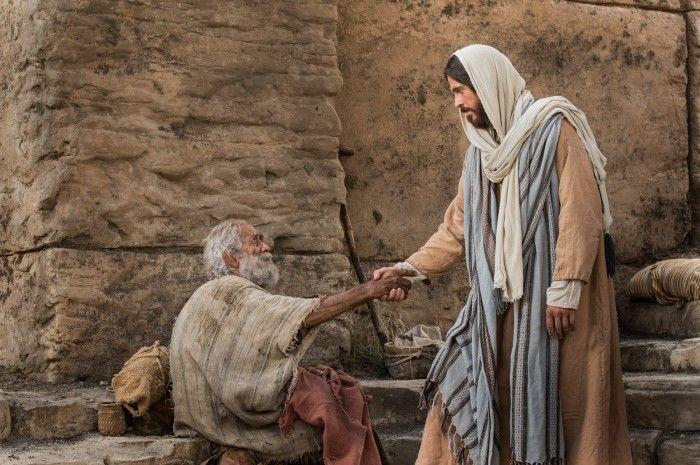
Jesus warns all believers to care for the poor and avoid oppressing them.9
God will severely judge the rich who mistreat the poor and fail to repent. God’s condemnation of wealthy people who mistreat the poor is repeated throughout the Bible. But the book of James has one of the strongest warnings. “Come now, you rich people, weep and howl for your miseries which are coming upon you. 2 Your riches have rotted and your garments have become moth-eaten. 3 Your gold and your silver have corroded, and their corrosion will serve as a testimony against you and will consume your flesh like fire. It is in the last days that you have stored up your treasure! 4 Behold, the pay of the laborers who mowed your fields, and which has been withheld by you, cries out against you; and the outcry of those who did the harvesting has reached the ears of the Lord of armies. 5 You have lived for pleasure on the earth and lived luxuriously; you have fattened your hearts in a day of slaughter. 6 You have condemned and put to death the righteous person; he offers you no resistance.” (Jam. 5:1-6). When someone oppresses the poor, that person taunts God. “One who oppresses the poor taunts his Maker,...” (Prov. 14:31a). “Do not rob the poor because he is poor, nor crush the needy at the gate; for the LORD will plead their case and take the life of those who rob them.” (Prov. 22:22-23; Ps. 140:12; Is. 41:17; Ezek. 22:29; Matt. 25:35-40, 43-45).
5. Vanity: God May Discipline Vain Individuals Who Glorify Themselves with Their God-Given Beauty, Wealth, or Power. Is. 3:16-24.
The beauty that brought Judah pride would soon be removed. God’s people also become vain because their God-given material provision. “16 Moreover, the Lord said, ‘Because the daughters of Zion are haughty and walk with heads held high and seductive eyes, and go along with mincing steps and jingle the anklets on their feet, 17 the Lord will afflict the scalp of the daughters of Zion with scabs, and the Lord will make their foreheads bare.’ 18 On that day the Lord will take away the beauty of their anklets, headbands, crescent ornaments, 19 dangling earrings, bracelets, veils, 20 headdresses, ankle chains, sashes, perfume boxes, amulets 21 finger rings, nose rings, 22 festive robes, outer garments, shawls, purses, 23 papyrus garments, undergarments, headbands, and veils. 24 Now it will come about that instead of balsam oil there will be a stench; instead of a belt, a rope; instead of well-set hair, a plucked-out scalp; instead of fine clothes, a robe of sackcloth; and branding instead of beauty.” (Is. 3:16-24). “Isaiah gets very specific in 3:16-24 about the arrogance and selfish luxury of the ‘daughters of Zion.’ In a chapter in which the plundering of the poor is exposed and judged, we have a long list of luxury items with which the women of Judah made themselves beautiful … When the judgment falls, all their outward luxuries will be snatched away by their conquerors. Then, instead of soft garments and luxurious accessories, they will wear sackcloth bound with a rope; and instead of smelling lovely, they will stink (Is. 3:24). In the end their physical condition will match the ugliness of their souls.” (Andrew Davis on Is. 3:16-24).10
God removed the beauty that made the women of Judah vain. To remove their vanity, Isaiah warned, “the Lord will make their foreheads bare.”’ (Is. 3:17). God’s other prophets repeated these warnings. “Shave yourself bald, yes, cut off your hair, because of the children of your delight; extend your baldness like the eagle, for they will go from you into exile.” (Micah 1:16). “Cut off your hair and throw it away, and take up a song of mourning on the bare heights; for the LORD has rejected and forsaken the generation of His wrath.’” (Jer. 7:29). The Babylonians then fulfilled these prophecies. In addition to shaving the Jews’ heads, they also took their jewelry and wealth (Is. 3:18-24).
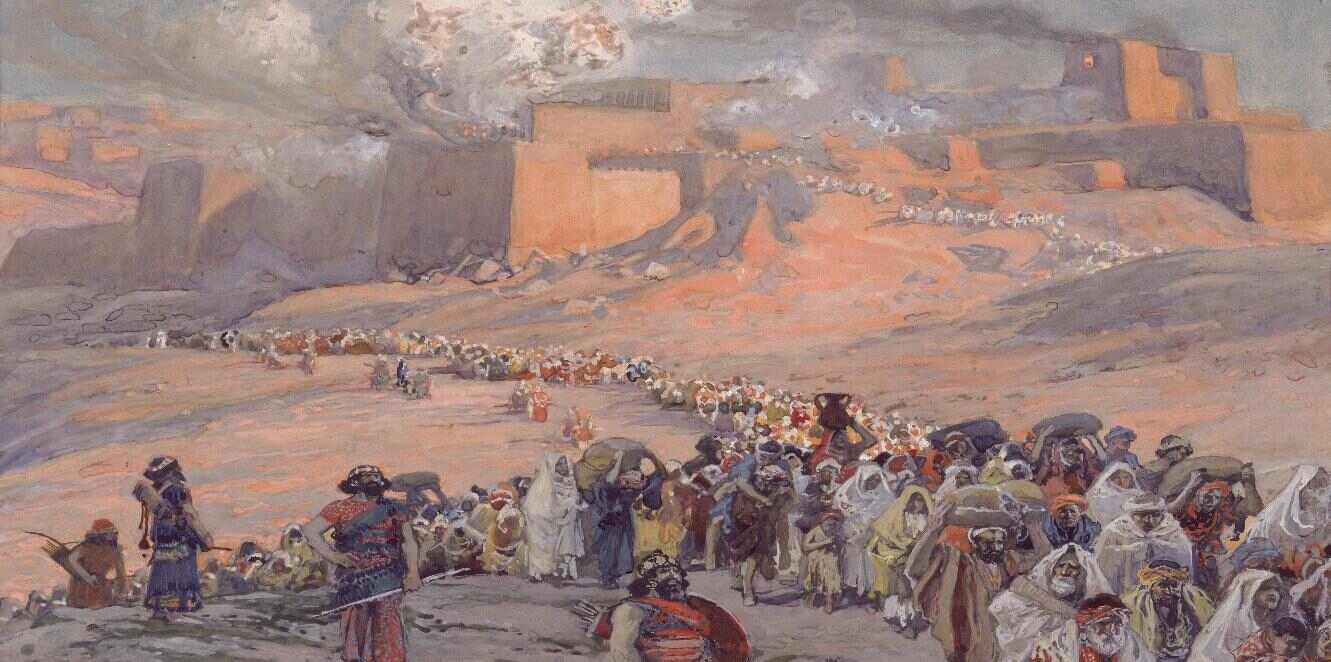
The Babylonians stripped the Jews of their wealth and their sources of vanity.11
In the end times, God will remove the sources of vanity that bring self-glorification. Isaiah also warned, “the Lord will afflict the scalp of the daughters of Zion with scabs…” (Is. 3:17). “The prophet reproves and warns the daughters of Zion of the sufferings coming upon them. Let them know that God notices the folly and vanity of proud women, even of their dress. The punishments threatened answered the sin. Loathsome diseases often are the just punishment of pride.” (Matthew Henry on Is. 3:16-24).12 God can also punish a vain society or individual with ugly sores that cause a loss of beauty: “The Lord will smite you with the boils of Egypt and with tumors and with the scab and with the itch, from which you cannot be healed.” (Dt. 28:27; Ex. 9:9). ‘“I sent a plague among you after the manner of Egypt; I slew your young men by the sword along with your captured horses, and I made the stench of your camp rise up in your nostrils; yet you have not returned to Me,’ declares the LORD.” (Amos 4:10; Lev. 26:25). “The Lord will strike you on the knees and legs with sore boils, from which you cannot be healed, from the sole of your foot to the crown of your head.” (Dt. 28:35; Ex. 9:9). In the end times, God will again punish a vain generation that has turned away from Him: “So the first angel went and poured out his bowl on the earth; and it became a loathsome and malignant sore on the people who had the mark of the beast and who worshiped his image.” (Rev. 16:2). “[T]hey blasphemed the God of heaven because of their pains and their sores; and they did not repent of their deeds.” (Rev. 16:11).
6. Violence: God May Discipline Those Who Glorify Their Strength or Violence with Violence and Defeat. Is. 3:25.
The people of Judah who sought to live without God would die without Him. Because God’s people lived by the sword, many would perish. “25 Your men will fall by the sword and your mighty ones in battle.” (Is. 3:25). “In the calamities coming on them, their strong men should be overcome, and fall in battle.” (Albert Barnes on Is. 3:25).13
God would weaken the might of His people to allow the Babylonians to defeat Judah. Because the Jews would not repent, God fulfilled the warnings He gave them. “The anger of the LORD burned against Israel, . . . so that they could no longer stand before their enemies.” (Josh. 2:14). “The LORD has done what He purposed; He has accomplished His word which He commanded from days of old. . . . He has exalted the might of your adversaries.” (Lam. 2:17). “I will make void the counsel of Judah and Jerusalem in this place, and I will cause them to fall by the sword before their enemies and by the hand of those who seek their life; and I will give over their carcasses as food for the birds of the sky and the beasts of the earth.” (Jer. 19:7; 7:33; Ps. 79:2). “The wicked flee when no one is pursuing, but the righteous are bold as a lion.” (Prov. 28:1).
Faith in the promises in Jesus’ Word leads to your eternal salvation. The Jews looks to their military might and strong foreign powers for deliverance. But the psalmist warned that “salvation [is] according to Your word;” (Ps. 119:41). Many Jews today interpret this as “deliverance”. But Jesus gave new meaning to the promises of salvation found throughout the psalms. “For You will not abandon my soul to Sheol; You will not allow Your Holy One to undergo decay.” (Ps. 16:10). “To rescue their soul from death and to keep them alive in famine. Our soul waits for the LORD; He is our help and our shield.” (Ps. 33:19-20). “But God will redeem my soul from the power of Sheol, for He will receive me. Selah” (Ps. 49:15). “For You have saved my soul from death, indeed my feet from stumbling, so that I may walk before God in the light of the living.” (Ps. 56:13). “God is to us a God of salvation; and to GOD the Lord belong ways of escape from death.” (Ps. 68:20). “Help us, God of our salvation, for the glory of Your name; and save us and forgive our sins for the sake of Your name.” (Ps. 79:9). “You have saved my soul from the depths of Sheol.” (Ps. 86:13). “16 I will … show him My salvation.’” (Ps. 91:16). “ . . . . proclaim the good news of His salvation.” (Ps. 96:2).
7. Pride: God May Discipline Those Who Are Prideful with Sorrow. Is. 3:26.
While Judah felt prideful, it would soon feel sorrow. To restore His prideful people, God would be forced to defeat and humble them. “26 And her gates will lament and mourn, and she will sit deserted on the ground.” (Is. 3:26). “We can show genuine humility and modesty by avoiding excessive pride and arrogance, which often lead to judgment and downfall. Instead of seeking attention and recognition for ourselves, we can focus on serving others with kindness and compassion. We can demonstrate a true sense of modesty that reflects a deeper understanding of our place in the world by humbly acknowledging our strengths and weaknesses.” (Rev. Michael Johnson on Is. 3:26).14
God humbled the mighty and prideful people of Judah. To confirm Isaiah’s prophecy, Jeremiah also warned that the mighty people of Judah would soon be defeated and humbled. “Judah mourns and her gates languish; her people sit on the ground in mourning garments, and the cry of Jerusalem has ascended.” (Jer. 14:2). “Why have I seen it? They are terrified, they are retreating, and their warriors are defeated and have taken refuge in flight, without facing back. Terror is on every side!’ Declares the LORD … Why have your powerful ones been cut down? They do not stand because the LORD has thrust them away.” (Jer. 46:5, 15). “Her gates have sunk into the ground, He has destroyed and broken her bars. Her king and her leaders are among the nations; the Law is gone. Her prophets, too, find no vision from the LORD.” (Lam. 2:9).
In His sovereign timing, Jesus will discipline prideful people. Even though Jesus temporarily allows evil to exist, all who refuse to repent out of pride will one day face His divine judgment. “5 Everyone who is proud in heart is an abomination to the Lord; be assured, he will not go unpunished.” (Prov. 16:5). Pride is one of the things that Jesus “hates” (Prov. 6:16-17). “When pride comes, then comes dishonor; but with the humble there is wisdom.” (Prov. 11:2). “Pride goes before destruction, and a haughty spirit before stumbling.” (Prov. 16:18). “Before destruction the heart of a person is haughty, but humility goes before honor.” (Prov. 18:12). “For the LORD is exalted, yet He looks after the lowly, but He knows the haughty from afar.” (Ps. 138:6). Jesus will judge those who exalt themselves. “Whoever exalts himself shall be humbled, and whoever humbles himself shall be exalted.” (Matt. 23:12; Lk. 14:11). “But He gives a greater grace. Therefore it says, ‘God is opposed to the proud, but gives grace to the humble.’ … Humble yourselves in the presence of the Lord, and He will exalt you.” (Jam. 4:6, 10).
Don’t ignore God’s warnings of judgment. No person should treat sin lightly (Rom. 6:26). God is a consuming fire when in the presence of sin (Heb. 12:29; 10:27; Ex. 24:17; Dt. 4:24; 9:3; Ps. 97:3; Is. 33:14; 2 Thess. 1:7). For those who do not repent, He warns: “I will pour out My indignation on you; I will blow on you with the fire of My wrath, . . .” (Ez. 21:31(a)). ‘“Is not My word like fire?’ declares the LORD, ‘and like a hammer which shatters a rock?’” (Jer. 23:29). “The soul who sins will die.” (Ez. 18:4(b)). Unless you accept that God will judge sin, you will feel no pressure to repent.
Warn others of their need to turn to Jesus. Every believer should desire to help others avoid judgment. To help others avoid the need for God’s discipline, Jesus calls upon every believer to share the hope that He has given you. “Go, therefore, and make disciples of all the nations, baptizing them in the name of the Father and the Son and the Holy Spirit, teaching them to follow all that I commanded you; and behold, I am with you always, to the end of the age.” (Matt. 28:19-20). “but sanctify Christ as Lord in your hearts, always being ready to make a defense to everyone who asks you to give an account for the hope that is in you, but with gentleness and respect;” (1 Pet. 3:15).
John Oswalt, The Book of Isaiah Chapters 1 -39 (William B. Eerdmans Publishing Company, 1986), pgs. 130, 132-133 (italics in original).↩︎
Image credit: What does 2 Kings 24:14 mean? | Bible Art↩︎
J. Alex Motyer, The Prophecy of Isaiah, An Introduction & Commentary (InterVarsity Press, 1993), pgs. 60-61.↩︎
Image credit: Rehoboam - Alchetron, The Free Social Encyclopedia↩︎
Image credit: What does Isaiah 3:10 mean? | Bible Art↩︎
Raymond Ortlund Jr., Preaching the Word, Isaiah God Saves Sinners (Crossway, 2005), p. 60.↩︎
Image credit: How can i really help the poor – Artofit↩︎
Andrew Davis, Christ-Centered Exposition, Exalting Jesus in Isaiah (B&H Publishing Group, 2017), p. 27.↩︎
Image credit: Tissot_The_Flight_of_the_Prisoners.jpg (3000×2048)↩︎
