Proverbs 26: Lessons Regarding Fools Who Rejects God’s Wisdom
Introduction: Proverbs 26 contains Solomon’s warnings for those who reject Yahweh’s wisdom and instead embrace the false wisdom of the world. You will know these people by their evil fruits (Matt 7:16). These evils include: (1) faithlessness, (2) spiritual blindness, (3) worldliness, (4) slothfulness, (5) mischief and strife, (6) gossip and slander, and (7) deceptive hatred.
First, in verses one and two, Solomon warned that honoring a fool is contrary to God’s divine order. Among other sins, they act as if they are the gods of their lives. They are fools because they lack faith in God and His authority. Second, in verses three through five, Solomon warned that fools act like barn animals. They see without seeing and hear without hearing because they are spiritually blind to God’s authority and His Word. Third, in verses six through 12, Solomon warned how fools speak words of worldly wisdom that have no spiritual value. Fools are worldly and fail to understand matters of the Holy Spirit. Fourth, in verses 13 through 16, Solomon condemned those who are slothful. Fools are also spiritually slothful in pursuing God’s calling in their lives. Fifth, in verses 17 through 19, Solomon warned against busy bodies and those who offer unnecessarily harmful words and then call their words jokes. Fools also create unnecessary mischief or strife. Sixth, in verses 20 through 22, Solomon condemned those who spread slander and gossip. Only fools spread gossip or slander because they will one day be held to account for their hurtful words. Fifth, in verses 23 through 27, Solomon warned against those who use deceptive words to conceal their hatred. Only fools engage in deception and hatred.
1. Faithlessness: Fools Lack the Faith to Respect God’s Authority. Prov. 26:1-2.
Do not honor people or ideas which deny God or contradict His sovereign Word. To honor atheism or ideas which deny God’s Word as the source of truth is as contrary to the natural order as snow during the summer. “1 Like snow in summer and like rain in harvest, so honor is not fitting for a fool.” (Prov. 26:1). “The social damage resulting from honoring a fool is compared to the anomaly and calamity of snow in summer and rain at harvest. Snow and rain in summer mean that times are catastrophically out of sync (cf. 1 Sam. 12:17). In summer, they damage the grain harvest and cause it to rot. So (similarly) honor is not fitting for a fool. The notion of unfitting implies a standard – namely, the standard revealed in the Proverbs. Its teachings produce an abundant life. Fools despise wisdom, and giving them honor emboldens them in their deadly folly. Honoring them is a characteristic of an upside-down, damned society (cf. 2 Sam. 15:1-12; 1 Kgs. 12:1-20).” (Bruce Waltke and Ivan De Silva on Prov. 26:1).1
Fools deny God or refuse to let Him have authority over their lives. Psalm 14 helps to explain this proverb. A fool either denies God’s existence or His sovereignty. “A Psalm of David. The fool has said in his heart, ‘There is no God.’ They are corrupt, they have committed detestable acts; there is no one who does good.” (Ps. 14:1). “And without faith it is impossible to please Him, for the one who comes to God must believe that He exists, and that He proves to be One who rewards those who seek Him.” (Heb. 11:6).
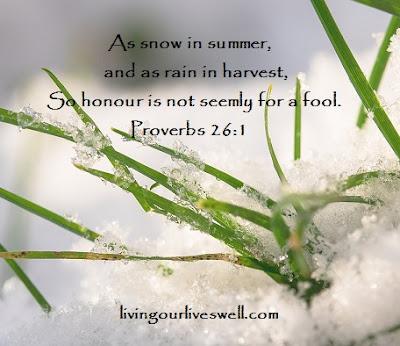
Just as snow can destroy a summer harvest, honor for a fool causes harm in society2
Fools also feel no need to learn God’s Word or apply it because they do not fear Him. Alternatively, fools are willfully ignorant of God’s Word and make no effort to learn it. “Then I said, ‘They are only the poor, they are foolish; for they do not know the way of the LORD or the judgment of their God.”’ (Jer. 5:4). “For they being ignorant of God’s righteousness, and seeking to establish their own righteousness, have not submitted to the righteousness of God.” (Ro. 10:3). Because they do not fear God, fools choose the folly of worldly ignorance and rebellion over God’s wisdom and knowledge. “The fear of the LORD is the beginning of knowledge; fools despise wisdom and instruction.” (Prov. 1:7). “How long, you naive ones, will you love simplistic thinking? And how long will scoffers delight themselves in scoffing and fools hate knowledge?” (Prov. 1:22). Isaiah prophesied that God’s Messiah would restore His moral order on Earth. “No longer will the fool be called noble, or the rogue be spoken of as generous.” (Is. 32:5).
Fools believe that they can act without God. Because fools deny God’s sovereignty, their actions have no lasting impact as they act without His authority. “2 Like a sparrow in its flitting, like a swallow in its flying, so a curse without cause does not come to rest.” (Prov. 26:2). “Sparrows and other small birds can follow erratic patterns. Swallows, especially, are known for dramatic twists and turns as they fly. A bird looking for food, or chasing it, flies around but doesn't land. The same is true of the "curse" leveled at the person who has done nothing wrong. In this context, a "curse" is not a magical spell or hex. It's a condemnation, insult, or declaration of harm (Job 3:1; Psalm 109:28; Mark 14:71; Luke 6:28). When Goliath threatened to kill David, he cursed David (1 Samuel 17:43), but the cursing was ineffective. Fighting for the Lord's honor, David prevailed and killed the Philistine giant (1 Samuel 17:45–50). Human beings have no power to initiate bad luck or misfortune with their words. Only God can supernaturally "curse" anyone (Deuteronomy 28:20; Proverbs 3:33). When the person does not deserve the curse—because God does not instigate it—it never ‘lands’ on the intended target.” (BibleRef.com on Prov. 26:1).3
Those who try to curse others without God’s authority will fail. God will protect people from curses that He does not authorize. “They will curse, but You bless; when they arise, they will be ashamed, but Your servant will be glad.” (Ps. 109:28). The best example of this was when Balak hired Balaam to curse Israel. Balaam tried to do what Balak hired him to do. But God stopped him. Balaam then confessed, “How am I to put a curse on him upon whom God has not put a curse? And how am I to curse him whom the LORD has not cursed?” (Num. 23:8). God instead made Balaam bless Israel. “Nevertheless, the LORD your God was unwilling to listen to Balaam, but the LORD your God turned the curse into a blessing for you because the LORD your God loves you.” (Dt. 23:5).
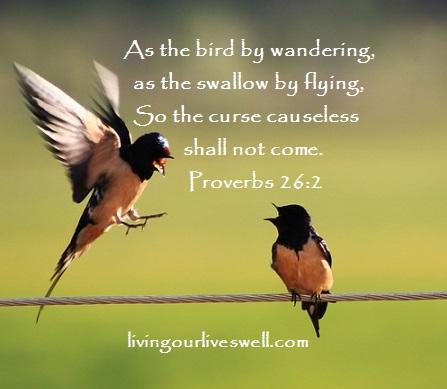
Fools try to curse others instead of speaking words of life through Jesus4
2. Spiritual Blindness: Fools Are Spiritually Blind to God’s Authority and His Word. Prov. 26:3-5.
Fools are blind to God’s will unless and until He disciplines them. Like a stubborn farm animal, some are blind to God’s will and will not respond without His divine discipline. “3 A whip is for the horse, a bridle for the donkey, and a rod for the back of fools.” (Prov. 26:3). “This verse illustrates the concept of discipline and the different methods needed to guide and control different individuals. Just like a whip is necessary for a horse and a bridle for a donkey to direct them in the right path, discipline is also required for fools who refuse to heed wisdom and correction. The imagery of using a rod on the backs of fools suggests the harsh measures sometimes needed to correct behavior in those who are stubborn and resistant to learning.” (Reverend Michael Johnson on Prov. 26:3).5
Fools ignore God until He grabs their attention with discipline. All should embrace God’s discipline. But fools force God to use discipline to reach them. “On the lips of the discerning, wisdom is found, but a rod is for the back of him who has no sense.” (Prov. 10:13). “Judgments are prepared for scoffers, and beatings for the backs of fools.” (Prov. 19:29). “Do not be like the horse or like the mule, which have no understanding, whose trappings include bit and bridle to hold them in check, otherwise they will not come near to you.” (Ps. 32:9). Sadly, many become so spiritually blind that they become less responsive to God than the animals. “An ox knows its owner, and a donkey its master’s manger, but Israel does not know, My people do not understand.” (Is. 1:3).
Fools hear God’s Word and fail to understand it or reject it. Believers should be a light to the lost (Matt. 5:14-16); but they should avoid engaging with fools who reject God’s Word. “4 Do not answer a fool according to his foolishness, or you will also be like him. 5 Answer a fool as his foolishness deserves, so that he will not be wise in his own eyes. 6 One who sends a message by the hand of a fool chops off his own feet and drinks violence.” (Prov. 26:4-6). “Do not answer a fool according to his folly: When a fool pours forth his foolishness, it is often right to not answer them. Sometimes contending with a fool can make one just like the fool …Answer a fool according to his folly: Other times the right thing is to answer a fool. Sometimes a wise answer to a fool will expose his folly and prevent him from becoming wise in his own eyes … He who sends a message by the hand of a fool: One should never expect a good result from sending a message by the hand of a fool. It is like harming one’s self. Curiously, God chose the foolish things of this world to be His messengers (1 Corinthians 1:27), but He wants them to be something better than fools in His work.” (David Guzik on Prov. 26:4-6).6
Focus on those who will hear God’s Word and ignore scoffers. Solomon urged believers to leave the fool who mocks God’s Word alone. “Leave the presence of a fool, or you will not discern words of knowledge.” (Prov. 14:7). “Do not speak to be heard by a fool, for he will despise the wisdom of your words.” (Prov. 23:9). Jesus also warned against using your God-give time, talent, and treasure on mockers when there are others who need your help. “Do not give what is holy to dogs, and do not throw your pearls before pigs, or they will trample them under their feet, and turn and tear you to pieces.” (Matt. 7:6). “Leave them alone; they are blind guides of blind people. And if a person who is blind guides another who is blind, both will fall into a pit.” (Matt. 15:14). For example, Jesus remained silent in front of His false accusers. “The high priest stood up and said to Him, ‘Do You offer no answer for what these men are testifying against You?’ But Jesus kept silent. And the high priest said to Him, ‘I place You under oath by the living God, to tell us whether You are the Christ, the Son of God.”’ (Matt. 26:62-63). He also remained silent before Pilate. “And still He did not answer him in regard to even a single charge, so the governor was greatly amazed.” (Matt. 27:14). He then fulfilled Isaiah’s prophecy when He remained silent as He was led to the cross. “He was oppressed and afflicted, yet He did not open His mouth; like a lamb that is led to slaughter, and like a sheep that is silent before its shearers, so He did not open His mouth.” (Is. 53:7).

Those who are spiritually blind hear God’s Word without understanding it7
3. Worldliness: Fools Are Worldly and Fail to Understand Matters of the Holy Spirit. Prov. 26:7-12.
Fools can repeat God’s Word but they are unlikely to apply it as God intends. Even though a fool can repeat God’s Word, a worldly fool is unlikely to properly explain spiritual matters as God intends. “7 Like useless legs to one who cannot walk, so is a proverb in the mouths of fools.” (Prov. 26:7). “This verse draws a powerful analogy that compares a lame person’s legs with the way foolish individuals speak or use wisdom. When we take a moment to reflect on this analogy, we begin to understand that not everything that sounds wise is useful. Just as a physically impaired leg struggles to function normally, a foolish person lacks the capacity to use wisdom or proverbs effectively… It’s vital to discern between true wisdom and the empty words spoken by fools. As we navigate our spiritual journeys, seeking relationships and counsel from wise individuals stands as a safeguard against misguided notions. Wisdom brings clarity, helping us align our lives with God’s purposes.” (Christinitypath.com on Prov. 26:7).8
Look to God for wisdom and not from worldly people9
True wisdom comes from God and should only be sought from Him. Because wisdom comes from God, it should not be sought from worldly persons. “For the LORD gives wisdom; from His mouth come knowledge and understanding.” (Prov. 2:6). If you need wisdom, seek it from God and not from the world. “But if any of you lacks wisdom, let him ask of God, who gives to all generously and without reproach, and it will be given to him.” (Jam. 1:5). Jesus condemned the religious leaders who claimed to speak God’s Word but instead taught worldly traditions. “Then the Lord said, ‘Because this people approaches Me with their words and honors Me with their lips, but their heart is far away from Me, and their reverence for Me consists of the commandment of men that is taught; therefore behold, I will once again deal marvelously with this people, wondrously marvelous; and the wisdom of their wise men will perish, and the understanding of their men who have understanding will be concealed.”’ (Is. 29:13-14). God has hidden the true meaning of His Word from worldly people. “At that time Jesus said, “I praise You, Father, Lord of heaven and earth, that You have hidden these things from the wise and intelligent, and have revealed them to infants.” (Matt. 11:25). “But a natural person does not accept the things of the Spirit of God, for they are foolishness to him; and he cannot understand them, because they are spiritually discerned.” (1 Cor. 2:14).
Honoring fools in their blindness leads to them harming themselves. Like a rock in a defective sling that harms the thrower, fools only harm themselves when they are encouraged in their worldly thinking. “8 Like one who binds a stone in a sling, so is one who gives honor to a fool.” (Prov. 26:8). “If a stone were bound in the sling, when the release thong was let go, the stone could not leave the sling. However, the pent up centrifugal force could cause the stone, bound in its pouch, to hit you in the face! At the least, binding a stone in a sling was totally counterproductive and wasteful; at the worst, it was fatally dangerous to the thrower. What does the simile about binding a stone in a sling mean? At the least, honoring a fool is counterproductive and wasteful; at the worst, it is very dangerous, for the misplaced honor can come back to severely hurt you. If you honor a fool, you are going to suffer for it, for an honored fool is an unbearable thing (Pr 23:9; 26:4-5; 29:9; 30:21-23; Matt 7:6).” (LetGodbeTrue on Prov. 26:8).10
Satan leads the blind to their destruction. Satan blinds worldly people to God’s truth. “in whose case the god of this world has blinded the minds of the unbelieving so that they will not see the light of the gospel of the glory of Christ, who is the image of God.” (2 Cor. 4:4). Satan then misleads those who are blind to their destruction. “When anyone hears the word of the kingdom and does not understand it, the evil one comes and snatches away what has been sown in his heart. This is the one sown with seed beside the road.” (Matt.13:19). “Claiming to be wise, they became fools,” (Rom. 1:22). “Woe to those who are wise in their own eyes and clever in their own sight!” (Is. 5:21). “There is a way which seems right to a person, but its end is the way of death.” (Prov. 14:12).
Fools also unknowingly lead others to their destruction with their worldly wisdom. The spiritually blind are like drunk persons with weapons. They cause serious harm to others without even realizing it. “9 Like a thorn that sticks in the hand of a heavy drinker, so is a proverb in the mouths of fools. 10 Like an archer who wounds everyone, so is one who hires a fool or hires those who pass by.” (Prov. 26:9). “Many times a fool will use the Word of God making it say what he wants it to say. By doing this, he is like a drunk with a thorny stick in his hand; there is no telling who or how many he will hurt. God is concerned with who uses His Word and how they use it.” (Ronald Young, Prov. 26:9).11
Be careful not to listen to worldly people. A person who follows the spiritually blind and worldly wisdom is set on a foolish path of self-destruction. “Now He also spoke a parable to them: “A person who is blind cannot guide another who is blind, can he? Will they not both fall into a pit?” (Lk. 6:39). “Leave them alone; they are blind guides of blind people. And if a person who is blind guides another who is blind, both will fall into a pit.” (Matt. 15:14). “And you neglected all my advice and did not want my rebuke; I will also laugh at your disaster; I will mock when your dread comes,” (Prov. 1:25-26).
Fools cannot escape their worldly ways. A fool returning to worldly ways is just as disgusting to God as a person watching a dog eat its vomit. “11 Like a dog that returns to its vomit, so is a fool who repeats his foolishness. 12 Do you see a person wise in his own eyes? There is more hope for a fool than for him.” (Prov. 26:11-12). “The fool never frees himself from the trammels of his foolishness; his deeds and words always bear the same character to the end. The same truth holds good of the sinner, especially the drunkard and the sensualist. If they feel temporary compunction, and reject their sin by partial repentance, they do not really shake it off wholly; it has become a second nature to them, and they soon relapse into it…A fool who is conscious of unwisdom may be set right; but one who fancies himself perfect, and needing no improvement, is beyond cure; his case is hopeless. ” (Pulpit Commentary on Prov. 26:11-12)12

Fools return to worldly wisdom like a dog returns to vomit13
Fools who know the truth but then reject it will be condemned. Peter applied Solomon’s proverb to condemn those who come to know that truth that Jesus offers and then reject it. “For it would be better for them not to have known the way of righteousness, than having known it, to turn away from the holy commandment handed on to them. It has happened to them according to the true proverb, “a dog returns to its own vomit,” and, “A sow, after washing, returns to wallowing in the mire.” (2 Pet. 2:21-22). These fools suffer the greatest form of condemnation. “For it is impossible, in the case of those who have once been enlightened and have tasted of the heavenly gift and have been made partakers of the Holy Spirit, and have tasted the good word of God and the powers of the age to come, and then have fallen away, to restore them again to repentance, since they again crucify to themselves the Son of God and put Him to open shame.” (Heb. 6:4-6).
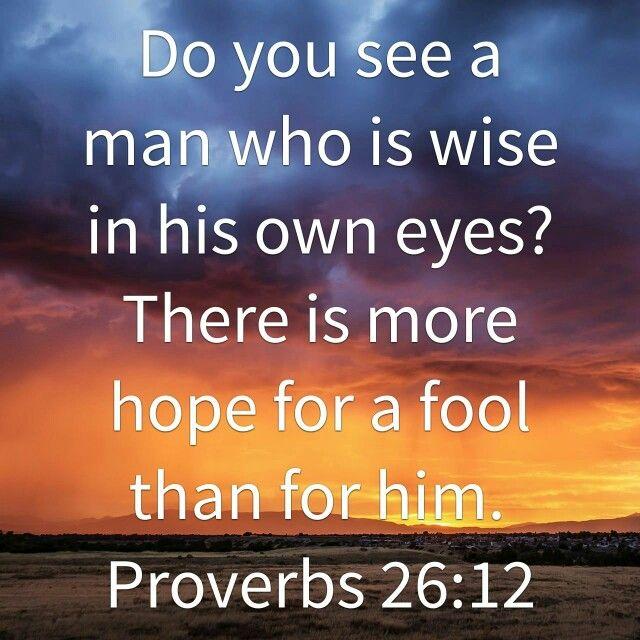
A fool embraces his or her wisdom instead of God’s wisdom14
4. Slothfulness: Fools Are Spiritually Slothful in Pursuing God’s Calling in Their Lives. Prov. 26:13-16.
The fool imagines excuses to avoid physical or spiritual work. Because fools are selfish they invent excuses to avoid engaging in any form of hard work and then find pride in their schemes. “13 A lazy one says, ‘There is a lion on the road! A lion is in the public square!’ 14 As the door turns on its hinges, so does a lazy one on his bed. 15 A lazy one buries his hand in the dish; he is weary of bringing it to his mouth again. 16 A lazy one is wiser in his own eyes than seven people who can give a discreet answer.” (Prov. 26:13-16). “As men's folly makes them slothful, so their slothfulness makes them foolish. Observe, 1. What the slothful man really dreads. He dreads the way, the streets, the place where work is to be done and a journey to be gone; he hates business, hates everything that requires care and labour. 2. What he dreams of, and pretends to dread—a lion in the way. When he is pressed to be diligent, either in his worldly affairs or in the business of religion, this is his excuse (and a sorry excuse it is, as bad as none), There is a lion in the way, some insuperable difficulty or danger which he cannot pretend to grapple with. Lions frequent woods and deserts; and, in the day-time, when man has business to do, they are in their dens, Ps 104 22, 23. But the sluggard fancies, or rather pretends to fancy, a lion in the streets, whereas the lion is only in his own fancy, nor is he so fierce as he is painted. Note, It is a foolish thing to frighten ourselves from real duties by fancied difficulties, Eccl 11 4. … Having seen the slothful man in fear of his work, here we find him in love with his ease; he lies in his bed on one side till he is weary of that, and then turns to the other, but still in his bed, when it is far in the day and work is to be done, as the door is moved, but not removed; and so his business is neglected and his opportunities are let slip … The sluggard has now, with much ado, got out of his bed, but he might as well have lain there still for anything he is likely to bring to pass in his work, so awkwardly does he go about it…Those that are slothful in the business of religion will not be at the pains to feed their own souls with the word of God, the bread of life, nor to fetch in promised blessings by prayer, though they might have them for the fetching… The high opinion which the sluggard has of himself, notwithstanding the gross absurdity and folly of his slothfulness: He thinks himself wiser than seven men, than seven wise men, for they are such as can render a reason.” (Matthew Henry on Prov, 26:13-16).15

The slothful person makes up imaginary excuses for refusing physical or spiritual work16
Avoid making excuses for failing to engage in physical or spiritual work. For emphasis, this was the second time that Solomon condemned a person for inventing excuses for refusing to work. “The lazy one says, ‘There is a lion outside; I will be killed in the streets!”’ (Prov. 22:13). On the day of judgment, many will also try and fail to offer excuses for their failure to serve Jesus. “Now the one who had received the one talent also came up and said, ‘Master, I knew you to be a hard man, reaping where you did not sow, and gathering where you did not scatter seed. And I was afraid, so I went away and hid your talent in the ground. See, you still have what is yours.” (Matt. 25:24-25).
Work diligently for Jesus. Solomon frequently warned against the sin of slothfulness. “Poor is one who works with a lazy hand, but the hand of the diligent makes rich. He who gathers in summer is a son who acts wisely, but he who sleeps in harvest is a son who acts shamefully.” (Prov. 10:4-5). “The hand of the diligent will rule, but the lazy hand will be put to forced labor.” (Prov. 12:24). “The soul of the lazy one craves and gets nothing, but the soul of the diligent is made prosperous.” (Prov. 13:4). “Laziness casts one into a deep sleep, and a lazy person will suffer hunger.” (Prov. 19:15). “The desire of the lazy one puts him to death, for his hands refuse to work;” (Prov. 21:25). “30 I passed by the field of a lazy one, and by the vineyard of a person lacking sense, 31 and behold, it was completely overgrown with weeds; its surface was covered with weeds, and its stone wall was broken down. 32 When I saw, I reflected upon it; I looked, and received instruction. 33 ‘A little sleep, a little slumber, a little folding of the hands to rest,’ 34 Then your poverty will come like a drifter, and your need like an armed man.” (Prov. 24:30-34). “Through extreme laziness the rafters sag, and through idleness the house leaks.” (Ecc. 10:18). Jesus also judge those who fail to use their gifts for serving His Kingdom, which includes helping the needy. “But his master answered and said to him, ‘You worthless, lazy slave! Did you know that I reap where I did not sow, and gather where I did not scatter seed?’... For to everyone who has, more shall be given, and he will have an abundance; but from the one who does not have, even what he does have shall be taken away. And throw the worthless slave into the outer darkness; in that place there will be weeping and gnashing of teeth.” (Matt. 25:26, 29-30).
Only fools find pride in their schemes. Solomon mocked the fool who believes that he is smarter than seven men for figuring out a way to avoid having to work (Prov. 26:16). Without repentance, such a fool will one day be judged. “The way of a fool is right in his own eyes, but a person who listens to advice is wise.” (Prov. 12:15). “There is a way which seems right to a person, but its end is the way of death.” (Prov. 14:12).
5. Mischief / Strife: Fools Create Unneeded Mischief or Strife. Prov. 26:17-19.
Fool engage in unnecessary conflict with others. Like a moth drawn to a light, the fool is also drawn to the conflicts of other people. “17 Like one who takes a dog by the ears, so is one who passes by and meddles with strife not belonging to him.” (Prov. 26:17). “The essence of Proverbs 26:17 speaks to the folly of involving oneself in disputes that do not concern us. The metaphor of grabbing a stray dog by the ears illustrates the danger and potential harm of meddling in someone else's conflict. This verse warns against the impulsive urge to intervene in quarrels, emphasizing that such actions can lead to unnecessary trouble and strife. The underlying message encourages us to maintain boundaries and recognize when our involvement may lead to more chaos rather than resolution. In spiritual terms, this verse encourages a posture of wisdom and humility, urging us to discern when to speak up and when to remain silent. It reminds us that our energy is better spent fostering peace rather than contributing to discord. Engaging in conflicts that do not pertain to us can distract us from our spiritual growth and lead us into unnecessary entanglements.” (Bibleverseexplained.com on Prov. 26:17).17
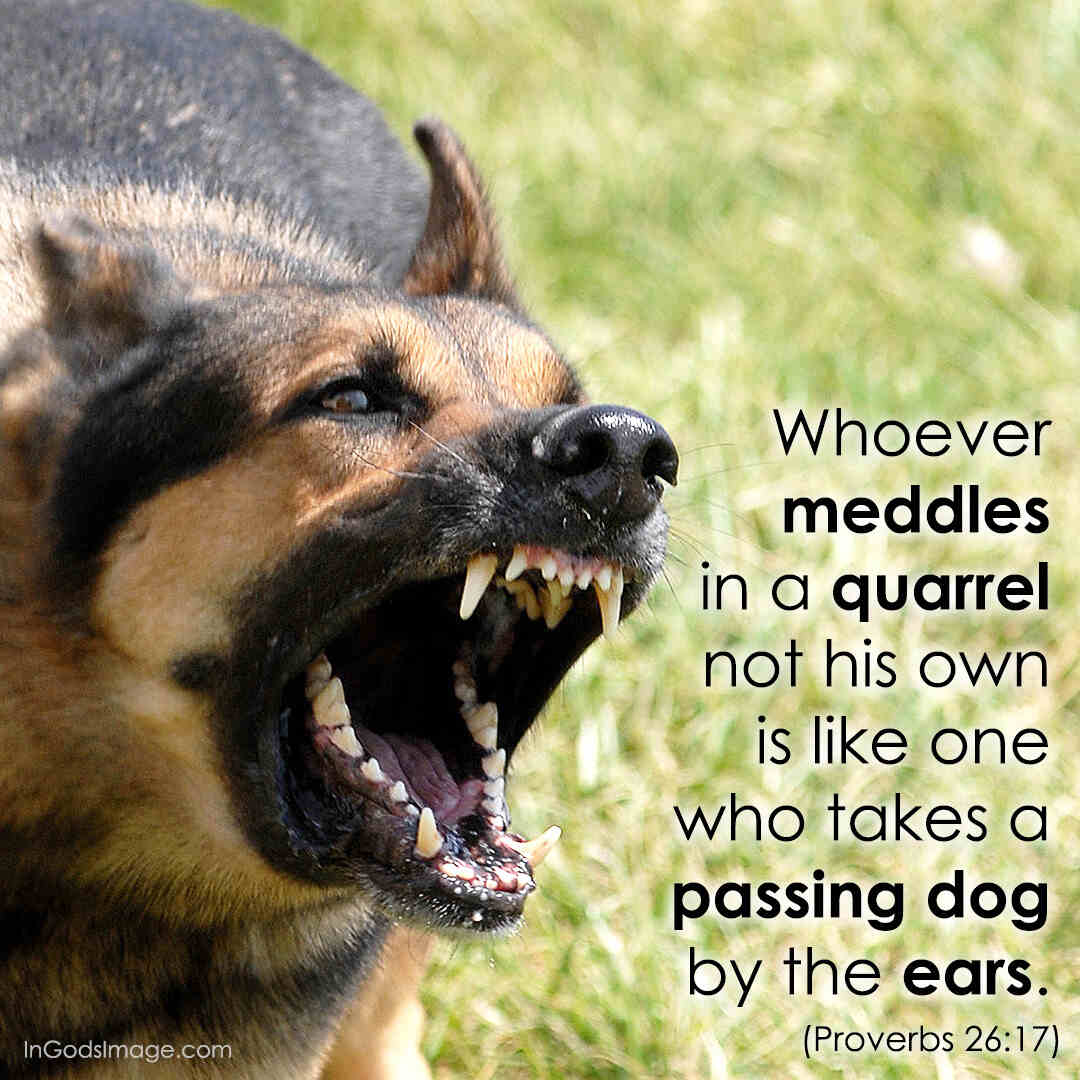
Jesus will judge those who create unnecessary strife between other people18
Avoid engaging in other people’s disputes unless there is a compelling need. The New Testament also condemns the “busy body” who engages unnecessarily in another person’s dispute. “Make sure that none of you suffers as … a troublesome meddler;” (1 Pet. 4:15). “and to make it your ambition to lead a quiet life and attend to your own business and work with your hands, just as we instructed you,” (1 Thess. 4:11). “For we hear that some among you are leading an undisciplined life, doing no work at all, but acting like busybodies.” (2 Thess. 3:11). There are exceptions to this rule. Believers should be God’s salt and light when there is actual injustice in the world (Matt. 5:13-16).
Fools say hurtful things and then dismiss their words as jokes when confronted. There are times when tough words of truth must be spoken. But fools carelessly offer hurtful words and then find excuses for their actions when others complain about the pain they inflict. “18 Like a maniac who shoots flaming arrows, arrows, and death, 19 so is a person who deceives his neighbor, and says, ‘Was I not joking?’” (Prov. 26:18-19). “Just as arrows can hurt and firebrands can ignite, our words can inflict emotional and spiritual wounds. Such words can stay with individuals for a long time, often leading to mistrust and heartbreak. It is crucial for us, as individuals aspiring to live a Christ-like life, to remain mindful of our speech and actions and their far-reaching consequences. We all know how easy it is to make a joke or say something without thinking. We might not intend to hurt anyone, but that doesn’t mean the wounds aren’t real. Proverbs 12:18 states that reckless words pierce like a sword, but the tongue of the wise brings healing. This emphasizes that our communication style can have various influences; the choice is ours to make. We recognize our Christ-like calling: to bring love, comfort, and joy into the lives of others, rather than chaos and harm.” (William David on Prov. 26:18-19).19
Avoid filthy or hurtful talk that is not meant to edify, correct, or encourage. The New Testament also warns against “and there must be no filthiness or foolish talk, or vulgar joking, which are not fitting, but rather giving of thanks.” (Eph. 5:4). “But I tell you that for every careless word that people speak, they will give an account of it on the day of judgment.” (Matt. 12:36). “But now you also, rid yourselves of all of them: anger, wrath, malice, slander, and obscene speech from your mouth.” (Col. 3:8).
6. Gossip / Slander: Fools Spread Gossip or Slander. Prov. 26:20-22.
Fools fuel conflicts and cause great harm through gossip and slander. Conflicts within Jesus’ Church would gradually disappear if it were not for the gossip and slander of fools who enjoy it. “20 For lack of wood the fire goes out, and where there is no gossiper, quarreling quiets down. 21 Like charcoal to hot embers and wood to fire, so is a contentious person to kindle strife. 22 The words of a gossiper are like dainty morsels, and they go down into the innermost parts of the body.” (Prov. 26:20-22). “Bitterness is repeatedly stirred up in certain groups because there are certain ones in there who keep putting a little wood on the fire. If no one were fueling it, the fire would go out; the strife would cease… There are certain folks who cause strife as soon as they start attending a church or join a church. You will find them in the Lord’s work today. They seem to stir things up all the time. They are never really interested in the Word of God, although they may pretend to be… People like to bear those choice little nits of gossip. They like to hear them, but they are hard to digest and will finally make them sick. A real child of God does not wish to hear things that are ugly. (J. Vernon McGee on Prov. 26:20-22).20
An uncontrolled tongue can inflict great harm. James expanded upon these warnings about gossip and slander. “So also the tongue is a small part of the body, and yet it boasts of great things. See how great a forest is set aflame by such a small fire! And the tongue is a fire, the very world of unrighteousness; the tongue is set among our body’s parts as that which defiles the whole body and sets on fire the course of our life, and is set on fire by hell. For every species of beasts and birds, of reptiles and creatures of the sea, is tamed and has been tamed by the human race. But no one among mankind can tame the tongue; it is a restless evil, full of deadly poison.” (Jam. 3:5-8).
The momentary pleasures of gossip quickly fade. Gossip brings momentary pleasure but ultimately causes great harm to relationships. “8 The words of a gossiper are like dainty morsels, and they go down into the innermost parts of the body.” (Prov. 18:8; 26:22). Gossip also divides friends. “A perverse person spreads strife, and a slanderer separates close friends.” (Prov. 16:28). Even worse, gossip frequently involves slander. “One who goes about as a slanderer reveals secrets, but one who is trustworthy conceals a matter.” (Prov. 11:13). Thus, believers are warned not to associate with gossipers. “19 One who goes about as a slanderer reveals secrets; therefore do not associate with a gossip.” (Prov. 20:19). God also promises to judge those who “secretly slander,” another phrase for gossip (Ps. 101:5; 1 Tim. 5:13; Ro. 16:17-18; 2 Thess. 3:11).
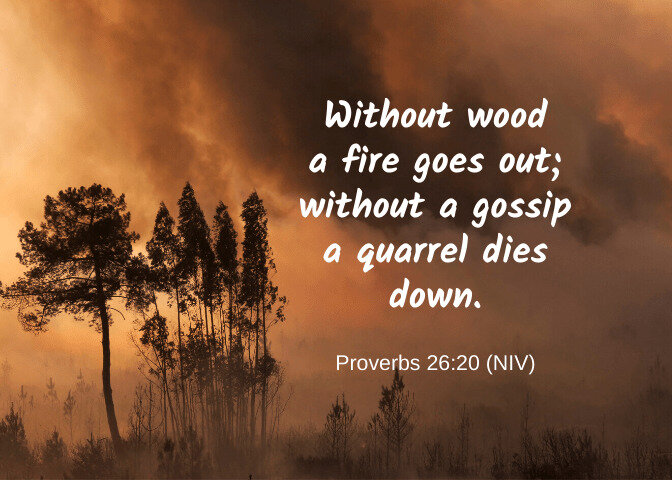
Those who spread gossip and slander foolishly spread great harm to God’s people21
Fools also fail to take God’s warnings about slander seriously. God warns believers not to slander others: “You shall not go about as a slanderer among your people; and you are not to jeopardize the life of your neighbor. I am the LORD.” (Lev. 19:16; Ex. 23:7) “‘You shall not steal, nor deal falsely, nor lie to one another.’” (Lev. 19:11; Ex. 23:1-2). Lying is so offensive to God that it violates the Ninth Commandment (Ex. 20:16; Dt. 5:20). Lies are also one of the sins that God “hates.” “There are six things which the Lord hates, yes, seven which are an abomination to Him: . . . a lying tongue, and . . . a false witness who utters lies, and one who spreads strife among brothers.” (Prov. 6:16-19). “Lying lips are an abomination to the Lord, but those who deal faithfully are His delight.” (Prov. 22:22). Satan is the father of all liars. When you lie, you are under his influence: “You are of your father the devil, and you want to do the desires of your father . . . Whenever he speaks a lie, he speaks from his own nature, for he is a liar and the father of lies.” (Jo. 8:44). Thus, no matter what the reason, never slander others.
Fools honor God with their lips while refusing to repent of their evil words and hearts. Solomon condemned the fool who tried to look holy for God while simultaneously speaking words of evil because his heart remain evil. “23 Like an earthenware vessel overlaid with silver impurities are burning lips and a wicked heart.” (Prov. 26:23). ‘“Lips glowing with, affection, uttering warm words of love,’ joined with a malignant heart, are like a piece of broken earthenware from the furnace, which glitters with the silver drops at stick to it, but is itself worthless.” (Albert Barnes on Prov. 26:23).22
Jesus knows when you try to act holy for Him but then engage in evil speech. Jesus’ greatest condemnations were against the religious leaders who appeared holy on the outside while their hearts were evil. “Woe to you, scribes and Pharisees, hypocrites! For you are like whitewashed tombs which on the outside appear beautiful, but inside they are full of dead men’s bones and all uncleanness. So you too, outwardly appear righteous to people, but inwardly you are full of hypocrisy and lawlessness.” (Matt. 23:27-28). “Then the Lord said, ‘Because this people approaches Me with their words and honors Me with their lips, but their heart is far away from Me, and their reverence for Me consists of the commandment of men that is taught;”’ (Is. 29:13; Matt. 15:8-9).
7. Deceptive Hatred: Fools Engage in Deception and Hatred. Prov. 26:23-27.
Fools engage in deception to conceal their hatred instead of repenting of their sins. God will one day expose those who engage in deception to conceal their hatred. “24 One who hates disguises it with his lips, but he harbors deceit in his heart. 25 When he speaks graciously, do not believe him, because there are seven abominations in his heart. 26 Though his hatred covers itself with deception, his wickedness will be revealed in the assembly.” (Prov. 26:24-26). “Proverbs 26:24-26 cautions us about the treacherous nature of deceit and hypocrisy. It sheds light on the hidden malice that can lurk within individuals, even when their words appear kind and flattering. This warning resonates with the broader biblical theme of the deceitfulness of the human heart, as highlighted in Jeremiah 17:9, which emphasizes the challenge of truly understanding the depths of one’s own intentions and those of others. The parallel in Matthew 7:15, warning about false prophets disguised as harmless beings, reinforces the idea that appearances can be deceiving, urging us to look beyond surface-level interactions. In a world where superficiality often masks true intentions, Proverbs 26:24-26 remains relevant, urging us to exercise discernment in our relationships. (Rev. Michael Johnson Prov. 26:23-27).23
God knows when you conceal unrepentant evil. God’s prophets repeatedly condemned those who offered smooth words while trying to conceal their hatred. “Their tongue is a deadly arrow; it speaks deceit; with his mouth one speaks peace to his neighbor, but inwardly he sets an ambush for him.” (Jer. 9:8). “They speak lies to one another; They speak with flattering lips and a double heart.” (Ps. 12:2). “His speech was smoother than butter, but his heart was war; his words were softer than oil, yet they were drawn swords.” (Ps. 55:21). “One who conceals hatred has lying lips, and one who spreads slander is a fool.” (Prov. 10:18). “If anyone thinks himself to be religious, yet does not bridle his tongue but deceives his own heart, this person’s religion is worthless.” (Jam. 1:26). “Therefore, ridding yourselves of falsehood, speak truth each one of you with his neighbor, because we are parts of one another.” (Eph. 4:25).
Unrepentant sinners who practice deceptive hatred will be judged. Those who engage in deception and hatred will one day be judged. “27 One who digs a pit will fall into it, and one who rolls a stone, it will come back on him. 28 A lying tongue hates those it crushes, and a flattering mouth works ruin.” (Prov. 26:27-28). “For, by the righteous judgment of God, the wicked are not only generally disappointed in their designs, but involve themselves in that mischief which they intended to do to others:” (Joseph Benson on Prov. 26:27).24 “Scripture condemns both lies and flattery (Proverbs 6:16–19; 12:22; 29:5). Hateful people often spread lies about those they hope to destroy (Proverbs 26:24–26). Deceptive people may try to catch their victims off guard by praising them, giving insincere compliments. These tactics result in disaster, both for the victim and for those who lie (Proverbs 26:27). This not only condemns such actions but teaches that it's good to avoid those who participate in them.” (BibleRef.com, Prov. 26:28).25
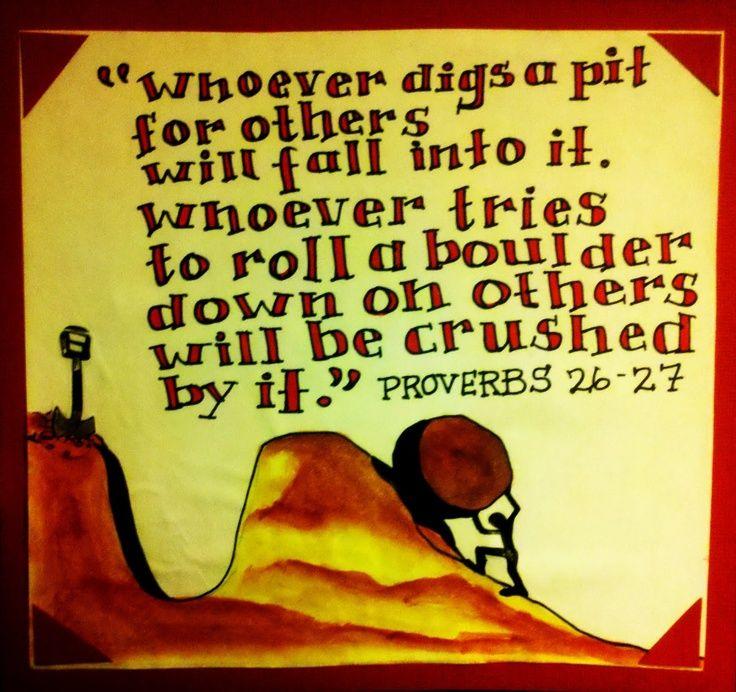
Those who engage in deceptive hatred will reap what they have sown for others26
Unrepentant sinners will reap what they sow. Throughout the Bible, God warns that a person reaps what he or she sows: “He has dug a pit and hollowed it out, and has fallen into the hole which he made. His harm will return on his own head, And his violence will descend on the top of his own head.” (Ps. 7:15-16). “One who digs a pit may fall into it, and a serpent may bite one who breaks through a wall.” (Ecc. 10:8). “You have plowed wickedness, you have harvested injustice, you have eaten the fruit of lies.” (Hos. 10:13a). “One who sows injustice will reap disaster, and the rod of his fury will perish.” (Prov. 22:8). “Do not be deceived, God is not mocked; for whatever a person sows, this he will also reap.” (Gal. 6:7). Thus, you should never engage in gossip, slander, deception or hatred. These are all the tools or the devil. They are never justified.
B. Waltke and I. De Silva, Proverbs, A Shorter Commentary, (Grand Rapids, MI: Wm. B. Eerdmans Publishing Co., 2021), p. 369 (italics in original).↩︎
Image credit: Living Our Lives Well: Proverbs 26 Scripture Pictures↩︎
Image credit: Living Our Lives Well: Proverbs 26 Scripture Pictures↩︎
Image credit: (38) Post | LinkedIn↩︎
Proverbs 26:7 Meaning & Explanation (with Related Verses) - Christianity Path↩︎
Image credit: True Wisdom Comes From GOD – The Reason For My Faith↩︎
R. Young, Proverbs, A Commentary on the Book of Proverbs (SureWord Publications, Baltimore, MD, 2005), p. 341.↩︎
Image credit: Proverbs 26:11 As a dog returns to its vomit, so also a fool repeats his foolishness. | Christian Standard Bible (CSB) | Download The Bible App Now↩︎
Image credit: Pin on Verses for Life↩︎
Proverbs 26 Commentary - Matthew Henry Commentary on the Whole Bible (Complete) | Bible Study Tools↩︎
Image credit: Proverbs 26:13 Artwork | Bible Art↩︎
Proverbs 26:17 - Meaning, Context, and Spiritual Reflection↩︎
Image credit: Weekend Wisdom – Proverbs 26:17 – In God's Image↩︎
Proverbs 26:18-19 Meaning and Commentary - The Bible Outlined↩︎
J. Vernon McGee, Thru the Bible, Commentary Series, Proverbs (Thomas Nelson, Inc., Nashville TN 1991), p. 223.↩︎
Image credit: Only You Can Prevent Forest Fires of the Mouth – Seek Grow Love↩︎
Image credit: Pin on Proverbs / spreuken↩︎