Proverbs 28: Lessons and Warnings About Rejecting God’s Wisdom
Introduction: After exhorting believers on the value of following Yahweh’s wisdom, Solomon warned about the dangers of rejecting it. These include: (1) loving evil, (2) disobedience, (3) pride, (4) a hardened heart, (5) oppression, murder, and hatred, (6) greed, and (7) selfishness.
First, in verses one through six, Solomon warned of the dangers that come from loving evil. Those who love evil step outside of God’s protection and face chaos, misery, and judgment. Second, in verses seven through 10, Solomon warned of the dangers of disobeying God. Those who disobey God face His discipline and “hindered” prayers when they cry out for relief. Third, in verses 11 and 12, Solomon warned of the dangers of pride. Pride causes a person to become wise in their own eyes and boast in their God-given successes. Fourth, in verses 13 and 14, Solomon warned of the sin that follows the preceding sins – a hardened heart. A hardened heart frequently causes a person to foolishly try to hide their sins. Fifth, in verses 15 through 18, Solomon warned of the dangers of oppression, murder, and hatred. Without the wisdom of God’s love, a sinner’s actions are frequently governed by their flesh. This can include heinous sins, among others, including oppression, murder, and hatred. Sixth, in verses 19 through 24, Solomon warned of the dangers of greed. When a sinner is consumed by the things of the world, the love of money, emptiness, sorrow, and judgment will frequently follow. Finally, in verses 25 through 28, Solomon warned of the dangers of selfishness. People who live according to worldly wisdom frequently care only for themselves and have no compassion for others in need.
1. Loving Evil: Those Who Reject God’s Wisdom and Embrace Evil Frequently Experience Fear, Chaos, and Judgement. Prov. 28:1-6.
Those who reject God become filled with fear. Unrepentant sinners can never find lasting peace because they face judgment. “1 The wicked flee when no one is pursuing, but the righteous are bold as a lion.” (Prov. 28:1). “Those that have made God their enemy, and know it, cannot but see the whole creation at war with them, and therefore can have no true enjoyment of themselves, no confidence, no courage, but a fearful looking for of judgment. Sin makes men cowards.” (Matthew Henry on Prov. 28:1).1
Those who reject God’s wisdom place themselves under the curse of the Law. If a person rejects God, God warns that He may allow the person to be defeated in battle: “The Lord shall cause you to be defeated before your enemies; you will go out one way against them, but you will flee seven ways before them, and you will be an example of terror to all the kingdoms of the earth.” (Dt. 28:25; Lev. 26:17). For example, when the Jews were disobedient to God, God allowed them to be defeated in battle (E.g., 1 Sam. 4:2, 10). In contrast, when believers are faithful, they do not need to fear their enemies. “A Psalm of David. The LORD is my light and my salvation; whom should I fear? The LORD is the defense of my life; whom should I dread?” (Ps. 27:1). “What then shall we say to these things? If God is for us, who is against us?” (Ro. 8:31). Even if God allows believers to die in battle, they are protected from eternal death (Matt. 10:28).
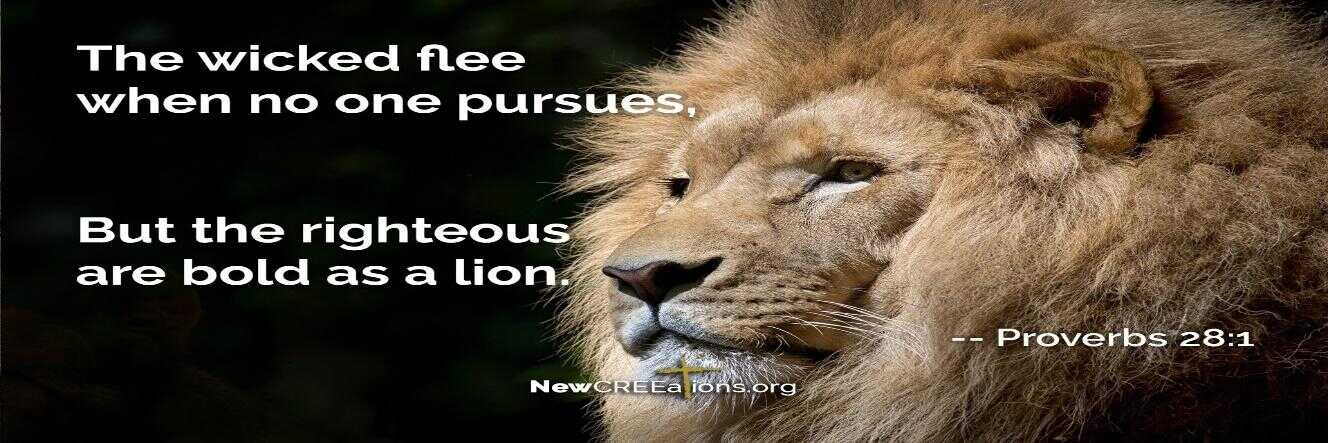
Those who reject God and embrace evil, face the fear of being caught and judged2
Those who reject God’s wisdom face the risk of instability. When a nation rejects God, it faces the curse of political instability and decline. “2 Due to a wrongdoing of a land its leaders are many, but by a person of understanding and knowledge, so it endures.” (Prov. 28:2). “This implies that the wickedness of a nation is punished by frequent changes of rulers, who impose new laws, taxes, and other burdens, which greatly oppress the people; but regarding the antithesis in the second hemistich, we take the meaning to be that when iniquity, injustice, apostasy, and other evils abound, a country becomes the prey of pretenders and partisans striving for the supremacy. The history of the northern kingdom of Israel, especially in the disastrous period succeeding the death of Jeroboam II, affords proof of the truth of the statement ...” (Pulpit Commentary on Prov. 28:2).3
Northern Israel faced the curse of instability and decline because it openly embraced evil. Because of their idolatry and other sins, the prophet Ahijah prophesied that the people of Northern Israel would be like a “a reed is shaken in the water” (1 Kgs. 14:15). This was a metaphor for instability (Matt. 11:7; Lk. 7:24). As a fulfillment of this prophecy, in the last 20 years of Northern Israel, the final six rulers were plagued with coups d'état, assassinations and instability. God judged each of the leaders of Northern Israel for their evil acts (1 Kgs. 15:34; 16:2, 19, 31; 22:52; 2 Kgs. 3:3; 10:29, 31; 13:2, 11; 14:24; 15:9, 18, 24, 28). Following Jeroboam II’s evil reign, King Zechariah also did evil in God’s eyes. He reigned over Norther Israel for just six months when Shallum assassinated him (746 B.C.) (2 Kgs. 15:15). King Shallum then also did evil before God. Thus, Shallum’s reign lasted only a month before Menahem assassinated him (745 B.C.) (2 Kgs. 15:14). After assassinating Shallum, Menahem also openly embraced evil. Thus, he also had a short reign (745-738 B.C.) (2 Kgs. 15:16-22). Menahem’s son Pekahiah then also did evil. He reigned for approximately two years before Pekah assassinated him (738-737) (2 Kgs. 15:23-26). Pekah then also did evil, and he also was also assassinated (737-732 B.C.) (2 Kgs. 15:27-31). Hoshea, the final leader, also embraced evil (732-722 B.C.). King Shalmaneser V of Assyria besieged the capital Samaria until he died. In 722, King Sargon II captured Samaria and deported the people of Northern Israel (2 Kgs. 17:6). These leaders reaped the evil that they sowed. “Do not be deceived, God is not mocked; for whatever a man sows, this he will also reap.” (Gal. 6:7; Ho. 8:4).
Rejecting God’s wisdom and oppressing the poor leads to self-destruction. When wealthy people oppress the poor, they eventually bring judgment upon themselves. “3 A poor man who oppresses the helpless is like a driving rain which leaves no food.” (Prov. 28:3). “Proverbs 28:3 gives us a vivid illustration about the consequences of how we treat others, especially those who are less fortunate. It presents the idea that a poor person who chooses to oppress the poor harms not only others but also himself. The metaphor makes it clear that such actions are as destructive as a flood that wipes away crops, leaving nothing behind. Here we understand that oppression and cruelty create a cycle of suffering and loss for everyone involved. Not only does the oppressor cause harm to others, but they are also jeopardizing their own lives and potential for a prosperous future. This verse challenges us to reflect on the choices we make daily. It reminds us that our actions are interconnected; when we thrive at the expense of others, we are participating in a destructive process.” (Christinanitypath.com on Prov. 28:3).4
God will severely judge the rich who mistreat the poor and fail to repent. God’s condemnation of wealthy people who mistreat the poor is repeated throughout the Bible. But the book of James has one of the strongest warnings. “Come now, you rich people, weep and howl for your miseries which are coming upon you. 2 Your riches have rotted and your garments have become moth-eaten. 3 Your gold and your silver have corroded, and their corrosion will serve as a testimony against you and will consume your flesh like fire. It is in the last days that you have stored up your treasure! 4 Behold, the pay of the laborers who mowed your fields, and which has been withheld by you, cries out against you; and the outcry of those who did the harvesting has reached the ears of the Lord of armies. 5 You have lived for pleasure on the earth and lived luxuriously; you have fattened your hearts in a day of slaughter. 6 You have condemned and put to death the righteous person; he offers you no resistance.” (Jam. 5:1-6). When someone oppresses the poor, that person taunts God. “One who oppresses the poor taunts his Maker,...” (Prov. 14:31a). “Do not rob the poor because he is poor, nor crush the needy at the gate; for the LORD will plead their case and take the life of those who rob them.” (Prov. 22:22-23; Ps. 140:12; Is. 41:17; Ezek. 22:29; Matt. 25:35-40, 43-45).
Those who reject the wisdom of God’s Law effectively celebrate evil in God’s eyes. God sees advocates of evil when people celebrate doing what feels right in their own eyes instead of following His Law. “4 Those who abandon the Law praise the wicked, but those who keep the Law strive against them.” (Prov. 28:4). “The Mosaic law was intended to expose sin and encourage righteous living. Shortly before his death, Moses challenged the people of Israel to choose between life and good, death and evil (Deuteronomy 30:15) … This proverb reinforces that same idea. Breaking moral laws is wrong, and so is applauding those who are immoral (Romans 1:32). Forsaking the law is to side with the wicked, whereas to obey the law is to oppose the wicked. Godly people should be speaking truth in love (Ephesians 4:15), against sin (Luke 5:32), not endorsing sin or celebrating those who defy God (Isaiah 5:20).” (BibleRef.com on Prov. 28:4).5
Unrepentant sinners who redefine what God calls evil and good will be severely judged. In the ancient world, there were people who rejected the standards of right and wrong that God set in His Law. God sent His prophets to warn these people to repent or face His judgment. “Woe to those who call evil good, and good evil; who substitute darkness for light and light for darkness; who substitute bitter for sweet and sweet for bitter!” (Is. 5:20). These condemnations and warnings are repeated in the New Testament. “and although they know the ordinance of God, that those who practice such things are worthy of death, they not only do the same, but also approve of those who practice them.” (Ro. 1:32). “in order that they all may be judged who did not believe the truth, but took pleasure in wickedness.” (2 Thess. 2:12; 1 Cor. 6:9-10; Gal. 5:19-21; Eph. 5:5-7).

Those who reject God’s wisdom become spiritually blind6
Unrepentant sinners who reject God’s wisdom become spiritually blind to God’s truth. Those who embrace evil eventually become blind to God’s justice. “5 Evil people do not understand justice, but those who seek the Lord understand everything.” (Prov. 28:5). ‘“Evil men do not understand justice’ paints a stark picture of the moral blindness that shrouds those who choose wickedness, indicating a lack of alignment with God’s principles in their decision-making. Conversely, ‘But those who seek the Lord understand it fully’ illuminates the profound clarity and insight that seeking God brings, enabling individuals to grasp justice in its entirety.” (Reverend Michael Johnson on Prov. 28:5).7
The devil has blinded those who reject God to truth, justice, and things of the Spirit. Those who reject God and embrace evil become spiritually blind. “in whose case the god of this world has blinded the minds of the unbelieving so that they will not see the light of the gospel of the glory of Christ, who is the image of God.” (2 Cor. 4:4). “But a natural person does not accept the things of the Spirit of God, for they are foolishness to him; and he cannot understand them, because they are spiritually discerned.” (1 Cor. 2:14). “being darkened in their understanding, excluded from the life of God because of the ignorance that is in them, because of the hardness of their heart;” (Eph. 4:18). “For even though they knew God, they did not honor Him as God or give thanks, but they became futile in their reasonings, and their senseless hearts were darkened.” (Ro. 1:21).
Those who reject God’s wisdom seek unjust wealth at the expense of their souls. It is better to be poor if the temptation to be rich causes you to cut ethical corners. “6 Better is a poor person who walks in his integrity, than a person who is crooked, though he is rich.” (Prov. 28:6). “The essence of Proverbs 28:6 lies in its stark contrast between two types of individuals: the poor but righteous man and the rich but dishonest man. In this verse, the keyword ‘integrity’ stands out as a cornerstone of true character and moral standing. Integrity refers to the quality of being honest and having strong moral principles. The verse teaches us that wealth and status are not the ultimate measures of a person’s worth; rather, it is their adherence to ethical values that truly counts. This proverb underscores the idea that those who prioritize their integrity, even in the face of poverty, are ultimately better off than those who achieve wealth through deceitful means. The spiritual implication here is profound: God values our character over our material possessions. For many, this might be a call to reassess priorities, reminding us that spiritual richness often outweighs financial gain. It encourages believers to strive for integrity in all aspects of life, suggesting that true fulfillment comes from aligning our actions with our moral values.” (Bibleverseexplained.com on Prov. 28:6).8
Those who seek wealth over faith in Jesus will have nothing to redeem their souls. Jesus warns people not to make the pursuit of wealth more important than their spiritual salvation. “For what does it benefit a person to gain the whole world, and forfeit his soul? For what could a person give in exchange for his soul?” (Mk. 8:36-37). “Better is a little with the fear of the LORD than great treasure, and turmoil with the treasure.” (Prov. 15:16; 16:8; 19:1). “Better is the little of the righteous than the abundance of many wicked.” (Ps. 37:16). “Better is a little with righteousness than great income with injustice. For all that is in the world, the lust of the flesh and the lust of the eyes and the boastful pride of life, is not from the Father, but is from the world.” (1 Jo. 2:15-16).
2. Disobedience: Those Who Disobey God Face His Discipline and “Hindered” Prayers When They Cry Out For Relief. Prov. 28:7-10.
Those who dishonor godly instruction with gluttony violate God’s Commandments. People who reject godly instruction to instead live profligate lives dishonor their parents and violate the Fifth Commandment. “7 He who keeps the Law is a discerning son, but he who is a companion of gluttons humiliates his father.” (Prov. 28:7). “The antithetical parallels of this proverb pit a discerning (cf. v. 2) son against the one who associates with profligates. The former is defined as one who guards the instruction inspired by the covenant-keeping sages and handed down by the faithful parents. The latter implicitly abandons that wisdom. By choosing to identify with reckless squanderers the foolish son puts his father to public shame (see 10:1; cf. 27:11). The Mosaic law prescribes that a profligate, stubborn son be stoned to death by the community (Deut. 21:18-21).” (Bruce Waltke and Ivan De Silva on Proverbs Prov. 28:7).9
A prodigal child who rejects the Word to live a life of gluttony is in need of God’s mercy. Solomon urged children to follow godly instruction (Prov. 1:8-9; 6:20: 10:1). Obedience to godly instruction honors a person’s parents (Prov. 15:20; 23:24-25). Honoring a parent’s godly instruction is so important that it forms the basis for God’s Fifth Commandment (Ex. 20:12; Dt. 5:16). The High Priest Eli’s sons dishonored him with their disobedience (1 Sam. 2:12; 8:3). In the parable of the prodigal son, the son who took his inheritance and squandered it violated the Fifth Commandment (Lk. 15:15:11-32). He received mercy under God’s law from his death penalty (Dt. 21:18-21).
God will remove the ill-gotten gains of those who impose usury interest on the poor. In His divine providence, God will take from those who abuse the poor to help the poor. “8 One who increases his wealth by interest of any kind, collects it for one who is gracious to the poor.” (Prov. 28:8). “Wicked men overcharge interest and take financial advantage of the poor. God will take the assets of such men and give those assets to men that help the poor (Pr 22:16,22-23)… The LORD had financial laws for His people and the poor among them. He condemned charging the poor interest (Ex 22:25; Lev 25:35-37), for this could further their poverty, and it showed a spirit of greed or cruelty. He also condemned charging interest to an Israelite (Deut 23:19), for the nation was to help each other, not get rich off one another…As Solomon the Preacher taught elsewhere, liberal giving is most rewarding to the giver (Pr 11:24-26). This proverb’s wisdom condemns charging interest to the poor. This interpretation and application is by comparing Moses’ Law and reading the second clause of the proverb. The lesson is about the poor. It also condemns any other means of taking financial advantage of the poor, such as overcharging in selling, underpaying in buying, delaying payments, keeping items put up as collateral, or paying wages on a delayed basis.” (LetGodbeTrue.com on Prov. 28:8).10
Believers should never place another person into bondage. Although commercial lending and lending to people with money was allowed, God prohibited the Jews from charging the poor interest: “If you lend money to My people, to the poor among you, you are not to act as a creditor to him; you shall not charge him interest.” (Ex. 22:25; Lev. 25:37; Dt. 23:19-20). In cases not involving the poor, the Jews could charge interest provided they did not charge “usurious interest.” (Lev. 25:36). Charging interest to the poor who could not afford a loan or “usury interest” to others was a form of oppression that God abhorred: “He who oppresses the poor taunts his Maker, but he who is gracious to the needy honors Him.” (Prov. 14:31). “He who oppresses the poor to make more for himself or who gives to the rich, will only come to poverty.” (Prov. 22:16). “The righteous is concerned for the rights of the poor, the wicked does not understand such concern.” (Prov. 29:7). “The righteous care about justice for the poor, but the wicked have no such concern.” (Prov. 31:9). When Nehemiah returned to Jerusalem, he found that some parents were forced to sell their children into servitude to pay off their debts (Neh. 5:5). This was a sad practice that parents resorted to when they were trapped into debts that they could not repay (cf., 2 Kgs. 4:1). Because God freed His people from slavery, they were prohibited from selling each other as slaves (Lev. 25:39, 42).
The prayers of unrepentant sinners who reject God’s Law are an abomination to Him. Those who reject God’s Law should not expect God to honor their prayers when they cry out for help or mercy in their times of need. “9 One who turns his ear away from listening to the Law, even his prayer is an abomination.” (Prov. 28:9). “Many people today feel that all the prayers that are offered up to heaven are honored by God; but the truth is that men who will not obey the laws of God, his prayers are an abomination to God. It is by the Word of God and prayer that our communication with God is kept. God speaks to us by his law, and if we listen we will be blessed.” (Ronald Young on Prov. 28:9).11
Those who reject God’s Word may encounter unanswered or hindered prayers12
Unrepentant sin can “hinder” your prayers. Although God will not permanently forsake a believer (Dt. 31:6; Heb. 13:5), He warns that He will temporarily hide His face from a believer in open rebellion (Dt. 31:18; 32:19-20). When God hid His face from the Jews, He did not “hear” their prayers (Is. 1:15; 8:17; Ps. 66:18; Prov. 28:9). In the New Testament, God also warns that sin can cause a believer’s prayers to be temporarily “hindered” or impaired (1 Pet. 3:7; Jo. 9:31). The reason for this is that sin cannot be in God’s presence, and He “cannot look on wickedness.” (Hab. 1:13). In contrast, when you act righteously, your prayers are a sweet aroma to Him (Ps. 141:2; Rev. 5:8; 8:3).
God will one day send unrepentant sinners who lead God’s children astray to the pit. Those who reject God will face judgment. Those who mislead others to reject God and refuse to repent of their actions will face an even greater judgment. “10 One who leads the upright astray in an evil way will himself fall into his own pit, but the blameless will inherit good.” (Prov. 28:10). “There are those who take pleasure in causing the godly to go astray. It makes them feel better and perhaps superior to those who are upright … God has a way of protecting His upright, even if they seem to, or actually do, go astray for a time. God knows how to put the wicked in their place (his own pit) and He knows how to make sure that the blameless will inherit good. God does not leave the final word to the wicked man with his evil plans.” (David Guzik on Prov. 28:10).13
Jesus’ greatest condemnations were reserved for those who lead others astray. Those who have created false religions, discouraged others in their faith, or turned others against Jesus by their actions will one day face His harshest judgments. “but whoever causes one of these little ones who believe in Me to sin, it is better for him that a heavy millstone be hung around his neck, and that he be drowned in the depths of the sea.” (Matt. 18:6; Mk. 9:42; Lk. 17:1-2). “But false prophets also appeared among the people, just as there will also be false teachers among you, who will secretly introduce destructive heresies, even denying the Master who bought them, bringing swift destruction upon themselves. Many will follow their indecent behavior, and because of them the way of the truth will be maligned; and in their greed they will exploit you with false words; their judgment from long ago is not idle, and their destruction is not asleep.” (2 Pet. 2:1-3).
3. Pride: Those Who Reject God’s Wisdom Foolishly Become Blinded by Their Wisdom and Boast in their God-Given Accomplishments. Prov. 28:11-12.
When the pride of wealth blinds a person, they will be exposed for their foolishness. God gives spiritual discernment to those who are poor but rich in their faith. He protects them from being deceived by the prideful who are deluded by their wealth. “11 The rich person is wise in his own eyes, but the poor who has understanding sees through him.” (Prov. 28:11). “Riches will minister to pride and conceit. They seem to go along together. You hear of rich people giving testimonies at banquets … The poor man, poor in this world’s good but rich in faith, can listen to the testimony of the rich and know that it is hollow, that it lacks reality. Even if it is real, it will often lack the ring of discernment and of understanding of spiritual things.” (J. Vernon McGee on Prov. 28:11).14
God humbles the proud and honors the humble. God warns against the temptation to let your God-given wealth lead to misplaced pride. “Instruct those who are rich in this present world not to be conceited or to set their hope on the uncertainty of riches, but on God, who richly supplies us with all things to enjoy.” (1 Tim. 6:17; Lk. 12:15-21). Only fools trust in their riches. “One who trusts in his riches will fall, but the righteous will flourish like the green leaf.” (Prov. 11:28). God will protect those who place their trust in God over worldly riches. “but God has chosen the foolish things of the world to shame the wise, and God has chosen the weak things of the world to shame the things which are strong, and the insignificant things of the world and the despised God has chosen, the things that are not, so that He may nullify the things that are,” (1 Cor. 1:27-28).
Fools become prideful and spiritually blind to the source of their wealth15
When prideful leaders gain power, Jesus protects His people. When evil flourishes, Jesus faithfully leads His people to safety. “12 When the righteous triumph, there is great glory, but when the wicked rise, people hide themselves.” (Prov. 28:12). “When individuals who are righteous succeed, their victory brings joy and pride to the community. Their triumph illuminates a path of goodness and integrity which encourages others to act similarly. Conversely, when those who engage in wickedness achieve power or influence, people tend to feel threatened, prompting them to seek safety. This contrast highlights the moral landscape of society — illustrating how righteousness fosters community strength while wickedness incites fear and confusion.” (William David on Prov. 28:12).16
Those who take pride in their accomplishments will see their victories quickly fade. You do not need to fear evil rulers because they will fade like the grass (Ps. 37:2). When evil people reign, Jesus is a shield to His people (2 Sam. 22:31; Ps. 91:2). Unlike the wicked, when those who are made righteous through faith in Jesus succeed, God’s people will celebrate. “When things go well for the righteous, the city rejoices, and when the wicked perish, there is joyful shouting.” (Prov. 11:10). “When the righteous increase, the people rejoice, but when a wicked person rules, people groan.” (Prov. 29:2). When a sinner humbles himself and repents, the angels also celebrate. (Matt. 18:12-14; Lk. 15:7).
4. A Hardened Heart: Those Who Reject God’s Wisdom Frequently Try to Hide Their Sins and Harden their Hearts, Leading to Their Sorrow. Prov. 28:13-14.
Sinners who are unwilling to repent of their sin will suffer in the long term. Although unrepentant sinners may temporarily succeed, Jesus will ensure that they do not succeed in the long term. “13 One who conceals his wrongdoings will not prosper, but one who confesses and abandons them will find compassion.” (Prov. 28:13). A person who tries to hide his sins ‘“shall not prosper’; in soul or body, in things temporal or spiritual; he shall not have peace of mind and conscience; but, sooner or later, shall feel the stings it; he shall not succeed even in those things he has in view by covering his sins; he shall not be able to cover them long, for there is nothing covered but what shall be revealed; if not in this life, which yet often is, however at the day of judgment, when every secret thing shall be made manifest; nor shall he escape the shame and punishment he thought to avoid by covering it, as may be observed in the case of Achan, Joshua 7:11; in short, he shall have no mercy shown him by God or man, …” (John Gill on Prov. 28:13).17
With a hardened heart, Achan tried to conceal his covetousness. Before the battle of Jericho, God warned His people not to take the idols of Jericho (Josh. 6:18-19). But Achan disobeyed God and tried to hide Canaanite idols. This in turn caused God’s anger to “burn” against him (Josh. 7:1). He violated the Tenth Commandment against coveting (Ex. 20:17; Dt. 5:21; Ro. 7:7). Coveting is also a form of idolatry (Col. 3:5). Thus, he also violated the Second Commandment (Ex. 20:4; Dt. 5:8). Because of Achan’s sins, the Jews then lost the battle of Ai (Josh. 7:2-5). Achan’s attempt to hide his sins out of pride ultimately led to his death (Josh. 7:22-26). No sin can escape God’s eyes (Prov. 15:3; Heb. 4:13). Only the fear of the Lord gives you the wisdom to avoid trying to conceal your sins (Prov. 1:7; 9:10). The Bible defines the fear of the Lord as hating evil (Prov. 8:13). When you sin, Solomon’s Proverb 28:13 offers hope. When you confess your sins, Jesus will cleanse you of your sins and forgive you. “If we confess our sins, He is faithful and righteous, so that He will forgive us our sins and cleanse us from all unrighteousness.” (1 Jo. 1:9; Acts 3:19; Ro. 10:9-10; Is. 1:18; 2 Chr. 7:14; Ps. 32:5).
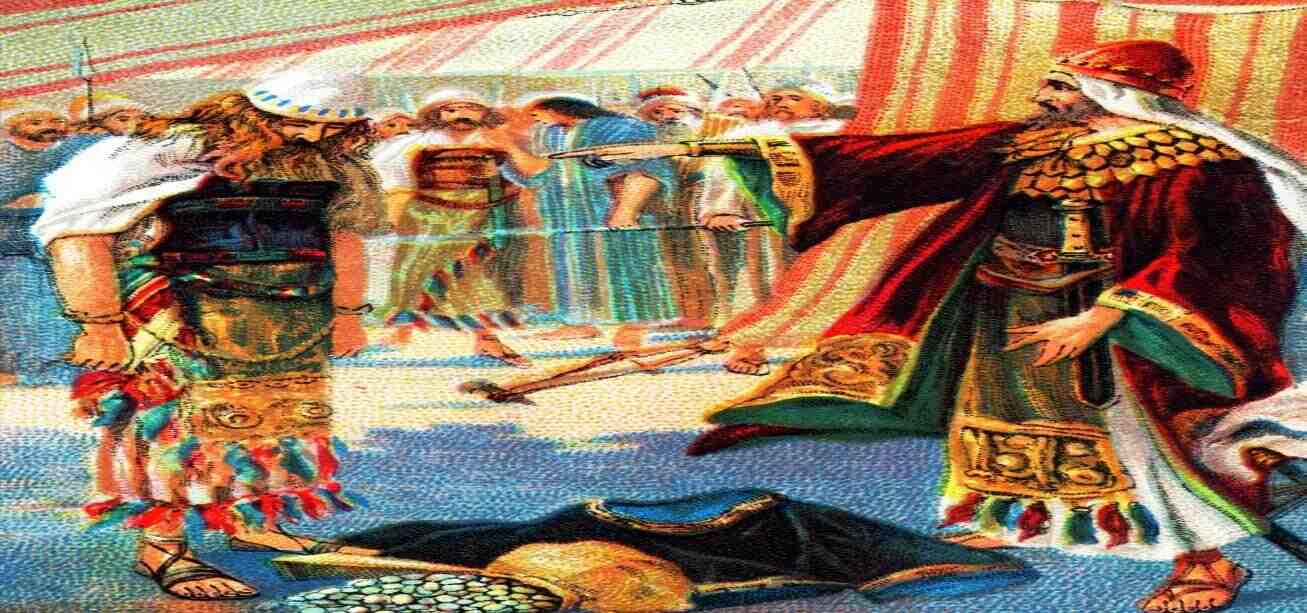
Achan tried to conceal his sins and brought judgment upon the Jews and himself18
A person who fails to fear sin risks facing a hardened heart and ruin without repentance. If sin is allowed to continue for long periods of time, sinners risk hardening their hearts to the point where they become numb to the Holy Spirit’s conviction. This can ultimately lead to disaster. “14 How blessed is the person who fears always, but one who hardens his heart will fall into disaster.” (Prov. 28:14). “Some have taken the fear mentioned to be the fear with which God is to be regarded … But it is rather the fear of sin which is meant - that tender conscience and watchful heart which lead a man robe prepared for temptation and able to resist it when it arises. Such a one distrusts himself, takes heed lest he fall (1 Corinthians 10:12), and works out his salvation with fear and trembling (Philippians 2:12) … A man hardens his heart who attends not to the voice of conscience, the restraints of religion, the counsel of friends, the warnings of experience (comp. ver. 26; Proverbs 29:1; Exodus 8:15; Psalm 95:8). This man scorns the grace of God, loses his protection, and must come to misery.” (Pulpit Commentary on Prov. 28:14).19
Sinners who become hardened to sin and fail to repent store up wrath for themselves. The Bible warns that the heart can be “hardened by the deceitfulness of sin.” (Heb. 3:12-13). Those who know the truth, fail to repent, and continue to embrace sin store up wrath for themselves. “But because of your stubbornness and unrepentant heart you are storing up wrath for yourself on the day of wrath and revelation of the righteous judgment of God,” (Ro. 2:5). “For if we go on sinning willfully after receiving the knowledge of the truth, there no longer remains a sacrifice for sins, but a terrifying expectation of judgment and the fury of a fire which will consume the adversaries.” (Heb. 10:26-27). In contrast, believers who fear the consequences of sin and thus avoid sin are blessed (Prov. 28:14).
5. Oppression / Murder / Hatred: Those Who Reject God’s Wisdom Commit Sins of the Flesh, Like Oppression, Murder and Hatred. Prov. 28:15-18.
Foolish leaders oppress the poor. When a leader ignores God’s law and oppresses the poor, the entire nation suffers. “15 Like a roaring lion and a rushing bear is a wicked ruler over a poor people.” (Prov. 28:15). “Whether by violence, repression, hardship, or other means, the evil tyrant drives people into hiding. Here, the mention of ‘a poor people’ suggests heavy taxation or theft and other types of direct abuse. People afflicted this way respond to a tyrant's leadership as to an aggressive predator: by hiding (Proverbs 28:12). Godly rulers inspire confidence and security in their people; the people learn to trust that the leader will do what is right (Proverbs 28:2; 29:2). Many of history's most notorious dictators ruled by fear and intimidation.” (BibleRef.com on Prov. 28:15).20
Rehoboam’s mistreatment of the poor led to Israel’s civil war and division. When Solomon’s son Rehoboam became king, the people asked him to change Solomon’s forced labor and taxation practices. Israel’s elders urged Rehoboam to show compassion. But he rejected their advice (1 Kgs. 12:1-8). Instead, he sought out the advice of younger servants who knew him. They appealed to his vanity and urging him to use oppression in response to the people’s complaints (1 Kgs. 12:9-11). Rehoboam then threatened to punish the people with labor and tax requirements far worse than any sacrifice that they had to make under Solomon (1 Kgs. 12:12-15). Jeroboam then incited the northern tribes into a civil war that ultimately divided Israel into two nations (1 Kgs. 12:16-20).21
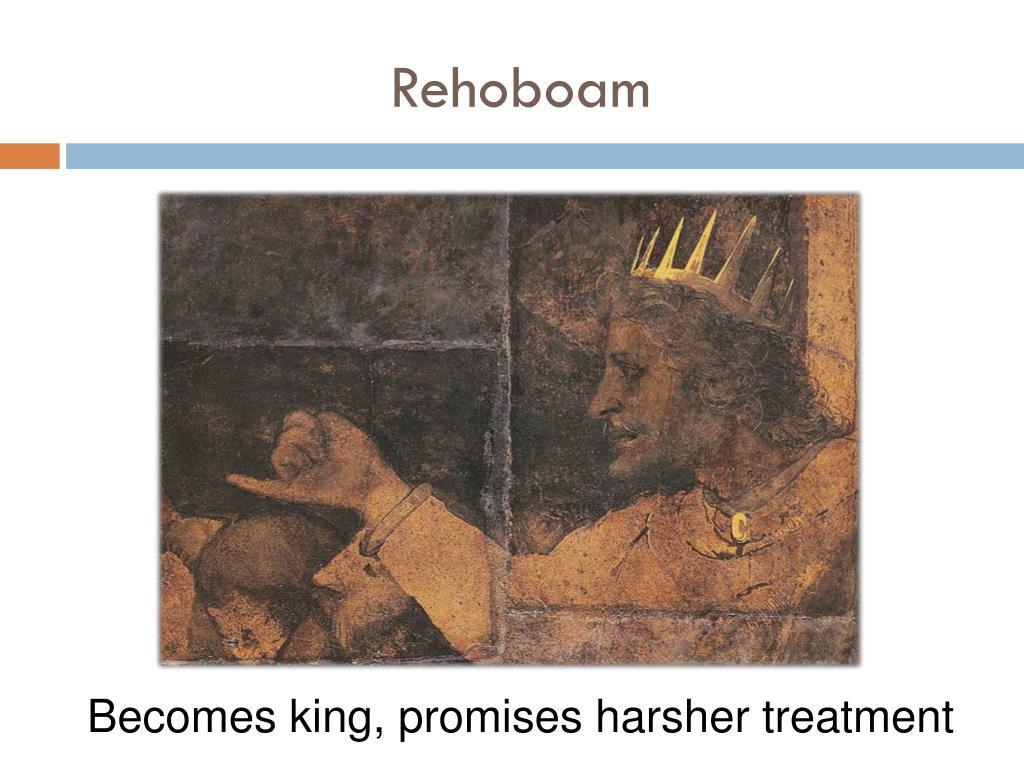
Rehoboam inflicted cruelty and oppression upon those who pleaded for help22
A leader who rejects God’s Word lacks understanding and will be removed from power. Foolish leaders who reject God’s Word become spiritually blind, lose God’s hand of protection, and can have their leadership cut short. “16 A leader who is a great oppressor lacks understanding, but a person who hates unjust gain will prolong his days.” (Prov. 28:16). “The tyranny or oppression of a prince is a manifest sign of great folly, because it alienates from him the hearts of his people, in possessing which his honour, safety, and riches consist; and often causes the shortening of his days, either through God’s cutting him off by some sudden stroke, or through the violence of men who have been injured by him, and are exasperated against him.” (Joseph Benson on Prov. 28:16).23
King Jehoahaz was a foolish leader who burned God’s Word and had his reign cut short. In 609 B.C., Jehoahaz became King of Judah and rejected Josiah’s reforms. While Josiah publicly proclaimed God’s Word, Jehoiakim publicly burned His Word (Jer. 36:22-24). God then cut Jehoiakim from the throne the way that he had cut and burned His Word (Jer. 36:29-30). He ruled for only three months before he became a captive of Pharaoh-necho II in Egypt. He then died in Egyptian captivity (2 Chr. 36:1-4).
Murderers who reject Jesus’ blood of atonement cannot escape the punishment of death. In Old Testament times, people could make atonement blood sacrifices for certain sins. But no atonement was available for intentional homicide. “17 A person who is burdened with the guilt of human blood will be a fugitive until death; no one is to support him!” (Prov. 28:17). “Let no man stay him: so it is a prohibition that no man should endeavour to save the life of a willful murderer, either by intercession, or by offering satisfaction, or any other way; of which see Genesis 9:6 Exodus 21:14 Numbers 35:31. Or, as the ancient and many other interpreters render it, no man shall stay him; none shall desire or endeavour to save him from his deserved punishment; he shall die without pity, being an object of public hatred.” (Matthew Poole on Prov. 28:17).24
Faith in Jesus’ atoning sacrifice is the only hope for those guilty of murder and hatred. God’s punishment for intentional murderer is death: “Whoever sheds the blood of man, by man shall his blood be shed; for God made man in his own image.” (Gen. 9:6; Nu. 35:33-34). Many might think that they are not guilty of this sin. But if you have ever been angry with your brother or called someone a fool, you have also committed an act of murder (Matt. 5:21-26; 1 Jo. 3:15-16). Likewise, if you have broken one of the laws, you are guilty of having broken them all (Jam. 2:10-11). All are sinners before God (Rom. 3:23; 5:12; Ps. 58:3), and the wages of sin are death (Ro. 6:23). Faith in Jesus’s atoning sacrifice offers the only refuge from eternal death (Rom. 10:9-10, 13; Jo. 5:24; 10:28-29).
Those who reject God’s strict standards of morality will fail before God. God will protect those who walk according to His standards of morality. But the wicked will ultimately fail before His final judgment. “18 One who walks blamelessly will receive help, but one who is crooked will fall all at once.” (Prov. 28:18). “The verse Proverbs 28:18 encapsulates the dichotomy between integrity and deceit. At its core, the message conveys that those who lead a life rooted in honesty and moral uprightness will ultimately find deliverance and protection from harm. This notion of deliverance can be understood not only in a physical sense but also spiritually, as a state of peace and safety that accompanies a righteous life. In contrast, those who engage in dishonest behavior and deceitful practices are warned of sudden downfall, highlighting the instability and precariousness of living a life lacking in integrity. This verse underscores the biblical principle that our choices carry consequences.” (Bibleverseexplained.com Prov. 28:18).25
Remain on Jesus’ narrow path and avoid doing what you feel is right. The person who does what is right in their own eyes embraces a path that leads to destruction. “There is a way which seems right to a person, but its end is the way of death.” (Prov. 14:12). To receive Jesus’ protection, believers must stay on the narrow path found in His Word. “Enter through the narrow gate; for the gate is wide and the way is broad that leads to destruction, and there are many who enter through it. For the gate is narrow and the way is constricted that leads to life, and there are few who find it.” (Matt. 7:13-14).
6. Greed: Those Who Reject God’s Wisdom to Seek After Worldly Ways Like Greed Ultimately Find Only Emptiness, Sorrow, and Judgment. Prov. 28:19-24.
Fools chase after worldly pursuits, including money. Within a series of proverbs about money, Solomon warns against pursuing “empty pursuits”. While Jesus offers true fulfillment, those who seek after worldly things will not find long-term satisfaction. “19 One who works his land will have plenty of food, but one who follows empty pursuits will have plenty of poverty.” (Prov. 28:19). “Here, we witness a warning against being entangled with futile pursuits or individuals who lead us astray. The term ‘vain persons’ can refer to those whose lives revolve around trivial matters. It paints a picture of distraction that leads to stagnation and, ultimately, despair. Investing time and resources in pursuits that don’t yield lasting satisfaction can leave us impoverished—a lesson that rings true throughout our lives.” (Christinanitypath.com on Prov. 28:19).26
Spiritual poverty awaits those who fail to labor for Jesus. In both the physical and spiritual sense, those who fail to work will be impoverished. “Poor is one who works with a lazy hand, but the hand of the diligent makes rich.” (Prov. 10:4). “One who works his land will have plenty of bread, but one who pursues worthless things lacks sense.” (Prov. 12:11). “The soul of the lazy one craves and gets nothing, but the soul of the diligent is made prosperous.” (Prov. 13:4; 19:15; 21:25; Ecc. 10:18). Jesus warns every person about the sin of failing to use His gifts for His Kingdom (Matt. 25:26, 29-30). If you labor for Jesus out of love, He offers true satisfaction in Him. “Delight yourself in the LORD; and He will give you the desires of your heart.” (Ps. 37:4).
Greed will not go unpunished. Those who faithfully pursue God will find satisfaction. In contrast, those who are motivated by greed face His judgment. “20 A faithful person will abound with blessings, but one who hurries to be rich will not go unpunished.” (Prov. 28:20). “The idea of a ‘faithful man’ encompasses qualities such as patience, integrity, and diligence. It highlights that such a person will experience an abundance of blessings, not just in material wealth but also in relationships, peace of mind, and spiritual fulfillment. When we make choices based on our values rather than on immediate desires, we open ourselves up to a life of abundance … Contrasting the faithful person are those who rush towards riches. The term ‘whoever hastens to be rich’ speaks to a mindset that prioritizes quick gains over steady progress. This hurried pursuit can manifest in various forms, such as unethical business practices, taking risks that jeopardize our well-being, or falling prey to get-rich-quick schemes.” (Jamie Wilson on Prov. 28:20).27

Those in a hurry to get rich frequently fall victims to greed and covetousness28
The love of money frequently leads to sorrow. Jesus will reward those who use their talents to faithfully serve Him (Matt. 25:21; Lk. 16:10-12; Gal. 6:9). In contrast, those who act out of greed face long-term misery. “But those who want to get rich fall into temptation and a trap, and many foolish and harmful desires which plunge people into ruin and destruction. For the love of money is a root of all sorts of evil, and some by longing for it have wandered away from the faith and pierced themselves with many griefs.” (1 Tim. 6:9-10; Jam. 5:1-3; Prov. 11:28; Ecc. 5:10; Lk. 12:15; Mk. 4:19).
Favoring others for self-gain will frequently lead to ethical shortcuts. Within the context of Solomon’s proverbs about greed, he warns that a slippery slope typically follows from favoring wealthy people. “21 To show partiality is not good, because for a piece of bread a man will do wrong.” (Prov. 28:21). “A good man is always fair. He exercises righteous judgment and avoids corrupting justice or truth. But a foolish and wicked man will show partiality, when the compromise can benefit him. This evil character trait makes a man vulnerable to even small temptations. Warnings against financial haste surround this proverb. Diligent labor works, but vain ideas of quick riches lead to poverty (Pr 28:19). A faithful man works diligently and is blessed; a greedy man cheats for riches and is judged (Pr 28:20). Greed for riches, rejecting diligent labor, leads men to evil ideas, which bring them to poverty (Pr 28:22).” (LetGodbeTrue.com on Prov. 28:21).29
Those who fear God do not favor those with worldly success. Believers are called upon to be impartial (Jam. 2:1; 1 Pet. 1:17; Prov. 24:23; Dt. 1:17; Lev. 19:15; Ex. 23:3). To overcome the temptation to favor worldly success, fear the Lord. “Now then, let the fear of the LORD be upon you; be careful about what you do, for the LORD our God will have no part in injustice or partiality, or in the taking of a bribe.” (2 Chr. 19:7; Dt. 10:17).
Those who are driven by greed risk facing spiritual poverty. The love of money can sometimes lead to temporary, worldly wealth. But it ultimately leads to spiritual poverty because you fill your heart with empty pursuits that will one day disappear. “22 A person with an evil eye hurries after wealth and does not know that poverty will come upon him.” (Prov. 28:22). “Proverbs 28:22 cautions us about the dangers of greed and the relentless pursuit of wealth without regard for moral boundaries. It serves as a poignant reminder of the perils that come with an insatiable desire for riches, urging us to consider the ethical implications of our actions. The verse highlights the potential consequences of avarice, emphasizing the importance of aligning our pursuit of wealth with principles of integrity and compassion.” (Reverend Michael Johnson on Prov. 28:22).30
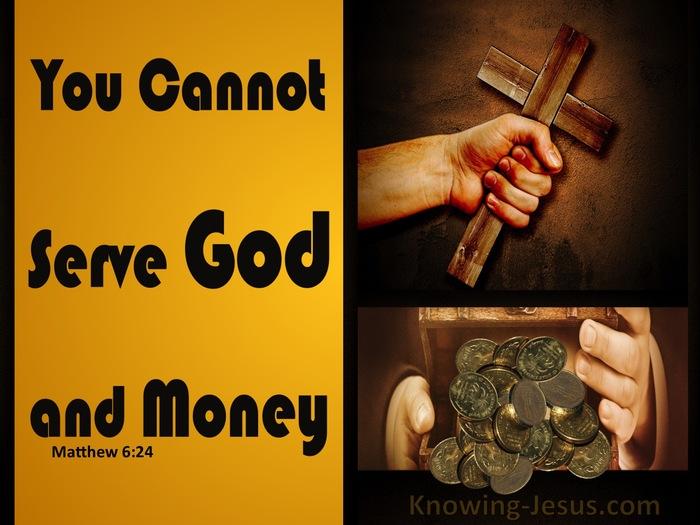
Believers must choose between Jesus and greed. Jesus warns that you cannot be His disciple while also pursuing greed for wealth. “No one can serve two masters; for either he will hate the one and love the other, or he will be devoted to one and despise the other. You cannot serve God and wealth.” (Matt. 6:24). “You adulteresses, do you not know that friendship with the world is hostility toward God? Therefore whoever wants to be a friend of the world makes himself an enemy of God.” (Jam. 4:4; 1 Jo. 2:15-17).
Believers who flatter others trapped in greed or other sins do more harm than good. Within the context of other proverbs about greed, Solomon warned against flattery and withholding a loving rebuke from a sinner in need of repentance. “23 One who rebukes a person will afterward find more favor than one who flatters with the tongue.” (Prov. 28:23). “It may take a while for the dividends to come in when a man stands true to God and tries to help a brother by giving him a loving rebuke, but it is sure to come!!! The favor of God is upon a man or woman that will give out the truth. The person that uses the tongue of flattery is expecting the praise of men. Honest words will always be better than a tongue that tries to please the flesh. The honest word will stand the storms of life, but flattery will do nothing but kill in the end.” (Ronald Young on Prov. 28:23).31
Stealing from parents is a heinous act before God. Because children were meant to support their parents in their old age, stealing from parents is an abomination before God. “24 He who robs his father or his mother and says, ‘There is no wrong done,’ is the companion of a person who destroys.” (Prov. 28:24). “The catalog of get-rich-quick schemes climactically ends with the most reprehensible of all evils: the robbing of parents. The subject is those who rob their father and their mother (cf. 19:26) while saying, ‘There is no crime.’ Such people rationalize their villainy with excuses such as, ‘Eventually it will be all mine anyway’ (see 19:14) or ‘They can no longer manage their finances.’ …far from being family members, such people are companions to those who destroy people.” (Bruce Waltke and Ivan De Silva on Proverbs Prov. 28:24).32
7. Selfishness: Those Who Reject God’s Wisdom are Frequently Governed by Self-Interest and Find Only Misery and Eventual Judgment. Prov. 28:25-28.
People governed by self-interest frequently create strife. Those who reject God’s wisdom and promote themselves out of prideful arrogance frequently cause strife and sorrow. “25 An arrogant person stirs up strife, but one who trusts in the Lord will prosper.” (Prov. 28:25). “A proud man or woman is constantly causing strife because they want the attention and preeminence. That doesn’t agree with most people, so there is strife … He who trusts in the LORD shall be prospered: To trust in the LORD is presented as a contrast to the proud heart. That one should expect to be prospered, as they humbly trust God and forsake pride.” (David Guzik on Prov. 28:25).33
Selfishness leads to misery for both the victim and the perpetrator. In addition to harming others, arrogant people ultimately cause their own downfall. “Pride goes before destruction, and a haughty spirit before stumbling.” (Prov. 16:18). “A person’s pride will bring him low, but a humble spirit will obtain honor.” (Prov. 29: 23).
People governed by self-interest foolishly trust in their own wisdom. Those who trust in their own wisdom do so at their own peril. “26 One who trusts in his own heart is a fool, but one who walks wisely will flee to safety.” (Prov. 28:26). “The character of a fool: He trusts to his own heart, to his own wisdom and counsels, his own strength and sufficiency, his own merit and righteousness, and the good opinion he has of himself; he that does so is a fool, for he trusts to that, not only which is deceitful above all things (Jer 17 9), but which has often deceived him.” (Matthew Henry on Prov. 28:26).34
Those who place their trust in themselves over God face judgment. Fools who trust in their own wisdom take the path leading to sorrow. “There is a way which seems right to a person, but its end is the way of death.” (Prov. 14:12). “Do you see a person wise in his own eyes? There is more hope for a fool than for him.” (Prov. 26:12). “Woe to those who are wise in their own eyes and clever in their own sight!” (Is. 5:21; Ecc. 7:16).
People governed by self-interest frequently ignore the plight of the poor. Those who reject God’s wisdom and live for themselves frequently turn a blind eye to others who are in need. “27 One who gives to the poor will never lack anything, but one who shuts his eyes will have many curses.” (Prov. 28:27). “Turning a blind eye brings about emotional, social, and possibly spiritual consequences … Wealth is not merely for personal enjoyment but is intended to be shared for the benefit of others. This reshapes our values and priorities, encouraging us to leverage our resources—financial and otherwise—for the greater good. Ultimately, Proverbs 28:27 calls us to action within our faith. It encourages us to engage with our communities, alleviate suffering, and pursue justice. In so doing, we reflect God’s love and care for the world, demonstrating that our faith is not stagnant but active and vibrant.” (William David on Prov. 28:27).35
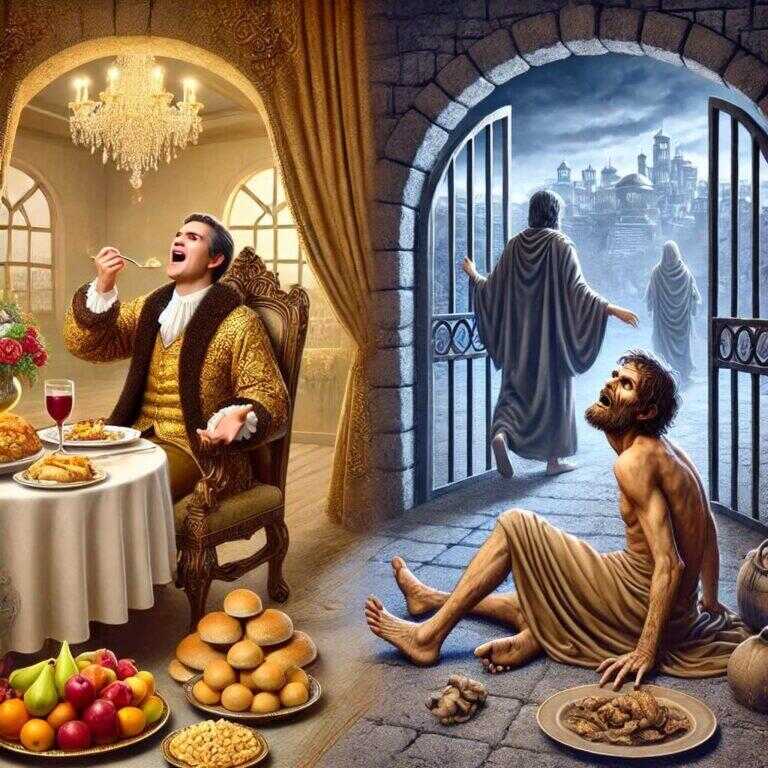
Jesus will hold to account those who ignore others in need out of selfishness36
Those who ignore the plight of the poor will be held to account for their actions. Jesus warns believers that the neglect of persons in need is a direct offense against Him (Matt. 25:35-4). Such a person has a faith that is “dead” (Jam. 2:15-17; 1 Jo. 3:17-18). Those who sow sparingly for the poor will also reap sparingly before Jesus (2 Cor. 9:6-7).
People governed by self-interest find any success to be fleeting. Those who reject God’s wisdom and live for themselves find any success to be temporary. God will ultimately restore the righteous. “28 When the wicked rise, people hide themselves; but when they perish, the righteous increase.” (Prov. 28:28). “[W]hen the wicked are removed from power, the righteous not only regain visibility but flourish. This transition restores hope and encourages public and moral engagement among good people, leading to an increase in righteousness and integrity within society. This duality highlights God’s sovereignty- His ultimate plan ensures that the faithful prevail, affirming that in the end, virtue is rewarded while the wicked face downfall.” (TheBibleSays.com on Prov. 28:28).37
People being lovers of themselves is a sign of the end times. Wide-spread selfishness is the first sign that the time of Jesus’ return is approaching. “But realize this, that in the last days difficult times will come. For people will be lovers of self …,” (2 Tim. 3:1-22). This includes a lack of love for others in need. “And because lawlessness is increased, most people’s love will become cold.” (Matt. 24:12). They will mourn and weep unless they repent. “Woe to you who are well-fed now, for you will be hungry. Woe to you who laugh now, for you will mourn and weep.” (Lk. 6:25; Jam. 5:1-6; Rev. 18:7-8).
Proverbs 28 Commentary - Matthew Henry Commentary on the Whole Bible (Complete) | Bible Study Tools↩︎
Image credit: Proverbs 28:1 - Bold as a Lion - NewCREEations↩︎
Proverbs 28:3 Meaning & Explanation (with Related Verses) - Christianity Path↩︎
Image credit: Spiritual and Physical Blindness Because of Sin↩︎
Proverbs 28:6 - Meaning, Context, and Spiritual Reflection↩︎
B. Waltke and I. De Silva, Proverbs, A Shorter Commentary, (Grand Rapids, MI: Wm. B. Eerdmans Publishing Co., 2021), p. 394-395 (italics in original).↩︎
R. Young, Proverbs, A Commentary on the Book of Proverbs (SureWord Publications, Baltimore, MD, 2005), p. 367.↩︎
Image credit: 7 Reasons Our Prayers Go “Unanswered” - River’s Edge Community Church↩︎
J. Vernon McGee, Thru the Bible, Commentary Series, Proverbs (Thomas Nelson, Inc., Nashville TN 1991), p. 234-235.↩︎
Image credit: Greed Bible Quotes↩︎
Proverbs 28:12 Meaning and Commentary - The Bible Outlined↩︎
Image credit: DISCOVER BIBLE | THE SIN OF ACHAN↩︎
Proverbs 28 - The Pulpit Commentaries - Bible Commentaries - StudyLight.org↩︎
1 Kings 12: Lessons from Rehoboam and Jeroboam Regarding the Signs and Warnings that Come from Rebellious Leaders | Inspired Scripture↩︎
Image credit: PPT - Israeli Historical Changes: From Kingdoms to Conquests PowerPoint Presentation - ID:2665290↩︎
Proverbs 28:18 - Meaning, Context, and Spiritual Reflection↩︎
Proverbs 28:19 Meaning & Explanation (with Related Verses) - Christianity Path↩︎
Image credit: shutterstock.com/search/greed?dd_referrer=https%3A%2F%2Fwww.bing.com%2F↩︎
R. Young, Proverbs, A Commentary on the Book of Proverbs (SureWord Publications, Baltimore, MD, 2005), p. 373-74.↩︎
B. Waltke and I. De Silva, Proverbs, A Shorter Commentary, (Grand Rapids, MI: Wm. B. Eerdmans Publishing Co., 2021), p. 400 (italics in original).↩︎
Proverbs 28 Commentary - Matthew Henry Commentary on the Whole Bible (Complete) | Bible Study Tools↩︎
Proverbs 28:27 Meaning and Commentary - The Bible Outlined↩︎
Image credit: The Parable of the Rich Man and Lazarus - Truly I Say To You↩︎