Song of Solomon 5: Lessons for Maintaining Your Love for Jesus
Introduction: Here, Solomon described how the bride’s love for her husband became lukewarm. She symbolized how believers can become complacent in their love for Jesus. To maintain your love for Jesus, the Bible reveals here that your love for Him will endure with: (1) submission, (2) vigilance, (3) sacrifice, (4) perseverance, (5) evangelism, (6) praise, and (7) reverent awe.
First, following the wedding, the groom declared a celebration. Out of love, the bride shared the fruit of her garden with others to celebrate. To maintain your love for Jesus, He also desires that you submit your heart and the fruit of your life for His glory. Second, at a later time, the husband suffered persecution and called for his bride. But she had become complacent and did not immediately recognize his voice. To maintain your love for Jesus, He desires that you remain vigilant in your faith. Third, the bride became complacent and did not desire to sacrifice her needs for her husband. To maintain your love for Jesus, Jesus also desires that you sacrifice your own needs for His Kingdom. Fourth, after her husband left her, the bride realized her foolishness and set out to find Him. While searching, she suffered persecution. She then cried out that she was love struck for her husband. To maintain your love for Jesus, He wants you to persevere in your faith during your trials and cling to Him out of love. Fifth, upon hearing the bride speak of her love for her husband, the daughters of Jerusalem called on her to explain what made her husband worthy of such a declaration of love. To maintain your love for Jesus, He also desires that you share your testimony and the hope that lies within you with others. Sixth, the bride responded to the daughters of Jerusalem with gushing praise for her husband. To maintain your love for Jesus, praise Him for His mercy, grace, love, and all His wonders. Finally, the bride concluded by declaring her awe-struck love for her husband to the daughters of Jerusalem. If you have a sincere reverent awe for Jesus, maintaining your love for Him will come naturally.
1. Submission: To Maintain Your Love for Jesus, Submit Your Heart and the Fruit of Your Life for Jesus’ Glory. SoS 5:1.
Jesus comes into your heart and celebrates when you submit to Him as Lord and Savior. The groom declared a celebration that he and his wife were now one. Out of love, the wife shared the fruit of her garden as her husband requested. “1 I have come into my garden, my sister, my bride; I have gathered my myrrh along with my balsam. I have eaten my honeycomb with my honey; I have drunk my wine with my milk. Eat, friends; drink and drink deeply, lovers.” (SoS 5:1). “Here our Lord claims the church as his own garden, his rightful possession. In this one verse he uses the personal possessive pronoun ‘my’ nine times. Certainly this is meaningful. We rightly belong to the Lord Jesus Christ … The sweet produce, which Christ finds in his garden, is the result of his own cultivation.” (Don Fortner SoS 5:1).1 “These words are Christ’s answer to the church’s prayer in the close of the foregoing chapter, Let my beloved come into his garden … Those that throw open the door of their souls to Jesus Christ shall find him ready to come in to them; and in every place where he records his name he will meet his people, and bless them… Eat, O friends! …Those that entertain Christ must bid his friends welcome with him; Jesus and his disciples were called together to the marriage (Jo. 2:2), and Christ will have all his friends to rejoice with him in the day of his espousals to his church, and, in token of that, to feast with him.” (Matthew Henry SoS 5:1) (italics in original).2
Jesus will dwell within the heart of anyone who submits to Him as Lord and Savior. Jesus will enter the heart of anyone who responds to His calling. The church of Laodicea accepted Jesus as Savior. But they had not made Him Lord over their lives. Thus, He invited them to submit to Him. “Behold, I stand at the door and knock; if anyone hears My voice and opens the door, I will come in to him and will dine with him, and he with Me.” (Rev. 3:20). “‘Call to Me and I will answer you, and I will tell you great and mighty things, which you do not know.’” (Jer. 33:3). “It will also come to pass that before they call, I will answer; while they are still speaking, I will listen.” (Is. 65:24).
Jesus comes into your heart, and the Holy Spirit dwells within you. When you accept Jesus as your Lord and Savior, the Holy Spirit dwells within you. This should bring the same joy described in 5:1. “And the disciples were continually filled with joy and with the Holy Spirit.” (Acts 13:52; 4:31). The invitation to drink in 5:1 should also be understood as an invitation to be filled with the Spirit. “And do not get drunk with wine, in which there is debauchery, but be filled with the Spirit,” (Eph. 5:18; Ro. 14:17).

The fruit in your life comes from Jesus and is meant to further His Kingdom.3
Jesus desires that you submit your life to Him for His use and glory. Out of love, the bride shared the fruit of her garden with others as her husband directed her to do. All that she had was a gift that she shared (SoS 5:1). Jesus also desires that you submit your heart and the fruit of your life to Him. “And He said to him, You shall love the Lord your God with all your heart, and with all your soul, and with all your mind.’” (Matt. 22:37). “For we are His workmanship, created in Christ Jesus for good works, which God prepared beforehand so that we would walk in them.” (Eph. 2:10). “Therefore I urge you, brothers and sisters, by the mercies of God, to present your bodies as a living and holy sacrifice, acceptable to God, which is your spiritual service of worship.” (Ro. 12:1). “you also, as living stones, are being built up as a spiritual house for a holy priesthood, to offer spiritual sacrifices that are acceptable to God through Jesus Christ.” (1 Pet. 2:5).
All are invited to share with Jesus at His table in heaven. The groom invited his friends to celebrate the wedding in a banquet (SoS 5:1). Jesus invites all to eat from the food and drink He created at His table in heaven. “that you may eat and drink at My table in My kingdom, and you will sit on thrones judging the twelve tribes of Israel.” (Lk. 22:30). “Then he said to me, “Write: ‘Blessed are those who are invited to the wedding feast of the Lamb.’” And he said to me, “These are the true words of God.”’ (Rev. 19:9).
The Song of Solomon is not a book about sex. Some modern commentators see verses 4:16 and 5:1 as a vivid depiction of the couple’s sexual acts immediately following their wedding. Commentator Iain Duguid calls 5:1 the climatic “moment of consummation” following the “sexual intimacy that they will now share.”4 Commentator Tremper Longman calls references to the husband taking all the things listed as “a fitting image of sexual intercourse.”5 Commentator Tom Gledhill goes even further. “They are abandoning themselves unreservedly and unashamedly to each other in an intoxicating orgy of love-making.”6 Commentator Daniel Akin also finds a lesson for married couples in how the woman’s seductive invitation in 4:16 allowed for both to experience “great sex”: “She invites him and she guides him. She tells him what she is feeling and what she wants. Great sex the result of good communication… The first verse of chapter 5 records the aftermath of their consummation. The couple has made love. They were not disappointed.”7 These authors believe that a literal interpretation requires this interpretation. But the groom also called the bride his “sister.” (SoS 5:1). Having sex with a “sister” was an abomination to God (Lev. 18:9). The groom also offered to his “friends” to “eat” and “drink” from the fruit of the garden in a joyful celebration (SoS 5:1). If the groom were speaking in sexual terms, it would be horrific to think that his friends were invited to feast on her garden. Some authors wish to remove the shame of sex within the context of marriage. But neither the Church fathers, nor the Protestant reformers, nor anyone else before recent times interpreted these verses for that purpose.
Married couples should commit to submitting what Jesus provides for His glory. This verse has an application for married couples. Each spouse should recognize that their family garden, including their children, their wealth, their lives, and everything else they own, is a gift from Jesus (Jam. 1:17). Married couples should commit to inviting Jesus into their family and asking Jesus to use their children, time, talent, and treasure that He provides for His glory. “But if it is disagreeable in your sight to serve the LORD, choose for yourselves today whom you will serve: whether the gods which your fathers served, which were beyond the Euphrates River, or the gods of the Amorites in whose land you are living; but as for me and my house, we will serve the LORD.” (Josh. 24:15).
2. Vigilance: To Maintain Your Love for Jesus, Have a Vigilant Faith. SoS 5:2.
Jesus wants you to remain vigilant after accepting Him as Lord. After the passage of time and after her husband’s apparent trials, the bride’s love for her husband became dull. But her husband graciously tried to rekindle her love. “2 I was asleep but my heart was awake. A voice! My beloved was knocking: ‘Open to me, my sister, my darling, my dove, my perfect one! For my head is drenched with dew, my locks with the dew drops of the night.’” (SoS 5:2). “Christ and the church having feasted together at his invitation, she soon after fell asleep, as the disciples did after a repast with their Lord; …Christ was the church's beloved still, had an affection for him, though not thoroughly awaked by his voice, but sleeps on still; …for head is filled with dew, and my locks with the drops of the night; through standing so long at the door, in the night season, waiting to be let in; …by which may be meant the sufferings of Christ, ” (John Gill on SoS 5:2).8
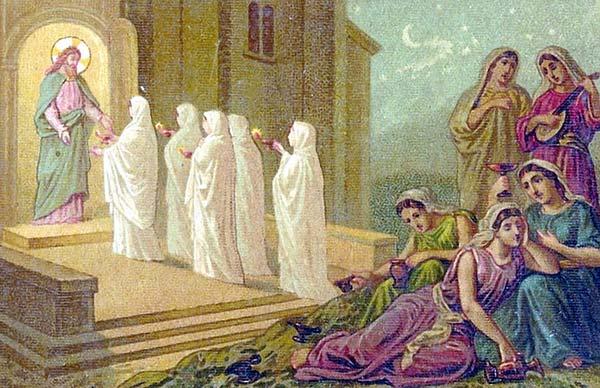
Avoid becoming complacent in your walk with Jesus, like the five unprepared virgins.9
Be careful to avoid letting your walk become a routine where your feelings become dull. In the parable of the ten virgins, five remained alert. But five became drowsy and fell asleep while waiting for the bridegroom. “Now while the groom was delaying, they all became drowsy and began to sleep.” (Matt. 25:5). Believers must also remain spiritually alert and always prepared for Jesus. “Therefore, stay alert—for you do not know when the master of the house is coming, whether in the evening, at midnight, or when the rooster crows, or in the morning—so that he does not come suddenly and find you asleep.” (Mk. 13:35-36). “so then, let’s not sleep as others do, but let’s be alert and sober.” (1 Thess. 5:6). “Be on the alert, stand firm in the faith, act like men, be strong.” (1 Cor. 16:13). Being alert includes avoiding circumstances where your faith becomes a routine. Jesus does not want you to take His sacrifice for granted. “This sleepiness is not a thing to be indulged in but to be abhorred…when we come into God’s house, and hear the old familiar story of the cross, and it does not charm us, let us mournfully say, ‘I sleep’ … How does her heart wake up? It is because the voice and the knock of her Beloved are heard. Every child of God has a wondrous union with Christ. ‘Because I live, says Christ, ‘ ye shall live also.’ (Jn. 14:19).” (Charles Spurgeon on SoS 5:2).10
Out of grace, Jesus pursues your love even when your faith becomes a dull routine. The groom experienced suffering for his bride. He was “drenched with dew, my locks with the dew drops of the night.’” (SoS 5:2). Just as Jesus suffered on the cross to redeem His bride, this “signifies his sufferings for the church’s good.” (Joseph Benson on SoS 5:2).11 Out of grace, Jesus calls to His bride when she is in darkness. “I will bless the LORD who has advised me; indeed, my mind instructs me in the night.” (Ps. 16:7). Jesus can also call to believers through dreams, as He did with Jacob. “And God spoke to Israel in visions of the night and said, ‘Jacob, Jacob.’ And he said, ‘Here I am.”’ (Gen. 46:2).
Even when you become spiritually blind, Jesus pursues your love. The woman became drowsy. This signified a stage of spiritual blindness. Even when this happens, Jesus continues to call out. But many will not recognize His call. “You have seen many things, but you do not retain them; your ears are open, but no one hears.” (Is. 42:20; Jer. 5:21; Ezek. 12:2; Mk. 8:18). “Indeed God speaks once, or twice, yet no one notices it. In a dream, a vision of the night, when deep sleep falls on people, while they slumber in their beds, then He opens the ears of people, and horrifies them with warnings,” (Job. 33:14-16). Jesus spoke in parables to wake people from their blindness. “Therefore I speak to them in parables; because while seeing they do not see, and while hearing they do not hear, nor do they understand.” (Matt. 13:13). “You are also to be like people who are waiting for their master when he returns from the wedding feast, so that they may immediately open the door for him when he comes and knocks.” (Lk. 12:36).
3. Sacrifice: To Maintain Your Love for Jesus, Sacrifice for Him. SoS 5:3-6.
Jesus wants you to avoid becoming self-centered and lukewarm in your faith. When it was not convenient, the bride was not motivated to exert any effort for her husband. Out of love, he pursued her. But he eventually left. “3 I have taken off my dress, how can I put it on again? I have washed my feet, how can I dirty them again? 4 My beloved extended his hand through the opening, and my feelings were stirred for him. 5 I arose to open to my beloved; and my hands dripped with myrrh, and my fingers with drops of myrrh, on the handles of the bolt. 6 I opened to my beloved, but my beloved had turned away and had gone! My heart went out to him as he spoke. I searched for him but I did not find him; I called him but he did not answer me.” (SoS 5:3-6). [v.3] “Evidently the meaning is, ‘I have retired to rest; do not disturb me.’ She is lying in bed … [The] Shulamith has forsaken her first love … How true a picture both of the individual soul and of the Church in its decline! ‘Leave me to myself; let me lie at ease in my luxury and my smooth, conventional ways and self-flattering deceit.’…[v. 4] The door hole is a part of the door pierced through at the upper part of the lock, …How much he loved her! How he tried to come to her! As applied to the Saviour, what infinite suggestiveness! He would be with us, and not only knocks at the door, but is impatient to enter; tries the lock, and too often finds it in vain; he is repelled, he is resisted, he is coldly excluded…[v. 5] His very hand, wherever it has been, leaves behind it ineffable delight. His presence reveals itself everywhere. Those who go after him know that he is not far off by the traces of his loving approaches to them. The spiritual meaning is too plain to need much exposition….[v. 6] The voice of my beloved struck my heart; but in the consciousness that I had estranged myself from him I could not openly meet him, I could not offer him mere empty excuses. Now I am made sensible of my own deficiency. I call after him. I long for his return, but it is in vain.” (Pulpit Commentary on SoS 5:3-6).12

Be passionate in your love for Jesus, just as He died during Passion Week for your sins.13
Jesus will eventually reject those who are lukewarm about Him. The woman provides a symbolic warning to believers. “She has so cooled toward her groom that she cannot be bothered to put on her robe or rewash her feet. She leaves him standing outside, waiting, and knocking, knocking. Finally, he leaves, but first he does something so like our Lord … He was showing her that he still loved her and was giving her grace …In the book of Revelation, we have an almost identical picture to this one in the Song. Jesus comes and knocks at the door of His lukewarm bride in the church of Laodicea.” (Dee Brestin on SoS 5:3-6).14 “‘I know your deeds, that you are neither cold nor hot; I wish that you were cold or hot. So because you are lukewarm, and neither hot nor cold, I will vomit you out of My mouth.” (Rev. 3:15-16). But Jesus showed grace to the wayward church by knocking on its door to dwell within the hearts of its members (Rev. 3:20).
Sacrifice your needs for Jesus or you may forget your first love. Like the bride, Jesus charged the church of Ephesus with forgetting their first love. “But I have this against you, that you have left your first love.” (Rev. 2:4). To avoid making this mistake or becoming selfish like the woman, Jesus desires that you sacrifice your needs for His Kingdom. “Then Jesus said to His disciples, ‘If anyone wants to come after Me, he must deny himself, take up his cross, and follow Me.”’ (Matt. 16:24; Mk. 8:34; Lk. 9:23).
Sacrifice your needs for your spouse in the marriage. Although this story is about Jesus and His Church, spouses can also learn from this song. Just as Jesus sacrificed for His Church, each spouse should sacrifice their needs for the other. “Husbands, love your wives, just as Christ also loved the church and gave Himself up for her,” (Eph. 5:25). “Husbands, love your wives and do not become bitter against them.” (Col. 3:19). “You husbands in the same way, live with your wives in an understanding way, as with someone weaker, since she is a woman; and show her honor as a fellow heir of the grace of life, so that your prayers will not be hindered.” (1 Pet. 3:7; 1 Cor. 7:3-5).
4. Perseverance: To Maintain Your Love for Jesus, Persevere in Your Faith During Your Trials and Cling to Him Out of Love. SoS 5:7-8.
Jesus sometimes allows believers to experience trials to bring them back to Him. Having rejected her husband, the bride encountered persecution. Although the persecution was terrible, it restored her heart for her husband. “7 The watchmen who make the rounds in the city found me, they struck me and wounded me; the guards of the walls took my shawl away from me. 8 Swear to me, you daughters of Jerusalem, if you find my beloved, as to what you will tell him: For I am lovesick.” (SoS 5:7-8). “The Church is indeed married to Christ; but the Bridegroom has been taken away (Matthew 9:15); this is beautifully symbolized here by the absence of the Shepherd. The mistreatment of the maiden stands for the persecutions, hatred, and bitterness of the world against the Bride of Christ (His Church). Her being wounded speaks of the martyrdoms of the faithful. The maiden’s crying after her beloved speaks of the fidelity of the Church to Christ in his absence. We hardly need to be reminded that, ‘We must with many tribulations enter into the kingdom of God (Acts 14:22).’ …Any alleged absence of Solomon here is an absurdity. It is the Good Shepherd who is in heaven where He is absent from the Church, his earthly bride.” (James Burton Coffman’s Commentaries on the Bible on SoS 5:7-8).15
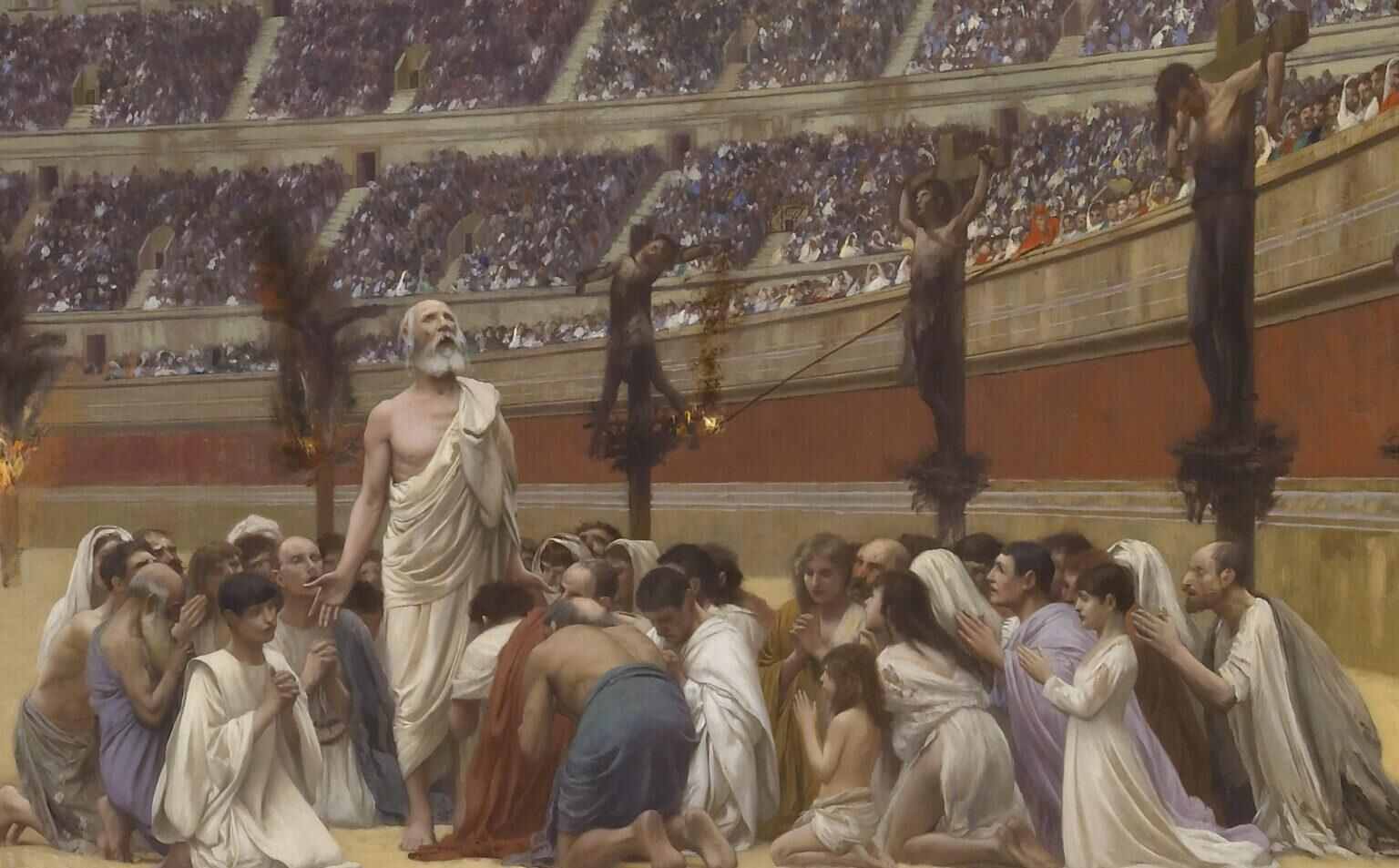
Allow the hardship in your life to cause you to grow in your love for Jesus.16
Accept Jesus’ testing in the wilderness as He exposes your sins and molds you. Here, the bride encountered testing after she withdrew from her husband. The testing brought her back to Him (SoS 5:7-8). God repeatedly tested the Jews in the wilderness to show them where their hearts held onto evil. “You shall remember all the way which the LORD your God has led you in the wilderness these forty years, that He might humble you, testing you, to know what was in your heart, whether you would keep His commandments or not.” (Dt. 8:2). David also recorded in a psalm how God tested his heart out of love to expose his hidden sins: “You have tried my heart; You have visited me by night; You have tested me and You find nothing; I have purposed that my mouth will not transgress.” (Ps. 17:3). David then wrote another psalm where he encouraged God to search his heart for other sins: “Search me, O God, and know my heart; try me and know my anxious thoughts;” (Ps. 139:23). “Examine me, O LORD, and try me; test my mind and my heart.” (Ps. 26:2). David’s willingness to accept testing and correction was what made him “a man after His own heart,” (1 Sam. 13:14; Acts 13:22).
Give thanks when your trials cause you to draw closer to Jesus. The woman persevered in the face of abuse, and her love for her husband only grew stronger (SoS 5:8). Jesus will also bless those who persevere in their faith during their trials. “Blessed is a man who perseveres under trial; for once he has been approved, he will receive the crown of life which the Lord has promised to those who love Him.” (Jam. 1:12). “And not only this, but we also celebrate in our tribulations, knowing that tribulation brings about perseverance;” (Ro. 5:3). “For I consider that the sufferings of this present time are not worthy to be compared with the glory that is to be revealed to us.” (Ro. 8:18). Jesus sometimes allows believers to suffer in the wilderness so that they will learn to cling to Him and trust Him. “And we know that God causes all things to work together for good to those who love God, to those who are called according to His purpose.” (Ro. 8:28).
Being lovestruck for Jesus helps you to persevere in your faith. After being persecuted, the bride was “lovesick” for her husband (SoS 5:8). After being persecuted, David also declared how his soul thirsted for God. “You are my God; I shall be watching for You; my soul thirsts for You, my flesh yearns for You, in a dry and exhausted land where there is no water.” (Ps. 63:1). “My soul longed and even yearned for the courtyards of the LORD; my heart and my flesh sing for joy to the living God.” (Ps. 84:2). When you face a trial, if you focus on your love for Jesus, He will give you the strength to endure.
Jesus will deliver you from your enemies when you turn to Him. Out of love for His people, God delivered the Jews from their captures with His mighty arm: “Say, therefore, to the sons of Israel, ‘I am the LORD, and I will bring you out from under the burdens of the Egyptians, and I will deliver you from their bondage. I will also redeem you with an outstretched arm and with great judgments.” (Ex. 6:6). “Moses said to the people, ‘Remember this day in which you went out from Egypt, from the house of slavery; for by a powerful hand the LORD brought you out from this place. And nothing leavened shall be eaten.”’ (Ex. 13:3). “for the LORD your God is the one who goes with you, to fight for you against your enemies, to save you.” (Dt. 20:4). As the Jews learned in the wilderness, there was no enemy that God could not defeat. When you try to live without Jesus and find suffering in the world, turn to Jesus for deliverance.
Persevere in your marriage. Although this account is about Jesus and His Church, there are again lessons for marriages. Solomon is hardly the ideal messenger for godly love. God’s law prohibited any king from having more than one wife (Dt. 17:17). Solomon violated God’s law 999 times with 700 wives and 300 concubines (1 Kgs. 11:3). But Jesus is a God of mercy and grace. He can transform any sinner and use the sinner for His glory. His love also covers a multitude of sins. “Above all, keep fervent in your love for one another, because love covers a multitude of sins.” (1 Pet. 4:8). Jesus’ love can also transform any broken marriage. Thus, you should never give up on your spouse.
5. Evangelism: To Maintain Your Love for Jesus, Share Your Testimony and the Hope That Lies Within You with Others. SoS 5:9.
Help others turn to Jesus by sharing your testimony and your love for Him. After the wayward bride repented and returned to her first love, a chorus urged her to share why her husband was so worthy of her affection. “9 What kind of beloved is your beloved, O most beautiful among women? What kind of beloved is your beloved, that you make us swear in this way?” (SoS 5:9). “The same title Christ gives her, Sol 1:8; and from whom these daughters seem to have taken it; and, in giving it to her, … this they used, to show their esteem of her, and that they were willing to do all the service they could for her; and what made them so attentive to her charge, and so desirous of knowing her beloved; since they concluded he must be some extraordinary person that one so fair and beautiful as she was should make the object of her love and choice:” (John Gill on SoS 5:9).17
Share the hope that lies within you. Like the bride, you are meant to share God’s light with the lost. “Sing praises to the LORD, who dwells in Zion; declare His deeds among the peoples.” (Ps. 9:110). “Sing to the LORD, bless His name; proclaim the good news of His salvation from day to day. Tell of His glory among the nations, His wonderful deeds among all the peoples.” (Ps. 96:2-3). “And on that day you will say, ‘Give thanks to the LORD, call on His name. Make known His deeds among the peoples; make them remember that His name is exalted. Praise the LORD in song, for He has done glorious things; let this be known throughout the earth.”’ (Is. 12:4-5) “He says, ‘It is too small a thing that You should be My Servant to raise up the tribes of Jacob and to restore the protected ones of Israel; I will also make You a light of the nations so that My salvation may reach to the end of the earth.”’ (Is. 49:6). “How delightful on the mountains are the feet of one who brings good news, who announces peace and brings good news of happiness, who announces salvation, and says to Zion, ‘Your God reigns!”’ (Is. 52:7).

To keep your love for Jesus strong, share your testimony and hope in Jesus.18
To maintain your love for Jesus, share Jesus’ “good news” with the lost. Jesus calls upon every believer to share the hope that He has given you. “Go, therefore, and make disciples of all the nations, baptizing them in the name of the Father and the Son and the Holy Spirit, teaching them to follow all that I commanded you; and behold, I am with you always, to the end of the age.” (Matt. 28:19-20). “but sanctify Christ as Lord in your hearts, always being ready to make a defense to everyone who asks you to give an account for the hope that is in you, but with gentleness and respect;” (1 Pet. 3:15).
6. Praise: To Maintain Your Love for Jesus, Give Him the Praise That He Deserves Because of His Perfect and Holy Character. SoS 5:10-15.
To maintain your love for Jesus, share your praises for Him. When asked to share the reasons for her love for her husband, the bride gushed with praise for her true love: “10 My beloved is dazzling and reddish, outstanding among ten thousand. 11 His head is like gold, pure gold; his locks are like clusters of dates and black as a raven. 12 His eyes are like doves beside streams of water, bathed in milk, and perched in their setting. 13 His cheeks are like a bed of balsam, banks of herbal spices; His lips are lilies dripping with drops of myrrh. 14 His hands are rods of gold set with topaz; his abdomen is panels of ivory covered with sapphires. 15 His thighs are pillars of alabaster set on pedestals of pure gold; his appearance is like Lebanon, choice as the cedars.” (SoS 5:10-15). “Even those who have little acquaintance with Christ, cannot but see amiable beauty in others who bear his image.” (Matthew Henry on SoS 5:10-15).19 “The white may denote his pure and spotless innocence, and the ruddy colour, his bloody passion. His head is as the most fine gold — It shines like gold, by reason of the crown of pure gold upon his head…His eyes, the eyes of doves — Lovely and pleasant, chaste and innocent … His cheeks — His face or countenance, an eminent part whereof is the cheeks; are as a bed of spices — Of aromatic flowers, which delight both the eye with a pleasant prospect, and the smell with their fragrancy. His lips are like lilies — Beautiful and pleasant; dropping sweet-smelling myrrh — Not only grateful to the eye, as lilies are, but also fragrant to the smell. His hands as gold rings set with beryl — Beautiful and precious, and richly adorned, as it were, with gold rings set with precious stones; his belly as bright ivory — Which seems to be here used for the whole body, reaching from the neck to the bottom of the belly; overlaid with sapphires — Of a pure and bright white colour, intermixed with blue veins; for some sapphires are of a bright blue colour. His legs as pillars of marble — White, and straight, and well shaped, and strong; set upon sockets of fine gold — His feet are compared to gold, for their singular brightness, for which they are compared to fine brass, Revelation. 1:15;” (Joseph Benson on SoS 5:10-15) (italics in original).20
Praise Jesus because He is a righteous and holy King of Kings. The bride described her husband as “outstanding among ten thousand.” (SoS 5:10). This described Jesus and His righteous and holy supreme authority. Jesus is the King of Kings (Rev. 17:14). He is also our righteous judge (2 Tim. 4:8). “I can do nothing on My own initiative. As I hear, I judge; and My judgment is just, because I do not seek My own will, but the will of Him who sent Me.” (Jo. 5:30). “But even if I do judge, My judgment is true; for I am not alone in it, but I and the Father who sent Me.” (Jo. 8:16). While David, Solomon, and Israel’s other kings sinned, Jesus never will. His reign will be perfect, just, and righteous. “1 Then a shoot will spring from the stem of Jesse, and a Branch from his roots will bear fruit. 2 The Spirit of the Lord will rest on Him, the spirit of wisdom and understanding . . . with righteousness He will judge the poor, and decide with fairness for the humble of the earth; . . . 5 Also righteousness will be the belt around His hips, and faithfulness the belt around His waist.” (Is. 11:1-5). “There will be no end to the increase of His government or of peace, on the throne of David and over his kingdom, to establish it and to uphold it with justice and righteousness from then on and forevermore.” (Is. 9:7; 16:5). “Behold, a king will reign righteously, and officials will rule justly.” (Is. 32:1). ‘“Behold, the days are coming,’ declares the LORD, ‘When I will raise up for David a righteous Branch; and He will reign as king and act wisely and do justice and righteousness in the land.”’ (Jer. 23:5; Is. 24:15; 42:4; Zech. 9:9-10).

Jesus, the King of Kings, in His glory is more beautiful than anyone has ever seen.21
Praise Jesus because the beauty of who He is surpasses all others. The bride described her husband as being more handsome than any other (SoS 5:10-15). This foreshadowed Jesus. “You are the most handsome of the sons of mankind; grace is poured upon Your lips; therefore God has blessed You forever.” (Ps. 45:2). “Your eyes will see the King in His beauty; they will see a distant land.” (Is. 33:17). “And He was transfigured before them; and His face shone like the sun, and His garments became as white as light.” (Matt. 17:2). “His head and His hair were white like white wool, like snow; and His eyes were like a flame of fire. His feet were like burnished bronze when it has been heated to a glow in a furnace, and His voice was like the sound of many waters.” (Rev. 1:14-15).
To keep your passion for Jesus ongoing, praise Him in all circumstances. Like the woman, Jesus wants you to give praise in all circumstances: “in everything give thanks; for this is God’s will for you in Christ Jesus.” (1 Thess. 5:18). “always giving thanks for all things in the name of our Lord Jesus Christ to God, even the Father;” (Eph. 5:20).
Your love for your spouse should include kindness and positive affirmation. This part of the song is obviously about Jesus. But the song also encourages believers to show their spouses kindness and encouragement. “Love is patient, love is kind, it is not jealous; love does not brag, it is not arrogant.” (1 Cor. 13:4; Col 3:12-15; Eph. 4:2; 2 Tim. 2:24).
7. Reverent Awe: If You Have a Sincere Reverent Awe for Jesus, Maintaining Your Love For Him Will Come Naturally. SoS 5:16.
Jesus is worthy of your reverent awe. The bride concluded by declaring her awe-struck love for her husband to the daughters of Jerusalem. “16 His mouth is full of sweetness. And he is wholly desirable. This is my beloved and this is my friend, you daughters of Jerusalem.” (SoS 5:16). “His mouth is most sweet, which was said before in other words, Song of Solomon 5:13, and is here justly repeated, because it was a principal part of Christ’s beauty, and the chief instrument of the spouse’s comfort and happiness, which wholly depends upon his sweet and excellent speeches, his holy precepts and gracious offers and promises contained in the gospel. He is altogether lovely; not to run out into more particulars, in one word, there is no part of him which is not exquisitely beautiful. This is my Beloved, and this is my Friend, O daughters of Jerusalem, and therefore you have no cause to wonder or to blame me if I am transported with love to so excellent a personage.” (Matthew Poole’s Commentary on SoS 5:16).22
God deserves your awe and wonder. The woman’s words of awe-struck love for her husband foreshadowed the awe that believers should naturally feel about Jesus because of who He is and what He does. The word “awesome” in Hebrew is literally translated as “He is the one to be feared.”23 “The Bible emphasizes, however, that genuine awe is primarily a disposition rather than merely an emotional state. God's person and his works of creation, providence, redemption, and judgment are astounding and demand both sober contemplation and humble submission. God's people are commanded to show proper regard for his power and dominion — his absolute authority to rule (Job 25:2; Jer. 33:9) and his power to perform what he will (Dt. 4:34; 34:12; 1 Sam. 12:18; Hab. 3:2).”24 For example, Moses referred to God as awe inspiring or “awesome”: “You shall not dread them, for the LORD your God is in your midst, a great and awesome God.” (Dt. 7:21). The psalmists also referred to God as being awesome: in glory, power, and majesty: “Say to God, ‘How awesome are Your works! . . . . Come and see the works of God, who is awesome in His deeds toward the sons of men.”’ (Ps. 66:3, 5). “O God, You are awesome from Your sanctuary. The God of Israel Himself gives strength and power to the people. Blessed be God!” (Ps. 68:35). “Men shall speak of the power of Your awesome acts, and I will tell of Your greatness.” (Ps. 145:6; 106:22; Is. 64:3). “For the LORD most high is to be feared, a great King over all the earth.” (Ps. 47:2). “I prayed to the LORD my God and confessed and said, ‘Alas, O Lord, the great and awesome God, who keeps His covenant and lovingkindness for those who love Him and keep His commandments,”’ (Dan. 9:4). Many people casually use the term “awesome” to express approval for a good outcome to a situation. But this misuses a word that was reserved for God’s amazing power. In your prayers, you should profess an awe-struck love for Jesus.
Bless Jesus’ Holy name. As an expression of their awe for God’s power, the Jews also blessed God’s holy name: “And blessed be His glorious name forever; and may the whole earth be filled with His glory. Amen, and Amen.” (Ps. 72:19). “Ascribe to the LORD the glory of His name; bring an offering and come into His courts.” (Ps. 96:8). “Not to us, O LORD, not to us, but to Your name give glory because of Your lovingkindness, because of Your truth.” (Ps. 115:1). “that Your name may be magnified forever,” (2 Sam. 7:26). “bless the Lord your God forever and ever! May Your glorious name be blessed and exalted above all blessing and praise!” (Neh. 9:5). Jesus also began the Lord’s prayer by declaring God’s name to be holy (Matt. 6:9). Your prayers should also include expressions of awe and praises for Jesus’ holy name.
Be in awe that the Creator of the universe loves you individually. In addition to calling her husband “my beloved,” the bride also stated, “this is my friend.” (SoS 5:16). Jesus is the Creator of the universe (Jo. 1:3; Col. 1:16). Jesus is worthy of your awe-struck love because the Creator of the universe cares about you and loves you. “A common Old Testament word rê·‘î [רֵעִ֔י] expresses companionship and friendship without overtones of sexual partnership. Cf. Psalm 45:15).” (G. Lloyd Carr on SoS 5:16).25

Be in awe that the Creator of the universe loves you and wants a relationship with you.26
Don Fortner, Discovering Christ in the Song of Solomon (Auburn, MA, Evangelical Press USA, 2005) (ISBN 085234-581-X), p. 106.↩︎
Song of Solomon 5 Commentary - Matthew Henry Commentary on the Whole Bible (Complete) | Bible Study Tools↩︎
Image credit: youtube.com/watch?v=WPLRxI1oNTw↩︎
Iain M. Duguid, Song of Songs, Reformed Expository Commentary, (Phillipsburg, NY P&R Publishing 2016) (ISBN 978-1-59638-948-9), p. 81 (italics in original).↩︎
Tremper Longman III, Song of Songs, (Grand Rapids, MI, William B. Eerdman’s Publishing Company, 2001) (ISBN 978-0-8028-2543-8) p. 159.↩︎
Tom Gledhill, The Message of the Song of Songs (Downers Grove, IL, InterVarsity Press 1994) (ISBN 978-1-5140-0633-7), p. 153-154 (italics added).↩︎
Daniel L. Akin, Christ-Centered Exposition, Exalting Jesus in Song of Songs, (Brentwood, TN, B&H Publishing Group, 2015) (ISBN 978-0-8054-9676-5), p. 125 (italics added).↩︎
Image credit: Ten Virgins Parable - Esoteric Meanings↩︎
Charles H. Spurgeon, The Song of Solomon, (84 Sermons on the Song of Solomon, assembled by Eric Steward and Gary Morris 2020) (ISBN: 979-8-55-894256-9), pgs. 417, 423; No. 56 “Asleep and Yet Awake: A Riddle”, Delivered on October 10, 1880 at the Metropolitan Tabernacle, Newington, England.↩︎
Image credit: Revelation 3:16 So, because you are lukewarm—neither hot nor cold—I am about to spit you out of my mouth. | New I… | Versículos bíblicos, Seguir a jesús, Proverbios↩︎
Dee Brestin, He Calls You Beautiful, Hearing the Voice of Jesus in the Song of Songs (New York, NY, Crown Publishing Group 2017) (ISBN 978-1-60142-990-2) pgs. 146-147.↩︎
Song of Solomon 5:7 - Verse-by-Verse Bible Commentary - StudyLight.org↩︎
Image credit: The Christian Martyrs’ Last Prayer and The Retreating Lions by Jean-Léon Gérôme: The Morbid Gaze of the Spectator – The Journal of the Walters Art Museum↩︎
Image credit: 10 Things You Should Know about Evangelism - Germantown Presbyterian Church↩︎
Image credit: 900+ Shekinah Glory ideas | shekinah glory, christian quotes, inspirational quotes↩︎
Frank Gaebelein, The Expositors Bible Commentary, Vol. 4, 1, 2 Kings, 1, 2 Chronicles, Ezra, Nehemiah, Esther, Job (Zondervan Publishing House 1988) p. 682. ↩︎
Awe, Awesome - Bible Meaning & Definition - Baker's Dictionary | Bible Study Tools↩︎
G. Lloyd Carr, The Tyndale Old Testament Commentaries, The Song of Solomon (Downers Grove, IL, Inter-Varsity Press, 1984) (ISBN 0-87784-268), p. 144.↩︎
Image credit: Christian Art: welcome Home, Son. Printable, Digital Art of a Man Hugging Jesus After He Died. 10500 X 6000 Px, - Etsy↩︎