Song of Solomon 6: Lessons for Maintaining Your Love for Jesus
Introduction: Here, the bride searched for her husband, found him, celebrated his grace, and then struggled with her old temptations. Her struggle foreshadowed the struggle that every believer faces in maintaining a walk with Jesus. Through this account, the Bible reveals seven lessons for maintaining your love for Jesus. These include: (1) faith, (2) your church, (3) submission to Jesus, (4) faithfulness, (5) reflecting Jesus’ light, (6) joyful gratitude, and (7) vigilance.
First, the daughters of Jerusalem heard the bride’s testimony about her husband. They believed in her testimony, and they desired to search out a relationship with him. Maintaining your love with Jesus begins with faith, and it includes seeking out a relationship with Him. Second, the bride told the daughters of Jerusalem that they could find her husband in a garden tending to his flock. This foreshadowed Jesus’ presence within His churches. Maintaining you love for Jesus includes attending church where you can experience His presence through corporate worship. Third, the groom returned, and he declared his loving grace towards his bride. He then used symbolism to stress the importance of submission. Out of gratitude for Jesus’ loving grace, He also wants you to submit to Him and obey Him. Fourth, the groom stated that the bride’s beauty exceeded that of everyone else. This stressed both his grace, and it implied that he would be faithful to her. In response to Jesus’ faithfulness, He also desires that you remain faithful to Him. Fifth, those around the bride declared that her beauty was like the light from the moon at night and the sun during the day. This foreshadowed the light of Jesus in every believer. Maintaining your love for Jesus also includes being His light to others. Sixth, in response to her undesired praise, the bride showed gratitude for her husband and celebrated how he captured her heart. In response to Jesus’ mercy and grace, you should also respond with joyful gratitude. Finally, in her moment of joy, the bride heard voices telling her to go back to her old life. The bride then lamented about the struggle within her. To maintain your love for Jesus, you must also remain vigilant as the desires of your flesh wage war against the Spirit.
1. Faith: Maintaining Your Love for Jesus Begins with Faith, and It Includes Seeking Out a Relationship with Him. SoS 6:1.
With faith, Jesus transforms hearts and minds. The bride regretted having made her husband a secondary priority in her life to her own desires (SoS 5:2-8). While searching for her missing husband, the bride shared her testimony about him with the daughters of Jerusalem (SoS 5:10-15). Her loving testimony moved the daughters of Jerusalem, and they also desired to seek him and know him. “1 Where has your beloved gone, O most beautiful among women? Where has your beloved turned, that we may seek him with you?” (SoS 6:1). “Here is, I. The enquiry which the daughters of Jerusalem made concerning Christ, ... The spouse had described him, and shown them his excellencies and perfections; and therefore, though they have not seen him, yet, believing, they love him. Those that undervalue Christ do so because they do not know him; when God, by his word and Spirit, discovers him to the soul, with that ray of light the fire of love to him will be kindled … Those that are made acquainted with the excellencies of Christ, and the comfort of an interest in him, cannot but be inquisitive after him and desirous to know where they may meet with him … They offer their service to the spouse to accompany her in quest of him: We will seek him with thee. Those that would find Christ must seek him, seek him early, seek him diligently; and it is best seeking Christ in concert, to join with those that are seeking him. We must seek for communion with Christ in communion with saints. We know whither our beloved has gone; he has gone to heaven, to his Father, and our Father. He took care to send us notice of it, that we might know how to direct to him, John 20:17. We must by faith see him there, and by prayer seek him there, with boldness enter into the holiest, and herein must join with the generation of those that seek him (Psalms 24:6), even with all that in every place call upon him, 1 Corinthians 1:2. We must pray with and for others.” (Matthew Henry on SoS 6:1).1
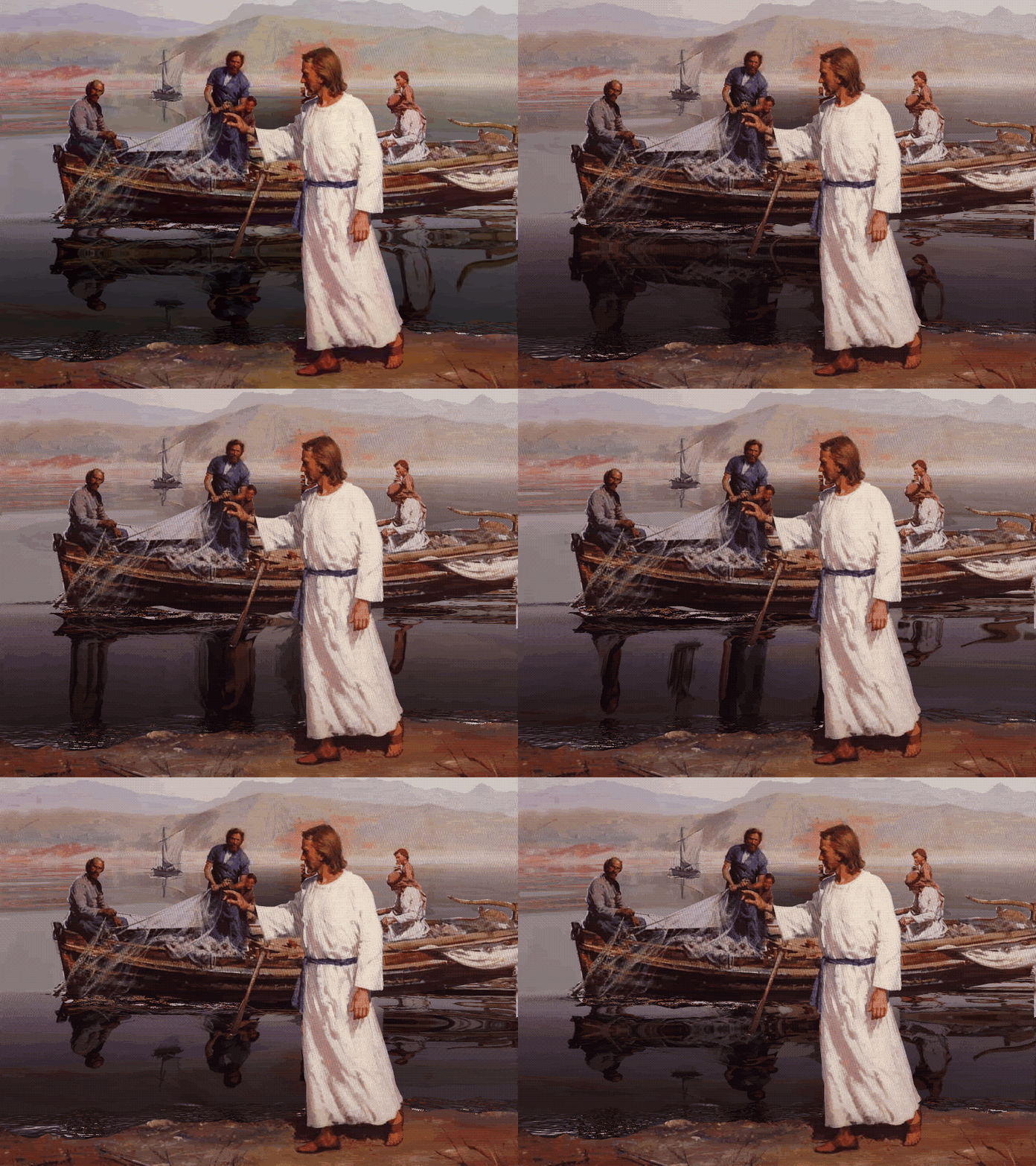
With faith, you will search out a relationship with Jesus and follow Him.2
With faith and a desire to find Jesus, you will find Him. Unless you respond in faith to Jesus’ Word, your efforts to learn about Him on a purely intellectual level will not be enough to please Him. “And without faith it is impossible to please Him, for the one who comes to God must believe that He exists, and that He proves to be One who rewards those who seek Him.” (Heb. 11:6). If you seek to know Jesus with a believing heart, you will find Him. “And you will seek Me and find Me when you search for Me with all your heart.” (Jer. 29:13). “But from there you will seek the LORD your God, and you will find Him if you search for Him with all your heart and all your soul.” (Dt. 4:29). “Seek the LORD while He may be found; call upon Him while He is near.” (Is. 55:6). “I love those who love me; and those who diligently seek me will find me.” (Prov. 8:17).
Those who hear Jesus’ calling and seek Him in faith will also be saved. The daughters of Jerusalem heard the testimony, they believed, and they desired to get to know the groom. If someone hears the Word, responds in faith, and believes that Jesus is Lord and Savior, that person will also be saved. “that if you confess with your mouth Jesus as Lord, and believe in your heart that God raised Him from the dead, you will be saved;” (Ro. 10:9). “Now I say to you, everyone who confesses Me before people, the Son of Man will also confess him before the angels of God;” (Lk. 12:8; Matt. 10:32). “Whoever confesses that Jesus is the Son of God, God remains in him, and he in God.” (1 Jo. 4:15).
In order for people to come to know Jesus, His Name must be preached and shared. The daughters of Jerusalem believed because the bride shared her testimony. Jesus also wants you to share your testimony so that others will also believe in Him. “How then are they to call on Him in whom they have not believed? How are they to believe in Him whom they have not heard? And how are they to hear without a preacher?” (Ro. 10:14). A person without faith also gains faith as a gift of Jesus’ grace when they hear the Word. “So faith comes from hearing, and hearing by the word of Christ.” (Ro. 10:17).
2. The Church: Maintaining Your Love for Jesus Includes Attending Church Where You Can Experience His Presence with Worship. SoS 6:2-3.
Even though Jesus is on the throne in heaven, He is also with His Church. The bride was physically separated from her husband. But she knew that he was in his garden pastoring His flock. “2 My beloved has gone down to his garden, to the beds of balsam, to pasture his flock in the gardens and gather lilies. 3 I am my beloved’s and my beloved is mine, he who pastures his flock among the lilies.” (SoS 6:2-3). “In Ecclesiastes 2:5,6 Solomon says, ‘I planted me vineyards; I made me gardens and parks, and I planted trees in them of all kinds of fruit; I made me pools of water, to water therefrom the forest where trees were reared.’ In Revelation 7:17 it is said, ‘The Lamb which is in the midst of the throne shall be their Shepherd, and shall guide them unto fountains of water of life: and God shall wipe away every tear from their eyes.’ We can scarcely doubt that the meaning is - The bridegroom is not gone far; he is where he is congenially employed; where his pure and lovely nature finds that which is like itself - beauty and fragrance and innocence. It is his resort, and it corresponds with his perfection. … She [the bride] is one of the lilies. The king is coming into his garden, and I am ready to receive him. The shepherd among his flock. They are all like lilies, pure and beautiful. The bride has nothing but chaste thoughts of her husband: because she knows that he is hers, and she is his. Surely such language is not inaptly applied to spiritual uses.” (Pulpit Commentary on SoS 6:2-3).3
Jesus is the Good Shepherd on the throne who comes down to minister to His flock. Jesus, who sits on the throne, ministers to His flock. “for the Lamb in the center of the throne will be their shepherd, and will guide them to springs of the water of life; and God will wipe every tear from their eyes.” (Rev. 7:17). Even though He is in heaven, He also feeds His flock (the Church) on Earth. “I will feed them in a good pasture, and their grazing place will be on the mountain heights of Israel. There they will lie down in a good grazing place and feed in rich pasture on the mountains of Israel.” (Ezek. 34:14).
Jesus loves His flock, and He paid a terrible price to acquire it. Jesus searches for His flock out of love. “For the Lord GOD says this: ‘Behold, I Myself will search for My sheep and look after them. As a shepherd cares for his flock on a day when he is among his scattered sheep, so I will care for My sheep and will rescue them from all the places where they were scattered on a cloudy and gloomy day.”’ (Ezek. 34:11-12). Out of love, Jesus paid the ultimate price to purchase and redeem His flock. “I am the good shepherd; the good shepherd lays down His life for the sheep. He who is a hired hand, and not a shepherd, who is not the owner of the sheep, sees the wolf coming, and leaves the sheep and flees; and the wolf snatches them and scatters the flock. He who is a hired hand, and not a shepherd, who is not the owner of the sheep, sees the wolf coming, and leaves the sheep and flees; and the wolf snatches them and scatters the flock.” (Jo. 10:11-12). “Know that the LORD Himself is God; it is He who has made us, and not we ourselves; we are His people and the sheep of His pasture.’ (Ps. 100:3).
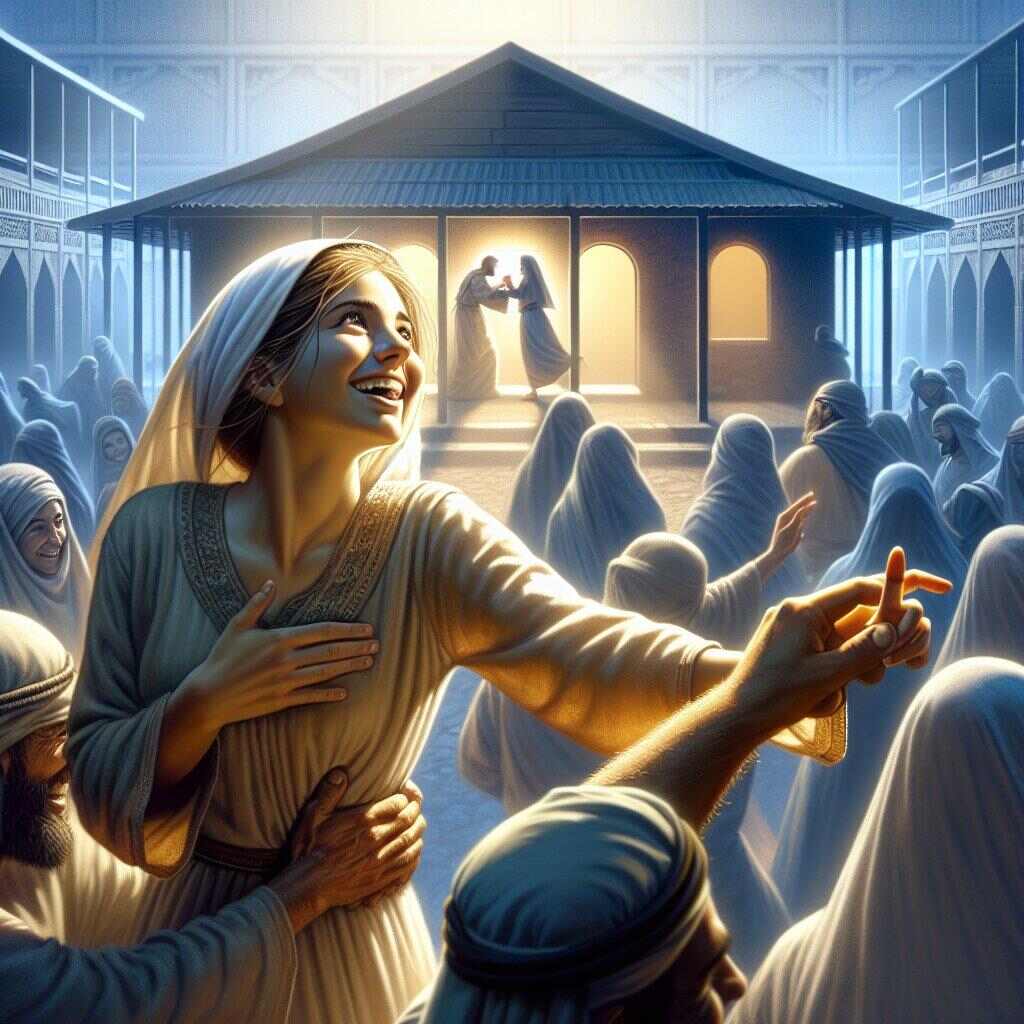
You belong to the Good Shepherd, and you can find Him with His flock.4
Jesus wants you to find fellowship with Him with other believers. The daughters of Jerusalem did not know where to find the groom. Many have the same question about Jesus. “The Lord Jesus Christ is to be found in the midst of his church and people. He said ‘I am come into my garden’ (5:1). And now, the spouse seems to say, ‘How foolish I have been, fretting and worrying myself about where to find him, seeking him where he is not to be found. He told me where he is. He is in his garden!’ His garden is the church considered as a whole. The beds of spices and the smaller gardens may refer to the many congregations of the Lord’s people. The spices and the lilies may be taken to refer to the individual believers. The church is the Lord’s garden. He bought it with his blood. He encloses it with his providence. He plants it by his grace. He protects it with his power. And he dwells there. Yes, the Lord Jesus Christ dwells in the midst of his people. He is always with his beloved (Matt. 18:20; 28:20; 28:20; Phil. 4:5). The Son of God still walks in the midst of the seven golden candlesticks (Rev. 1:9-20).” (Don Fortner SoS 6:2-3).5 Thus, you should not forsake the fellowship of church (Heb. 10:25).
You can experience Jesus’ presence through worship at church. Worship in a church setting is also important for cleaning your heart to experience Jesus’ presence. “I will praise the name of God with song, and exalt Him with thanksgiving.” (Ps. 69:30). “A Psalm for Thanksgiving. Shout joyfully to the LORD, all the earth. Serve the LORD with jubilation; come before Him with rejoicing.” (Ps. 100:1-2). “Therefore, since we receive a kingdom which cannot be shaken, let’s show gratitude, by which we may offer to God an acceptable service with reverence and awe;” (Heb. 12:28)
Jesus also loves in the heart of every believer. In addition to being with His Church, Jesus also dwells in the hearts of His believers. “I have been crucified with Christ; and it is no longer I who live, but Christ lives in me; and the life which I now live in the flesh I live by faith in the Son of God, who loved me and gave Himself up for me.” (Gal. 2:20).
3. Submission: Out of Gratitude for Jesus’ Loving Grace, Submit to Him and Obey Him. SoS 6:4-7.
Jesus is forgiving but desires your fellowship through your submission. Even though she had neglected him, the groom reaffirmed the beauty of his bride as a sign of his grace. “4 You are as beautiful as Tirzah, my darling, as lovely as Jerusalem, as awesome as an army with banners. 5 Turn your eyes away from me, for they have confused me; your hair is like a flock of goats that have descended from Gilead. 6 Your teeth are like a flock of ewes that have come up from their watering place, all of which bear twins, and not one among them has lost her young. 7 Your temples are like a slice of a pomegranate behind your veil.” (SoS 6:4-7). “Thou art beautiful — These are the words of Christ, who had now again manifested himself to his church; as Tirzah — A very pleasant city, the royal seat of the kings of Israel; comely as Jerusalem — Which was beautiful, both for its situation and for its goodly buildings; terrible as an army, &c. — To her enemies, whom God will certainly destroy. Turn away thine eyes from me — It is a poetical expression, signifying how beautiful the church was in Christ’s eyes. Thy hair, &c. — This clause and the whole following verse are repeated from Song of Solomon 4:1-2. And this repetition is not vain, but confirms what was said before, that the church’s miscarriage had not alienated Christ’s affection from her.” (Joseph Benson on SoS 6:4-7).6
Jesus paid the price for our sins, but He seeks our submission to Him as King of Kings. The husband declared, “You are as beautiful as Tirzah, my darling, as lovely as Jerusalem, ...” (SoS 6:4a). Like the bride, all have sinned (Ro. 3:23). Also like the bride, none had the right to boast of their works before Jesus. They are nothing but filthy rags (Is. 64:6). But Jesus loves us, and He is faithful to forgive us when we repent (1 Jo. 1:9). To show that he forgave his bride, this was the third time that he declared her beautiful. “How beautiful you are, my darling, how beautiful you are! …” (SoS 4:1). “You are altogether beautiful, my darling, and there is no blemish on you.” (SoS 4:7). The groom also compared his bride to Jerusalem. It was both a symbol of authority and beauty (Lam. 2:15; Ps. 48:2). “Tirzah was an ancient Canaanite city of Samaria which served as the capital of the secessionist Northern Kingdom for some fifty years during the reigns of Jeroboam and his successors until Omri established Samaria as the capital about 879 BC (1 Ki. 14:1-20; 16:8-26).” (G. Lloyd Carr on SoS 6:4).7 This shows that Jesus loves both Jews and gentiles. But no matter which seat of authority we belong to, we must bow in submission to the King of Kings. “Then the King will crave your beauty. Because He is your Lord, bow down to Him.” (Ps. 45:11). “and that every tongue will confess that Jesus Christ is Lord, to the glory of God the Father.” (Phil. 2:11; Ro. 14:11).
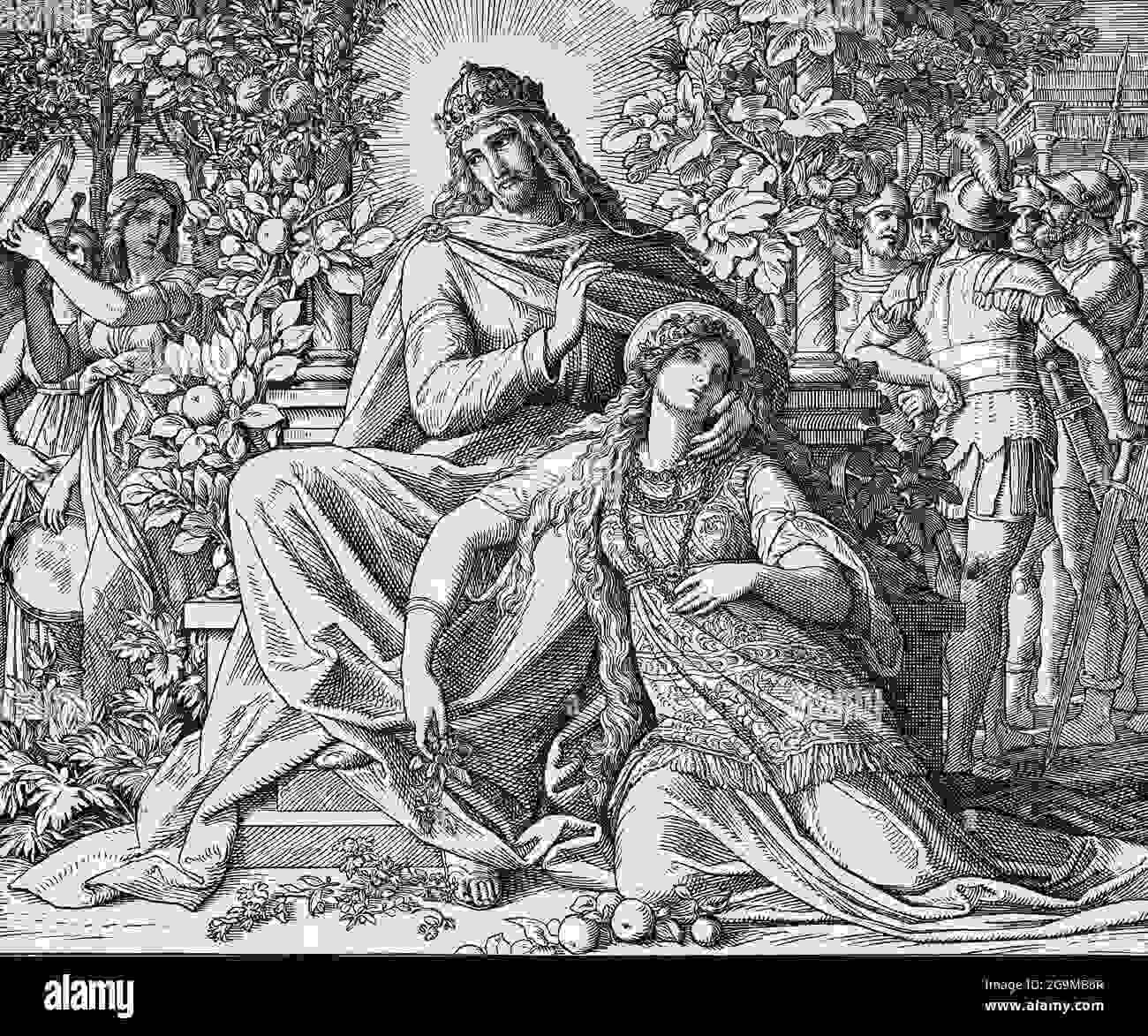
In response to Jesus’ loving grace, submit to Him and obey Him.8
Submit to Jesus under His banner and the authority of His Church. The groom also declared that his bride was “as awesome as an army with banners.” (SoS 6:4b). While in wilderness, God’s people carried banners to identify their tribes (Nu. 1:52; 2:2). God’s banner was also a symbol to rally His people. “You have given a banner to those who fear You, that it may be displayed because of the truth. Selah” (Ps. 60:4). This speaks to how a believer should submit to Jesus’ army under His authority of His Church. “That she is an army is true enough … But why an army with banners? Is not this, first of all, for distinction? … Every Christian church should know what it believes, and publicly avow what it maintains … Banners were carried not merely for distinctiveness, but also to serve the purposes of discipline… An army with banners may also be taken to represent activity… Does not the description ‘an army with banners’ imply a degree of confidence? … Once more, an army with banners may signify constancy and perseverance in holding the truth.” (Charles Spurgeon on SoS 6:4) (italics in original).9
Submit to Jesus through the direction of the Holy Spirit. The groom also said, “5 Turn your eyes away from me, for they have confused me.” (SoS 6:5). The groom was again expressing the overwhelming beauty of his bride. The groom had twice referred to his bride’s eyes as being “like doves” (SoS 4:1b; 1:15). “The dove is a powerful symbol in the Bible, representing peace, purity, and the Holy Spirit.”10 “After He was baptized, Jesus came up immediately from the water; and behold, the heavens were opened, and he saw the Spirit of God descending as a dove and settling on Him,” (Matt. 3:16). The Holy Spirit enters your heart and transforms you into a beautiful, new creation. “But we all, with unveiled faces, looking as in a mirror at the glory of the Lord, are being transformed into the same image from glory to glory, just as from the Lord, the Spirit.” (2 Cor. 3:18). But you must turn away from relying upon our own sight and let the Holy Spirit guide your path. “But the Helper, the Holy Spirit whom the Father will send in My name, He will teach you all things, and remind you of all that I said to you.” (Jo. 14:26).
Submission should also depend upon Jesus’ righteousness. The groom also compared the bride’s “hair” to “a flock of goats that have descended from Mount Gilead.” (SoS 6:5). To show that he forgave her, he repeated the exact same description that he gave previously (SoS 4:1c). Jesus “is also the head of the body, the church…” (Col. 1:18a). Jesus numbers every hair in His Church (Lk. 12:7). This means that you are dependent upon Him, and He knows and owns you. The goat is a symbol of sin, separation, and judgment (Lev. 16:21-22).11 You would be separated from Jesus and judged without His imputed righteousness. “I am the vine, you are the branches; the one who remains in Me, and I in him bears much fruit, for apart from Me you can do nothing.” (Jo. 15:5). “Now the hair of the church may be interpreted … [as] members of the church of Christ; the hairs of the head are numerous, grow upon the head, and have their nourishment from it; are weak in themselves, but depend upon the head … and as a flock of goats on Mount Gilead; and is a covering, though not from divine justice…is influenced by grace…from Christ, the Head.” (John Gill on SoS 4:1c).12
Submission includes finding purity through Jesus’ Word. The groom also described the bride’s “teeth” as being “like a flock of ewes that have come up from their watering place, all of which bear twins, and not one among them has lost her young.” (SoS 6:6). To show that he had forgiven her, this repeated what the groom previously said that the bride’s teeth (SoS 4:2). Sheep are considered vulnerable, innocent, and require guidance.13 White wool further symbolizes purity through faith in Jesus. “Though your sins are as scarlet, they shall become as white as snow; though they are red like crimson, they shall be like wool.” (Is. 1:18b). The sheep’s teeth symbolize chewing. Believers cannot live on bread alone. Instead, they must also live on Jesus’ Word (Matt. 4:4). A person of faith should also chew on and then consume Jesus’ Word. “Your words were found and I ate them, ...” (Jer. 15:16a). Believers must also submit to and obey the Good Shepherd, like the sheep marching in order and with all accounted for (Jo. 10:11). When you submit to His Word and repent, He washes you pure of your sins. “so that He might sanctify her, having cleansed her by the washing of water with the word,” (Eph. 5:26).
Submission includes meditating on and obeying God’s law. The groom also described the bride’s “temples” as being “like a slice of a pomegranate behind your veil.” (SoS 6:7). This also repeated his description of her temples (SoS 4:3b). The temples are above the mind, and they symbolize the “temple” of the Holy Spirit (1 Cor. 6:19-20). The beauty “behind your veil” spoke of her pure hidden thoughts. The pomegranate was proof of God’s faithfulness in leading the people to the Promised Land (Nu. 13:23). The pomegranate was also part of the High Priest’s robe (Ex. 28:33-34; 39:24-26). The red color symbolized atonement, and the seeds represent God’s perfect law, which leads a sinner to repentance (Ro. 7:7). One Jewish commentator observes, “Some Jewish traditions hold that the pomegranate’s 613 seeds correspond with the 613 laws in the Torah; ...”14 The beautiful believer meditates on God’s law to avoid sin. “But his delight is in the Law of the LORD, and on His Law he meditates day and night.” (Ps. 1:2). “I have treasured Your word in my heart, so that I may not sin against You …I shall delight in Your statutes; I will not forget Your word.” (Ps. 119:11, 16; Phil. 4:8).
4. Faithfulness: In Response to Jesus’ Faithfulness, He Desires that You Remain Faithful to Him. SoS 6:8-9a.
Jesus considers every believer to have beauty beyond comparison, and He is faithful. The groom declared that his bride’s beauty surpassed all others who sought to be his queen. He further declared her to be perfect and unique. The implication was that he would remain faithful to her. “8 There are sixty queens and eighty concubines, and young women without number; 9a but my dove, my perfect one, is unique: she is her mother’s only daughter; she is the pure child of the one who gave birth to her.” (SoS 6:8-9a). The “rulers of the earth contrasted with the saints, who, though many, are but ‘one’ bride (Is. 52:15; Lk. 22:25, 26; Jo. 17:21; 1 Cor. 10:17). The one Bride is contrasted with the many wives whom Eastern kings had in violation of the marriage law (1 Kgs. 11:1-3).” (Jamieson-Fausset-Brown Commentary on SoS 6:8).15 “The king contrasts the bride with the other claimants for her royal estate or favor Sol 6:8. She not only outshines them all for him, but herself has received from them disinterested blessing and praise. This passage is invaluable as a divine witness to the principle of monogamy under the Old Testament and in the luxurious age of Solomon.” (Albert Barnes on SoS 6:9a).16
Jesus declares each believer to be beautiful and perfect through His atonement. The bride symbolized the Church. Through His sacrifice at the cross, Jesus has made it both perfect and beautiful. ‘“Then your fame spread among the nations on account of your beauty, for it was perfect because of My splendor which I bestowed on you,’ declares the Lord GOD.” (Ezek. 16:14). “I will rejoice greatly in the LORD, my soul will be joyful in my God; for He has clothed me with garments of salvation, He has wrapped me with a robe of righteousness, as a groom puts on a turban, and as a bride adorns herself with her jewels.” (Is. 61:10). “Let’s rejoice and be glad and give the glory to Him, because the marriage of the Lamb has come, and His bride has prepared herself.” (Rev. 19:7).
Praise Jesus for His faithfulness to forgive you and restore you. When you repent of your sins, you can praise Jesus because He is faithful to forgive you and rehabilitate you: “If we confess our sins, He is faithful and righteous, so that He will forgive us our sins and cleanse us from all unrighteousness.” (1 Jo. 1:9). “Know therefore that the LORD your God, He is God, the faithful God, who keeps His covenant and His faithfulness to a thousand generations for those who love Him and keep His commandments;” (Dt. 7:9). “This is what the LORD, the Redeemer of Israel and its Holy One, says to the despised One, to the One abhorred by the nation, to the Servant of rulers: ‘Kings will see and arise, princes will also bow down, because of the LORD who is faithful, the Holy One of Israel who has chosen You.”’ (Is. 49:7). “Faithful is He who calls you, and He also will do it.” (1 Thess. 5:24). “God is faithful, through whom you were called into fellowship with His Son, Jesus Christ our Lord.” (1 Cor. 1:9). “Let’s hold firmly to the confession of our hope without wavering, for He who promised is faithful;” (Heb. 10:23).

Be faithful to Jesus because He is faithful to you.17
Be faithful to Jesus because He is faithful to you. In response to Jesus’ faithfulness, you can respond by being faithful to Him. This includes staying pure and obedient. “For I am jealous for you with a godly jealousy; for I betrothed you to one husband, to present you as a pure virgin to Christ.” (2 Cor. 11:2). “I will not violate My covenant, nor will I alter the utterance of My lips.” (Ps. 89:34). “If a man makes a vow to the LORD, or takes an oath to put himself under a binding obligation, he shall not break his word; he shall act in accordance with everything that comes out of his mouth.” (Nu. 30:2).
Give thanks that Jesus remains faithful even when we are unfaithful. By Jewish tradition, Solomon wrote the Song of Solomon as a young man, Proverbs in his midlife, and Ecclesiastes as an old, regretful man.18 God’s law prohibited any king from having more than one wife (Dt. 17:17). Solomon violated God’s law 999 times with 700 wives and 300 concubines (1 Kgs. 11:3). Thus, Solomon realized that his wisdom could not save him from his sins, disobedience, and his broken vows to God. “Indeed, there is not a righteous person on earth who always does good and does not ever sin.” (Ecc. 7:20). You can give thanks that Jesus’ faithfulness is not based upon our faithfulness to Him. “If we are faithless, He remains faithful, for He cannot deny Himself.” (2 Tim. 2:13).
5. Jesus’ Light: Maintaining Your Love for Jesus Includes Being His Light to Others. SoS 6:9b-10.
Jesus’ light shines through His believers as a witness to others. The woman who observed the bride praised her for her beauty. It shined like a banner of righteousness. “The young women saw her and called her blessed, the queens and the concubines also, and they praised her, saying, 10 ‘Who is this who looks down like the dawn, as beautiful as the full moon, as pure as the sun, as awesome as an army with banners?’” (SoS 6:9b-10). “The greatness and beauty of the maiden was evident not only to the beloved, but also to her woman companions (and theoretical rivals)… Fair as the moon, clear as the sun, awesome as an army with banners: This high and poetic praise assured the maiden that her relationship with her beloved was truly reconciled. There was no lingering bitterness or withheld forgiveness.” (David Guzik on SoS 6:9b-10).19 ‘“[C]lear as the sun’, may describe the church under the Gospel dispensation; when the ‘sun of righteousness’ arose, and made the famous Gospel day; when the shadows of the old law fled away, … the church was ‘terrible as an army with banners’; to her enemies, … The whole of this may be applied to particular believers; who, at first conversion, ‘look forth as the morning’, their light being small, but increasing; and, as to their sanctification, are ‘fair as the moon’, having their spots and imperfections, and deriving all their light, grace, and holiness, from Christ; and, as to their justification, clear as the sun, being clothed with Christ, the sun of righteousness, Revelation 12:1; and so all fair and without spot; and terrible as an army with banners, fighting the good fight of faith, under the banners of Christ, against all spiritual enemies.” (John Gill on SoS 6:10).20
Let Jesus’ light shine through you as a witness to others. Jesus is the true light of the world. “Then Jesus again spoke to them, saying, ‘I am the Light of the world; the one who follows Me will not walk in the darkness, but will have the Light of life.”’ (Jo. 8:12). Jesus’ light exists within every believer. His light should be a beacon to the lost. “You are the light of the world. A city set on a hill cannot be hidden; nor do people light a lamp and put it under a basket, but on the lampstand, and it gives light to all who are in the house. Your light must shine before people in such a way that they may see your good works, and glorify your Father who is in heaven.” (Matt. 5:14-16).

Let Jesus’ light shine through you to bring others to Him.21
To be a witness to the light of Jesus, walk in His righteousness. Being a light to others requires that you live as Jesus intends for you. “for you were once darkness, but now you are light in the Lord; walk as children of light (for the fruit of the light consists in all goodness, righteousness, and truth),” (Eph.5:8-9). “so that you will prove yourselves to be blameless and innocent, children of God above reproach in the midst of a crooked and perverse generation, among whom you appear as lights in the world,” (Phil. 2:15).
6. Joyful Gratitude: In Response to Jesus’ Mercy and Grace, You Should Respond with Joyful Gratitude. SoS 6:11-12.
Every believer should respond to Jesus’ grace with joyful gratitude. In response to the undeserved praise that she received after neglecting her husband, the bride responded with joy and gratitude for how her husband changed her life and captured her heart. “11 I went down to the orchard of nut trees to see the plants of the valley, to see whether the vine had grown or the pomegranates had bloomed. 12 Before I was aware, my soul set me over the chariots of my noble people.” (SoS 6:11-12). “There cannot he much doubt as to the meaning of these words. Taking them as put into the lips of the bride, and as intended to be a response to the lavish praises of the bridegroom, we may regard them as a modest confession that she had lost her heart immediately that she had seen King Solomon. She went down into her quiet garden life to occupy herself as usual with rustic labours and enjoyments, but the moment that her beloved approached she was carried away - her soul was as in a swift chariot.” (Pulpit Commentary on SoS 6:11-12).22
Jesus gave you new life to become like a garden in the desert. The wife was like a vibrant garden to her groom (SoS 6:11; 4:16). Jesus transforms believers with new life to become like gardens in the desert. “The wilderness and the desert will rejoice, and the desert will shout for joy and blossom; like the crocus. It will blossom profusely and rejoice with joy and jubilation. The glory of Lebanon will be given to it, the majesty of Carmel and Sharon. They will see the glory of the LORD, the majesty of our God.” (Is. 35:1). “He will be like a tree planted by streams of water, which yields its fruit in its season, and its leaf does not wither; and in whatever he does, he prospers.” (Ps. 1:3).
Be grateful because Jesus’ transformation brings joy. Jesus offers you joy. “These things I have spoken to you so that My joy may be in you, and that your joy may be made full.” (Jo. 15:11). You should respond with gratitude. “in everything give thanks; for this is the will of God for you in Christ Jesus.” (1 Thess. 5:18). “always giving thanks for all things in the name of our Lord Jesus Christ to our God and Father;” (Eph. 5:20). “I will bless the LORD at all times; His praise shall continually be in my mouth.” (Ps. 34:1)
Show your gratitude by offering the fruit of your life for Jesus’ glory. Every good gift in your life is a gift from Jesus (Jam. 1:17). If you love Jesus, you can make your life a “living sacrifice” where you offer the fruit of your life (Ro. 12:1). This includes offering good works for His glory. “For we are His workmanship, created in Christ Jesus for good works, which God prepared beforehand so that we would walk in them.” (Eph. 2:10). “Therefore, if anyone cleanses himself from these things, he will be a vessel for honor, sanctified, useful to the Master, prepared for every good work.” (2 Tim. 2:21).
7. Vigilance: To Maintain Your Love for Jesus, You Must Remain Vigilant as the Desires of Your Flesh Wage War Against the Spirit. SoS 6:13.
After you accept Jesus as your Lord and Savior, your flesh will still fight the Spirit. In her moment of joy after returning to her husband, the bride heard voices telling her to go back to her old life. The bride then lamented about the struggle within her. “13 Come back, come back, O Shulammite; come back, come back, so that we may look at you! Why should you look at the Shulammite, as at the dance of the two armies?” (SoS 6:13). The name “Shulammite” can be one of two things. First, it could represent her place of origin. There was a village called “Shunem,” located in the territory of Issachar, north of Jezreel and south of Mount Gilboa. Second, it is more likely a title from marriage. The word Shulammite is translated as “peaceful”. This is the feminine form of Solomon, which is also translated as “peaceful” (Marvin Pope on SoS 6:13).23 “The word from which this is derived signifies both perfection and peace; and the church may be called the Shulamite from her perfection, not in herself, but in Christ … Now the church, the Shulamite, is very importunately desired by the daughters of Jerusalem to return; which is said no less than four times, which shows how vehemently desirous they were of her company:” (John Gill on SoS 6:13).24 According to Charles Spurgeon, “These are voices from the vasty deep of sin and hell, voices from the tomb which we have quitted, voices from the Egypt from which we have fled…By old companions, he [Satan] does this. They say, ‘You have left us all, we do not know why. You have turned fanatic; you have joined with gloomy Christian people.” (Charles Spurgeon on SoS 6:13) (italics in original).25 Her responding reference to two armies speaks to the war between her flesh and the Spirit. “She is saying, ‘There is nothing in me but conflict and confusion. In my heart two armies are at war. If you look upon me, you will see a raging battle, good fighting evil, light contending with darkness.” (Don Fortner SoS 6:13).26
Be vigilant because the flesh is at war with the Spirit within you.27
Be vigilant and make no provision for the flesh. Satan will look for every opportunity to cause your flesh to wage war against the Spirit. “but I see a different law in the members of my body, waging war against the law of my mind and making me a prisoner of the law of sin which is in my members.” (Ro. 7:23). Thus, you must prepare to fight the desires of the flesh or your old life. You must take each thought captive (2 Cor. 10:5). You must also renew your mind daily in this conflict (Ro. 12:1-2). You must further consciously fight the desires of your flesh. “Come close to God and He will come close to you. Cleanse your hands, you sinners; and purify your hearts, you double-minded.” (Jam. 4:8). “Beloved, I urge you as aliens and strangers to abstain from fleshly lusts which wage war against the soul.” (1 Pet. 2:11). “But put on the Lord Jesus Christ, and make no provision for the flesh in regard to its lusts.” (Ro. 13:14). “Now those who belong to Christ Jesus have crucified the flesh with its passions and desires.” (Gal. 5:24).
Pray for strength in the face of temptation. Jesus knows that you will face temptations and struggles. Thus, He encourages believers to pray for strength and remain vigilant. “Keep watching and praying, so that you do not come into temptation; the spirit is willing, but the flesh is weak.” (Matt. 26:41). “Now in the same way the Spirit also helps our weakness; for we do not know what to pray for as we should, but the Spirit Himself intercedes for us with groanings too deep for words;” (Ro. 8:26). “Devote yourselves to prayer, keeping alert in it with an attitude of thanksgiving;” (Col. 4:2). “With every prayer and request, pray at all times in the Spirit, and with this in view, be alert with all perseverance and every request for all the saints,” (Eph. 6:18).
Song of Solomon 6 - Henry's Complete Commentary on the Bible - Bible Commentaries - StudyLight.org↩︎
Image credit: Real People meet a Real God: Four Fisherman Abandon Their Boats!↩︎
Image credit: Song Of Solomon 6:3 Artwork | Bible Art↩︎
Don Fortner, Discovering Christ in the Song of Solomon (Auburn, MA, Evangelical Press USA, 2005) (ISBN 085234-581-X), p. 153.↩︎
G. Lloyd Carr, The Tyndale Old Testament Commentaries, The Song of Solomon (Downers Grove, IL, Inter-Varsity Press, 1984) (ISBN 0-87784-268), p. 146.↩︎
Image credit: Song of Solomon, Holy love. The singing of the songs Jesus Christ and his wife the church. Sacred biblical history Old Testament. Old engraving from the book Historia Sagrada 1920 Juan Lagui Lliteras Stock Photo - Alamy↩︎
Charles H. Spurgeon, The Song of Solomon, (84 Sermons on the Song of Solomon, assembled by Eric Steward and Gary Morris 2020) (ISBN: 979-8-55-894256-9), No. 68 “The Church as She Should Be”, Delivered at the Metropolitan Tabernacle, Newington, England (date of sermon not recorded) (page numbers also not provided).↩︎
Song of Solomon 4:1 - John Gill's Exposition of the Whole Bible↩︎
How are sheep depicted in the Bible, and what lessons can we learn from their symbolism?↩︎
Image credit: 2 Timothy 2:1-13: Faithful to Christ - God Centered Life↩︎
Tremper Longman III, Song of Songs, (Grand Rapids, MI, William B. Eerdman’s Publishing Company, 2001) (ISBN 978-0-8028-2543-8), p. 3, citing the Midrash Rabbah.↩︎
Marvin H. Pope, Song of Songs (PDF). The Anchor Bible Series 7C. Doubleday and Company, Inc. (1977) p. 107.↩︎
Charles H. Spurgeon, The Song of Solomon, (84 Sermons on the Song of Solomon, assembled by Eric Steward and Gary Morris 2020) (ISBN: 979-8-55-894256-9), No. 73 “Return, Return, O Shulamite; Return, Return!”, Delivered August 10, 1884 at the Metropolitan Tabernacle, Newington, England (page numbers not provided).↩︎
Don Fortner, Discovering Christ in the Song of Solomon (Auburn, MA, Evangelical Press USA, 2005) (ISBN 085234-581-X), p. 165.↩︎
Image credit: The War Within: The Flesh vs The Spirit | Ashe Alliance Church↩︎