Song of Solomon 7: Lessons Regarding Some of the Attributes that Jesus Finds Beautiful in You and His Church
Introduction: Here, for the third time, the groom praised his bride. His praises foreshadowed the attributes that Jesus finds beautiful in you and His Church. These include: (1) evangelism, (2) generosity, (3) faith, (4) good works for Jesus, (5) prayer, (6) faithfulness, and (7) fellowship.
First, the groom praised his royal bride’s feet in her sandals. In the New Testament, these are revealed to be symbols of transformation and evangelism. Jesus finds it beautiful when your faith transforms you and prompts you to share His Good News with the lost. Second, the groom next praised the woman’s navel and breasts. These were both features that allowed a mother to give life to a baby. The symbolism here is provision for others. Jesus finds beauty when your faith prompts you to generously share with others who are in need. Third, the groom then celebrated the bride’s neck, nose, eyes, head, and hair. Through the analogies the groom provided, each of these features symbolized a transformed part of the bride’s character. Jesus also finds beauty when your faith in Him transforms you. Fourth, the groom next celebrated the fruit that he and his bride would produce together. Jesus created you for good works, and He finds beauty in your good works for His glory. Fifth, the groom praised the words of the bride as being better than wine. This symbolized the prayers of those who were humble and repentant. Jesus also loves the prayers of the humble who repent of their sins. Sixth, the bride declared that she belonged to her husband, and she felt secure in his love. Jesus loves it when you are faithful to Him the same way He is faithful to you. Finally, the groom wanted to spend time with his bride in the country. Jesus also desires your fellowship when you serve as His light to the lost.
1. Evangelism: Jesus Finds it Beautiful When Your Faith Transforms You and Prompts You to Share His Good News with the Lost. SoS 7:1.
Jesus has made you righteous, and He loves it when you help others turn to Him as well. The groom found beauty in the bride because of both who she became and what she did. “1 How beautiful are your feet in sandals, Prince’s daughter! The curves of your hips are like jewels, the work of the hands of an artist.” (SoS 7:1). “To the ladies who are looking on the bride appears simply noble and royal. The word naudhib which is used, translated ‘prince’s daughter,’ means ‘noble in disposition,’ and so in birth and rank, as in 1 Samuel 2:8; Psalm 113:8; so in Song of Solomon 6:12, ‘the princely people.’ … The general intention is to set forth the beauty and glory of the bride. The Church of Christ is most delightful in his sight when it is most full of activity and life, and every portion of it is called forth into manifest excellence.” (Pulpit Commentary on SoS 7:1).1
By faith you are transformed into an adopted child of God. The groom declared his wife to be a “beautiful” “Prince’s daughter” (SoS 7:1). The psalmists also spoke about how the “King” [Jesus] would marry a “beautiful” “daughter” [the Church]: “Listen, daughter, look and incline your ear: forget your people and your father’s house; then the King will crave your beauty. Because He is your Lord, bow down to Him…The King’s daughter is all glorious within; her clothing is interwoven with gold. She will be brought to the King in colorful garments; the virgins, her companions who follow her, will be brought to You.” (Ps. 45:10-11, 13-14). Through faith, you become a beautiful, adopted child of God. “For you are all sons and daughters of God through faith in Christ Jesus.” (Gal. 3:26). “For all who are being led by the Spirit of God, these are sons and daughters of God.” (Ro. 8:14). “But as many as received Him, to them He gave the right to become children of God, to those who believe in His name,” (Jo. 1:12). “See how great a love the Father has given us, that we would be called children of God; and in fact we are. For this reason the world does not know us: because it did not know Him.” (1 Jo. 3:1).
By grace, Jesus also gives His bride beauty. The bride’s “feet in sandals” was also a sign of bestowed royal honor. “I also clothed you with colorfully woven cloth and put sandals of fine leather on your feet; and I wrapped you with fine linen and covered you with silk.” (Ezek. 16:10). “Shoes were anciently evidence of a free and comfortable state, whereas slaves and mourners used to go barefoot.” (Joseph Benson on SoS 7:1).2 Jesus also rejoices over the beauty He bestows upon His bride. “For as a young man marries a virgin, so your sons will marry you; and as the groom rejoices over the bride, so your God will rejoice over you.” (Is. 62:5). “And it will come about on that day,” declares the LORD, ‘That you will call Me my husband’…I will betroth you to Me forever; Yes, I will betroth you to Me in righteousness and in justice, In favor and in compassion,’ (Hos. 2:16a, 19). “Let’s rejoice and be glad and give the glory to Him, because the marriage of the Lamb has come, and His bride has prepared herself.” (Rev. 19:7).

Jesus finds beauty when you share His Good News with the lost.3
Jesus finds beauty when your faith prompts you to share His Good News. Before listing off several holy attributes, the groom declared, “beautiful are your feet in sandals.” (SoS 7:1). The prophets later prophetically proclaimed how God would find beauty in the feet of those who traveled (hence the need for sandals) to announce the “good news” of salvation. “How delightful on the mountains are the feet of one who brings good news, who announces peace and brings good news of happiness, who announces salvation, and says to Zion, “Your God reigns!” (Is. 52:7). “Behold, on the mountains, the feet of him who brings good news, who announces peace!” (Nahum 1:15a). This beauty exists in all who share in faith Jesus’ Good News of salvation (Ro. 10:15).
Jesus finds beauty when you use your God-given gifts to evangelize the world. The groom further celebrated, “The curves of your hips are like jewels, the work of the hands of an artist.” (SoS 7:1b). Every person is the masterful work of “an artist”, Jesus Christ. “I will give thanks to You, because I am awesomely and wonderfully made; wonderful are Your works, and my soul knows it very well.” (Ps. 139:14). “The double-sided thighs, viewed from the spine and the lower part of the back, are called מתנים; from the upper part of the legs upwards, and the breast downwards (the lumbar region), thus seen on the front and sidewise, חלצים or ירכים. Here the manifold twistings and windings of the upper part of the body by means of the thigh-joint are meant; such movements of a circular kind are called חמּוּקים, from חמק,” (Keil and Delitzsch on SoS 7:1b).4 When your moments or “your works” glorify Jesus, He finds beauty. “‘The joints of thy thighs are like jewels.’ The principles that strengthen us determine how we walk through this world, like the knee and hip joints, are as jewels in his sight. They are the principles of love and faith and love toward him for the glory of God. They are produced in us by God the Holy Spirit, as ‘the work of the hands of a cunning workman’ (Eph. 2:30).” (Don Fortner SoS 7:1b).5 When added to the image of feet and sandals, this is a faith in motion. It includes evangelizing the entire world. “Go, therefore, and make disciples of all the nations, baptizing them in the name of the Father and the Son and the Holy Spirit,” (Matt. 28:19). “For so the Lord has commanded us, ‘I have appointed you as a light to the gentiles, that you may bring salvation to the end of the earth.’” (Acts 13:47). Jesus finds it beautiful when you seek to share the bestowed honor and glory He gives you.
Your love for your spouse should be manifested through kind words. The Song of Solomon is primarily about Jesus and His Church. But it also encourages spouses to express kind and affirming words. “Love is patient, love is kind, it is not jealous; love does not brag, it is not arrogant.” (1 Cor. 13:4; Col 3:12-15; Eph. 4:2; 2 Tim. 2:24).
2. Generosity: Jesus Finds Beauty When Your Faith Prompts You to Generously Share with Others Who are in Need. SoS 7:2-3.
Jesus finds beauty when you use your God-given gifts to help others in need. The groom next found symbolic beauty in two features that provide for the needs of dependent babies. “2 Your navel is like a round goblet that never lacks mixed wine; your belly is like a heap of wheat, surrounded with lilies. 3 Your two breasts are like two fawns, twins of a gazelle.” (SoS 7:2-3). These two verses are related. According to the English Anglican minister John Trapp [1601-1669], verse two referenced the “nourished newborn babes in the womb of the Church.” (John Trapp on SoS 7:2).6 “By the breasts of the church’s consolations those are nourished who are born from its belly (Isaiah 46:3), and by the navel received nourishment in the womb.” (Matthew Henry on SoS 7:3).7

Jesus finds great beauty when you feed His sheep and show generosity to the poor.8
The navel cord: The Church’s faithful provision for Jesus’ sheep. According to the English Baptist minister John Gill [1697-1771], the “navel” [לְשָׁרֶּ֑ךָ (lə·šār·re·ḵā)], represented the means “by which the child in the womb is supposed to receive its nourishment …by the wholesome words and sound doctrines they preach; and also of nourishing souls in embryo, and when new born, with the sincere milk of the word.” (John Gill on SoS 7:2).9 In Ezekiel 16:4, this same word referenced an umbilical cord. “As for your birth, on the day you were born your navel cord was not cut, nor were you washed with water for cleansing; you were not rubbed with salt or even wrapped in cloths.”10 In verse 7:2, Solomon compared the navel to a “round goblet that never lacks mixed wine.” The wine symbolized God’s abundance and blessings (Gen. 27:28; Ps. 104:14-15). This blessing foreshadowed the abundant blessing of forgiveness through faith in the blood of Jesus Christ (Matt. 26:27-28). The full cup of wine symbolized Jesus’ overflowing mercy and grace. “You anoint my head with oil; my cup runs over.” (Ps. 23:5b). Also according to Gill, the “belly” that “is like a heap of wheat” “denotes the fruitfulness of the church in bringing souls to Christ, comparable to a pregnant woman; and whose fruit, young converts born in her.”11 Presbyterian minister Matthew Henry [1662-1714] added, “The wheat is useful, the lilies are beautiful; there is every thing in the church which may be to the members of that body either for use or for ornament. All the body is nourished from the belly; it denotes the spiritual prosperity of a believer and the healthful constitution of the soul all in good plight.” (Matthew Henry on SoS 7:2).12 When your faith prompts you to generously use your God-given gifts to help others in need (like a baby dependent on an umbilical cord), Jesus finds great beauty in you.
Your good works are filthy rags and meaningless apart from Jesus’ righteousness. Modern commentators scoff at the interpretations of Protestant theologians like Trapp, Gill, Henry and others. After a child leaves the womb, the navel becomes dead and useless. Thus, modern scholars believe that it is absurd to see a symbol of provision in the dead navel. Instead, they look for a sexual meaning (see below). But Jesus takes that which is dead because of sin and brings new spiritual life to it. “Who has heard such a thing? Who has seen such things? Can a land be born in one day? Can a nation be given birth all at once? As soon as Zion was in labor, she also delivered her sons.” (Is. 66:8). “And you were dead in your offenses and sins, … even when we were dead in our wrongdoings, made us alive together with Christ (by grace you have been saved),” (Eph. 2:1, 5). Like a new baby with a new umbilical cord, you must be born again. “Jesus responded and said to him, ‘Truly, truly, I say to you, unless someone is born again he cannot see the kingdom of God.”’ (Jo. 3:3). Unless you are born again, your works are “filthy rags.” (Is. 64:6). They have no more value than a navel after a child’s birth.
The breasts: The Church’s faithful provision for God’s children. The groom also described how the bride’s “breasts” were like “twins of a gazelle.” (SoS 7:3). This repeated his prior description of her (SoS 4:5). God used the symbol of a nursing mother to depict both His faithfulness and the child-like dependent love of a believer. “Can a woman forget her nursing child and have no compassion on the son of her womb? Even these may forget, but I will not forget you.” (Is. 49:15). Jesus also explained, “Truly I say to you, unless you change and become like children, you will not enter the kingdom of heaven.” (Matt. 18:3). For these and other reasons, Jews and Christians have almost uniformly interpreted these words in a non-sexual manner for thousands of years. James Burton Coffman (1905 -2006) summarized this history as follows: “(a) The Jews saw the maiden’s two breasts as representing the two Messiah’s (one the Suffering Servant, and the other as the Glorious Conqueror), and the two brethren who led Israel, Moses and Aaron. (b) Christian writers saw these as the Old Testament and the New Testament, the outer and the inner man, or the blood and water from the side of Jesus on the Cross!”.13 Church father Cyril of Alexandria (376-444 A.D.) explained how the breasts symbolized the nourishment that a believer obtains from the Old and New Testaments. Bernard of Clairvaux [1090-1153] expanded upon this interpretation.14 Protestant writers then reaffirmed the historic Christian interpretation. These include, but are not limited to, John Trapp,15 Matthew Henry,16 and John Gill.17 These features symbolized an attribute that God admires (1 Sam. 16:7). “It is the glory of God to conceal a matter, but the glory of kings is to search out a matter.” (Prov. 25:2). The breasts are directly above the heart. Jesus finds beauty when you love and depend upon Him the way a nursing child loves and depends upon his or her mother. “And He said to him, ‘You shall love the Lord your God with all your heart, and with all your soul, and with all your mind.’ This is the great and foremost commandment.” (Matt. 22:37-38; Mk. 12:30-31; Lk. 10:27-28; Dt. 6:5). This includes the complete Word of God, found within the two gospels. “I have treasured Your word in my heart, so that I may not sin against You.” (Ps. 119:11; Dt. 11:18). Because the Church is the woman, it also symbolizes its provision for God’s children. When you or your church provides for others in need (including the teaching, exhortation, encouragement, and found hope in the Word), Jesus again finds great beauty.
Jesus finds beauty when the Church provides for His people in need. Just a nursing mother could not think of neglecting a child, your heart should be focused on helping others in need. “But whoever has worldly goods and sees his brother or sister in need, and closes his heart against him, how does the love of God remain in him? Little children, let’s not love with word or with tongue, but in deed and truth.” (1 Jo. 3:17-18). “No one is to seek his own advantage, but rather that of his neighbor.” (1 Cor. 10:24). “do not merely look out for your own personal interests, but also for the interests of others. Have this attitude in yourselves which was also in Christ Jesus,” (Phil. 2:4-5).
Jesus does not look to external appearance for true beauty. Many today read the Song of Solomon to celebrate exterior beauty. But Jesus sees beauty in your faith and character. “But the LORD said to Samuel, ‘Do not look at his appearance or at the height of his stature, because I have rejected him; for God does not see as man sees, since man looks at the outward appearance, but the LORD looks at the heart.”’ (1 Sam. 16:7). “Your adornment must not be merely the external—braiding the hair, wearing gold jewelry, or putting on apparel; but it should be the hidden person of the heart, with the imperishable quality of a gentle and quiet spirit, which is precious in the sight of God.” (1 Pet. 3:3-4).
The Song of Solomon is not a book about sex. Many modern commentators also see symbolism in verses 1 and 2. They further see the navel as a useless feature. But instead of seeing it as symbolic of Jesus’ supernatural conversion to provide for His sheep, they see the navel and breasts together as symbolic of sexual lust. “Working up from the thigh, the poet next pauses over the attraction of the woman’s ‘navel’ and ‘belly.’ These words are in quotation marks because we believe that they are euphemisms for the woman’s vulva … The poet says that her ‘navel’ never lacks wine. The navel is not a particularly moist location, whereas the vulva is, at least when sexually excited … The description of the woman’s aperture as containing wine implies the man’s desire to drink from the sensual bowl. Thus, this may be a subtle and tasteful allusion to the intimacies of sex.” (Tremper Longman on SoS 7:2).18 “Solomon’s description … beautifully expresses the sexual pleasures he continually receives from his wife … Shulammite was an exotic garden (4:12,16) and an intoxicating drink (7:2) in her lovemaking. Seldom, if ever, was her husband disappointed. She was his dream lover, and amazingly, he wasn’t dreaming!” (Daniel Akin on SoS 7:2).19 “So God is willing to do what some commentators are not: to talk to us about our bodies and our sexuality … In comparing her breasts to twin fawns, the images of fertility and sexual enjoyment likewise overlap and overflow into one another. He doesn’t simply want the woman as the mother of his children; he wants her for herself.” (Iain Duguid on SoS 7:2-3).20 But no Church fathers or Protestant reformers ever adopted these highly sexualized and carnal interpretations of the Bible. The Protestant reformers sought to make the Word the final authority over tradition. They did not seek to destroy all tradition in how to interpret God’s Word.
3. Faith: Jesus Finds Beauty When Your Faith Transforms You. SoS 7:4-5.
Faith leads to purity, strength, discernment, and righteousness. Through symbols, the groom praised his bride’s beautiful character. “4 Your neck is like a tower of ivory, your eyes like the pools in Heshbon by the gate of Bath-rabbim; your nose is like the tower of Lebanon, which looks toward Damascus. 5 Your head crowns you like Carmel, and the flowing hair of your head is like purple threads; the king is captivated by your tresses.” (SoS 7:4-5). [v. 4.] “The description of the beloved concludes with some earlier similes repeated and modified. Her neck, described as surrounded by beautiful, jeweled necklaces in 1:10 and 4:4, here praised for its own smooth ivory-colored beauty (cf. 5:14). Her eyes, previously compared to the iridescent mauves and greys of the dove (1:15; 4:1, etc.), here are described as deep, clear pools.” (G. Lloyd Carr on SoS 7:4).21 [v. 5] “The beauty of her hair is so striking that it can only be related to royalty (is like purple) and captivates royals (a king is held captive).” (David Guzik on SoS 7:5).22
The neck: Purity and a strong foundation through faith. The groom compared the bride’s “neck” to “a tower of ivory,” (SoS 7:4). This was similar to his prior description of her neck (SoS 4:4). The neck has meaning because it supports the head. “And what is this but our faith? Does not the neck join the body to the head, and is not faith that connecting link by which we are united to Christ?” (Charles Spurgeon on SoS 4:4).23 The white ivory represented a strong purity through faith in Jesus’ atoning sacrifice. “The neck … is here compared to a tower of ivory, so white, so precious; such is the faith of the saints, by which they are joined to Christ their head. The name of the Lord, improved by faith, is to the saints as a strong and impregnable tower.” (Matthew Henry on SoS 7:4).24
The nose: With faith, the power to discern and face evil without fear. With adoration, the groom compared the bride’s “nose” to “the tower of Lebanon, which looks toward Damascus.” (SoS 7:4). Each word has meaning. “Thy nose; the instrument of smelling, and discerning between pleasant and loathsome things; which may signify the church’s sagacity in discerning between good and evil;” (Matthew Poole on SoS 7:4).25 “This tower looks towards Damascus, the head city of Syria, denoting the boldness of the church in facing its enemies and not fearing them.” (Matthew Henry on SoS 7:4).26
The eyes: Faith provides spiritual discernment to clearly see Jesus’ will and follow Him. The groom also compared that the bride’s “eyes” to “the pools in Heshbon by the gate of Bath-rabbim;” (SoS 7:4). He previously compared her eyes to doves, a symbol of the Holy Spirit (SoS 1:15; 4:1; Matt. 3:16; Mk. 1:10; Lk. 3:22). Faith provides the “spiritual sight” to both discern and follow Jesus’ narrow path for you. “Hesbhon, formerly belonging to the Amorites, but at this time to the kingdom of Solomon, lay about 5 1/2 hours to the east of the northern point of the Dead Sea, on an extensive, undulating, fruitful, high table-land, with a far-reaching prospect. Below the town, now existing only in heaps of ruins, a brook, which here takes it rise, flows westward, and streams toward the Ghτr as the Nahr Hesbαn. It joins the Jordan not far above its entrance into the Dead Sea. The situation of the town was richly watered.” (Keil and Delitzch on SoS 7:4).27 “Of the eyes of the church, as they may design either the ministers of the word, or the eyes of her understanding, particularly faith … And if applied to the church’s eyes of understanding, those of faith and knowledge, may denote the perspicuity of them, in the discernment of spiritual things; and the fixedness and immovableness of them on the person, blood, and righteousness of Christ; looking alone to him, and off of every other object, and so very attractive to him, and beautiful in his sight” (John Gill on SoS 7:4).28
The purple hair: Faith produces the fruit of righteousness when you depend upon Jesus. In reference to the bride’s hair, the groom said, “the flowing hair of your head is like purple threads; the king is captivated by your tresses.” (SoS 7:5). This slightly differed from his prior comparison of her hair to “a flock of goats that have descended from Mount Gilead.” (SoS 4:1; 6:5). Jesus “is also the head of the body, the church…” (Col. 1:18a). Jesus numbers every hair in His Church. “But even the hairs of your head are all counted.” (Lk. 12:7). This means that you are dependent upon Him, and He knows and owns you. “I am the vine, you are the branches; the one who remains in Me, and I in him bears much fruit, for apart from Me you can do nothing.” (Jo. 15:5). “Now the hair of the church may be interpreted … [as] members of the church of Christ; the hairs of the head are numerous, grow upon the head, and have their nourishment from it; are weak in themselves, but depend upon the head.” (John Gill on SoS 4:1c).29 “The head like Carmel, a very high hill near the sea; Song of Solomon 7:5. The head of a believer is lifted up above his enemies (Psalm 27:6), above the storms of the lower region, as the top of Carmel was, pointing heaven-ward. The more we get above this world, and the nearer to heaven, and the more secure and serene we become by that means, the more amiable we are in the eyes of the Lord Jesus. … The hair of the head is said to be like purple. This denotes the universal amiableness of a believer in the eyes of Christ, even to the hair, or (as some understand it) the pins with which the hair is dressed. Some by the head and the hair understand the governors of the church, who, if they be careful to do their duty, add much to her comeliness. The head like crimson (so some read it) and the hair like purple, the two colors worn by great men.” (Matthew Henry on SoS 7:5).30
4. Good Works: Jesus Created You for Good Works, and He Finds Beauty in Your Good Works for His Glory. SoS 7:6-8.
Jesus finds beauty when your faith produces the fruit of good works for His glory. The groom next celebrated the beautiful fruit that he and his bride would produce together. “6 How beautiful and how delightful you are, my love, with all your delights! 7 Your stature is like a palm tree, and your breasts are like its clusters. 8 I said, ‘I will climb the palm tree, I will grasp its fruit stalks.’ Oh, may your breasts be like clusters of the vine, and the fragrance of your breath like apples, (SoS 7:6-8). [v. 6] “There is nothing more admirable than love, … the apostle expresses himself in his spiritual ‘Song of Songs,’ 1 Corinthians 13:13, in relation to faith and hope, ‘greater than these,’ greater than both of them, for it is their sacred, eternal aim.” (Keil and Delitzch on SoS 7:6).31 “Thy stature is like to a palm-tree — Tall and straight, or upright. And he seems to mention the palm-tree rather than any other, because it is constantly green and flourishing, and grows upward in spite of all pressures. I said — Within myself, I resolved; I will go up to the palm tree — Climb up, that so I may take hold of the boughs, which do not grow out of the sides, as in other trees, but only at the top of it. I will take hold, &c. — Partly to prune and dress them, and partly to gather the fruit. The smell, &c. — Of thy breath; which is often called the breath of a man’s nostrils.” (Joseph Benson on SoS 7:7-8).32
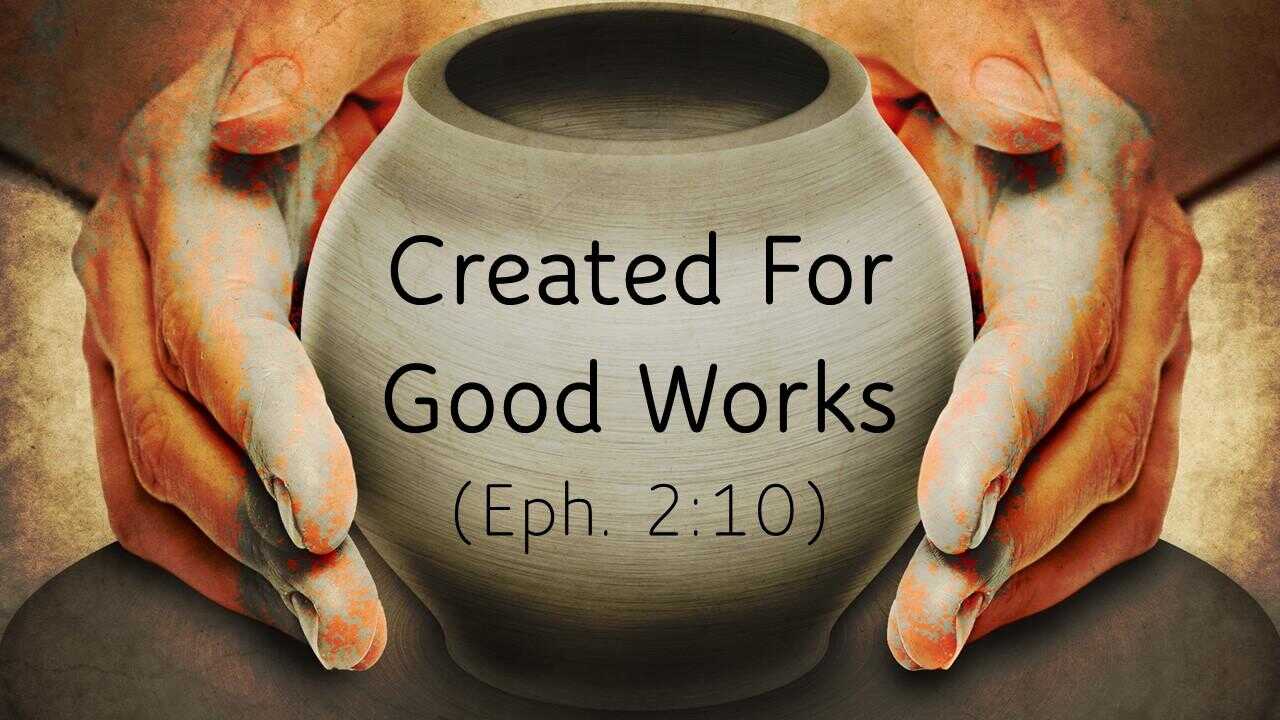
Jesus finds beauty when your faith produces good works for His glory.33
Jesus made you for good works for His glory. The groom celebrated the bride’s “fruit’” (SoS 7:8). He used the Hebrew “peri” (פְּרִי), which implies abundance. It can also be used for offspring in the context of the “fruit of the womb” (i.e. Gen 30:2; Dt. 7:13) or figuratively for the “fruit” of a person’s actions (i.e., Is. 3:10; Ps. 58:12).34 Jesus made you for “good works”: “For we are His workmanship, created in Christ Jesus for good works, which God prepared beforehand so that we would walk in them.” (Eph. 2:10). Your good deeds should also glorify God. “Your light must shine before people in such a way that they may see your good works, and glorify your Father who is in heaven.” (Matt. 5:16). Jesus further said, “You will know them by their fruits.” (Matt. 7:16).
Jesus is the vinedresser who also prunes His fruit. The groom stated that he would “climb the palm tree,” to “grasp its fruit stalks.” (SoS 7:8). Jesus is the vinedresser. We cannot produce good works apart from Him. “I am the vine, you are the branches; the one who remains in Me, and I in him bears much fruit, for apart from Me you can do nothing. If anyone does not remain in Me, he is thrown away like a branch and dries up; and they gather them and throw them into the fire, and they are burned.” (Jo. 15:5-6). Those who live to serve Jesus with good works will flourish like a palm tree in an arid environment. “The righteous person will flourish like the palm tree, ....” (Ps. 92:12).
The fruit of your life should include the fruit of the Holy Spirit. How do you know if you are producing good fruit? You will know if your fruit meets the test for the holy fruit of the Spirit. “But the fruit of the Spirit is love, joy, peace, patience, kindness, goodness, faithfulness, gentleness, self-control; against such things there is no law.” (Gal. 5:22-23).
5. Prayer: Jesus Loves the Prayers of the Humble Who Repent of Sin. SoS 7:9.
Jesus finds beauty in those who speak to Him through prayer after repenting of their sins. The groom then praised the beautiful words of his bride, which were better than fine wine. “9 And your mouth like the best wine! It goes down smoothly for my beloved, flowing gently through the lips of those who are asleep.” (SoS 7:9). “The reference here as in Song of Solomon 5:16 is to the sweet words of love which she whispers, they intoxicate like wine.” (Cambridge Bible for Schools and Colleges SoS 7:9).35
The prayers of repentant sinners are beautiful to Jesus. Jesus finds beauty when you speak to Him through prayer. “[H]er breath, sweet and of a good smell, like the best wine; the breathings of her soul in prayer, which are sweet odors,… and may denote both her speech in common conversation, which is warming, refreshing, comforting, and quickening; and in prayer and praise, which is well pleasing and delightful to Christ;… causing the lips of those that are asleep to speak; either such who are in the dead sleep of sin; who, when the Gospel comes with power, are quickened by it; and it produces in them humble confessions of sin; causes them to speak in praise of Christ, and his grace, and of the salvation which he has procured for lost sinners;” (John Gill on SoS 7:9).36

Jesus finds beauty in your prayers to Him.37
The prayers of the righteous are a sweet aroma to Jesus. The bride previously declared that her groom had “a pleasing fragrance, …;” (SoS 1:3a). When he approached her with columns of smoke, it was also “perfumed with myrrh and frankincense,” (SoS 3:6). The priests used frankincense for their “thank offerings” (Lev. 2:2). They also used pure frankincense for the altar of incense. When burned, the incense created smoke that was a “sweet aroma” to God (Lev. 24:7; Ex. 30:22-37). Because it was valuable, frankincense was brought to Jesus by the wise men at His birth (Matt. 2:11). His sacrifice was a fragrant aroma for His bride (Eph. 5:20). Today, instead of smoke, any believer in Christ can offer prayers as a sweet aroma to Him “May my prayer be counted as incense before You; the raising of my hands as the evening offering.” (Ps. 141:2). “When He had taken the scroll, the four living creatures and the twenty-four elders fell down before the Lamb, each one holding a harp and golden bowls full of incense, which are the prayers of the saints.” (Rev. 5:8). “Another angel came and stood at the altar, holding a golden censer; and much incense was given to him, so that he might add it to the prayers of all the saints on the golden altar which was before the throne. And the smoke of the incense ascended from the angel’s hand with the prayers of the saints before God.” (Rev. 8:3-4). “For we are a fragrance of Christ to God among those who are being saved and among those who are perishing:” (2 Cor. 2:15). “All Your garments are fragrant with myrrh...” (Ps. 45:8).
Unrepentant sinners may find their prayers hindered or ignored. The groom stated that the bride’s words go “gently through the lips of those who are asleep.” (SoS 7:9). As John Gill points out above, this speaks of people awaked to their sins. Jesus may not consider every prayer to be beautiful. When you fail to repent of your sins, your prayers may be “hindered” or ignored (1 Pet. 3:7; Jo. 9:31; Ps. 66:18; Prov. 28:9; Isa. 1:15). Thus, you should confess your sins: “Therefore, confess your sins to one another, and pray for one another so that you may be healed. The effective prayer of a righteous man can accomplish much.” (Jam. 5:16). Also, pray without doubt in Jesus (Jam. 1:6-8).
6. Faithfulness: Jesus Finds Great Beauty in Your Faithfulness. SoS 7:10.
Jesus finds beauty when you are faithful to Him in the same way He is faithful to you. Out of love, the bride responded by confirming her commitment to be faithful, and she found security in her husband’s commitment and faithfulness. “10 I am my beloved’s, and his desire is for me.” (SoS 7:10). “With these words, the believing soul acknowledges that all she is and all she has belongs to Christ and comes from Christ. And she here makes a voluntary surrender to all to him again. As she received all from him, she devotes all to him. ‘I am my beloved’s,’ not my own.” (Don Fortner SoS 7:10).38
Out of love and holiness, Jesus is faithful to His bride. Jesus is faithful to His bride, the Church. “And I will betroth you to Me in faithfulness. Then you will know the LORD.” (Hos. 2:20). Even when His bride is unfaithful, He remains faithful to love His bride. “If we are faithless, He remains faithful, for He cannot deny Himself.” (2 Tim. 2:13).
Jesus brings joy when you are committed and faithful to both Him and your spouse. The bride expressed joy in being united with her husband through God’s marriage covenant. “My beloved is mine, and I am his; He pastures his flock among the lilies.” (SoS 2:16). “I am my beloved’s and my beloved is mine, He who pastures his flock among the lilies.” (SoS 6:3). The Hebrew ‘echad’ (אֶחָד), meaning ‘one’, captures the idea of a couple unified as one before God.39 The word ‘ahavah’ (אַהֲבָה), meaning ‘love,’ also frequently represents a covenantal love that is faithful and steadfast.40 The root word ‘dod’ (דּוֹד), meaning ‘beloved’ or ‘lover,’ also reflects God’s intended loving bond between married couple.41 The word ‘simchah’ (שִׂמְחָה), meaning ‘joy’ or ‘gladness’, captures the joy that God intends for married couples.42 Jesus also promises great joy for those who are willing to be spiritually united with Him through faith. “He who has the bride is the groom; but the friend of the groom, who stands and listens to him, rejoices greatly because of the groom’s voice. So this joy of mine has been made full.” (Jo. 3:29).
Jesus loved you before time began, and He died for you out of love. The bride celebrated that her husband’s “desire is for me.” (SoS 7:10). Jesus loved you and chose you before time began. “just as He chose us in Him before the foundation of the world, that we would be holy and blameless before Him. In love” (Eph. 1:4). “You did not choose Me but I chose you, and appointed you that you would go and bear fruit, and that your fruit would remain, so that whatever you ask of the Father in My name He may give to you.” (Jo. 15:16). “We love, because He first loved us.” (1 Jo. 4:19). He loved you so much that He died for you. “For God so loved the world, that He gave His only Son, so that everyone who believes in Him will not perish, but have eternal life.” (Jo. 3:16).
Be faithful because Jesus bought you and redeemed you at a terrible price. Just as the bride stated that she belonged to her spouse, you also belong to Jesus because of His sacrifice at the cross. Thus, out of gratitude, you should desire to be faithful to Him. “For you have been bought for a price: therefore glorify God in your body.” (1 Cor. 6:20). “You were bought for a price; do not become slaves of people.” (1 Cor. 7:23).

Just as Jesus is faithful and committed to you, be faithful and committed to Him.43
Be faithful to give Jesus your consistent and complete love. God frequently used the institution of marriage to convey His relationship with His people. “For your husband is your Maker, whose name is the LORD of armies; and your Redeemer is the Holy One of Israel, who is called the God of all the earth.” (Is. 54:5). “I will betroth you to Me forever; yes, I will betroth you to Me in righteousness and in justice, in favor and in compassion,” (Hos. 2:19). ‘“not like the covenant which I made with their fathers on the day I took them by the hand to bring them out of the land of Egypt, My covenant which they broke, although I was a husband to them,’ declares the LORD.” (Jer. 31:32). As the bride of Christ, the Church belongs to Him (Jo. 3:29). The Song of Solomon therefore encourages you to love Jesus with all your heart, mind, and soul (Dt. 6:5; Matt. 22:37).
Just as Jesus is faithful to you, be faithful to your spouse. To be faithful to your spouse, you must be willing to sacrifice for your spouse. “Greater love has no one than this, that a person will lay down his life for his friends.” (Jo. 15:13). This includes putting your spouse’s needs above your own. “Two are better than one because they have a good return for their labor; for if either of them falls, the one will lift up his companion. But woe to the one who falls when there is not another to lift him up!” (Ecc. 4:9-10). “A Song of Ascents, of David. Behold, how good and how pleasant it is for brothers to live together in unity!” (Ps. 133:1). “A friend loves at all times, and a brother is born for adversity.” (Prov. 17:17). “A person of too many friends comes to ruin, but there is a friend who sticks closer than a brother.” (Prov. 18:24). There are many examples of this in the context of brotherly love. Out of brotherly love, Jonathan protected David from his wrathful father Saul, even though he placed himself at risk by doing so. (1 Sam. 18:1-3). Also out of a brotherly love, Elisha refused to leave Elijah (2 Kgs. 2:2). Out of love, Ruth also refused to abandon Naomi during her time of great need (Ruth 1:16-17).
7. Fellowship: Jesus Finds Great Beauty in Your Fellowship That Comes from Serving Him and Bringing His Light to the Lost. SoS 7:11-13.
Jesus finds great beauty and fellowship when you go into the world to serve Him. Out of love and a desire to be with his spouse, the groom invited her to travel with him and serve in the country’s villages. “11 Come, my beloved, let’s go out to the country, let’s spend the night in the villages. 12 Let’s rise early and go to the vineyards; let’s see whether the vine has grown and its buds have opened, and whether the pomegranates have bloomed. There I will give you my love. 13 The mandrakes have given forth fragrance; and over our doors are all delicious fruits, new as well as old, which I have saved for you, my beloved.” (SoS 7:11-13). “Observe that the love of the spouse was lived in fellowship with the Well-beloved … Observe, too, that the spouse is quite ready to continue in this uncomfortable service … Observe how the spouse says, ‘There will I give thee my love.’ [v. 11b]. It is as much as to say, if Jesus will therefore go with us into active service, then we will reveal to him the love of our hearts … Jesus has no fellowship with you who do not care for souls that are perishing.” (Charles Spurgeon on SoS 7:11-13).44
Jesus loves you and desires your fellowship through service. The groom invited his bride to come with him (SoS 7:11). This repeated his prior invitation. “My beloved responded and said to me, ‘Arise, my darling, my beautiful one, and come along.”’ (SoS 2:10). This included going into his vineyard (SoS 7:12). “Let me sing now for my beloved a song of my beloved about His vineyard. My beloved had a vineyard on a fertile hill.” (Is. 5:1). Jesus desires that you invite Him into your heart (Rev. 3:20). When you invite Jesus into your heart, you can become a living sacrifice for Him (Ro. 12:1-2).
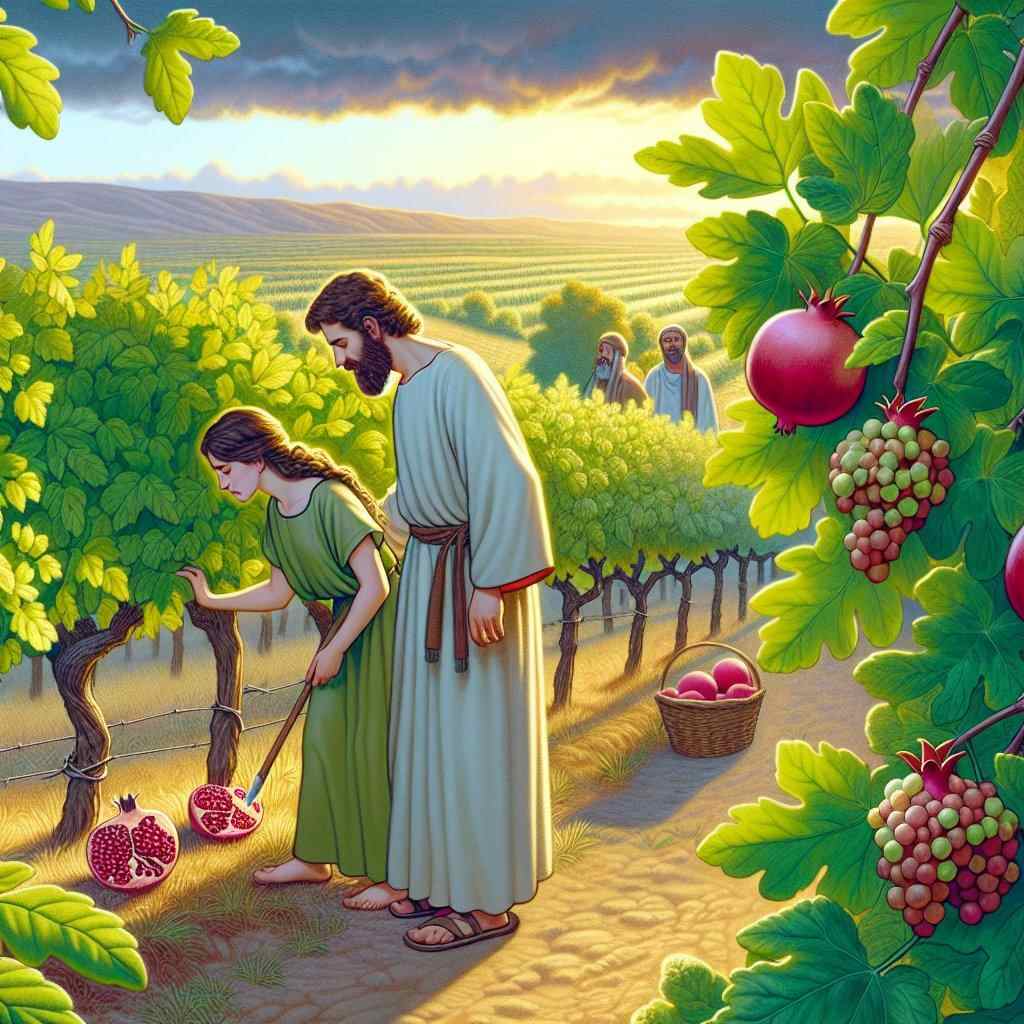
Find fellowship with Jesus by serving Him in His fields as a light to the lost.45
To live in fellowship with Jesus, give your life to serve Him. The groom did not invite the bride to recline in luxury. Instead, he invited her to serve in the country villages and vineyards (SoS 7:11-12). There, they would be fruitful (SoS 7:13). The word “kerem” (כֶּרֶם), translated as vineyards, frequently represented fertility and abundance.46 The word “duday” or mandrakes also symbolized fertility (Gen 30:14-16). The bride would not be fruitful by sitting on a royal throne. Instead, she would be fruitful and come to know her husband by serving others in need. When we lose our own life to serve Jesus, we also come to live in fellowship with Him. “For whoever wants to save his life will lose it, but whoever loses his life for My sake and the gospel’s will save it.” (Mk. 8:35).
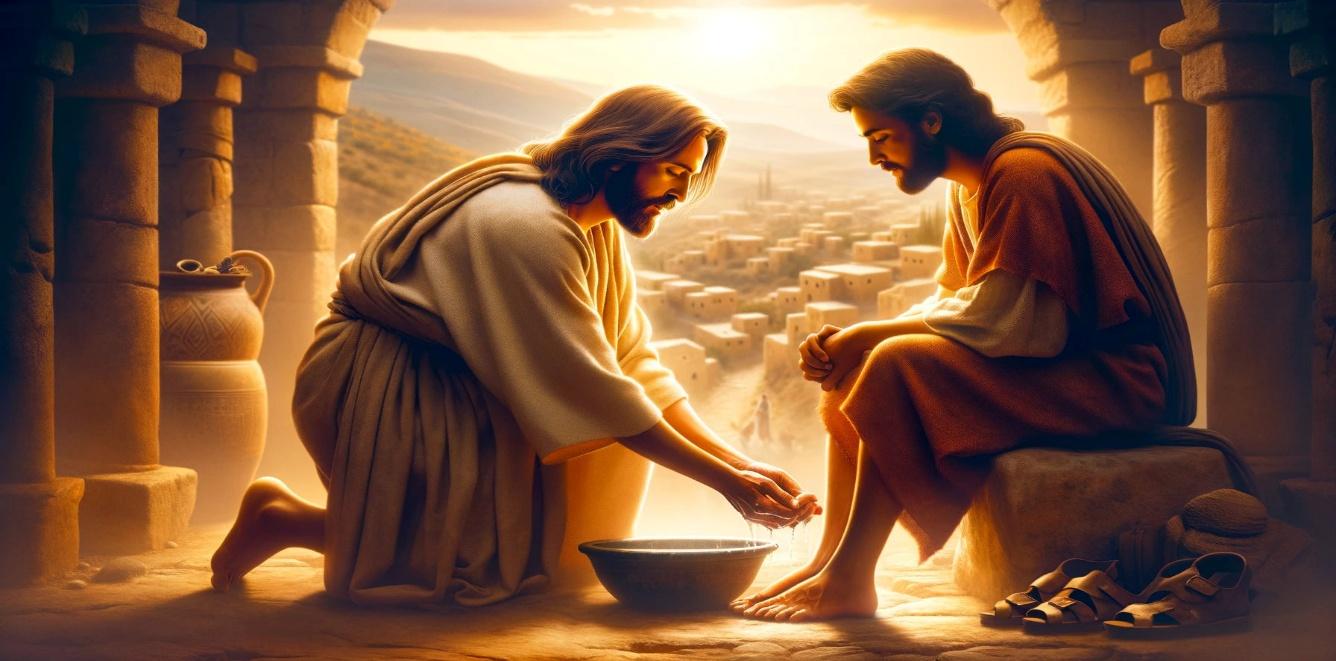
Find fellowship with Jesus by following His example and serving others.47
To be in fellowship with Jesus, serve Him as His light to the lost. For emphasis, the groom’s invitation to go into the countryside repeated the theme of evangelism found in the beauty of her feet. ‘field—the country … here she prepares for Him all kinds of fruit old and new; also, she anticipates, in going forth to seek them, communion with Him in ‘love.’ ‘Early’ implies immediate earnestness. ‘The villages’ imply distance from Jerusalem. At Stephen’s death the disciples were scattered from it through Judea and Samaria, preaching the word (Ac 8:4-25). Jesus Christ was with them, confirming the word with miracles. They gathered the old fruits, of which Jesus Christ had sown the seed (John 4:39-42), as well as new fruits.” (Jamieson-Fausset-Brown on SoS 7:11-13).48 Thus, the bride of Christ is called on to tend to the needs of His sheep. “He said to him the third time, ‘Simon, son of John, do you love Me?’ Peter was hurt because He said to him the third time, ‘Do you love Me?’ And he said to Him, ‘Lord, You know all things; You know that I love You.’ Jesus said to him, ‘Tend My sheep.”’ (Jo. 21:17).
Image credit: Romans 10:15↩︎
Don Fortner, Discovering Christ in the Song of Solomon (Auburn, MA, Evangelical Press USA, 2005) (ISBN 085234-581-X), p. 172.↩︎
Song of Solomon 7 - Henry's Complete Commentary on the Bible - Bible Commentaries - StudyLight.org↩︎
Image credit: Group of volunteers giving charity gifts to the poor | Premium AI-generated image↩︎
Song of Solomon 7:2 - Bible Verse Meaning and Commentary | Bible Study Tools↩︎
Song of Solomon 7 - Gill's Exposition of the Whole Bible - Bible Commentaries - StudyLight.org↩︎
Song of Solomon 7 - Henry's Complete Commentary on the Bible - Bible Commentaries - StudyLight.org↩︎
Song of Solomon 4 - Coffman's Commentaries on the Bible - Bible Commentaries - StudyLight.org↩︎
Iain M. Duguid, Song of Songs, Reformed Expository Commentary, (Phillipsburg, NY P&R Publishing 2016) (ISBN 978-1-59638-948-9), introduction p. xvi.↩︎
Song of Solomon 4 - Trapp's Complete Commentary - Bible Commentaries - StudyLight.org↩︎
Song of Solomon 4 Commentary - Matthew Henry Commentary on the Whole Bible (Complete) | Bible Study Tools↩︎
Tremper Longman III, Song of Songs, (Grand Rapids, MI, William B. Eerdman’s Publishing Company, 2001) (ISBN 978-0-8028-2543-8) p. 194-195.↩︎
Daniel L. Akin, Christ-Centered Exposition, Exalting Jesus in Song of Songs, (Brentwood, TN, B&H Publishing Group, 2015) (ISBN 978-0-8054-9676-5), p. 154, 156 (italics added).↩︎
Iain M. Duguid, Song of Songs, Reformed Expository Commentary, (Phillipsburg, NY P&R Publishing 2016) (ISBN 978-1-59638-948-9), p. 131, 133.↩︎
G. Lloyd Carr, The Tyndale Old Testament Commentaries, The Song of Solomon (Downers Grove, IL, Inter-Varsity Press, 1984) (ISBN 0-87784-268), p. 160 (italics in original).↩︎
Song of Solomon 7 - Henry's Complete Commentary on the Bible - Bible Commentaries - StudyLight.org↩︎
Song of Solomon 7 - Henry's Complete Commentary on the Bible - Bible Commentaries - StudyLight.org↩︎
Song of Solomon 4:1 - John Gill's Exposition of the Whole Bible↩︎
Song of Solomon 7 - Henry's Complete Commentary on the Bible - Bible Commentaries - StudyLight.org↩︎
Image credit: AM-Created-for-Good-Works.jpg (1280×720)↩︎
Song of Solomon 7 Cambridge Bible for Schools and Colleges↩︎
Image credit: 15 Inspiring Prayer Songs | Christian.net↩︎
Don Fortner, Discovering Christ in the Song of Solomon (Auburn, MA, Evangelical Press USA, 2005) (ISBN 085234-581-X), p. 183.↩︎
Strong's Hebrew: 259. אֶחָד (echad) -- One, single, first, alone, unity↩︎
Strong's Hebrew: 1730. דּוֹד (dod) -- Beloved, uncle, love↩︎
Strong's Hebrew: 8057. שִׂמְחָה (simchah) -- Joy, gladness, mirth, rejoicing↩︎
Image credit: Song of Solomon 7 Commentary | Living Hope Bible Blog↩︎
Charles H. Spurgeon, The Song of Solomon, (84 Sermons on the Song of Solomon, assembled by Eric Steward and Gary Morris 2020) (ISBN: 979-8-55-894256-9), No. 74 “A Call for Revival,” Spurgeon delivered this sermon on August 18, 1872 at the Metropolitan Tabernacle, Newington, England. (no page numbers provided).↩︎
Image credit: What does Song of Solomon 7:12 mean? | Bible Art↩︎
Image credit: Jesus Helping Others 24 Bible Verses About Helping Others That'll↩︎
