Song of Solomon 8: Lessons for Preparing Yourself for Jesus’ Return and His Marriage to His Church in Heaven
Introduction: Here, when he left her, the bride placed her hope in her beloved’s love. Believers can also trust in Jesus’ love while waiting for His return and His marriage to His Church. While waiting for Jesus’ return, you can live out your faith through: (1) ongoing spiritual communion, (2) patience, (3) preparation, (4) perseverance, (5) discipleship, (6) grateful service, and (7) hope.
First, the bride lamented that her marriage to the king had not yet become a public event. She also mourned that some still despised her love for her king. Jesus will return to marry His Church. Those who despise Him and His believers will not be invited. While waiting for Jesus’ return, He also desires that you long for and live for an ever closer holy, spiritual communion with Him. Second, after the bride was revealed to be dreaming, the groom instructed others not to wake her up prematurely. Jesus also wants you to be patient for His timing and His return. Third, without any warning, the daughters of Jerusalem saw the groom approaching in the wilderness. The groom then spoke of how he revived his bride where her mother gave birth. Jesus also wants you to be prepared for His return. This includes accepting Him as your Lord and Savior so that you may become born again of the Holy Spirit. Fourth, in the face of her flood of afflictions, the bride declared that the power of love was stronger than death. This foreshadowed how the power of Jesus’ love broke the curse of death. When the flood of afflictions, placing your hope in His love gives you the strength to persevere. Fifth, the story then shifts to the bride’s older siblings. They guarded and helped the bride grow and develop. The older siblings foreshowed the important function of mature believers in mentoring and discipling new believers. Discipling those who are young in their faith will help to find hope in Jesus and persevere through their trials until He returns. Sixth, the bride expressed gratitude for the peace and security that she found through her loving king. He had given her a vineyard, and she would devote the fruit of her vineyard to him. While waiting for Jesus, Jesus also wants you to serve Him with gratitude by giving Him the first fruits of your life. Finally, the song concludes with a message for the bride to speak to her companions as he left her. She responded by urging him to hurry back. Jesus also wants you to help others find hope in Him and long for His return.
1. Ongoing Spiritual Communion: While Waiting for Jesus’ Return, Seek Out and Live in Holy Spiritual Communion with Him. SoS 8:1-3.
Your greatest desires should be to live in spiritual communion with Jesus. Before their marriage could be officially celebrated [a foreshadow of the wedding in heaven] the bride longed to be close to her husband, just as a nursing baby is to his or her mother. “1 Oh that you were like a brother to me who nursed at my mother’s breasts. If I found you outdoors, I would kiss you; no one would despise me, either. 2 I would lead you and bring you into the house of my mother, who used to instruct me; I would give you spiced wine to drink from the juice of my pomegranates. 3 Let his left hand be under my head, and his right hand embrace me.” (SoS 8:1-3). “This last chapter of this inspired Song of Loves begins with ardent desire expressed by the church, the Bride of Christ … It is the desire of every believing soul. The request is just this, ‘O Lord, give me constant, intimate communion and freedom with you … He had taken her to be his bride; and she had taken him to be her Lord and husband … But the marriage had not yet been publicly solemnized. The marriage feast had not yet been spread. She was obligated, for the sake of decency and respectability, to keep her distance.” (Don Fortner SoS 6:8:1-3).1
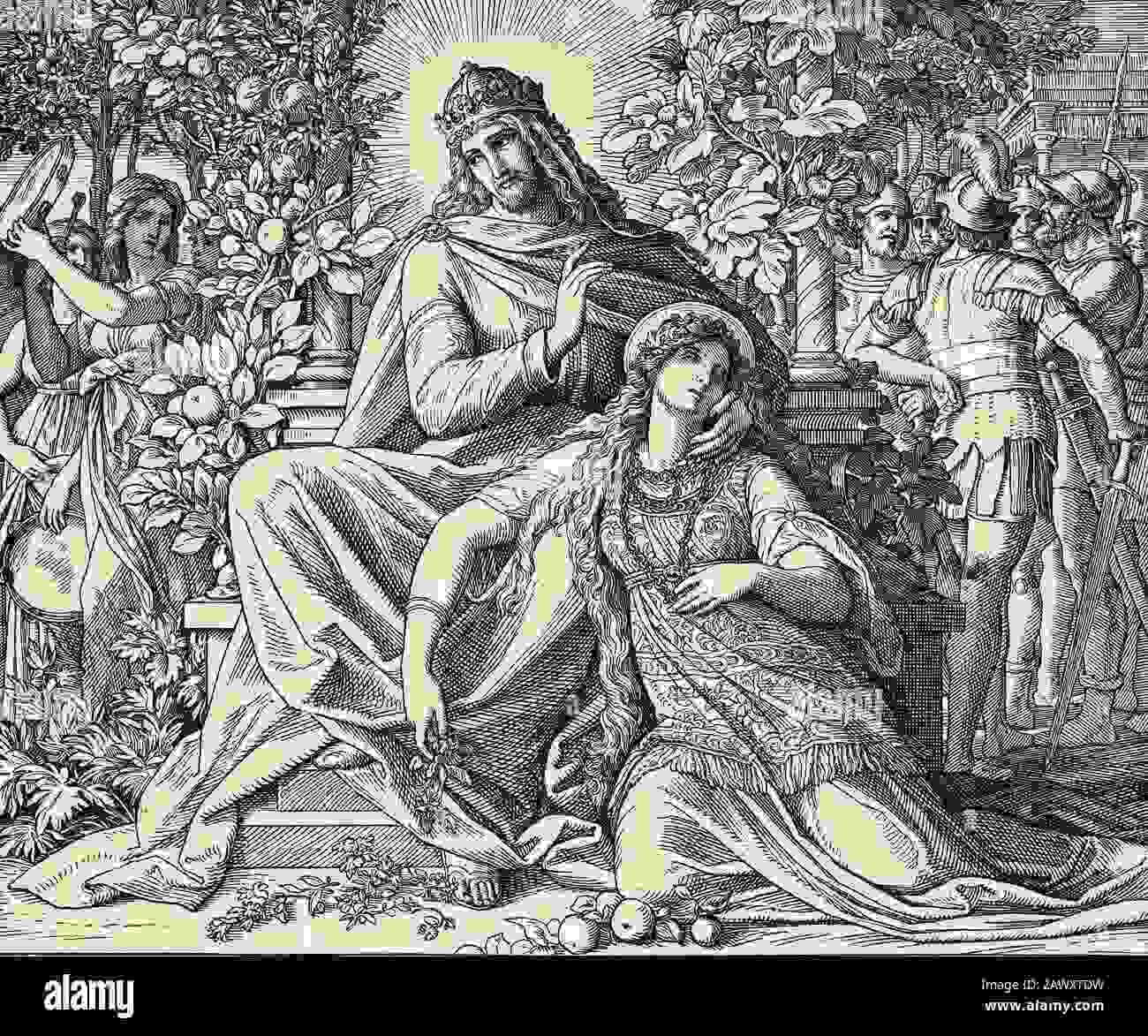
While you wait for Jesus’ return, seek out an ever deeper relationship with Him.2
Seek out spiritual communion with Jesus while waiting for His return. This account also foreshadows Jesus’ second coming. [v.1] “He had been a brother already. Why, then, this prayer here? It refers to the time after His resurrection, when the previous outward intimacy with Him was no longer allowed, but it was implied it should be renewed at the second coming (Joh 20:17). For this the Church here prays; meanwhile she enjoys inward spiritual communion with Him. The last who ever ‘kissed’ Jesus Christ on earth was the traitor Judas. The bride’s return with the King to her mother’s house answers to Ac 8:25, after the mission to Samaria. The rest spoken of (So 8:4) answers to Ac 9:31… a brother born of the same mother; the closest tie. [v.2] Her desire to bring Him into her home circle (Joh 1:41). [spiced wine]—seasoned with aromatic perfumes. Jesus Christ ought to have our choicest gifts. Spices are never introduced in the song in His absence; therefore the time of His return from ‘the mountain of spices’ (So 8:14) is contemplated. The cup of betrothal was given by Him at the last supper; the cup or marriage shall be presented by her at His return (Mt 26:29). [v. 3] Only at His first manifestation did the Church palpably embrace Him; at His second coming there shall be again sensible communion with Him.” (Jamieson-Fausset-Brown Bible Commentary on SoS 8:1-3).3
Even when others despise your faith, seek communion with Jesus all your heart and soul. Before their wedding was publicly celebrated in a formal event, the bride faced public ridicule for her love for her husband. “I would kiss you; no one would despise me, either.” (SoS 8:1). Jesus warns that the world will hate you when you declare your love for Him. But He wants you to continually seek out His presence and persevere when this happens. “And you will be hated by all because of My name, but it is the one who has endured to the end who will be saved.” (Matt. 10:22). During times of darkness, the psalmists encouraged the Jews to continually seek after God’s will through prayer: “When You said, ‘Seek My face,’ my heart said to You, ‘I shall seek Your face, LORD.”’ (Ps. 27:8). “4 Seek the Lord and His strength; seek His face continually.” (Ps. 105:4).
Jesus took on human form to become mankind’s kinsman redeemer. In a foreshadowing of Jesus, the bride declared, “Oh that you were like a brother to me…” (SoS 8:1). Jesus is God who took on human form (Jo. 1:1-2, 14). He became mankind’s kinsman -redeemer or “goel” (גֹּאֶל) (Lev. 25:25–28; 47–55; Dt. 25:5–10; Ruth 3:9, 12; Job 19:25). As a kinsman-redeemer, He became our brother. “For both He who sanctifies and those who are sanctified are all from one Father; for this reason He is not ashamed to call them brothers and sisters,” (Heb. 2:11). He died to redeem all willing to believe in Him. “Greater love has no one than this, that a person will lay down his life for his friends. You are My friends if you do what I command you. No longer do I call you slaves, for the slave does not know what his master is doing; but I have called you friends, because all things that I have heard from My Father I have made known to you.” (Jo. 15:13-15).
Jesus wants you to be spiritually dependent on Him like a nursing baby is to its mother. The bride used the analogy of a brother who “nursed at my mother’s breasts.” (SoS 8:1). This spoke of a dependence upon God the Father. While you wait for Jesus’ return, He wants you to be as dependent upon Him as a nursing baby is to its mother. “You will also suck the milk of nations, and suck the breast of kings; then you will know that I, the LORD, am your Savior and your Redeemer, the Mighty One of Jacob.” (Is. 60:16). “So that you may nurse and be satisfied with her comforting breasts, so that you may drink fully and be delighted with her bountiful breasts.” (Is. 66:11). The Lord’s Supper or Eucharist is an important part of being in spiritual communion with Jesus (Matt. 26:26-28; Mk. 14:22-24; Lk. 22:19-20; Jo. 6:35, 51, 53-54). But this can become a mere ritual. Jesus also wants you to depend upon Him with all your heart and soul.
Living in spiritual communion includes making your life a living sacrifice to Jesus. The bride desired to take her husband to “the house of my mother” (SoS 8:2; 3:4). This signified letting the groom into her heart, something Jesus seeks from every believer (Rev. 3:20). The bride further wanted to offer her husband “spiced wine to drink from the juice of my pomegranates.” (SoS 8:2). As a sign of devoted love, believers should desire to pour their lives out as a drink offering to Jesus. “For I am already being poured out as a drink offering, and the time of my departure has come.” (2 Tim. 4:6; Phil. 2:17; Nu. 28:7-8; Ex. 29:40-41). The “pomegranate” (SoS 8:2) was proof of God’s faithfulness in leading the people to the Promised Land (Nu. 13:23). It was also part of the High Priest’s robe (Ex. 28:33-34; 39:24-26). The pomegranate’s red color symbolized atonement, and the seeds represent God’s perfect law, which leads a sinner to repentance (Ro. 7:7). One Jewish commentator observes, “Some Jewish traditions hold that the pomegranate’s 613 seeds correspond with the 613 laws in the Torah; ...”4 If you love Jesus, you can become a “living sacrifice” where you offer with obedience the best of your life (Ro. 12:1).
Love your spouse the same way Jesus loves you. The Song of Solomon is primarily about Jesus and His Church. But it also applies to spouses. Here, the bride longed for the loving embrace of her husband. “Let his left hand be under my head, and his right hand embrace me.” (SoS 8:3). Jesus offers you love and comfort (2 Cor. 1:3–4; Matt. 11:28). Just as Jesus loves you, you can love and support your spouse. “Husbands, love your wives, just as Christ also loved the church and gave Himself up for her,” (Eph. 5:25). “Husbands, love your wives and do not become bitter against them.” (Col. 3:19).
2. Patience: Be Patient for Jesus’ Return and His Timing. SoS 8:4.
Be patient for Jesus and allow Him to mold and prepare you in His timing. Here, the bride is revealed to have been dreaming. The groom observed and instructed others around her not to wake her up. But no human can read another person’s dreams. Thus, the groom foreshadowed Jesus, who is watching over us and molding us. “4 Swear to me, you daughters of Jerusalem: Do not disturb or awaken my love until she pleases.” (SoS 8:4). “Hebrew scholars regard this charge here and elsewhere Sol 2:7; Sol 3:5 as an admonition to Israel not to attempt obtaining a possession of, or restoration to, the promised land, and union or reunion there with the Holy One, before being inwardly prepared for it by the trials of the wilderness and the exile.” (Albert Barns on SoS 8:4).5
Jesus is patient for everyone to turn to Him. For emphasis, the groom previously gave these same instructions on two prior occasions. “Swear to me, you daughters of Jerusalem, by the gazelles or by the does of the field, that you will not disturb or awaken my love until she pleases.” (SoS 2:7). “Swear to me, you daughters of Jerusalem, by the gazelles or by the does of the field, that you will not disturb or awaken my love until she pleases.” (SoS 3:5). Jesus is patient for sinners to turn to Him when their love for Him is genuine. “Love is patient, love is kind ...” (1 Cor. 13:4). “The Lord is not slow about His promise, as some count slowness, but is patient toward you, not willing for any to perish, but for all to come to repentance.” (2 Pet. 3:9).
Be patient for Jesus’ timing. Jesus wants you to be patient for His return. “Wait for the LORD; be strong and let your heart take courage; yes, wait for the LORD.” (Ps. 27:14). “Rest in the LORD and wait patiently for Him; do not get upset because of one who is successful in his way, because of the person who carries out wicked schemes.” (Ps. 37:7). “I waited patiently for the LORD; and He reached down to me and heard my cry.” (Ps. 40:1). “The LORD is good to those who await Him, to the person who seeks Him. It is good that he waits silently for the salvation of the LORD.” (Lam. 3:25-26). “Yet those who wait for the LORD will gain new strength; they will mount up with wings like eagles, they will run and not get tired, they will walk and not become weary.” (Is. 40:31).
Be patient with your spouse. Just as Jesus is patient with you, be patient with your spouse. “with all humility and gentleness, with patience, bearing with one another in love,” (Eph. 4:2). “So, as those who have been chosen of God, holy and beloved, put on a heart of compassion, kindness, humility, gentleness, and patience;” (Col. 3:12).
If you are single, be patient for Jesus’ appointed spouse. Showing godly patience also means that you should be patient for the right spouse. If you lack patience and fail to turn to Jesus to guide you (Jam. 1:5), you might become unequally yoked (2 Cor. 6:14-18).
3. Preparation: Be Prepared for Jesus’ Return by Accepting Him as Lord and Savior to Become “Born Again” of the Holy Spirit. SoS 8:5.
Be prepared for Jesus’ return. Without warning, the groom then approached to take his bride. His love had given his bride new life with him. “5 Who is this coming up from the wilderness, leaning on her beloved? Beneath the apple tree I awakened you; there your mother went into labor with you, there she was in labor and gave birth to you.” (SoS 8:5). [v.8:5a] “Which words are spoken by the daughters of Jerusalem, occasioned by her charge to them, by which they were excited to look more earnestly at her, whom Christ had indulged with so much nearness to him; at which they express their surprise, and describe her by her ascent ‘from the wilderness’; that is, of the world, out of which she was chosen and called; and from a state of nature, out of which she was brought; and was rising up in a state of grace to a state of glory;” (John Gill on SoS 8:5a).6 [v 5b] “I raised thee up — These are Christ’s words: when thou wast fallen, and laid low, and dead in trespasses and sins, and in the depth of misery, I revived thee: Under the apple-tree — Under my own shadow: for she had compared him to an apple-tree, and declared, that under the shadow of the tree she had both delight and fruit, (Song of Solomon 2:3,) which is the same thing with this raising up. There — Under that tree, either the universal or the primitive church did conceive and bring thee forth.” (Joseph Benson on SoS 8:5b).7
The glory of the Lord coming in the wilderness is Jesus. From the “wilderness,” daughters of Jerusalem saw the groom approach. For emphasis, this was the second warning of the groom approaching unannounced. “What is this coming up from the wilderness like columns of smoke, perfumed with myrrh and frankincense, with all the scented powders of the merchant?” (SoS 3:6). This foreshadowed Jesus’s arrival. “The wilderness and the desert will rejoice, and the desert will shout for joy and blossom; like the crocus it will blossom profusely and rejoice with joy and jubilation. The glory of Lebanon will be given to it, the majesty of Carmel and Sharon. They will see the glory of the LORD, the majesty of our God.” (Is. 35:1-2). He was also the “pillar of cloud” who led the Jews in the wilderness. “And the LORD was going before them in a pillar of cloud by day to lead them on the way, and in a pillar of fire by night to give them light, so that they might travel by day and by night. He did not take away the pillar of cloud by day, nor the pillar of fire by night, from the presence of the people.” (Ex. 13:21-22).
At all times, be prepared for Jesus’ arrival. In the parable of the ten virgins (Matt. 25:1-13), ten bridesmaids waited for the arrival of the groom and the start of the wedding festivities. But five of the bridesmaids failed to prepare. They had no oil in their lamps (the Holy Spirit). The other five bridesmaids prepared, and they were rewarded. “But while they were on their way to buy the oil, the groom came, and those who were ready went in with him to the wedding feast; and the door was shut.” (Matt. 25:10). Each person must also be at all times prepared for Jesus’ arrival or their death. “Therefore be on the alert, for you do not know which day your Lord is coming.” (Matt. 24:42; 25:13). “Watch out, stay alert; for you do not know when the appointed time is.” (Mk. 13:33).
Prepare yourself for Jesus’ return by accepting Him as Lord and Savior. In a direct foreshadow of Jesus, the groom prophetically spoke of how he revived his bride where her mother “was in labor and gave birth to you.” (SoS 8:5b). To live for eternity in heaven, you must also be born again of the Spirit: “Jesus answered and said to him, ‘Truly, truly, I say to you, unless one is born again he cannot see the kingdom of God.”’ (Jo. 3:3). The “apple tree” was a symbol of life (SoS 8:5b). Through faith in Jesus Christ, all are offered new life and the opportunity to be spiritually transformed. Where all are dead to sin, Jesus offers new life, like a transformed womb: “And when you were dead in your wrongdoings and the uncircumcision of your flesh, He made you alive together with Him, having forgiven us all our wrongdoings,” (Col. 2:13). “And you were dead in your offenses and sins, . . . even when we were dead in our wrongdoings, made us alive together with Christ (by grace you have been saved),” (Eph. 2:1, 5).
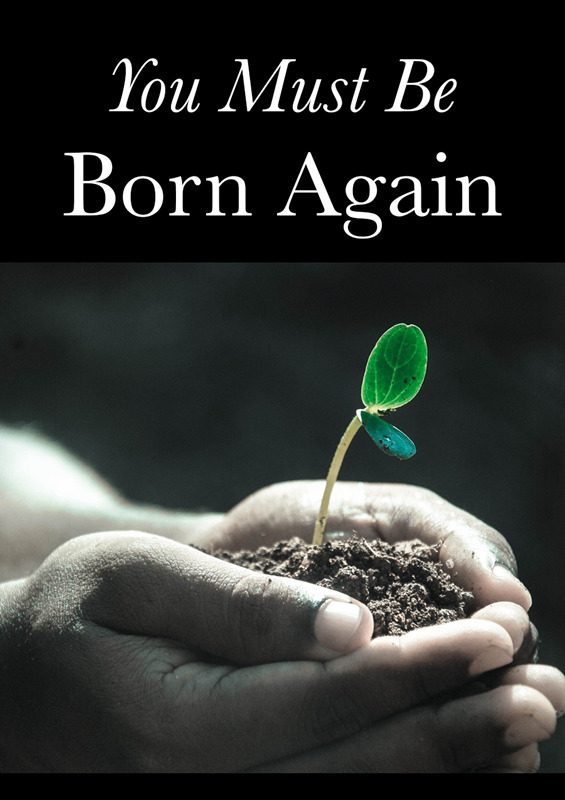
Let Jesus transform you and prepare you by being born again of the Spirit by faith.8
Jesus revives His believers by making them new creations. If you have accepted Jesus as your Lord and Savior, you can also give thanks that He has made a “new creation” out of you: “Therefore if anyone is in Christ, he is a new creature; the old things passed away; behold, new things have come.” (2 Cor. 5:17). “Therefore we have been buried with Him through baptism into death, so that as Christ was raised from the dead through the glory of the Father, so we too might walk in newness of life.” (Ro. 6:4). Yet, you must actively work to make sure that you do not corrupt the new creation that Jesus has created: “and put on the new self, which in the likeness of God has been created in righteousness and holiness of the truth.” (Eph. 4:24). But you must live as a new creation (Ro. 12:1-2).
Prepare your family for Jesus’ return. If this part of the song has any application to a husband and wife, it is to prepare their family for Jesus’ return. “Train up a child in the way he should go, even when he grows older he will not abandon it.” (Prov. 22:6).
4. Perseverance: Place Your Hope in the Power of Jesus’ Love Over Physical Death to Find the Strength to Persevere Through Your Trials. SoS 8:6-7.
Jesus offers you hope in the face of trials and death because of the power of His love. In the face of her trials, the bride found strength by sealing her heart with the power of her husband’s undying love. “6 Put me like a seal over your heart, like a seal on your arm. For love is as strong as death, jealousy is as severe as Sheol; its flames are flames of fire, the flame of the Lord. 7 Many waters cannot quench love, nor will rivers flood over it; if a man were to give all the riches of his house for love, it would be utterly despised.” (SoS 8:6-7). “The purity and perfection of true love are the theme of every sincere believer … It is an unquenchable flame - nothing can resist it. We cannot but recall the rapturous language of one who himself was an example of the highest devotedness to the Saviour, who rejoiced over death and the grave in the consciousness of victory through him from whose love nothing can separate us (Ro. 8:38; 1 Cor. 15:54). Certainly, the history of the sufferings and trials of the true Church form a most striking commentary upon these words. Floods of persecution have swept over it, but they have not quenched love … The whole of this passage, which forms a kind of keynote of the poem, is more like a distinct strain introduced to give climax to the succession of songs than the natural expression of the bride’s feelings … The enemies of God and of humanity are represented as falling before it, death and the grave. Its vehemence and force of manifestation are brought vividly before us by the comparison of the flash of lightning. It is remarkable that this exaltation of love should be included in the Old Testament, thus proving that the Mosaic Law, with its formal prescriptions, by no means fulfils the whole purpose of God in his revelation to the world.” (Pulpit Commentary on SoS 8:6).9
Being sealed with the Holy Spirit in your heart, Jesus offers you the strength to endure. To find the strength to persevere, the bride pleaded to her husband, “Put me like a seal over your heart, like a seal on your arm.” (SoS 8:6). The High Priest placed stones for each of the tribes over his heart (Ex. 28:29). Jesus is our High Priest (Heb. 4:14-16). As a sign of His love for mankind, He died at the cross so that all who believe would be saved (Jo. 3:16). For those who believe, He has sealed the Holy Spirit in their hearts as a sign and as a pledge. “In Him, you also, after listening to the message of truth, the gospel of your salvation—having also believed, you were sealed in Him with the Holy Spirit of the promise, who is a first installment of our inheritance, in regard to the redemption of God’s own possession, to the praise of His glory.” (Eph. 1:13-14).
Persevere in the hope Jesus offers because death cannot separate you from His love. The bride declared, “For love is as strong as death,” (SoS 8:6). When you face trials, you can find strength because death has no power over Jesus’ love. “Jesus said to her, ‘I am the resurrection and the life; the one who believes in Me will live, even if he dies, and everyone who lives and believes in Me will never die. Do you believe this?”’ (Jo. 11:25-26). “Greater love has no one than this, that a person will lay down his life for his friends.” (Jo. 15:13). “For I am convinced that neither death, nor life, nor angels, nor principalities, nor things present, nor things to come, nor powers, nor height, nor depth, nor any other created thing will be able to separate us from the love of God that is in Christ Jesus our Lord.” (Ro. 8:38-39). “Where, O death, is your victory? Where, O death, is your sting? The sting of death is sin, and the power of sin is the Law; but thanks be to God, who gives us the victory through our Lord Jesus Christ.” (1 Cor. 15:55-56).
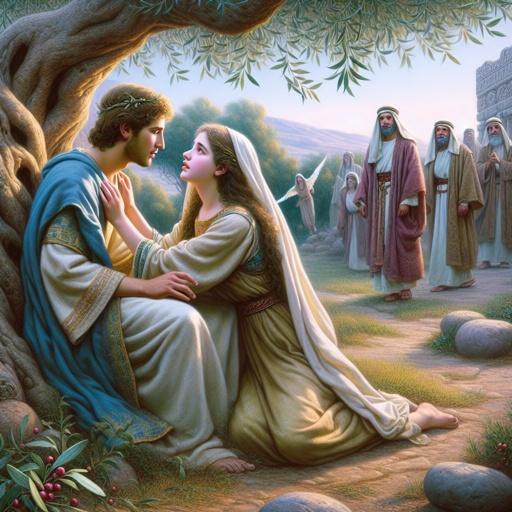
During your trials, turn to Jesus for the strength to endure.10
Jesus also offers hope in His mercy and grace to protect you from trials and torment. In “Sheol,” “its flames are flames of fire, the flame of the Lord.” (SoS 8:6). God is a consuming fire when evil is in His presence, “For the LORD your God is a consuming fire, a jealous God.” (Dt. 4:24). “for our God is a consuming fire.” (Heb. 12:29). The floods were also a symbol of trials or judgment. But through faith, there is also no condemnation in Jesus. “Therefore there is now no condemnation at all for those who are in Christ Jesus.” (Rom. 8:1). “who will also confirm you to the end, blameless on the day of our Lord Jesus Christ.” (1 Cor. 1:8). Jesus’ love will give you the strength to persevere through the trials that you will face in life. “7 Many waters cannot quench love, nor will rivers flood over it; if a man were to give all the riches of his house for love, it would be utterly despised.” (SoS 8:7). “When you pass through the waters, I will be with you; and through the rivers, they will not overflow you. When you walk through the fire, you will not be scorched, nor will the flame burn you.” (Is. 43:2). “Death, and all its terrors, will not frighten a believer from loving Christ: … No waters could quench Christ's love to us, nor any floods drown it; he waded through the greatest difficulties, even seas of blood … Love will enable us to repel and triumph over temptations from the smiles of the world, as much as from its frowns.” (Matthew Henry on SoS 8:6-7).11
Let Jesus use your trials to build up perseverance. Your trials also produce perseverance to build up your faith in Jesus to deliver you: “And not only this, but we also celebrate in our tribulations, knowing that tribulation brings about perseverance;” (Ro. 5:3). “Consider it all joy, my brothers and sisters, when you encounter various trials, knowing that the testing of your faith produces endurance.” (Jam. 1:2-3; 2 Cor. 1:8-10).
5. Discipleship: Disciple Others to Find Hope in Jesus and Persevere Through Their Trials as They Also Wait for Jesus’ Return. SoS 8:8-9.
Jesus wants you to disciple new believers to help them find hope in Him and persevere. The bride’s older sisters helped mentor her and to become a godly woman. “8 We have a little sister, and she has no breasts; what shall we do for our sister on the day when she is spoken for? 9 If she is a wall, we will build on her a battlement of silver; but if she is a door, we will barricade her with planks of cedar.” (SoS 8:8-9). “The idea is that Song of Solomon 8:8-9 is a look back at a planning session held by the maiden’s brothers when she was still a fairly young girl. They recognized that they had a responsibility towards her; to plan ahead for the day she would be spoken for – the day of her marriage … The idea is that the brothers wondered what they could do to prepare and protect their sister before her eventual marriage … The brothers wisely decided to guide and help their sister according to her own character and choices. If she were like a wall that stood effectively against despoilers and exploiters, they would reward, encourage, and build upon her. If she were more like a door allowing unwise access, they would then restrict her freedoms in her own self-interest (we will enclose her).” (David Guzik on SoS 8:8-9).12
Jesus wants mature believers to mentor new believers. Among other things, these verses also spoke to the light that God gave to the Jews. God meant for the Jews to guide the gentiles to Him. “We have a little sister: The present church, which was that of the Jews, speaks of another future church, which was to consist of the Gentiles, which she calls little, because she was the younger sister, and then, as a church, scarce had a being. And she calls her her sister, partly because she was such in the foreknowledge and purpose of God, their common Father, though, at present, in a great measure, a stranger to him; and partly to intimate that this Gentile church should be admitted to the participation of the same privileges with that of the Jews. (Joseph Benson on SoS 8:8a).13 “I am the LORD, I have called you in righteousness, I will also hold you by the hand and watch over you, and I will appoint you as a covenant to the people, as a light to the nations,” (Is. 42:6). “He says, ‘It is too small a thing that You should be My Servant to raise up the tribes of Jacob and to restore the protected ones of Israel; I will also make you a light of the nations so that My salvation may reach to the end of the earth.” (Is. 49:6).
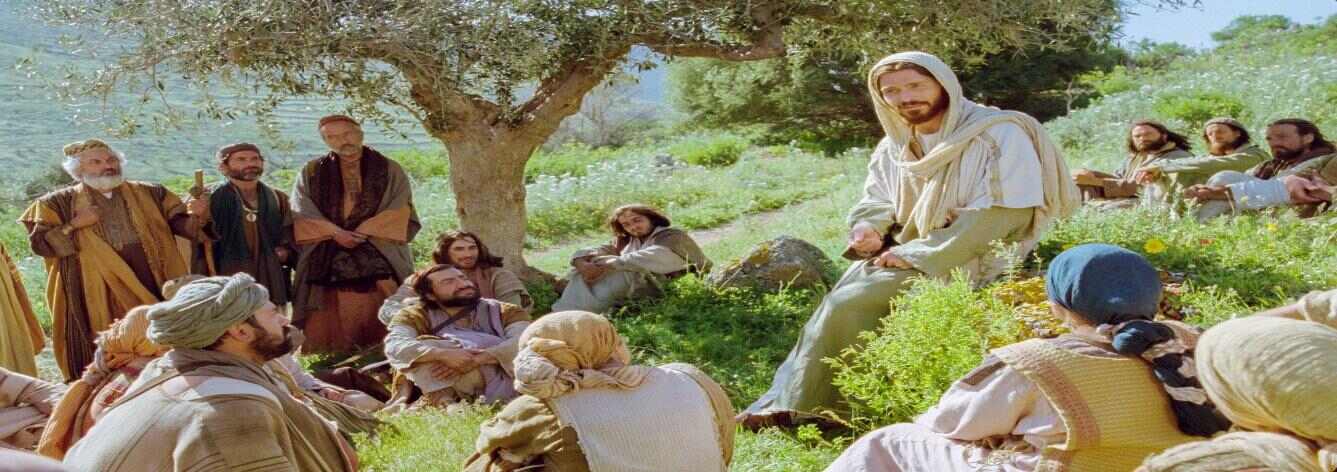
Mentor and teach others to prepare them for His return.14
Jesus wants you to mentor believers beyond spiritual milk to spiritual sold food. These verses also speak to how young believers should learn to grow in the Word. “[A]nd she hath no breasts: She had not an established ministry to nurse up her children with it. And at this same pass was the old Church at first, not only small, but unshapen (Ezek. 16:7-8). A society of men without the preaching of the Word is like a mother of children without breasts. All the Church’s children must ‘suck and be satisfied’ (Isa. 66:11); they must desire the sincere milk of the Word and grow thereby (1 Pet. 2:2), … What shall we do for our sister: … The Church, as an elder sister, shows herself solicitous, and propounds the matter to Christ, as the only best husband for her, the partition wall being broken down.” (John Trapp on SoS 8:8b).15 “For though by this time you ought to be teachers, you have need again for someone to teach you the elementary principles of the actual words of God, and you have come to need milk and not solid food.” (Heb. 5:12). This requires each church to develop faithful teachers. “The things which you have heard from me in the presence of many witnesses, entrust these to faithful people who will be able to teach others also.” (2 Tim. 2:2). “preach the word; be ready in season and out of season; correct, rebuke, and exhort, with great patience and instruction.” (2 Tim. 4:2).
Jesus also wants you to protect believers from evil and guide them to embrace good. The Church is also meant to help believers grown in Jesus’ wisdom to embrace what is good and to reject evil. “The wall and door are emblems of chastity and its opposite … The metaphors of the wall and door are naturally expanded. If the maiden grows up virtuous and inaccessible to seduction we will build upon her a palace of silver, i.e., we will so provide for her in marriage that from her may spring an illustrious house; … This passage is one of the strongest arguments for the theory that chaste wedded love is the theme of this book, the poet going on in Song of Solomon 8:10 to put into the heroine’s mouth a protestation of purity; and by which virtuous disposition, even more than by her beauty, she had won her husband’s love: “I have grown up to virtuous womanhood, and I have found favor in his eyes.” (Charles Ellicott on SoS 8:8-9).16 Believers should be taught to remain pure for Jesus. “For I am jealous for you with a godly jealousy; for I betrothed you to one husband, to present you as a pure virgin to Christ.” (2 Cor. 11:2). “yet He has now reconciled you in His body of flesh through death, in order to present you before Him holy and blameless and beyond reproach—” (Col. 1:22).
6. Grateful Service: While Waiting for Jesus, Serve Him with Gratitude by Giving Him the First Fruits of Your Life. SoS 8:10-12.
In response to the peace and blessings that Jesus provides, serve Him with gratitude. The bride was grateful for the peace, security, and provision that she received from her loving king and husband. She promised to respond by serving with gratitude and by giving the fruits of her life for his kingdom. “10 I was a wall, and my breasts were like towers; then I became in his eyes as one who finds peace. 11 Solomon had a vineyard at Baal-hamon; He entrusted the vineyard to caretakers. Each one was to bring a thousand shekels of silver for its fruit. 12 My very own vineyard is at my disposal; the thousand shekels are for you, Solomon, and two hundred are for those who take care of its fruit.” (SoS 8:10-12). “The bride takes up this thought. ‘So it is with me, and, in the spirit of thankful acknowledgments and praise, I will respond to all the favor of the king. King Solomon has loved me, and now I am rising higher and becoming more and more glorious because of his love.’ The typical reference can scarcely be missed. The Church, the bride of the Lamb, shines only in the light of him whose favor is life, and whose loving kindness is better than life…The word ‘peace’ (shalom) is in all probability purposely chosen in this case as a kind of play on the name Solomon, which appears immediately afterwards. ‘The king of peace delights in me because I am peace in his eyes.’ The Church is after the image of the King. His likeness in her makes her beautiful. Men take knowledge of Christians that they have been with Jesus (see 1 Chronicles 22:9)… The vineyard was a celebrated one, and was taken as a typical instance of fertility and abundance…I will give the king a thousand shekels, that is, the utmost that the vineyard can produce, and ‘those that keep the fruit thereof’ shall have two hundred - perhaps meaning a hundred each, that is a tenth, which was the ancient tithe due to the priests. It may be, however, that a double tithe is intended. The king shall be satisfied, and all those who labor for the king shall be more than ever rewarded.” (Pulpit Commentary on SoS 8:10-12).17
Jesus has given you protection, peace and strength in your salvation. [v. 10a] “God was a wall of fire about her; salvation was appointed as walls and bulwarks to her; she was one of the two walls Christ was a cornerstone unto, and cemented together; and was a wall built up of lively stones, of true believers, built on Christ, the foundation; and established in the doctrine of grace; and constant and immovable in her love to Christ; [v. 10b] and my breasts like towers; round, plump, and high; signifying that she was now marriageable; and the time of her being presented as a chaste virgin to Christ,” (John Gill on SoS 8:10).18 “Therefore let’s approach the throne of grace with confidence, so that we may receive mercy and find grace for help at the time of our need.” (Heb. 4:16).
Serve Jesus with the blessings He gives you. The king gave his bride a vineyard to develop for his kingdom. “Solomon had a vineyard at Baal-hamon; He entrusted the vineyard to caretakers.” (SoS 8:11). “Baal-hamon” “[Khirbet Balama, modern Ibleam), about a mile south-west of Janin … in Dothan valley … [shekels] is probably to be understood in connection with the payment fee v. 11, and is the percentage of the profit shared by the laborers.” (G. Lloyd Carr on SoS 8:11).19 Jesus has also entrusted His Church to cultivate His vineyard to serve His Kingdom. “We have no difficulty in understanding that the vineyard is Christ’s Church … First, he claims the Church as his own by his Father’s gift … Next, Christ’s Church is his by purchase …then all the fruit of the vineyard belongs to Christ, and he must have it.” (Charles Spurgeon on SoS 8:11).20
Jesus made you for good works for His glory. The vineyard produced fruit. Fruit can imply offspring (i.e. Gen 30:2; Dt. 7:13). Alternatively, it can be used figuratively for the “fruit” of a person’s actions (i.e., Is. 3:10; Ps. 58:12).21 Jesus made you for “good works”: “For we are His workmanship, created in Christ Jesus for good works, which God prepared beforehand so that we would walk in them.” (Eph. 2:10). Your good deeds should also glorify God. “Your light must shine before people in such a way that they may see your good works, and glorify your Father who is in heaven.” (Matt. 5:16).
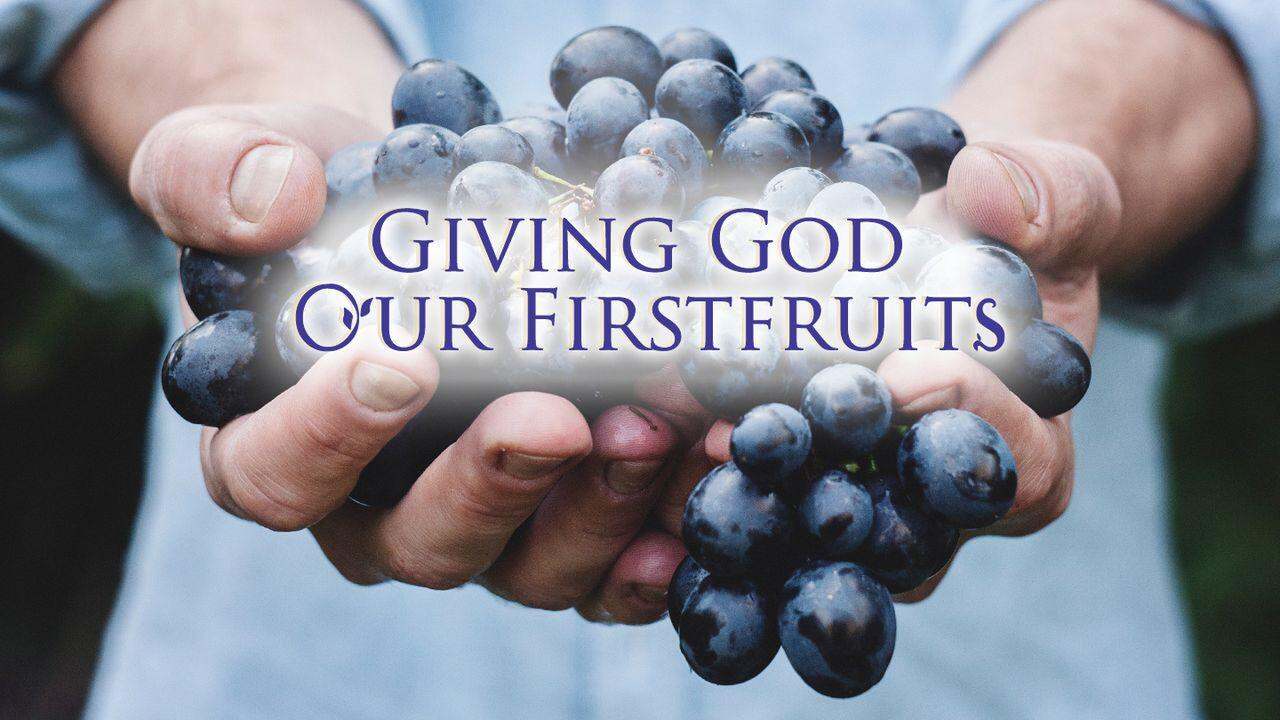
From the blessings Jesus gives you, serve Him by giving Hi the first fruits of your life.22
Manage the good and perfect gifts in your life for Jesus. Every good and perfect gift in your life comes from God. “Every good thing given and every perfect gift is from above, coming down from the Father of lights, with whom there is no variation or shifting shadow.” (Jam. 1:17). Jesus is also the vinedresser, and you cannot produce good works without Him. “I am the vine, you are the branches; the one who remains in Me, and I in him bears much fruit, for apart from Me you can do nothing. If anyone does not remain in Me, he is thrown away like a branch and dries up; and they gather them and throw them into the fire, and they are burned.” (Jo. 15:5-6). Thus, you should be a good steward and manage His resources. “Then you ought to have put my money in the bank, and on my arrival I would have received my money back with interest.” (Matt. 25:27).
7. Hope: Jesus Wants You to Help Others Find Hope in Him and Long for His Return. SoS 8:13-14.
Jesus commands believers to share the hope in Him with others and desire His return. As the groom departed, he urged those who were in his garden to listen to his bride. She agreed to do this and urged her husband to hurry back so that they could enjoy loving fellowship with each other. “13 You who sit in the gardens: My companions are listening for your voice—Let me hear it! 14 Hurry, my beloved, and be like a gazelle or a young stag on the mountains of balsam trees!” (SoS 8:13-14). “The Song closes, not with the lovers walking hand and hand into their happily ever after, but with a dose of reality. The beloved must leave again, but this time it is his decision, not because she has turned him away. There is grief, but not grief without hope. When the disciples were grieving because Jesus told them He was going away, He said, ‘Let not your hearts be troubled. Believe in God; believe also in me. In my Father’s house are many rooms. If it were not so, would I have told you that I go to prepare a place for you? And if I go and prepare a place for you, I will come again and will take you to myself, that where I am you may be also.’ – John 14:1-3. Jesus has wooed us and won us, and one amazing day He is coming back to wed us.” (Dee Brestin on SoS 8:13-14) (italics in original).23
Share Jesus’ Good News to give them the same hope that lies within you. The groom told those who were present in his garden to commit to listening to his bride. “You who sit in the gardens: My companions are listening for your voice—Let me hear it!” (SoS 8:13). Thus, this was Jesus’ call for all to listen to His Church as she preaches, evangelizes, and shares the hope of eternal life with Him, “In other words, our Lord says to each of us – While I am away from you, fill this garden with my name, and let your heart commune with me. As she sees him rising up into the clouds of glory, the bride quickly responds – ‘Make haste, my beloved, and be thou like a roe or to a young heart upon the mountain of spices.’ It is as though she said – I know, my Love, that you must go away for a while; but hurry back. As soon as it pleases you, when my work upon the earth is done, come to me again; and take me home ….” (Don Fortner SoS 8:13-14).24
Put your hope in Jesus’ return. The bride urged her departing husband to hurry back. “Hurry, my beloved, and be like a gazelle or a young stag on the mountains of balsam trees!” (SoS 8:14). Even amongst those who see the Song of Solomon as being primarily about marriage relationships, many concede that the final verses “describe the world to come.” (Tremper Longman on SoS 8:13-13).25 “Our song ends with the bride asking her shepherd-king to again come be with her (8:14). Interestingly, the Bible ends in exactly the same way. In Revelation 22 the bride twice asks for the Bridegroom to come to her and for her (22:17, 20). Then and only then will God’s great love song and story be complete. Only then will it reach its intended goal. The Song of Songs ends by pointing us to that great day and the climax of history.” (Daniel Akin on SoS 8:14).26
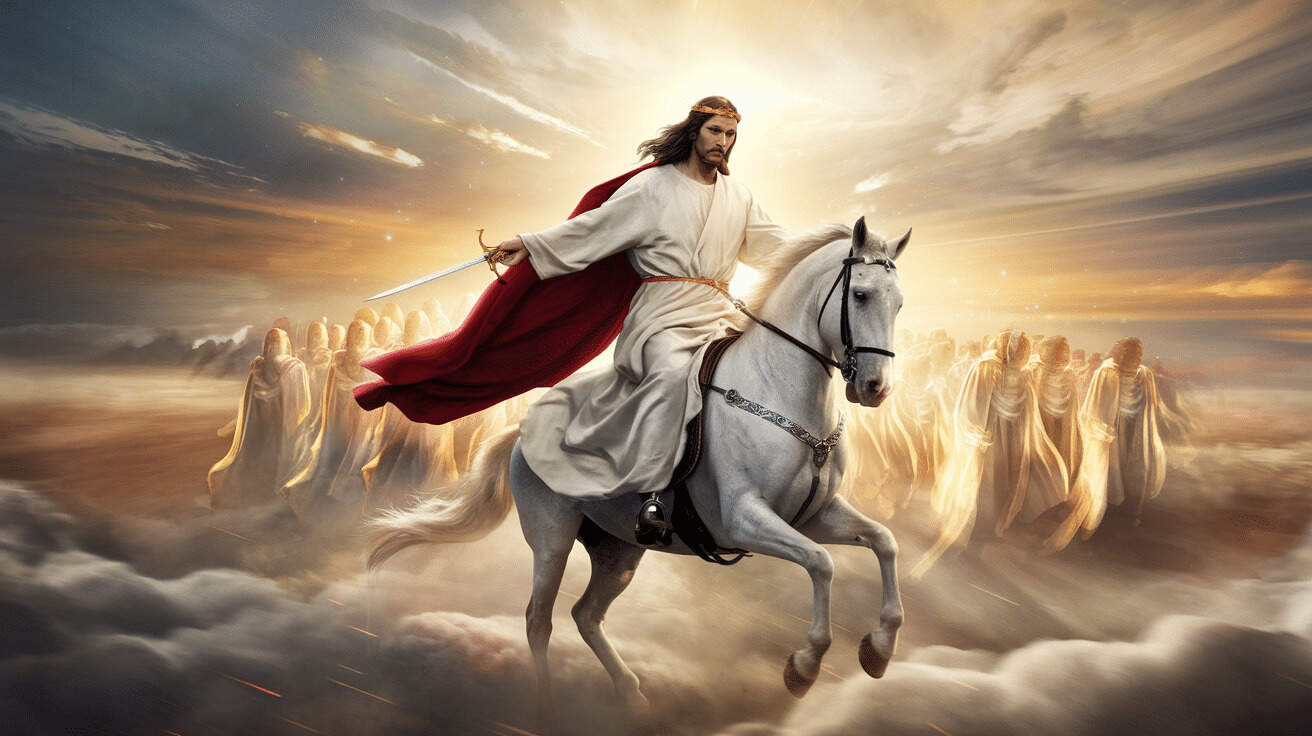
Put your hope in Jesus’ return.27
Jesus could return at any time. The groom did not say when he would return. Nor did Jesus. He will come unannounced to take His bride. “For the Lord Himself will descend from heaven with a shout, with the voice of the archangel and with the trumpet of God, and the dead in Christ will rise first. Then we who are alive, who remain, will be caught up together with them in the clouds to meet the Lord in the air, and so we will always be with the Lord.” (1 Thess. 4:16-17). “But about that day and hour no one knows, not even the angels of heaven, nor the Son, but the Father alone.” (Matt. 24:36). Thus, with eagerness and joy, always be ready for His return. “For our citizenship is in heaven, from which we also eagerly wait for a Savior, the Lord Jesus Christ;” (Phil. 3:20).
Don Fortner, Discovering Christ in the Song of Solomon (Auburn, MA, Evangelical Press USA, 2005) (ISBN 085234-581-X), p. 190-191.↩︎
Image credit: Song Of Solomon↩︎
Image credit: Must Be Born Again↩︎
Image credit: What does Song of Solomon 8:6 mean? | Bible Art↩︎
Song of Solomon 8 Commentary - Matthew Henry Commentary on the Whole Bible (Complete) | Bible Study Tools↩︎
Image credit: What is the Doctrine of Christ?↩︎
Song of Solomon 8 Ellicott's Commentary for English Readers↩︎
G. Lloyd Carr, The Tyndale Old Testament Commentaries, The Song of Solomon (Downers Grove, IL, Inter-Varsity Press, 1984) (ISBN 0-87784-268), p. 174.↩︎
Charles H. Spurgeon, The Song of Solomon, (84 Sermons on the Song of Solomon, assembled by Eric Steward and Gary Morris 2020) (ISBN: 979-8-55-894256-9), No. 81 “Christ’s Love for His Vineyard,” Spurgeon delivered this sermon in the summer of 1860 at New Park Street Chapel, Southwark, England. (no page numbers provided).↩︎
Image credit: Giving God Our First-Fruits↩︎
Dee Brestin, He Calls You Beautiful, Hearing the Voice of Jesus in the Song of Songs (New York, NY, Crown Publishing Group 2017) (ISBN 978-1-60142-990-2) pgs. 199-200.↩︎
Don Fortner, Discovering Christ in the Song of Solomon (Auburn, MA, Evangelical Press USA, 2005) (ISBN 085234-581-X), p. 236-37.↩︎
Tremper Longman III, Song of Songs, (Grand Rapids, MI, William B. Eerdman’s Publishing Company, 2001) (ISBN 978-0-8028-2543-8) p. 230.↩︎
Daniel L. Akin, Christ-Centered Exposition, Exalting Jesus in Song of Songs, (Brentwood, TN, B&H Publishing Group, 2015) (ISBN 978-0-8054-9676-5), p. 190.↩︎
Image credit: Discovering Jesus' Triumphant Return in the Bible↩︎